
Silicone Applications in Construction and Building
Silicone is a sealing, bonding, and waterproofing material widely used in construction, aluminum and glass systems, interior and exterior applications, aquariums, and residential projects.
In construction and building finishing, silicone is commonly used for many applications such as gap sealing, glass bonding, joint finishing, waterproofing, dust prevention, and bonding different material surfaces. From residential houses, offices, stores, and showrooms to commercial and industrial projects, silicone is used in most areas that require high airtightness, elasticity, and aesthetics.
The strength of silicone lies in its ability to form an elastic sealant layer after curing. This sealant layer helps cover gaps and prevents water, dirt, moisture, and air from entering through joints. As a result, silicone not only supports faster and cleaner construction but also contributes to the durability and service life of a building.
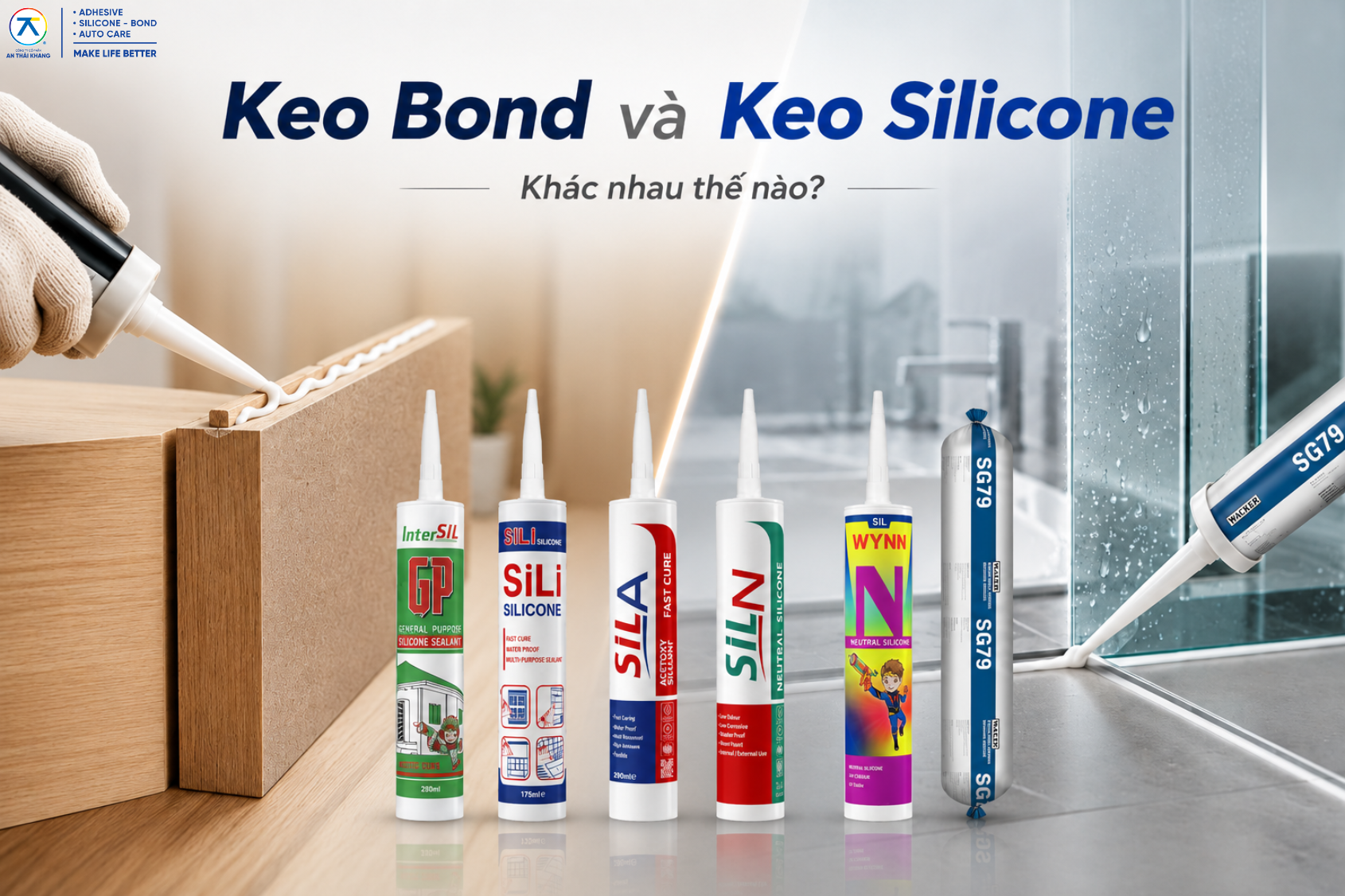
At An Thái Khang, silicone products are divided into different groups, such as acid silicone sealants, neutral silicone sealants, and Wacker silicone. Each product group is suitable for specific surfaces, environments, and application requirements. Therefore, understanding the applications of each silicone type helps installers, contractors, and users choose the right product, reducing the risk of peeling, cracking, or using the wrong material.
1. What is silicone and why is it widely used in construction?
Silicone is an adhesive-like material that cures when exposed to moisture in the air. After drying, it forms an elastic rubber-like layer with adhesion to many surfaces such as glass, aluminum, ceramic tiles, ceramics, metal, painted wood, concrete, mortar, and other non-porous materials.
In construction, material surfaces often expand or contract slightly due to changes in temperature, humidity, or environmental impact. If rigid materials are used to fill gaps, the joints may easily crack, open, or peel over time. Silicone solves this issue thanks to its good elasticity, allowing the sealant line to adapt to slight material movement while maintaining airtightness.
In addition, silicone is preferred because it is easy to apply, cures quickly, creates smooth sealant lines, and is suitable for both indoor and outdoor applications. For projects that require a clean, neat, and aesthetic finish, silicone is a familiar choice for treating edges, door gaps, tile joints, glass partitions, aluminum frames, and other finishing details.
2. Applications of silicone in door, glass, and aluminum construction
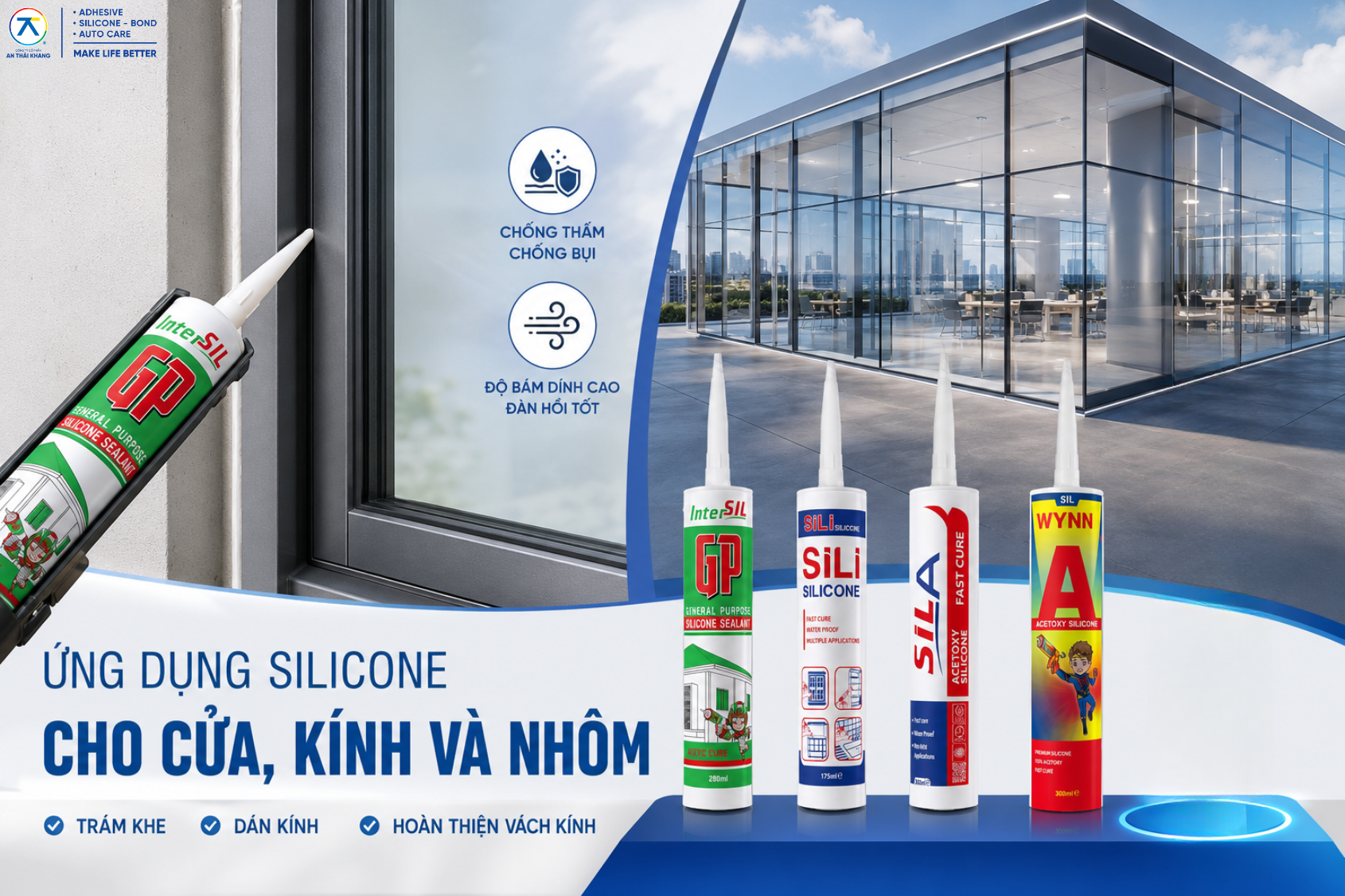
One of the most common applications of silicone is in the installation of glass doors, aluminum doors, glass partitions, and façade systems. These applications require sealant lines with good adhesion, high airtightness, and resistance to environmental impact.
2.1. Sealing window, door, and aluminum-glass frame gaps
In window, door, and aluminum-glass frame areas, silicone is commonly used to seal gaps between the frame and the wall, between the glass and the frame, or between aluminum-glass components. The sealant layer helps prevent rainwater, dust, wind, and insects from entering through gaps.
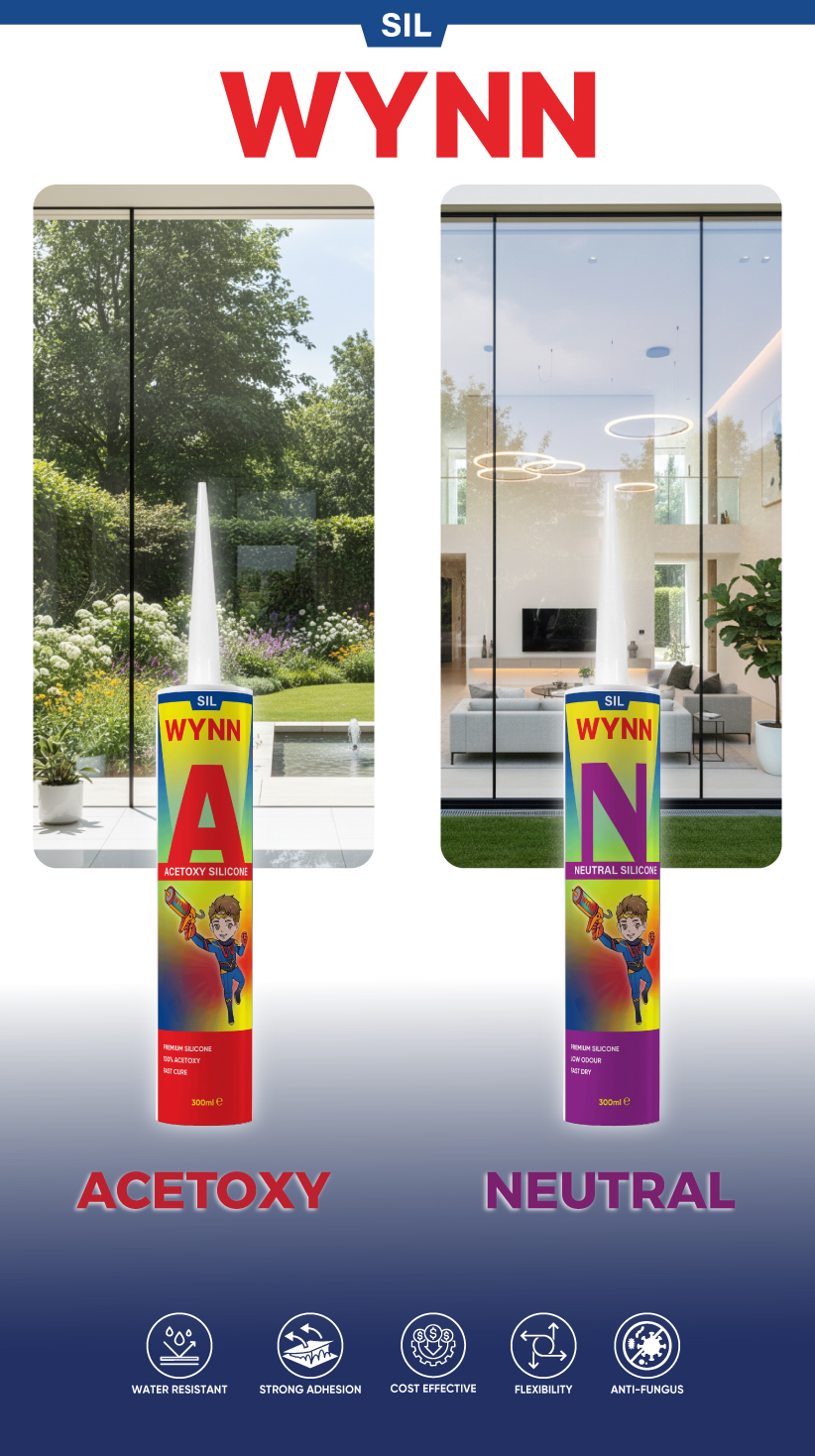
For common residential applications, users may consider acid silicone products such as Silicone GP - Acid, Silicone SILI - Acid, Silicone SIL A - Acid, or Silicone WYNN A - Acid. This product group is suitable for many non-porous surfaces such as glass, ceramic tiles, aluminum, metal, rigid plastic, and gaps in residential construction.
2.2. Glass bonding and finishing glass wall systems
For projects that use a large amount of glass, such as offices, showrooms, stores, townhouses, or façades, silicone helps create tight, neat, and stable joints. A well-applied sealant line makes the overall glass system look cleaner while preventing water and dirt from entering the joints.
Depending on the technical requirements, installers may choose acid silicone or neutral silicone. For standard glass applications, acid silicone can meet basic bonding and sealing needs. For applications requiring higher durability, reduced surface corrosion, or outdoor use, neutral silicone is the more suitable option.
For structural glazing, façade systems, or load-bearing glass partitions, a specialized product such as Silicone WACKER SG-79 - Neutral should be used. This silicone is suitable for projects that require higher stability, adhesion, and safety than standard residential applications.
3. Applications of silicone in interior, exterior, and waterproofing works
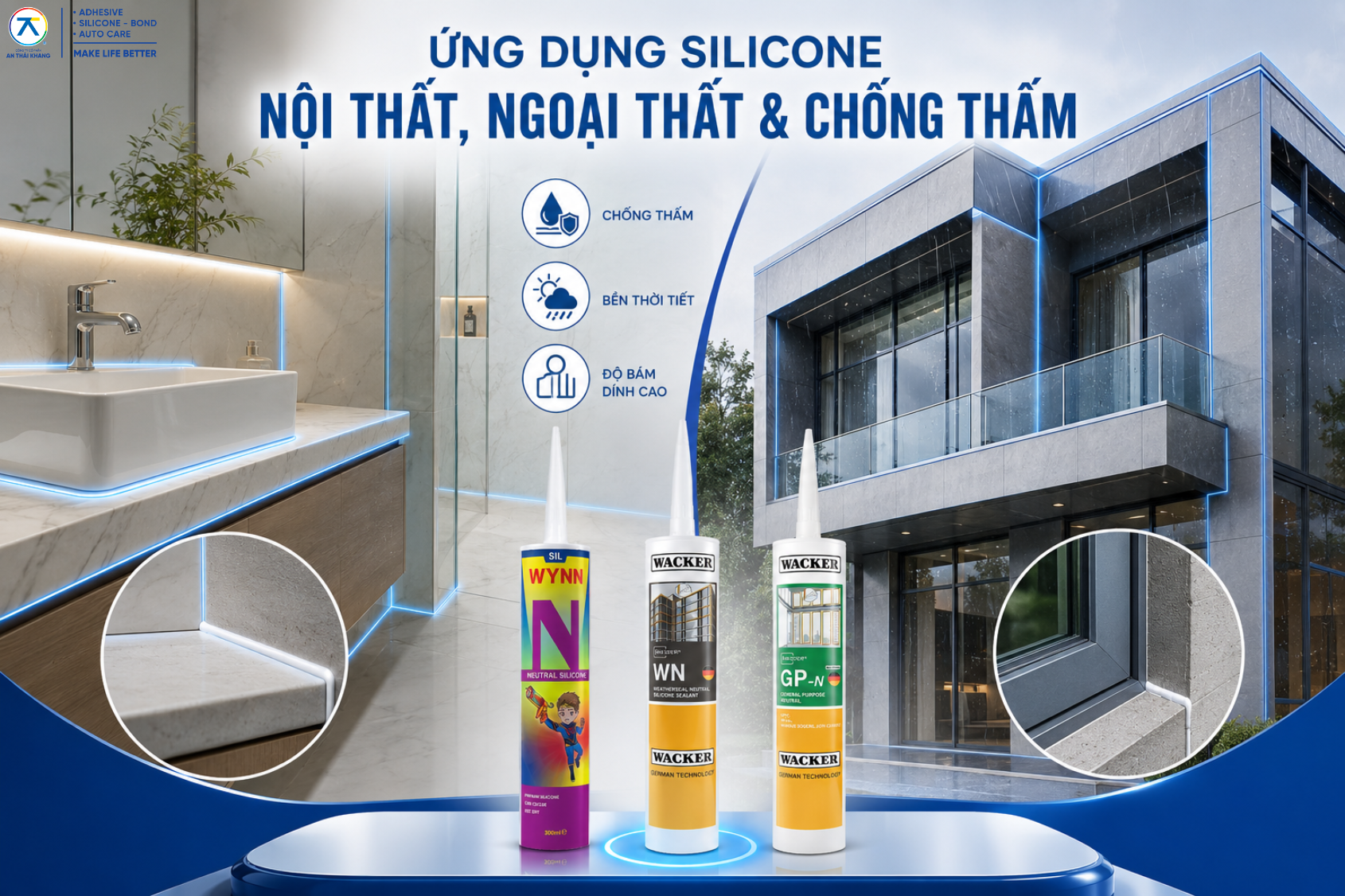
Silicone is not only used in aluminum and glass construction but is also widely applied in many interior and exterior applications. Areas such as wall edges, tile gaps, cabinet bases, lavabo edges, glass edges, sanitary fixture edges, joints between different materials, or small cracks can all be treated with silicone.
In interior applications, the common requirement is that the sealant line must be smooth, clean, non-sagging, and easy to control during application. An even sealant line makes the finished area look neater, especially in visible spaces such as living rooms, kitchens, bathrooms, offices, or showrooms.
In exterior applications, silicone is often used in areas exposed to sunlight, rain, humidity, and temperature changes. When applied properly, silicone helps prevent rainwater, moisture, dirt, and air from entering joints. This helps reduce the risk of seepage, mold, deterioration, or material damage over time.
For outdoor areas, users should prioritize silicone products with good weather resistance. Neutral silicone or Wacker silicone products are often more suitable for areas such as wall joints, door gaps, glass edges, metal frame edges, and joints between concrete, mortar, or ceramic tiles.
4. Quick silicone selection table by construction application
To choose the right silicone, users should not rely only on the product name or previous usage habits. Each sealant type is suitable for a different application group, from residential gap sealing, glass bonding, and aluminum-glass installation to outdoor sealing and specialized applications such as structural glazing or aquariums.
The table below helps readers quickly identify the right product based on practical needs.
4.1. Application table for silicone product lines at An Thái Khang
Construction need | Suitable silicone type | Recommended products | Suitable surfaces / applications | Selection notes |
|---|---|---|---|---|
Residential gap sealing and general repairs | Acid silicone | Silicone GP - Acid, Silicone SILI - Acid | Glass, ceramic tiles, aluminum, metal, rigid plastic, and gaps in residential construction | Suitable for general applications; not recommended for structural glazing or continuous water immersion areas |
Glass bonding, frame sealing, and window sealing | Acid silicone | Silicone SIL A - Acid, Silicone WYNN A - Acid | Glass, door frames, aluminum frames, walls, ceramic tiles, ceramics, plastic, and non-porous materials | Suitable for areas requiring fast application, neat sealant lines, and reasonable cost |
Interior and exterior applications requiring high durability | Neutral silicone | Silicone SIL N - Neutral, Silicone WYNN N - Neutral | Windows, doors, aluminum-glass systems, stainless steel, wood, ceramic tiles, ceramics, and alloys | Recommended when surface corrosion needs to be minimized and joint durability needs to be improved |
Outdoor joint sealing and weather-exposed areas | Wacker neutral silicone | Silicone WACKER WN - Neutral | Wall edges, outdoor joints, concrete, mortar, ceramic tiles, aluminum, steel, and glass | Suitable for projects requiring resistance to sunlight, rain, humidity, and temperature changes |
Bonding and sealing aluminum-glass systems in residential and industrial construction | Wacker neutral silicone | Silicone WACKER GP-N - Neutral | Windows, doors, aluminum-glass systems, ceramic tiles, ceramics, metal, cement, and mortar | Suitable for alkaline surfaces and applications requiring long-term stability |
Structural glazing, façades, and load-bearing glass partitions | Specialized Wacker silicone | Silicone WACKER SG-79 - Neutral | Architectural glass, façade systems, load-bearing glass partitions, and applications requiring high stability | Should not be replaced with general-purpose silicone because this is a technically demanding application |
Aquariums, glass tanks, and areas frequently exposed to water | Specialized Wacker silicone | Silicone WACKER 121 | Aquariums, fish tanks, glass tanks, and joints frequently exposed to water | The correct specialized product should be chosen to prevent leakage and ensure safety for aquatic environments |
Glass, windows, ceramics, plastic, and painted surfaces | Wacker acid silicone | Wacker acid silicone | Glass, door frames, aluminum-glass partitions, ceramics, plastic, and painted surfaces | Not recommended for natural stone, easily oxidized metals, or long-term water immersion areas |
From the table above, acid silicone is suitable for general construction applications such as gap sealing, glass bonding, door joints, and residential repairs. This product group is easy to apply, cures quickly, and is suitable for many non-porous surfaces.
For projects requiring higher durability, especially outdoor areas, aluminum-glass systems, metal, or alkaline surfaces, users should prioritize neutral silicone. This group helps reduce material corrosion, maintain elasticity, and create stable joints over time.
For specialized applications such as structural glazing, façades, load-bearing glass partitions, or aquariums, the correct specialized Wacker silicone should be selected. These are technically demanding applications and should not be replaced with general-purpose silicone.
5. How to choose silicone based on surface and environment
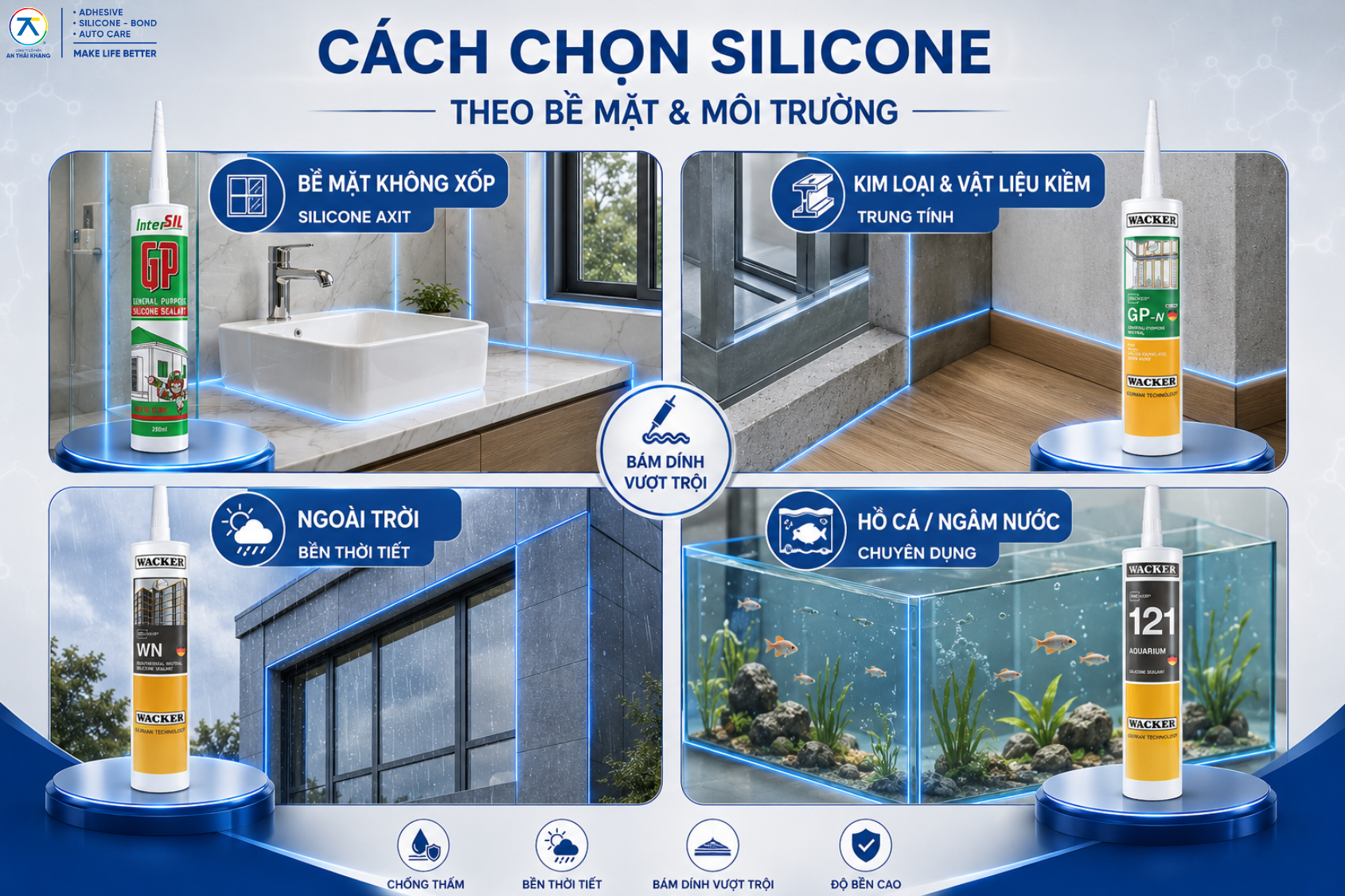
When choosing silicone, users need to clearly identify the application surface, usage environment, and technical requirements of the project. A product that is suitable for glass or ceramic tiles may not necessarily be suitable for natural stone, easily oxidized metals, PE or PP plastic, or areas exposed to long-term water immersion.
For glass, ceramic tiles, ceramics, aluminum, and other non-porous materials, acid silicone can be used for many general applications. This group is suitable for residential projects, aluminum-glass doors, tile joints, small interior gaps, and areas requiring fast application.
For metal, stainless steel, alloys, wood, concrete, mortar, or alkaline surfaces, neutral silicone is usually the safer choice. Its neutral curing properties help reduce the risk of surface corrosion while maintaining joint durability and elasticity.
For outdoor environments, users should choose silicone with good weather resistance. Areas continuously exposed to sunlight, rain, humidity, and temperature changes should prioritize neutral silicone or Wacker silicone. For premium projects, façades, structural glazing, or applications requiring movement resistance, specialized sealants should be used instead of general-purpose products.
For aquariums, glass tanks, or areas frequently exposed to water, a specialized silicone such as Silicone WACKER 121 is required. Standard silicone products may not be suitable for long-term water immersion or may not meet safety requirements for aquatic organisms.
6. Application notes for durable and aesthetic silicone sealant lines
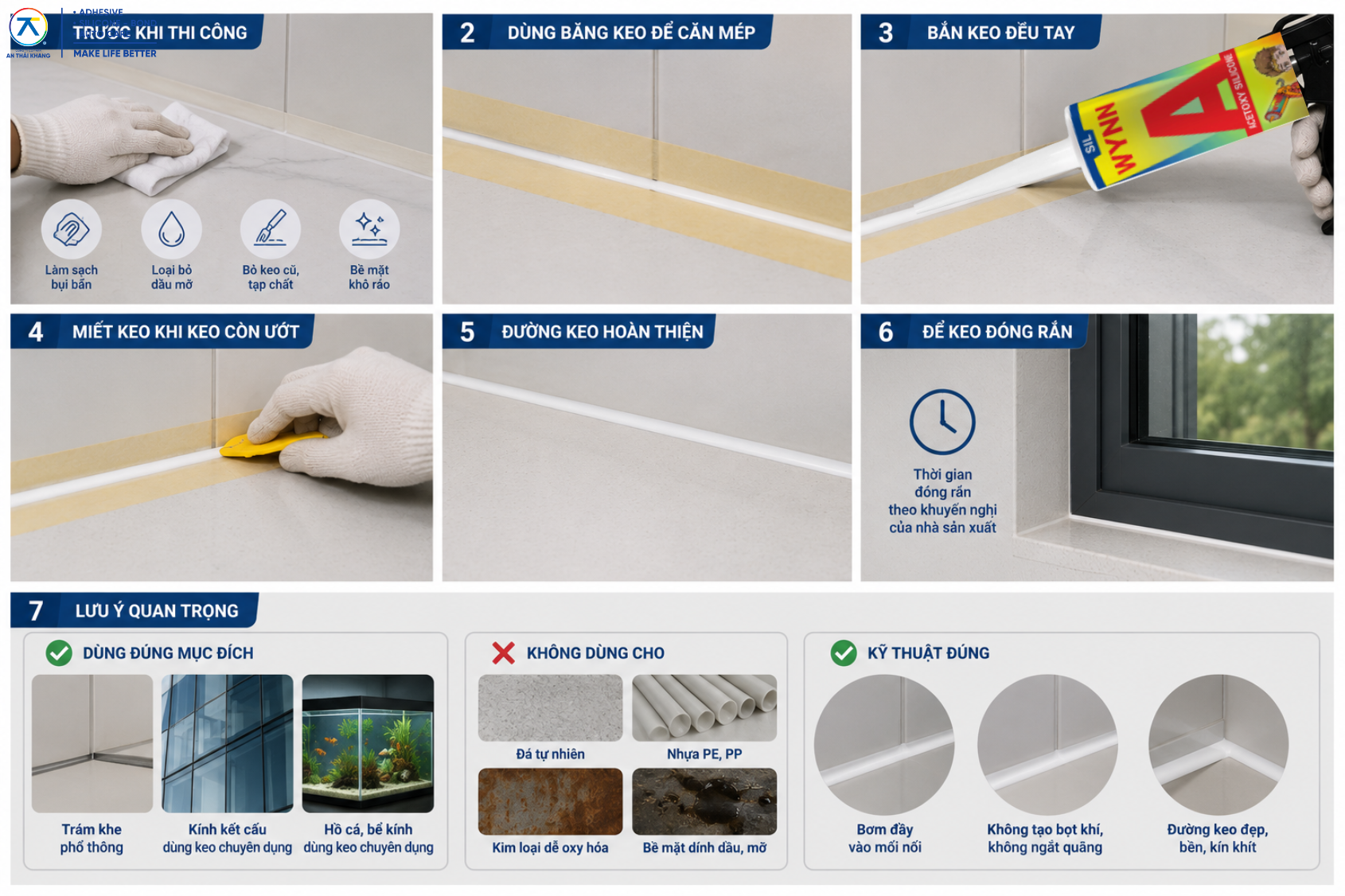
The quality of a silicone sealant line depends not only on the product itself but also heavily on application technique. If the surface has not been properly cleaned, the sealant may peel quickly, fail to adhere firmly, or fail to achieve the required airtightness.
Before applying silicone, the surface must be cleaned of dust, grease, rust, old sealant, and other contaminants. For areas requiring sharp and neat sealant edges, masking tape can be used to align the edges before application. After applying the sealant, the line should be tooled while the silicone is still wet to create a smooth, even, and aesthetic surface.
When applying silicone, users should dispense the sealant evenly and avoid interruptions or air bubbles inside the joint. The sealant must be applied sufficiently into the joint to ensure proper adhesion and sealing performance. After completion, the silicone should be allowed to cure according to the recommended time before use or before exposure to water.
In addition, silicone should not be used for the wrong purpose. General-purpose gap-sealing silicone should not be used for structural glazing. Silicone that is not designed for water exposure should not be used in aquariums or glass tanks. For special surfaces such as natural stone, PE or PP plastic, oily materials, or food-contact areas, product recommendations should be carefully checked before application.
7. Conclusion
Silicone is an important material in construction and building applications thanks to its ability to seal gaps, bond materials, waterproof, prevent dust, and finish surfaces. From aluminum-glass doors, glass partitions, interior and exterior applications to aquariums and specialized projects, silicone helps improve airtightness, durability, and aesthetics for each application.
However, each silicone type has its own properties and application range. Acid silicone is suitable for many general applications such as gap sealing, glass bonding, door joints, and residential repairs. Neutral silicone is suitable for projects requiring durability, elasticity, and reduced material corrosion. Wacker silicone is suitable for more demanding applications such as outdoor joint sealing, aluminum-glass systems, structural glazing, or aquariums.
When choosing silicone, users should clearly identify the application surface, environmental conditions, technical requirements, and level of water exposure. If you are unsure which silicone to use, please contact An Thái Khang for suitable product consultation, helping your project achieve proper installation, durability, and aesthetics.
AN THAI KHANG JSC
- • Fanpage: An Thái Khang JSC
- • Hotline: 0764 644 245
- • Email: support@anthaikhang.com
- • Website: https://anthaikhang.com/