
What Can Two-Component Adhesive Bond? Easy DIY Ideas
Two-component adhesive can bond metal, wood, ceramic, stone, glass, rubber, and hard plastic. Learn how to use S-EPOXY adhesive for household repairs and simple DIY ideas at home.
1. What is two-component adhesive?
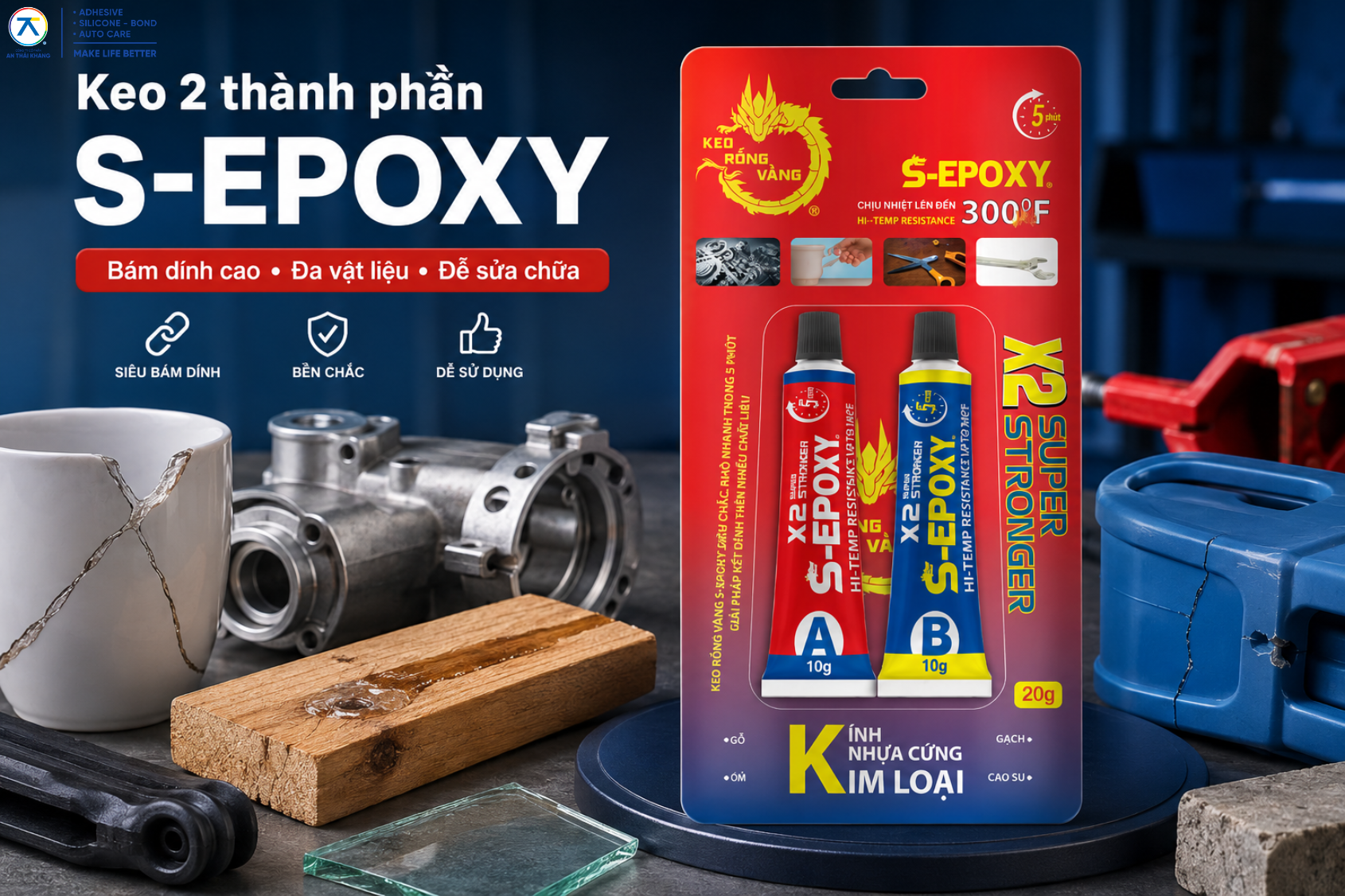
Two-component adhesive is a type of adhesive consisting of two separate parts, usually including the main adhesive and a hardener. When these two parts are mixed evenly at the correct ratio, the mixture creates a bonding reaction and gradually hardens into a strong adhesive layer. Thanks to this characteristic, two-component adhesive is often chosen for repair needs that require higher durability than ordinary adhesives.
In daily life, many items may crack, break, peel, open, or become loose after a period of use. Instead of replacing them immediately, users can use two-component adhesive to re-bond, reinforce, or restore familiar household items. This type of adhesive is also suitable for those who enjoy repairing things, making handmade items, or carrying out small DIY ideas at home.
An Thái Khang’s S-EPOXY Two-Component Adhesive is an epoxy-based adhesive consisting of epoxy resin and hardener. It is designed to provide strong adhesion on many materials such as metal, wood, ceramic, stone, glass, cement, rubber, and hard plastic. The product has a surface drying time of about 5 minutes, dries completely in about 45 minutes, and fully hardens after 3 days.
2. What can two-component adhesive bond?
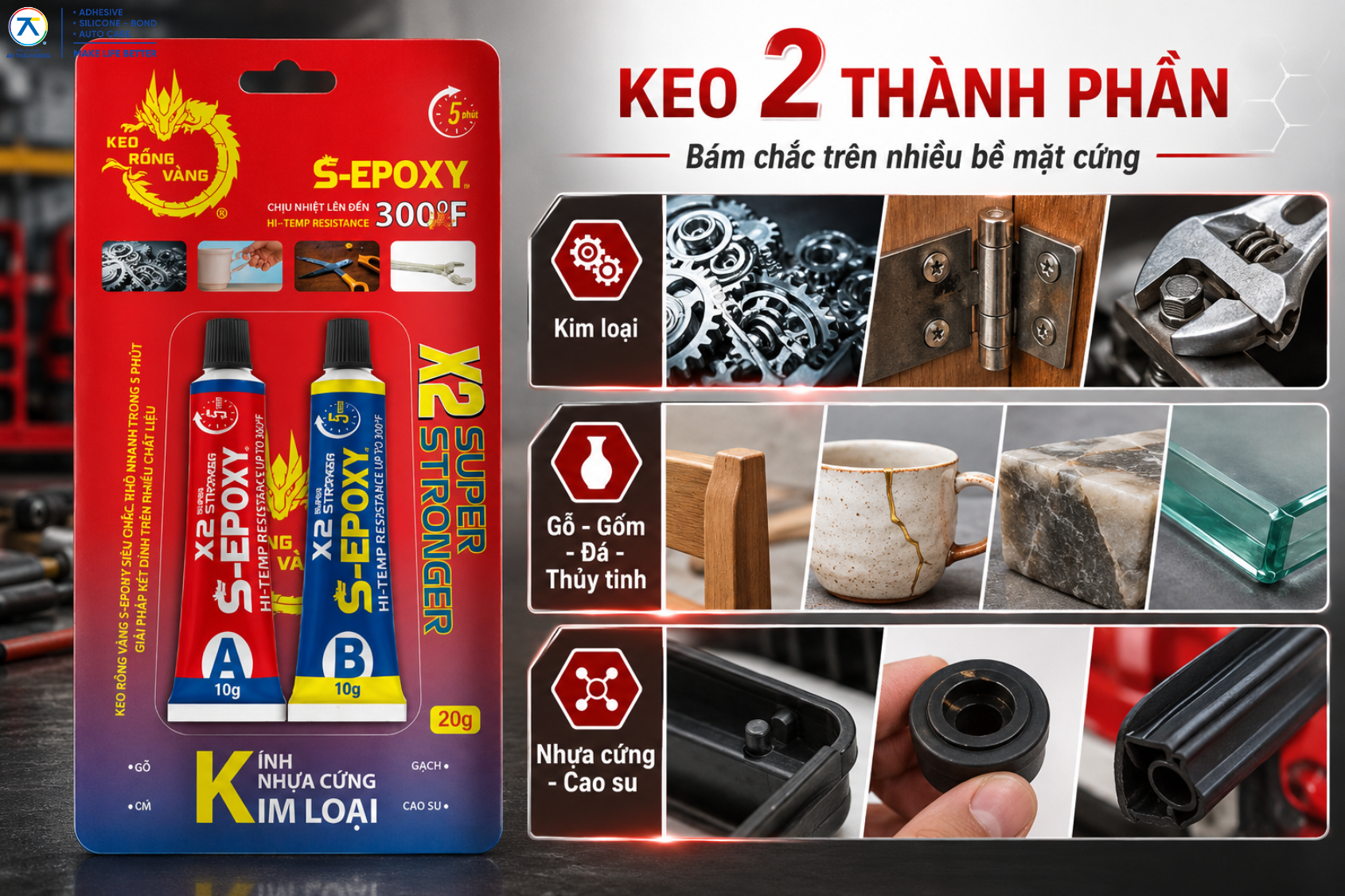
Two-component adhesive has the advantage of adhering to many hard surfaces, making it especially suitable for common materials used in household repairs, mechanical repairs, decoration, and handicrafts. When applied properly, the adhesive layer after curing can create a strong bond, helping items remain more stable during use.
2.1. Bonding metal, mechanical parts, and household items
Two-component adhesive can be used to bond or reinforce certain metal parts in the home, mechanical tools, motorcycle accessories, small devices, or items that are regularly exposed to light force. For metal surfaces, users should wipe away dust, grease, and moisture before bonding so the adhesive can adhere better.
This is a suitable option when repairing loose, cracked, or detached parts, or when extra strength is needed for a small joint. After drying, the adhesive forms a hard bond that helps reduce the risk of peeling again if the item is used properly.
2.2. Bonding wood, ceramic, stone, and glass
For materials such as wood, ceramic, stone, and glass, two-component adhesive can help re-bond decorative items, small frames, decor statues, handmade objects, or cracked interior details. These materials are commonly used in home DIY projects because they can often be repurposed from old items.
When bonding ceramic or glass, the edges should be aligned carefully before the adhesive begins to dry. After pressing the two surfaces together, the bonded area should be kept fixed during the initial period to prevent the joint from shifting.
2.3. Bonding rubber and hard plastic
Two-component adhesive can also be used on rubber and hard plastic in certain repair cases. However, it should not be used on PP, PE plastic, or oily surfaces, as adhesion may not be effective. This is an important point to check before application to avoid having to redo the repair.
3. When should two-component adhesive be chosen instead of ordinary adhesive?
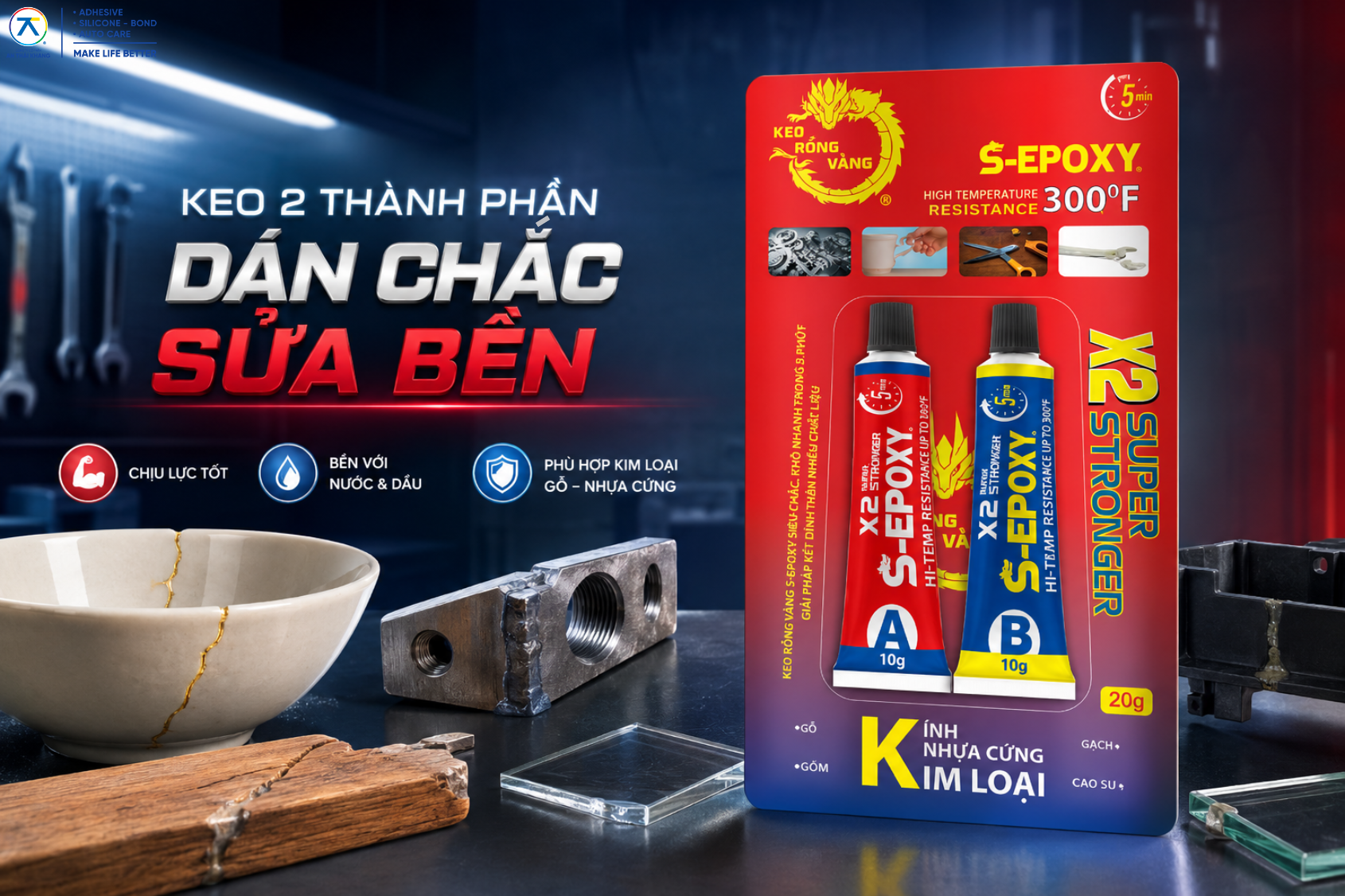
Two-component adhesive is suitable when an item requires a strong bond, better load-bearing ability, or long-term repair. For temporary bonding, users may choose simpler types of adhesive. However, if the bonding surfaces are metal, wood, ceramic, stone, glass, or hard plastic, two-component epoxy adhesive is a more worthwhile option to consider.
This type of adhesive is especially useful for re-bonding broken items, filling small cracks, reinforcing loose details, or restoring items that are still valuable for use. Instead of throwing away familiar objects, users can repair them to save costs and extend their service life.
After fully curing, S-EPOXY Two-Component Adhesive offers heat resistance, load resistance, vibration resistance, and durability against chemicals, oil, and water. These advantages make it suitable for many household, mechanical, and craft repair needs.
4. Easy DIY ideas with two-component adhesive

Two-component adhesive is not only used for repairs but can also be applied to many simple DIY ideas. With just a suitable amount of adhesive, users can refresh old items, restore cracked objects, or create small decorative pieces for their living space.
4.1. Re-bonding cracked ceramic items and decor statues
Ceramic items, decorative statues, or small decor objects with minor cracks can still be repaired using two-component adhesive. Users only need to clean the broken edges, mix the adhesive, apply a suitable layer, and press the two parts together. After the adhesive stabilizes, the item can continue to be used for decoration.
This method is suitable for items that do not bear too much force. For a cleaner finished result, excess adhesive should be wiped off before it hardens completely.
4.2. Making hooks, holders, or decorative frames
For small DIY items such as hooks, holders, mini photo frames, or tabletop decorations, two-component adhesive helps fix details more firmly. Especially when combining materials such as wood, small metal parts, stone, or hard plastic, this adhesive can help create a more durable bond during use.
Before bonding, users should arrange the layout and align the position in advance. Once the adhesive has cured, removing or adjusting the parts will become more difficult.
4.3. Reinforcing handles, bases, or loose details
Some items such as drawer handles, decorative bases, hard plastic accessories, or small metal details may become loose after long-term use. Two-component adhesive can help reinforce these areas, making the item sturdier and reducing the need for replacement.
For parts that frequently bear force, the adhesive should be allowed to dry for enough time before the item is used again. Strong impact should be avoided while the adhesive layer has not fully stabilized.
5. How to use two-component adhesive properly for a stronger bond
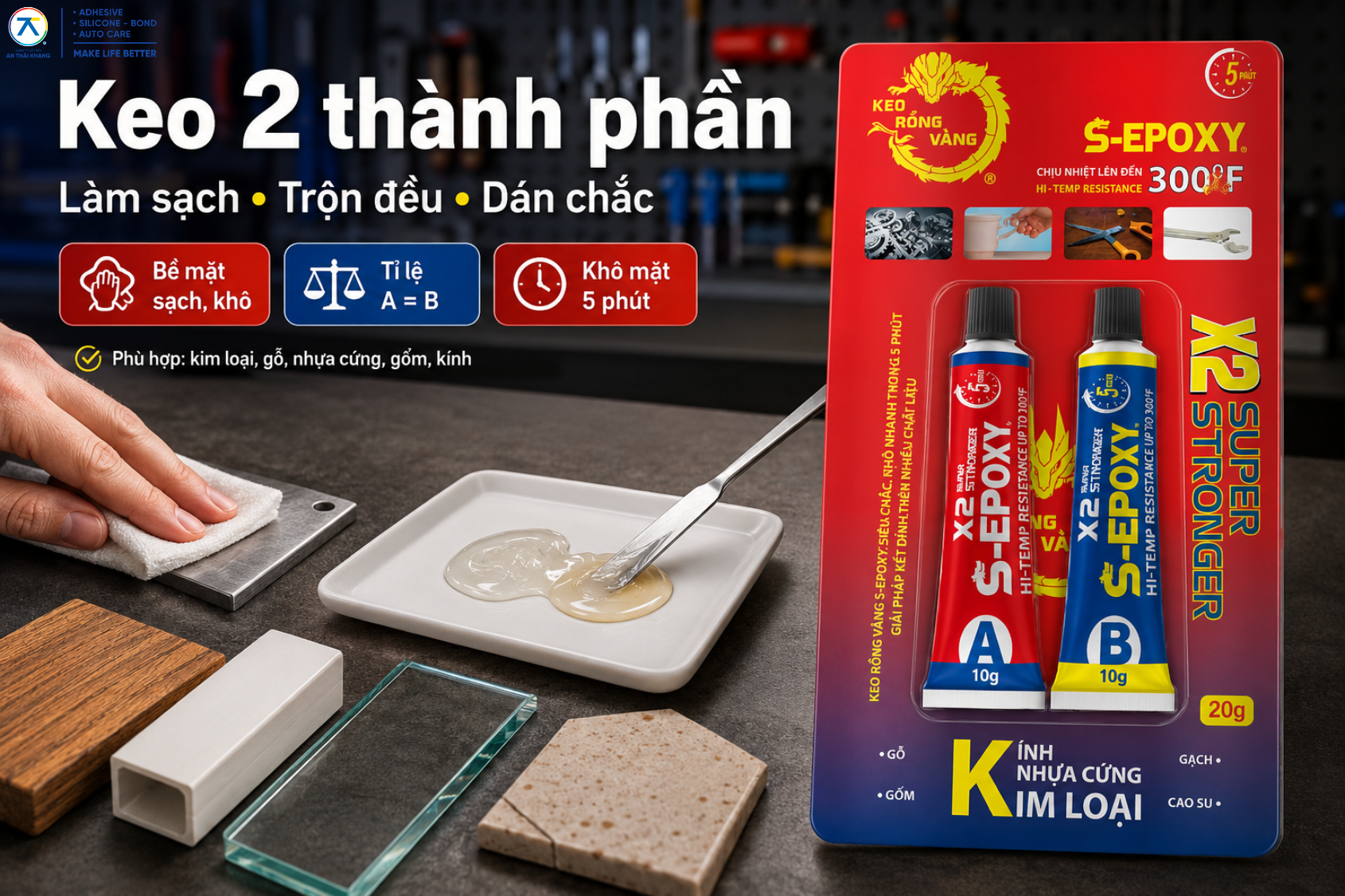
To help two-component adhesive perform effectively, users need to pay attention from surface preparation to the adhesive mixing process. The bonding surface must be clean, dry, and free from grease. If dust, water, or impurities remain on the surface, the adhesive layer may bond poorly and peel more easily after use.
5.1. Clean the surface before bonding
Before application, the area to be bonded should be wiped clean, and any old adhesive should be removed if present. For metal or hard plastic, the surface can be lightly roughened to increase adhesion. For ceramic, stone, or glass, the surface should be completely dry before applying adhesive.
5.2. Mix the adhesive at the correct ratio
When using the adhesive, take equal amounts from tubes A and B, then mix them evenly on a clean surface for about 1–2 minutes. After mixing, apply the mixture to the area that needs bonding, press the two surfaces together, and keep them fixed during the initial period. With S-EPOXY, the surface drying time is about 5 minutes, complete drying time is about 45 minutes, and full hardening takes place after 3 days.
Users should mix only a sufficient amount of adhesive and avoid mixing too much at once, as the adhesive will begin to harden after the two components are combined.
See An Thái Khang’s S-EPOXY Two-Component Adhesive here.
6. Notes when using two-component adhesive for repairs and DIY
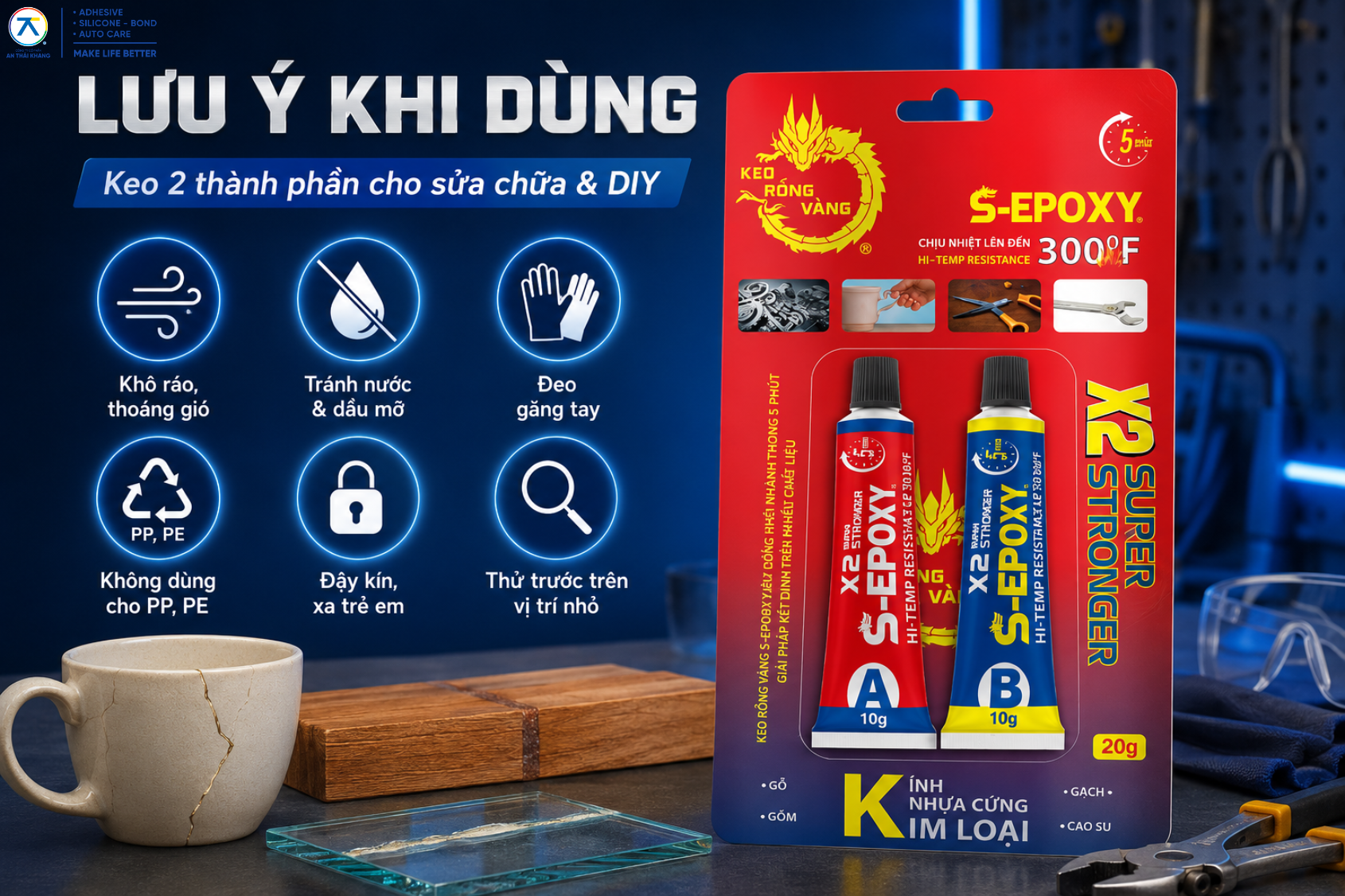
When using two-component adhesive, application should be carried out in a dry and well-ventilated area, away from heat sources. It should not be used on wet surfaces, surfaces that are frequently submerged in water, or greasy surfaces. The product is not recommended for PP plastic, PE plastic, or surfaces exposed to temperatures above 120°C.
During application, users should wear gloves or use supporting tools to limit direct skin contact with the adhesive. The product should be kept out of reach of children, and the caps should be tightly closed after use to better preserve the remaining adhesive.
For DIY items that require a high level of appearance, the adhesive should be tested on a small area before official application. This helps users check adhesion, the adhesive color after drying, and compatibility with the material to be bonded.
7. Conclusion
Two-component adhesive is a suitable choice for many repair and DIY needs thanks to its strong adhesion, durable curing, and ability to be used on various materials. From metal, wood, ceramic, stone, and glass to rubber and hard plastic, users can use the adhesive to bond, fill, patch, or reinforce familiar household items.
To achieve the best bonding result, the surface should be cleaned, the adhesive should be mixed at the correct ratio, the application should be done neatly and quickly, and enough time should be allowed for the adhesive to stabilize. For items that need strong and durable repair or for simple DIY ideas at home, S-EPOXY Two-Component Adhesive is a worthwhile solution for users who want to save replacement costs and extend the service life of their belongings.
AN THAI KHANG JSC
- • Fanpage: An Thái Khang JSC
- • Hotline: 0764 644 245
- • Email: support@anthaikhang.com
- • Website: https://anthaikhang.com/