
What Is Silicone? Applications and How to Choose the Right Type
Silicone is a common sealing and bonding material used in construction, interior finishing, and household applications thanks to its water resistance, elasticity, and strong adhesion. Learn about its key characteristics, applications, and how to choose th
Silicone is widely used in construction, interior works, aluminum-glass systems, bathrooms, kitchens, and many other household applications. When it comes to sealing gaps, waterproofing, bonding materials, or treating joint areas, silicone is often a familiar choice due to its flexibility, adhesion, and good resistance to environmental impacts.
However, not every type of silicone is suitable for every application. Each product line is designed for a specific purpose, such as glass bonding, outdoor joint sealing, bathroom waterproofing, door gap sealing, or interior finishing. Therefore, understanding silicone properly helps users choose the right product, apply it effectively, and avoid common issues such as peeling, water leakage, cracked sealant lines, or black mold after a period of use.
1. What Is Silicone?
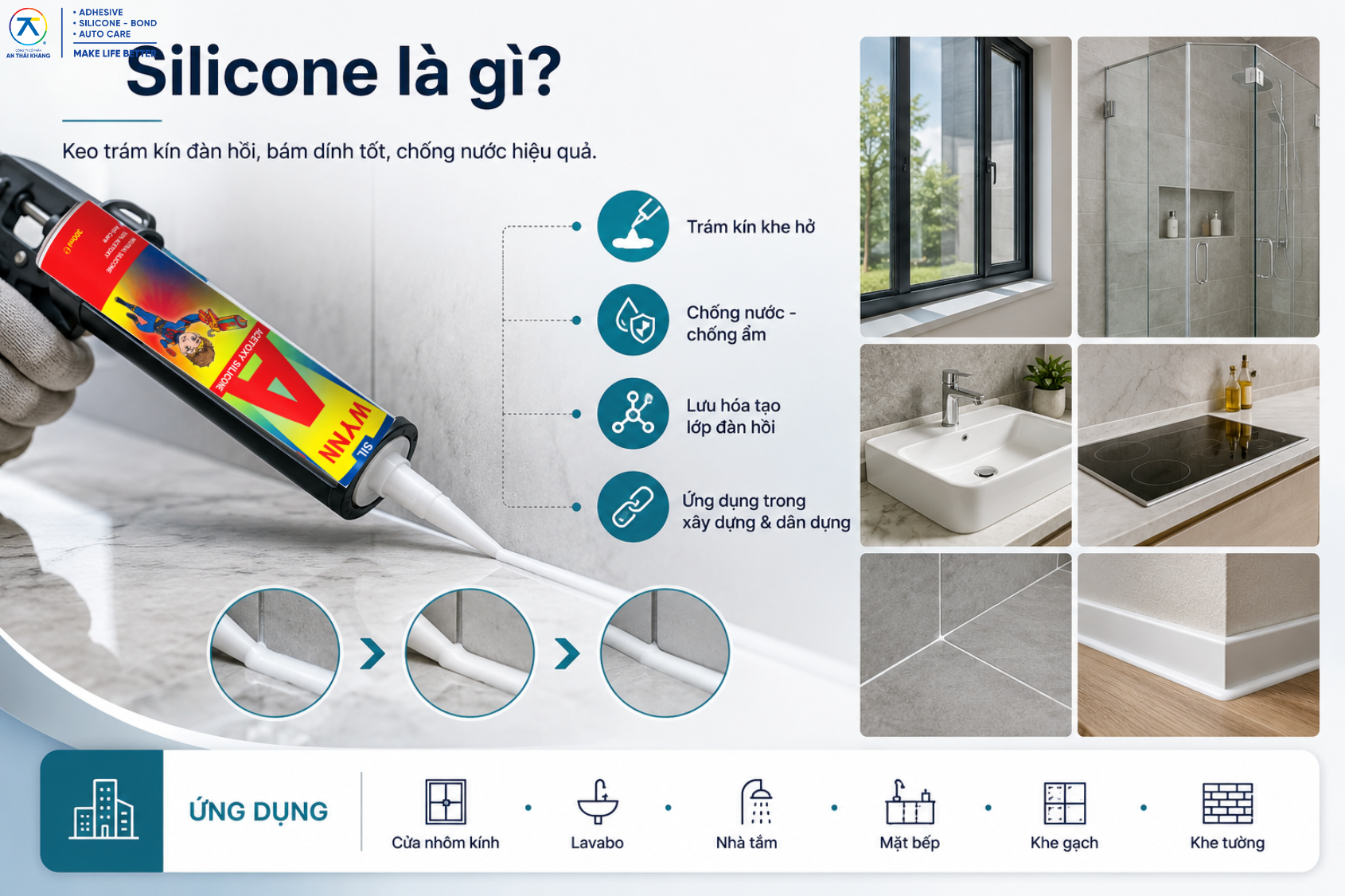
Silicone is a synthetic material with elastic properties. It is commonly produced in different forms, such as sealants, sealing compounds, gaskets, coating materials, or silicone rubber. In construction and household applications, silicone is usually understood as silicone sealant, which is used to seal gaps, bond materials, and provide water resistance.
Silicone sealant has a paste-like texture and is applied directly onto surfaces using a caulking gun. After being exposed to air, the sealant cures and forms a durable elastic layer. This layer helps cover gaps and prevents water, dust, wind, and moisture from entering the structure.
Silicone is commonly used in areas such as aluminum-glass door frames, glass partitions, sinks, washbasins, bathrooms, kitchen countertops, tile joints, wall gaps, and other joints that require high airtightness and watertightness.
2. Key Features of Silicone
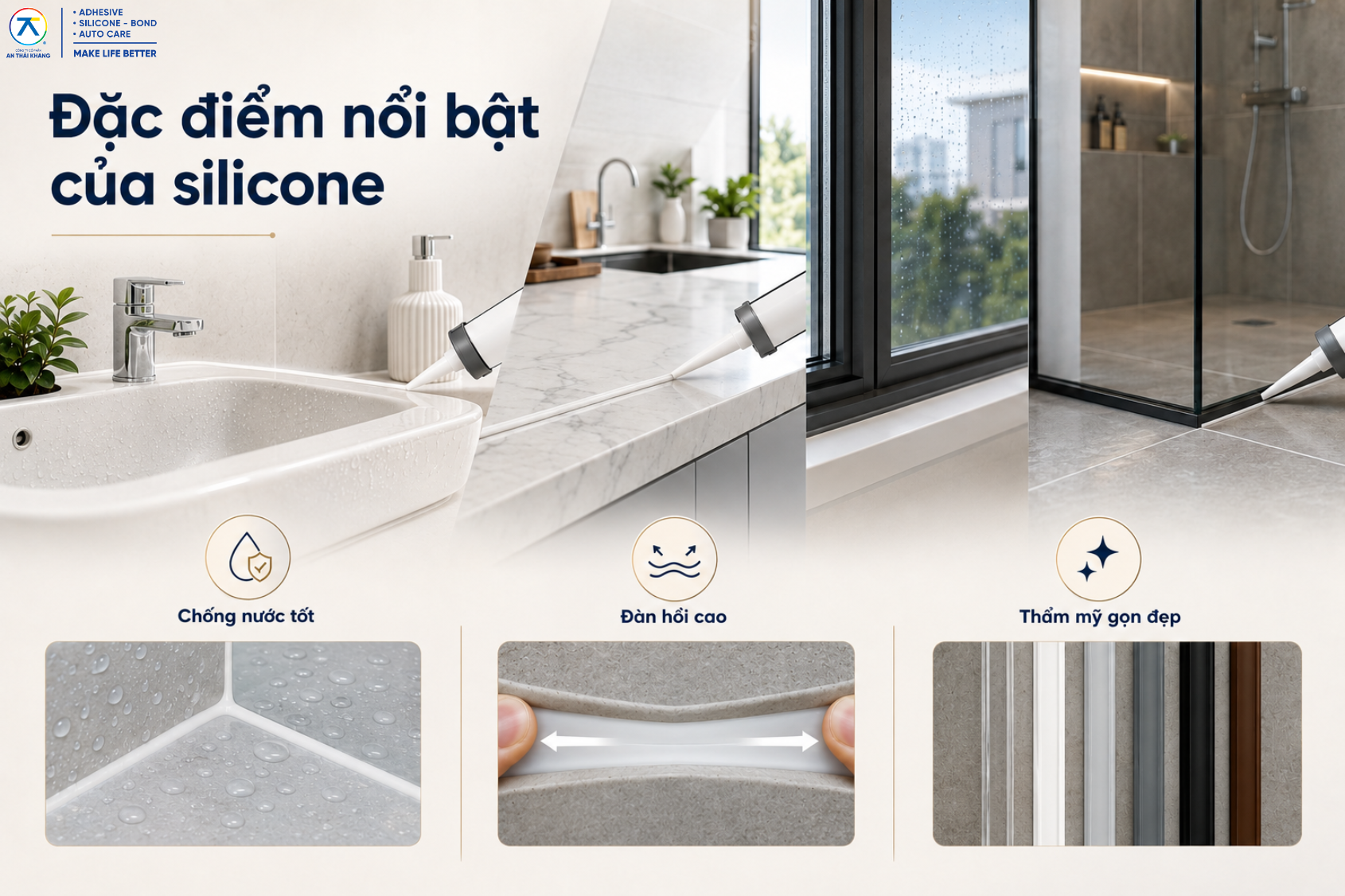
Silicone is widely used because it offers many characteristics suitable for construction and interior finishing environments.
First, silicone has good water resistance. When applied correctly, the sealant line helps prevent water from penetrating through gaps, especially in areas frequently exposed to moisture such as bathrooms, kitchens, windows, or glass partitions.
In addition, silicone has high elasticity. After curing, the sealant does not become overly rigid but still retains a certain level of flexibility. This allows the sealant line to withstand slight expansion and contraction of materials when temperature changes occur.
Silicone also offers good aesthetic value. It is available in various colors such as transparent, white, black, gray, and brown, making it suitable for different materials and finishing styles. When applied evenly, the sealant line helps surfaces look neat, clean, and professional.
3. Common Types of Silicone Today
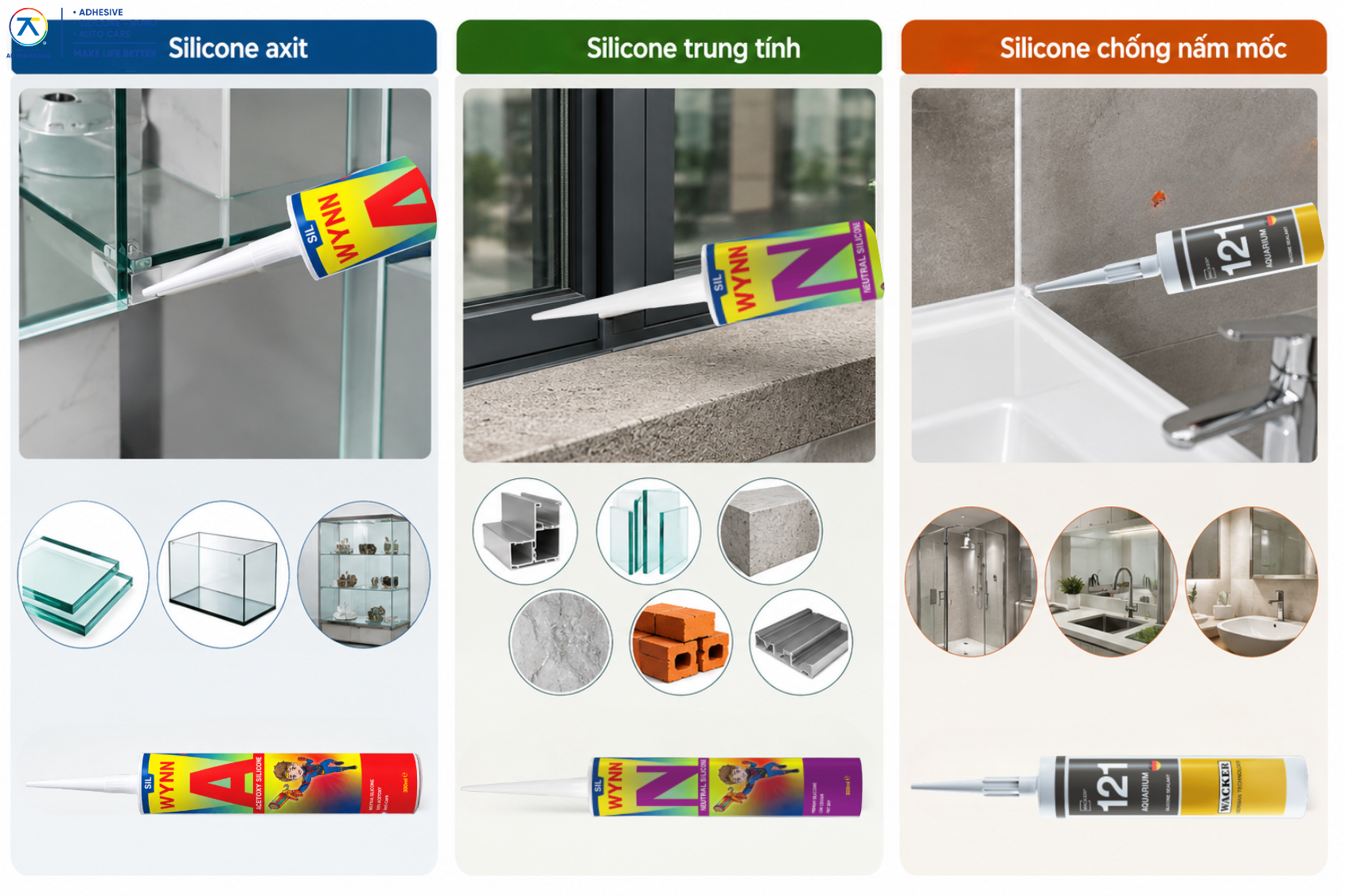
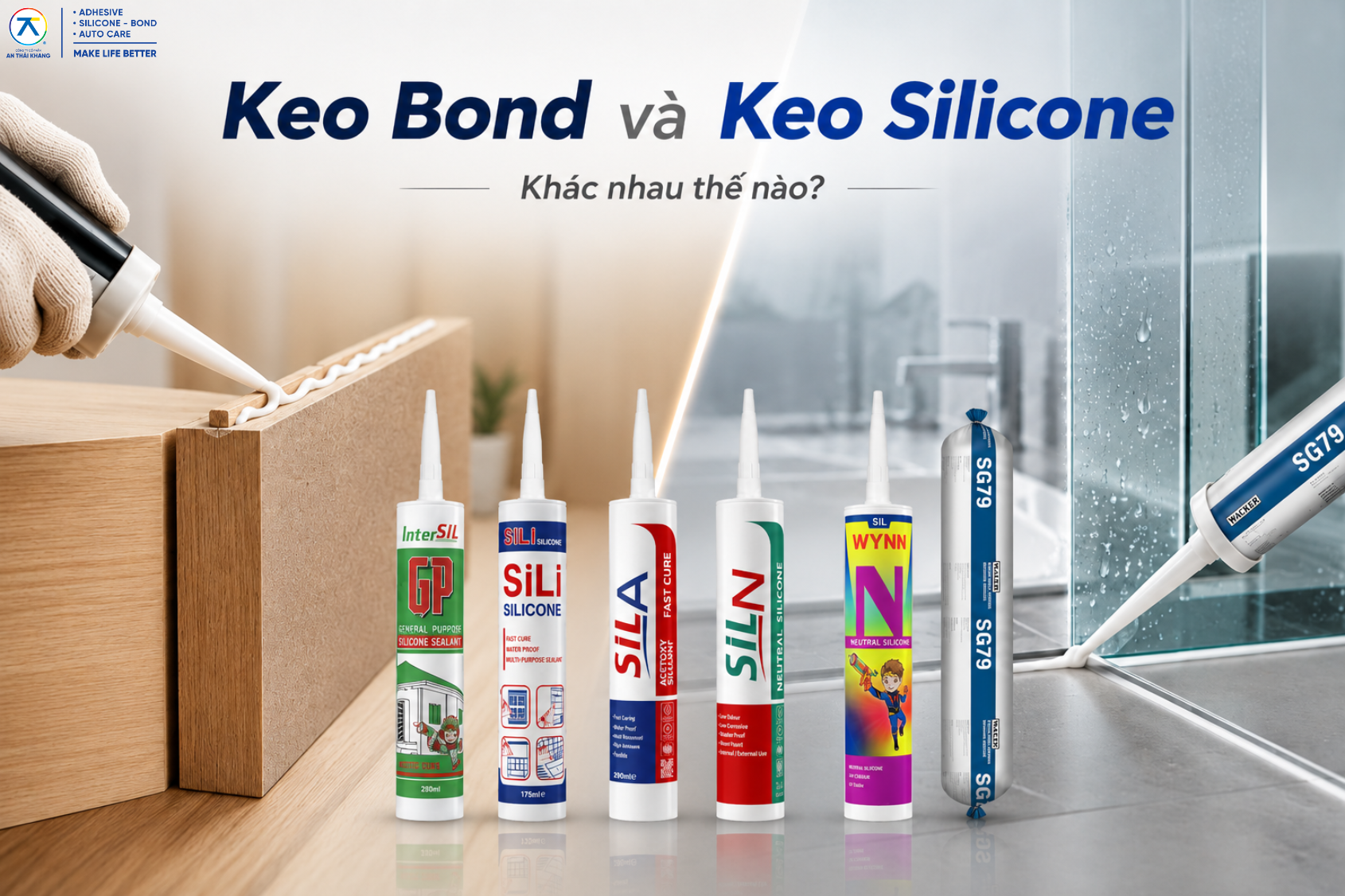
There are many different types of silicone available on the market. Each type has its own characteristics and range of applications, so users should choose the right one based on their specific installation needs.
3.1. Acid-Cure Silicone
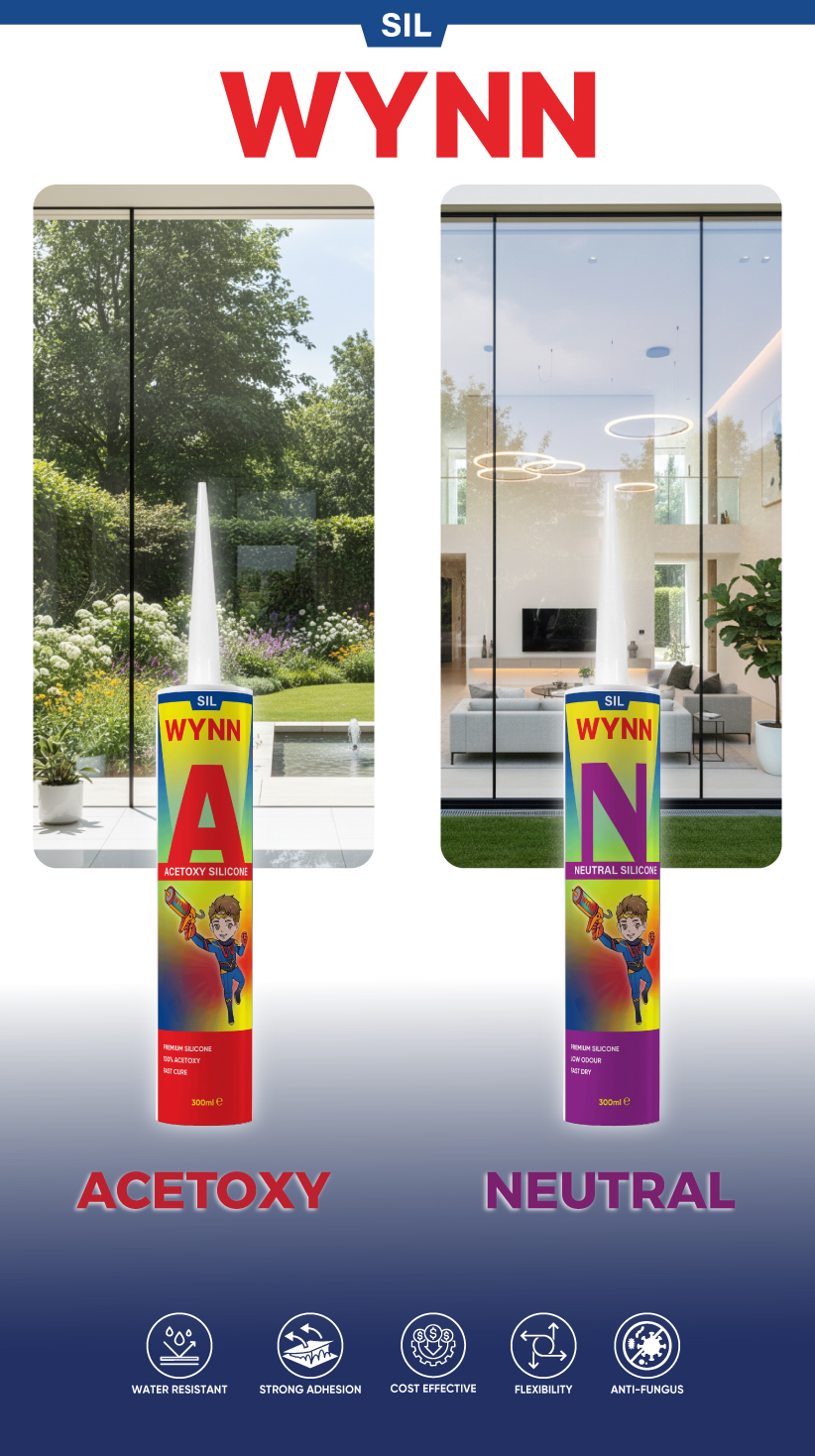
Acid-cure silicone is a type of sealant with a relatively fast curing speed. It usually adheres well to glass and some non-porous surfaces. This type is commonly used for applications such as glass bonding, glass cabinets, aquariums, or areas that do not require compatibility with sensitive metals.
However, acid-cure silicone may not be suitable for certain materials that are prone to corrosion or for special surfaces. Therefore, before use, users should carefully check the supplier’s recommendations.
3.2. Neutral-Cure Silicone
Neutral-cure silicone has a wider range of applications and is suitable for many materials such as aluminum, glass, concrete, stone, tiles, coated metals, and other construction surfaces.
This type of sealant is often preferred for aluminum-glass doors, curtain walls, outdoor areas, or applications that require stable long-term durability. Neutral-cure silicone is also generally less likely to affect materials compared with acid-cure silicone.
3.3. Anti-Mold Silicone
Anti-mold silicone is commonly used in bathrooms, kitchens, washbasins, sinks, glass shower partitions, and other humid areas. This type of sealant helps reduce black mold growth on the sealant line when applied and maintained properly.
For areas that are frequently exposed to water, choosing anti-mold silicone helps keep the space cleaner, improves durability, and reduces repair costs over time.
4. Applications of Silicone in Construction and Interior Finishing
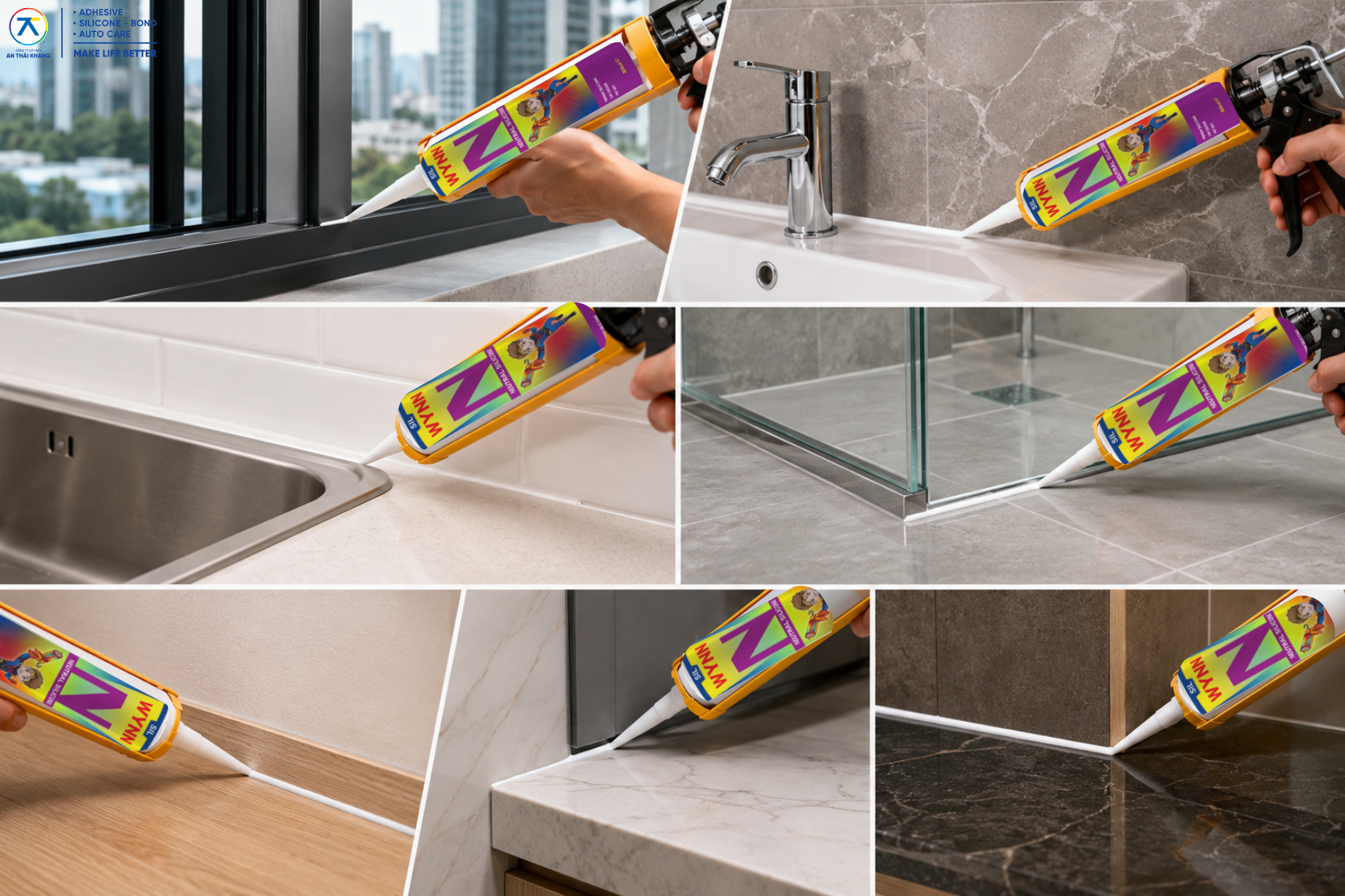
Silicone is used in many construction applications, from residential projects to commercial buildings. Although it is often considered an auxiliary material, silicone directly affects the airtightness, waterproofing performance, and finishing quality of a project.
4.1. Silicone for Aluminum-Glass Systems
In aluminum-glass systems, silicone is used to seal gaps between glass and aluminum frames, treat door joints, glass partitions, and curtain walls. The silicone sealant line helps prevent rainwater, dust, wind, and noise from entering through gaps.
For this type of application, it is important to choose silicone with good adhesion to both glass and aluminum. For outdoor installation, priority should be given to silicone products with weather resistance, UV resistance, and long-term durability.
4.2. Silicone for Bathrooms and Kitchens
Bathrooms and kitchens are areas that are frequently exposed to water, moisture, and cleaning agents. Silicone is often used to seal around washbasins, sinks, bathtubs, glass shower partitions, kitchen countertops, or joints between tiles and sanitary fixtures.
If the wrong type of sealant is chosen or if the application is not done correctly, the sealant line may develop mold, peel off, open up, or become discolored. Therefore, these areas should use silicone with water resistance, anti-mold properties, and good adhesion.
4.3. Silicone for Interior Finishing
In interior finishing, silicone is used to treat joints between wood, glass, stone, tiles, plastic, or metal. Areas such as kitchen cabinets, decorative partitions, mirrors, display counters, stone countertops, or baseboards can all use silicone for a cleaner and more complete finish.
For these applications, aesthetics are very important. Installers should choose a sealant color that matches the surface and carefully smooth the sealant line to ensure it is even, neat, and free from smudges.
5. How to Choose the Right Silicone
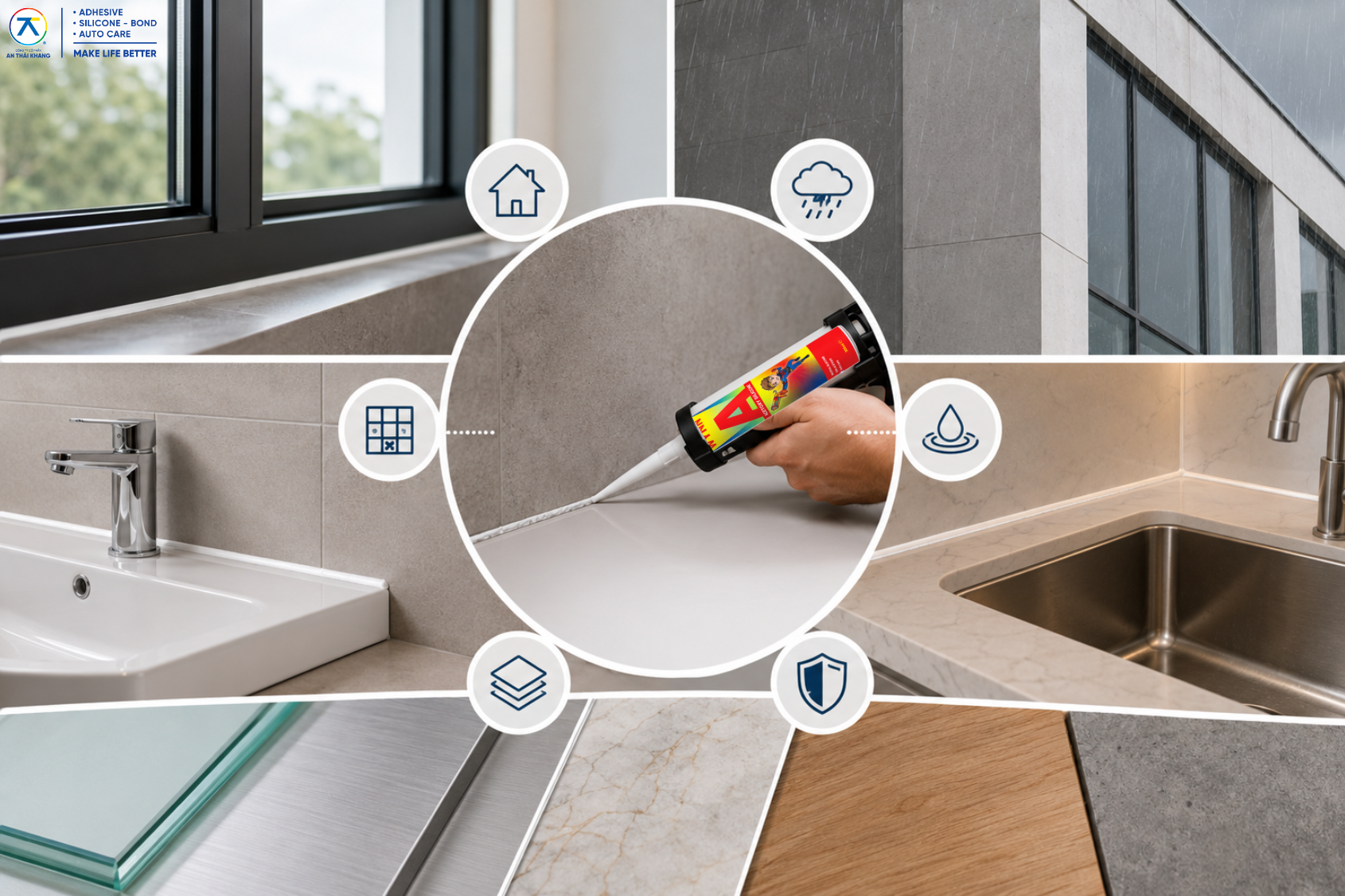
To choose the right silicone, users should not rely only on price or color. It is necessary to clearly identify the installation location, material type, environmental conditions, and technical requirements of the application.
For indoor use, users may prioritize silicone products that are easy to apply, have suitable colors, and offer good aesthetics. For outdoor use, silicone should be able to withstand sunlight, rain, UV exposure, and temperature changes.
For humid areas such as bathrooms, kitchens, or laundry rooms, users should choose waterproof and anti-mold silicone. For aluminum-glass doors, glass roofs, or curtain walls, neutral-cure silicone or weather-resistant silicone should be selected to ensure durability.
In addition, silicone should be chosen based on the material it needs to adhere to. Glass, aluminum, stone, tiles, concrete, wood, and metal all have different surface characteristics. Using the wrong type of sealant may cause the sealant line to peel easily, fail to provide proper waterproofing, or deteriorate quickly.
6. Notes When Applying Silicone
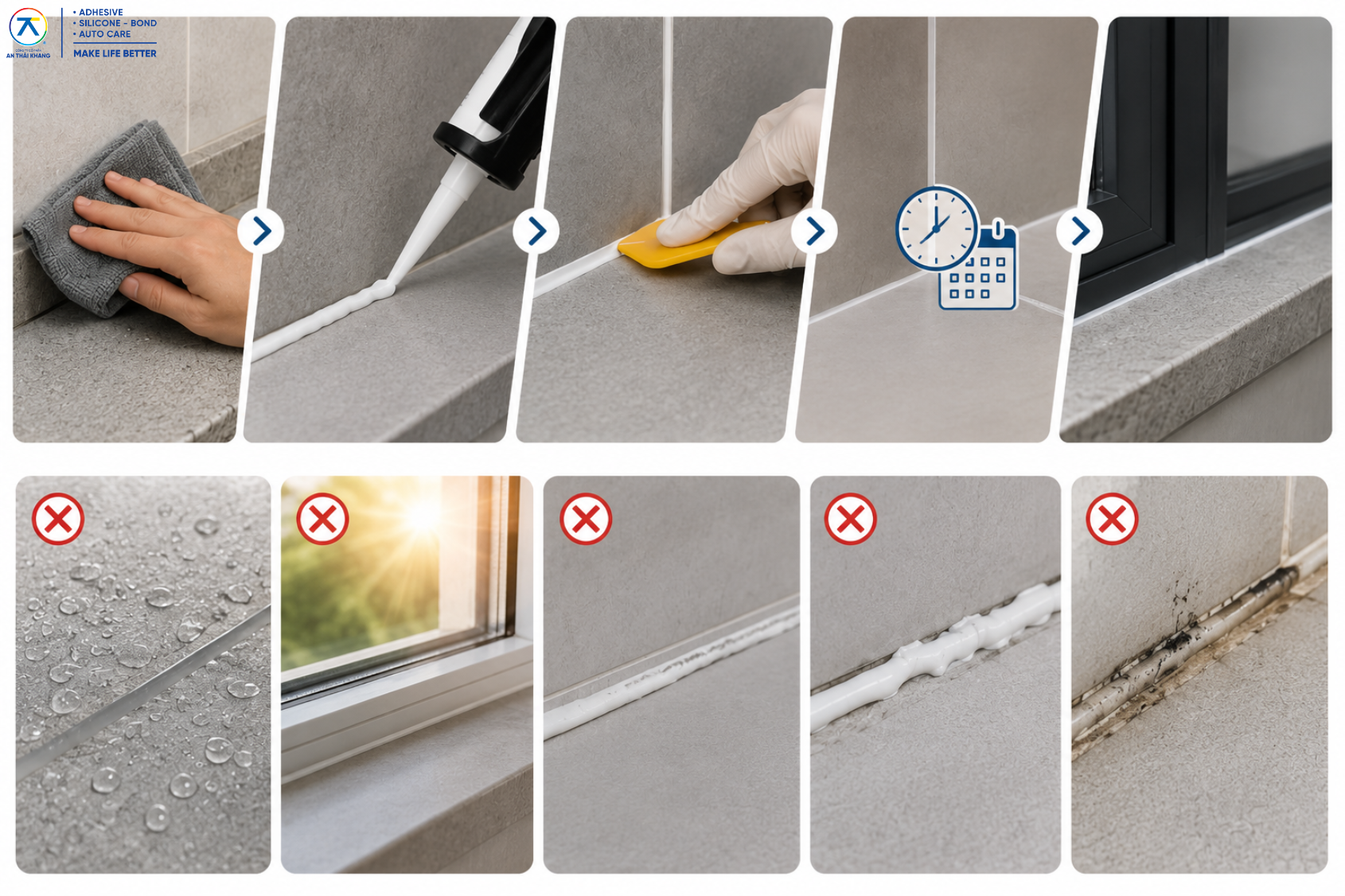
Proper application is an important factor that helps silicone perform effectively. Before applying the sealant, the surface must be cleaned thoroughly. Dust, water, grease, or other impurities can reduce the adhesion of the sealant.
When applying silicone, keep steady pressure on the caulking gun so that the sealant line is continuous and not broken. After that, use a sealant finishing tool to smooth the surface and press the sealant firmly against both sides of the joint. This step helps create a cleaner sealant line and improves water resistance.
After application, allow the sealant to dry and cure according to the recommended time. The sealant line should not be exposed to water, dust, or strong impact too early. If used before the sealant has fully stabilized, the sealant line may become deformed, peel off, or lose durability.
Some common mistakes to avoid when using silicone include applying it on a wet surface, using indoor sealant for outdoor areas, applying too little sealant, choosing the wrong sealant color, or applying new silicone directly over old sealant that has not been properly removed and cleaned.
7. Conclusion
Silicone is an important sealing and bonding material in construction, interior finishing, and household applications. Thanks to its water resistance, elasticity, adhesion, and aesthetic finishing performance, silicone is used in many areas such as aluminum-glass systems, bathrooms, kitchens, kitchen countertops, glass partitions, and joint areas.
To achieve long-term performance, users need to choose the right type of silicone based on the installation location, the material it needs to adhere to, and the environmental conditions. In addition, the application process must be carried out properly to avoid issues such as peeling, cracked sealant lines, water leakage, or black mold.
An Thai Khang provides adhesive and construction support material solutions suitable for a wide range of needs. When choosing silicone for a project, users should prioritize products with clear origin, complete technical information, and proper consultation based on the specific application.
AN THAI KHANG JSC
- • Fanpage: An Thái Khang JSC
- • Hotline: 0764 644 245
- • Email: support@anthaikhang.com
- • Website: https://anthaikhang.com/