
Silicone Sealant for Aluminum-Framed Glass Doors: Choosing the Right Sealant
Silicone sealant is essential in aluminum-framed glass door installation, helping prevent water leakage, improve airtightness, and create a cleaner finish. Choosing the right sealant depends on the frame color and installation area.
In the installation of aluminum-framed glass doors, silicone sealant may be a small material, but it plays a major role in determining the tightness, waterproofing performance, and appearance of the project. A silicone sealant bead that is correctly matched in color, properly selected, and applied with the right technique will help the door frame look more seamless while reducing the risk of rainwater, dust, wind, and moisture entering through the joints.
This is especially important for Xingfa aluminum door systems, where sealant color should not be overlooked. Xingfa aluminum frames commonly come in colors such as gray, black, white, or bronze brown. Therefore, instead of choosing silicone sealant based only on price, users should prioritize products with colors that match the aluminum frame and are suitable for the installation position.
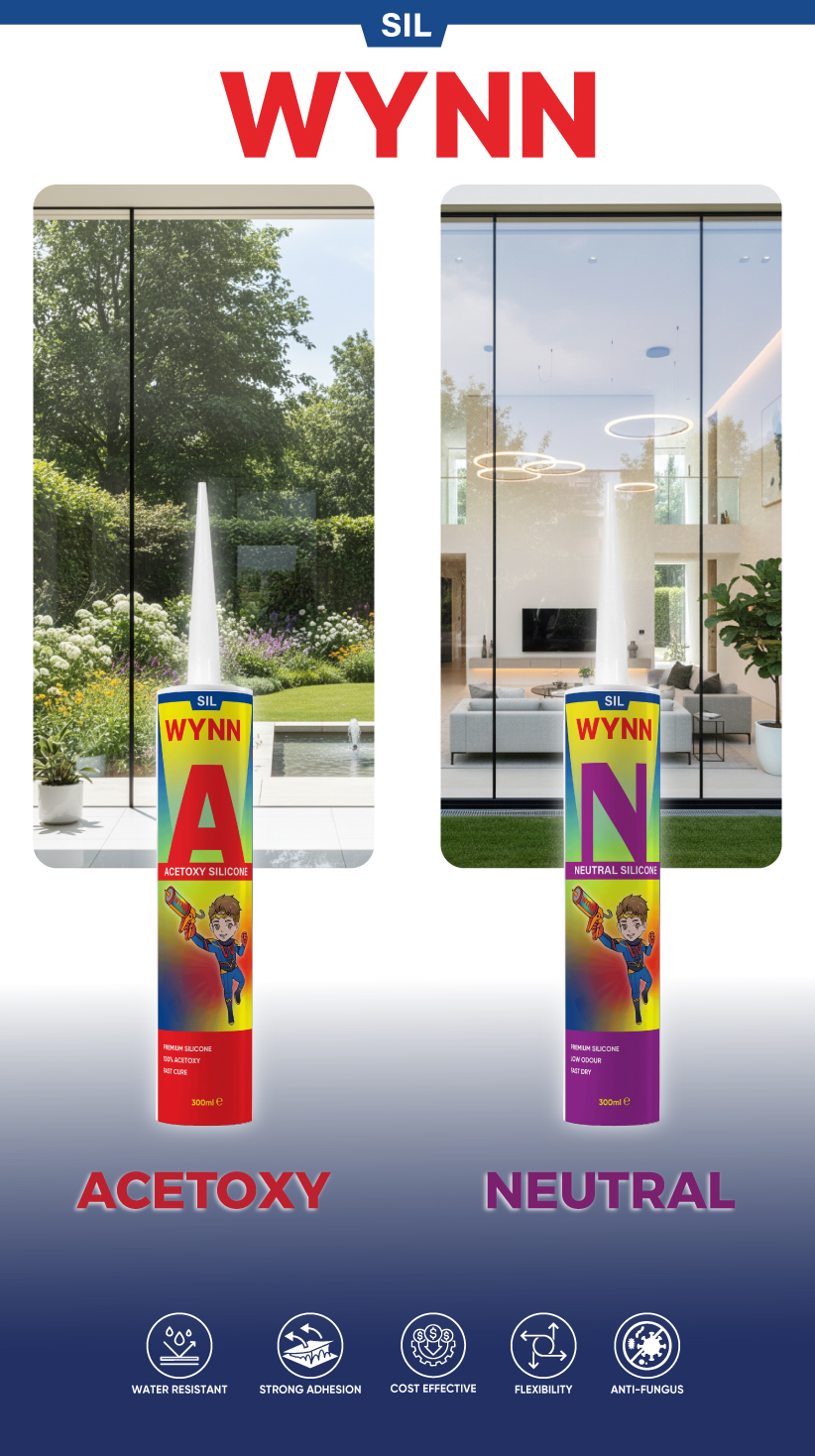
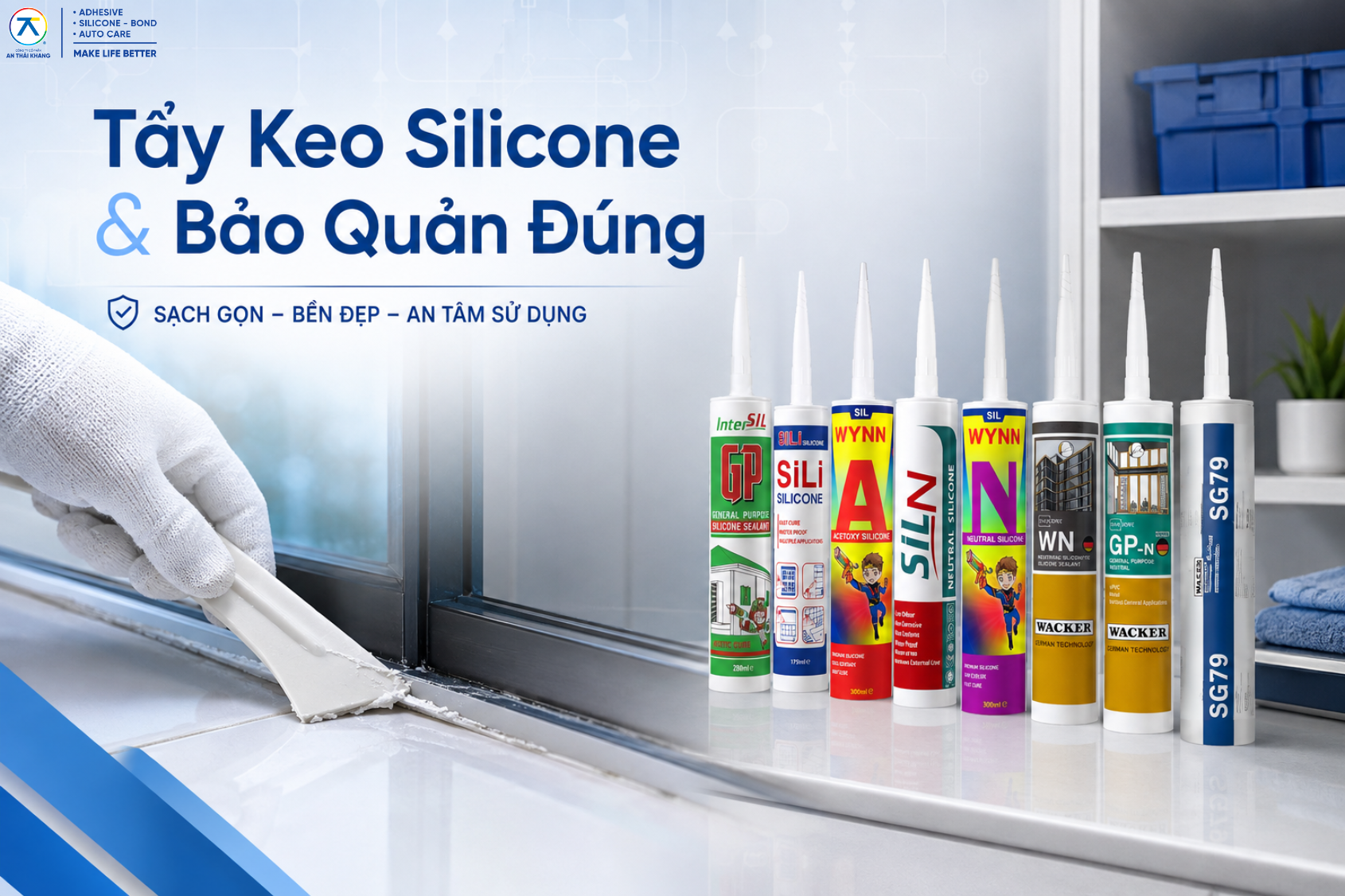
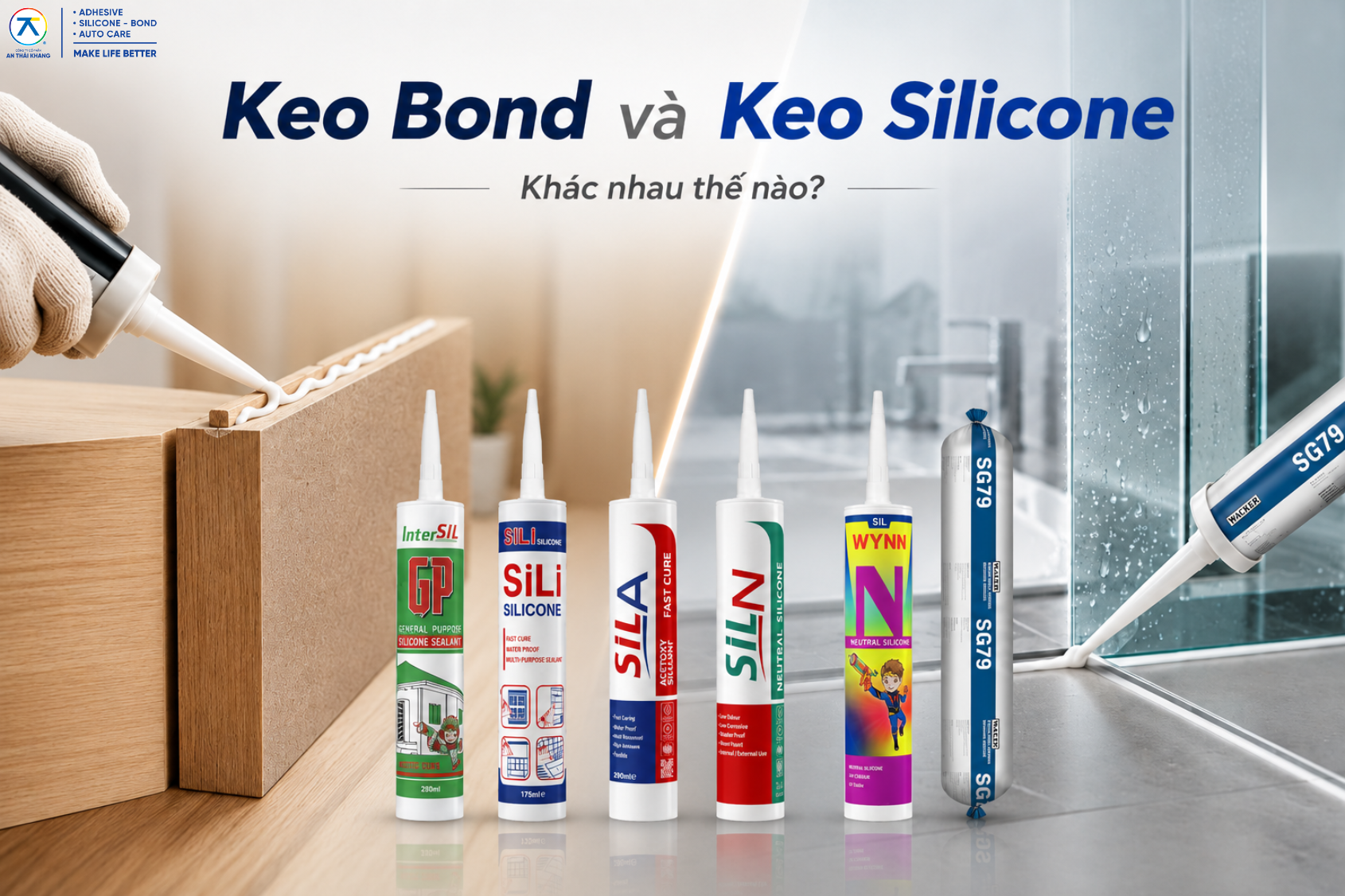
To select the right sealant for each application, users can refer to the range of silicone sealants available at An Thái Khang, including various options suitable for aluminum and glass systems, construction, interior applications, and finishing works.
1. What is silicone sealant in aluminum-framed glass door installation?
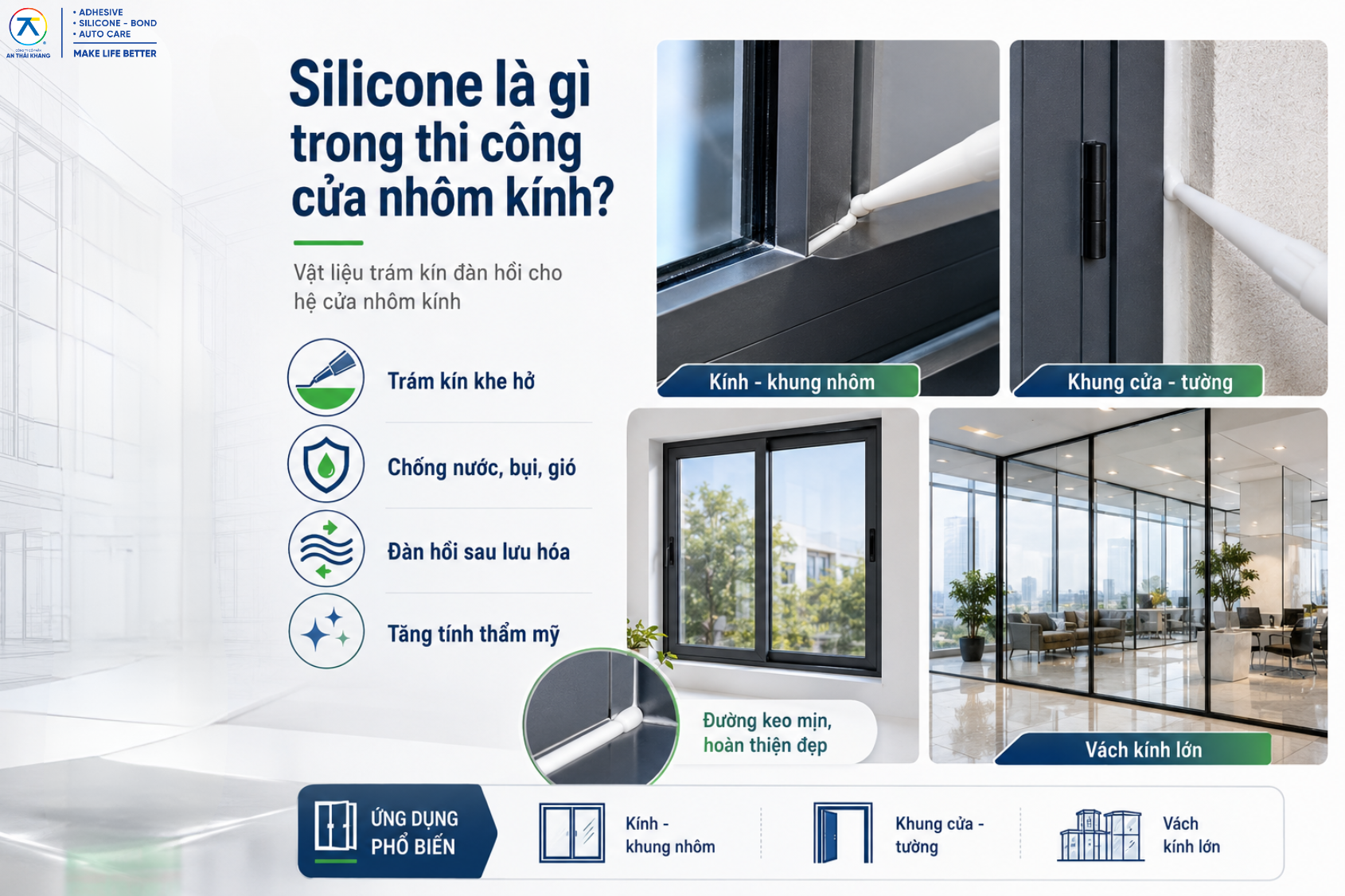
Silicone is an elastic sealing and bonding material commonly used to fill gaps, connect materials, and prevent water, dust, and wind from entering the interior of a building. In the aluminum and glass industry, silicone sealant is often applied at the joints between glass and aluminum frames, between door frames and walls, or between components that require a high level of sealing.
Silicone sealant has a paste-like consistency and is applied using a caulking gun. Once exposed to air, the sealant cures and forms a rubber-like elastic layer. Thanks to this property, silicone sealant is suitable for aluminum-framed glass door systems, as these doors are often exposed to sunlight, rain, humidity, temperature changes, and slight material movement during use.
In addition to sealing, silicone also contributes to the finished appearance of the project. A neat, evenly applied sealant bead in the right color, without smudging, makes the door frame look sharper and more refined, especially in projects using large glass areas, Xingfa aluminum, or glass curtain wall systems.
2. Why is it important to choose the right silicone sealant for aluminum-framed glass doors?

Aluminum-framed glass doors are often installed in areas directly exposed to the outdoor environment, such as balconies, building facades, windows, entrance doors, glass partitions, glass roofs, or curtain walls. If the joints are not properly treated, the project may experience water leakage, air drafts, dust infiltration, or sealant peeling after a period of use.
Silicone creates a flexible sealing layer between surfaces. The sealant bead can adhere to glass, aluminum, and many other construction materials, thereby improving the tightness of the door system. For projects with high aesthetic requirements, the color of the silicone sealant should also harmonize with the aluminum frame so that the overall appearance looks neat and professional.
For example, with gray or ash-gray Xingfa aluminum frames, users should prioritize gray or dark gray silicone sealant. For black aluminum frames, black silicone sealant can be selected. For white frames or areas that require a lighter sealant line, translucent white, opaque white, or clear silicone sealant may be considered depending on the installation position.
3. What criteria should be used when choosing silicone sealant?
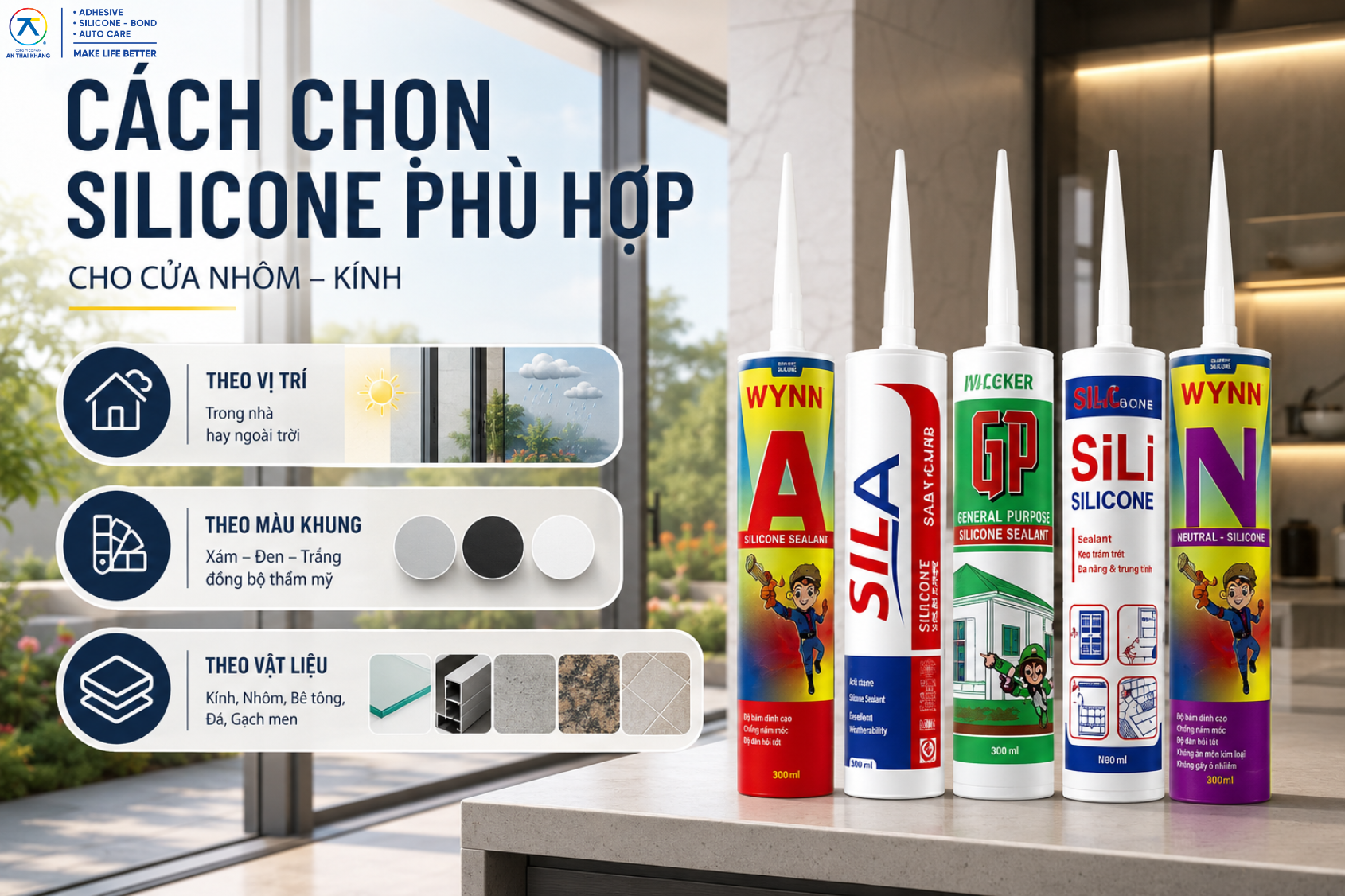
When choosing silicone sealant for aluminum-framed glass doors, users should not rely on color alone. A suitable product should meet several requirements at the same time, including adhesion, elasticity, waterproofing ability, outdoor durability, and compatibility with the materials involved.
3.1. Choose silicone sealant based on the installation area
For indoor applications, silicone sealant should provide good adhesion, aesthetic finishing, and ease of surface smoothing. For outdoor areas such as windows, balconies, facades, or glass curtain walls, users should prioritize sealants that can withstand sunlight, rain, UV rays, and temperature changes.
For aluminum and glass projects that are frequently exposed to outdoor conditions, users can refer to the neutral silicone sealant range at An Thái Khang to choose products that better meet requirements for durability and material compatibility.
3.2. Choose silicone sealant based on the color of the aluminum frame
The color of silicone sealant directly affects the final appearance after installation. For gray or ash-gray Xingfa aluminum frames, gray silicone sealant helps the sealant line blend with the frame, creating a more seamless and tidy look.
For black aluminum frames, black silicone sealant helps make the joints look sharper and makes the sealant line less visible. For white frames or light-colored details, users may choose opaque white, translucent white, or clear silicone sealant depending on the application surface.
When users are unsure which sealant color to choose, they should compare it directly with the aluminum frame color or contact the supplier for advice on the most suitable silicone sealant. At An Thái Khang, silicone sealants are categorized by properties and colors, making it easier for users to review and select the right product.
3.3. Choose silicone sealant based on the materials it needs to adhere to
Aluminum-framed glass doors do not only involve glass and aluminum. They may also be connected to walls, stone, tiles, concrete, or other finishing materials. Each surface has its own characteristics, so it is important to choose a silicone sealant with suitable adhesion performance.
If the wrong type of sealant is used, the sealant bead may have weak adhesion, peel at the edges, or fail to create a firm and reliable seal. This is especially important for outdoor areas, where sealant peeling or cracking can lead to water leakage and affect the overall quality of the door system.
4. Applications of silicone sealant in aluminum and glass systems
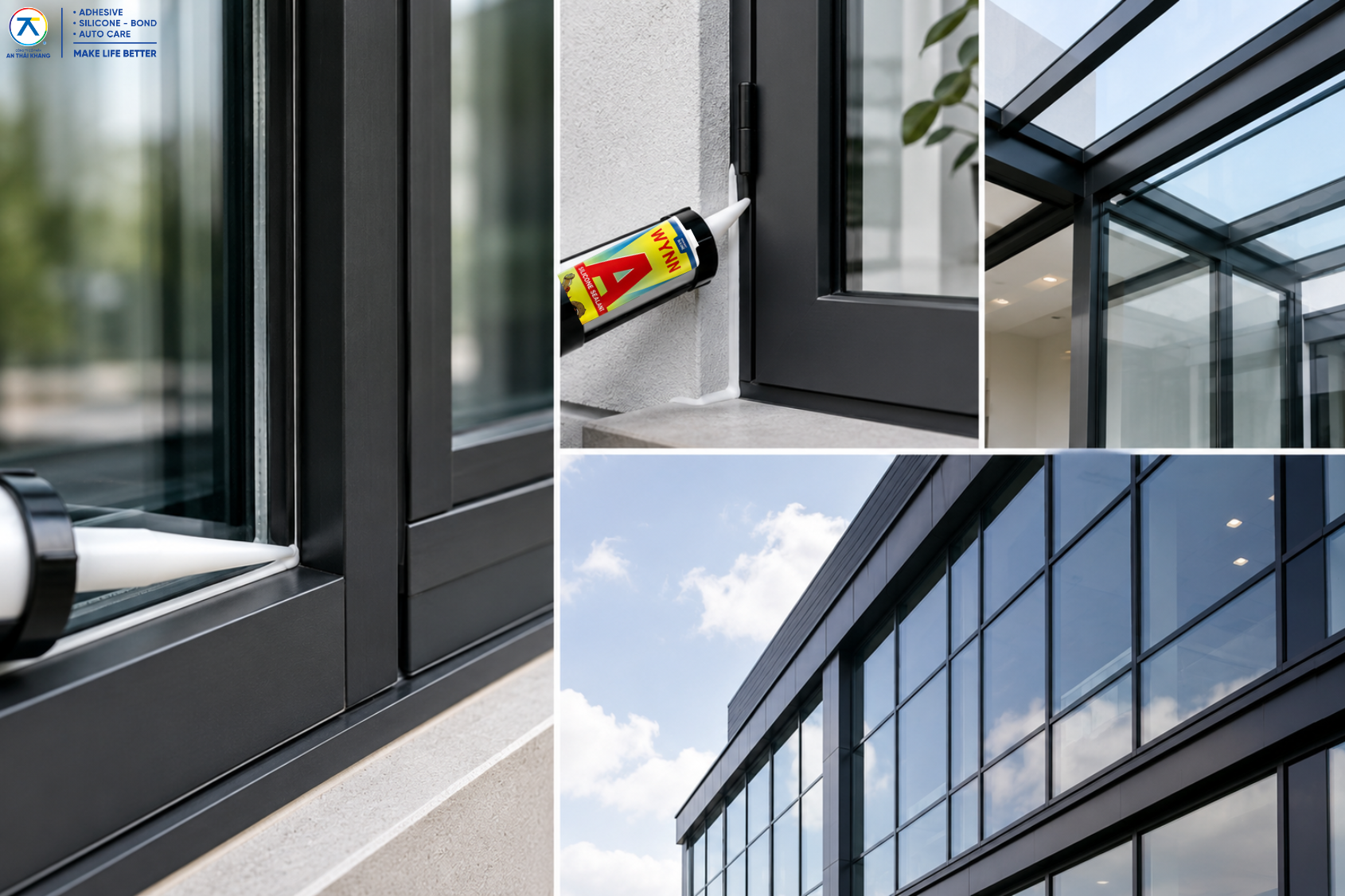
Silicone sealant is used in many stages of aluminum-framed glass door installation and finishing. Depending on the position, requirements for adhesion, color, and waterproofing performance may vary.
4.1. Sealing the gap between glass and aluminum frame
This is the most common application of silicone sealant in aluminum-framed glass door installation. The sealant bead helps fill the gap between the glass and the aluminum frame, preventing water, dust, and wind from entering the interior.
At this position, the sealant line must be even, firm, and continuous. If insufficient sealant is applied or the surface has not been properly cleaned, the joint may become loose or open after a period of use.
4.2. Sealing the joint between the door frame and the wall
After the door is installed, small gaps often remain at the joint between the aluminum frame and the wall. Silicone sealant is used to seal this joint, helping improve waterproofing performance and complete the aesthetic finish of the project.
For outdoor areas, it is advisable to choose silicone sealant with good weather resistance. The sealant bead should be neatly smoothed so that water does not accumulate along the sealant edge.
4.3. Finishing glass partitions, glass roofs, and curtain walls
For larger applications such as glass partitions, glass roofs, or curtain walls, silicone sealant plays an important role in waterproofing and creating a tight seal. These areas are often directly exposed to rain and sunlight, so they require silicone sealant with stable quality and suitable technical performance.
For projects with higher requirements, users should consult the supplier or technician to choose the right product line and avoid using ordinary sealing sealant for positions that require higher performance.
5. Important notes when applying silicone sealant to aluminum-framed glass doors
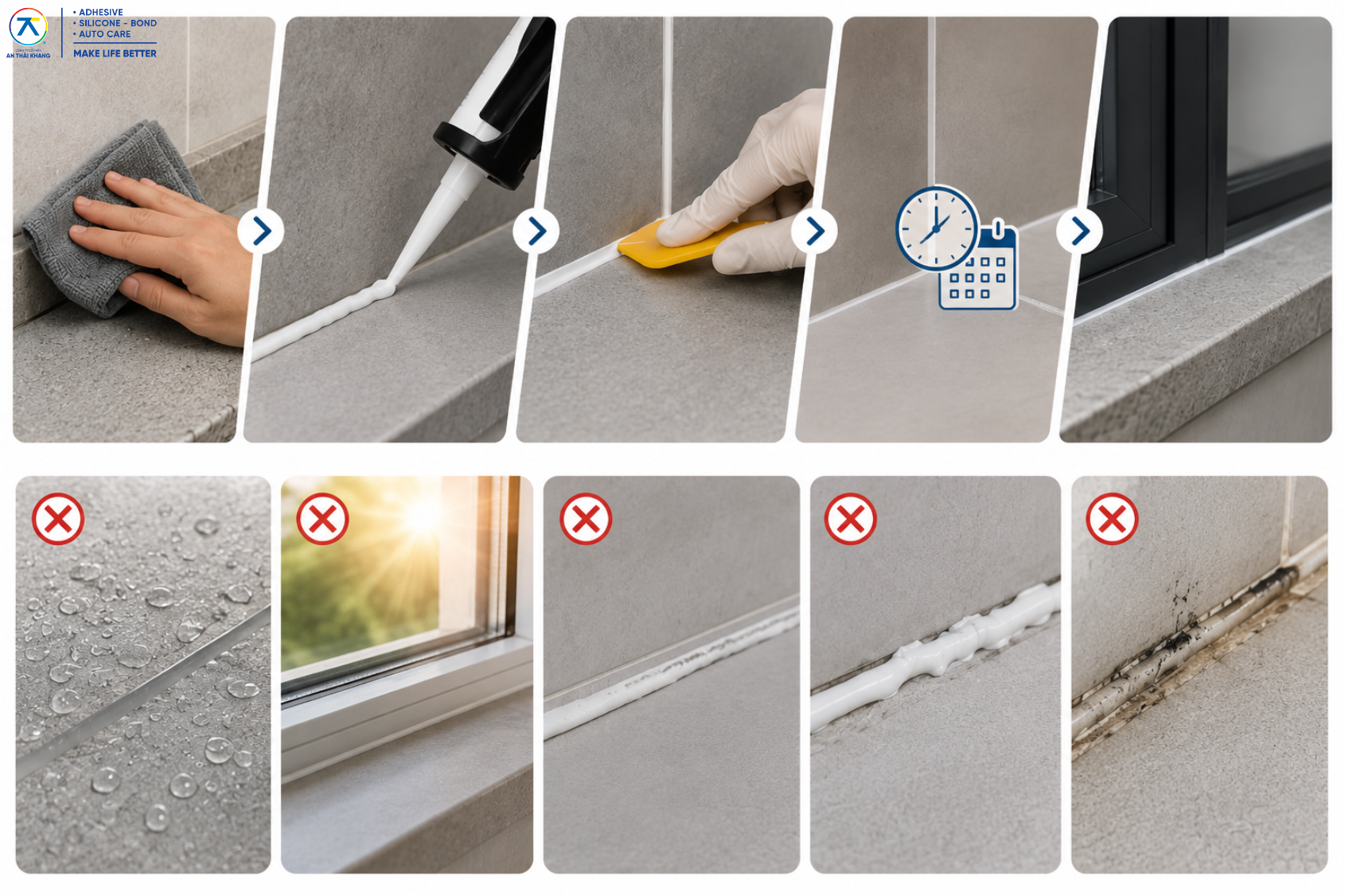
Proper application technique is a key factor in determining the durability of the sealant bead. Even when a good product is selected, silicone sealant may still peel quickly or look unattractive if the surface is dirty, the sealant is applied unevenly, or the application process is handled incorrectly.
Before applying silicone sealant, the glass, aluminum frame, and joint area must be cleaned thoroughly. Dust, grease, water, or old sealant residue can all reduce adhesion. The surface should be dry, clean, and stable before application.
When applying the sealant, users should maintain steady pressure so that the sealant line is continuous and not interrupted. After that, a smoothing tool should be used to create a flat, neat surface and help the sealant adhere closely to both sides of the joint. This step improves the appearance of the sealant bead while also increasing waterproofing performance.
After completion, the silicone sealant should be allowed to cure according to the manufacturer’s recommended time. The sealant bead should not be exposed to water, dust, or strong physical impact too early. If used before the sealant has fully stabilized, the sealant line may become deformed or lose durability.
6. Common mistakes when choosing and using silicone sealant
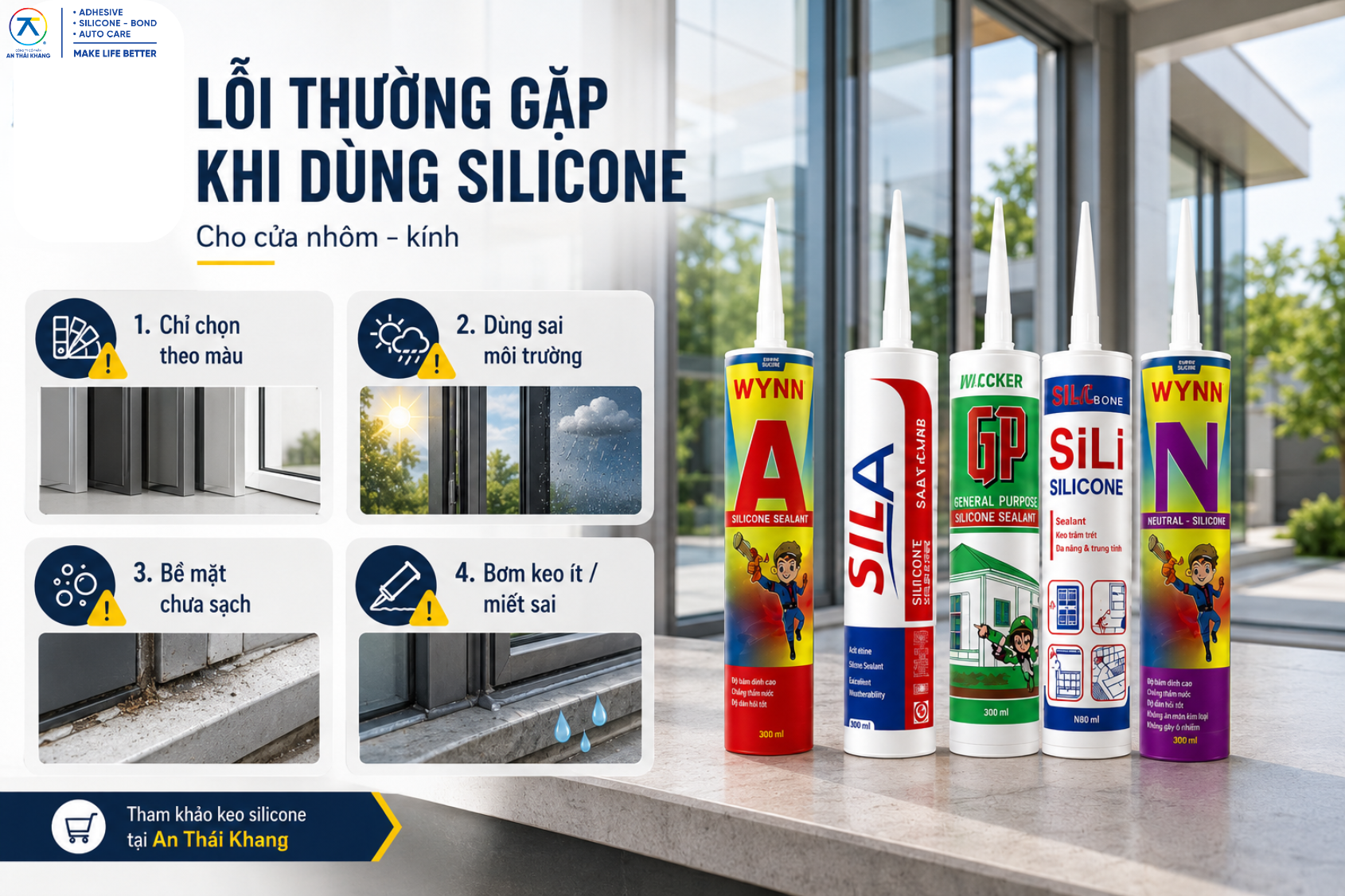
A common mistake is choosing silicone sealant based only on color. A sealant color that matches the aluminum frame is important, but it is not enough. Users still need to check the product’s adhesion, waterproofing ability, and weather resistance.
The second mistake is using silicone sealant that is not suitable for outdoor environments. Some sealants are only appropriate for indoor areas or positions with limited exposure to weather. If they are used for outdoor doors, the sealant bead may deteriorate quickly, crack, or peel.
The third mistake is applying silicone sealant on an unclean surface. This is one of the main reasons why the sealant does not adhere firmly, even when the product itself is of good quality. Before applying new sealant, users should remove dust, dirt, and any old sealant if present.
The fourth mistake is applying too little sealant or smoothing the bead incorrectly. The outside of the sealant line may look acceptable, but the inside may not fully fill the gap. This can easily lead to water leakage during heavy rain or under wind pressure.
To minimize these mistakes, users should choose products from suppliers that provide clear product information and offer proper consultation based on the specific application.
Refer to An Thái Khang’s range of silicone sealants for construction and aluminum-framed glass systems to choose the product that best suits your actual needs.
7. Conclusion
Silicone sealant is an essential material in the installation of aluminum-framed glass doors, especially for Xingfa aluminum systems, glass partitions, glass roofs, and modern curtain wall structures. A suitable silicone sealant helps the project achieve better waterproofing, improved tightness, and a more refined appearance after completion.
When choosing silicone sealant, users should consider multiple factors at the same time, including the type of material, installation position, aluminum frame color, weather conditions, and technical requirements of the project. For gray Xingfa aluminum doors, gray silicone sealant is a recommended option because it helps the sealant line look consistent, neat, and less likely to show dust.
An Thái Khang supplies a wide range of silicone sealants suitable for aluminum and glass systems, construction, and interior and exterior finishing works. Users can refer to the silicone sealant category at An Thái Khang to choose products with the right color, properties, and functions for each project.
AN THAI KHANG JSC
- • Fanpage: An Thái Khang JSC
- • Hotline: 0764 644 245
- • Email: support@anthaikhang.com
- • Website: https://anthaikhang.com/