
Reupholster Sofas with Rồng Vàng P-66 Adhesive
Reupholstering a sofa helps refresh your living space, reduce costs, and extend the furniture’s service life. Learn how to remove the old upholstery, repair the foam, bond materials, and complete the sofa using Rồng Vàng P-66 Adhesive.
After extended use, a sofa may begin to peel, fade, lose its cushioning, or no longer match the surrounding interior style. Instead of purchasing an entirely new sofa set, reupholstering allows you to improve its appearance, reuse a structurally sound frame, and significantly reduce costs.
To achieve a smooth and durable finish, it is important not only to select the right fabric, genuine leather, or synthetic leather, but also to properly repair the foam and internal bonding areas. An adhesive with suitable bonding strength and flexibility can help secure foam, simili, and various upholstery materials during installation.
Rồng Vàng P-66 Adhesive is a solvent-based contact adhesive with high flexibility, developed for materials that require a durable yet adaptable bond. It can be used for interior decoration, sofa upholstery, foam, simili, carpets, and many other related surfaces.
1. When Should You Reupholster a Sofa?
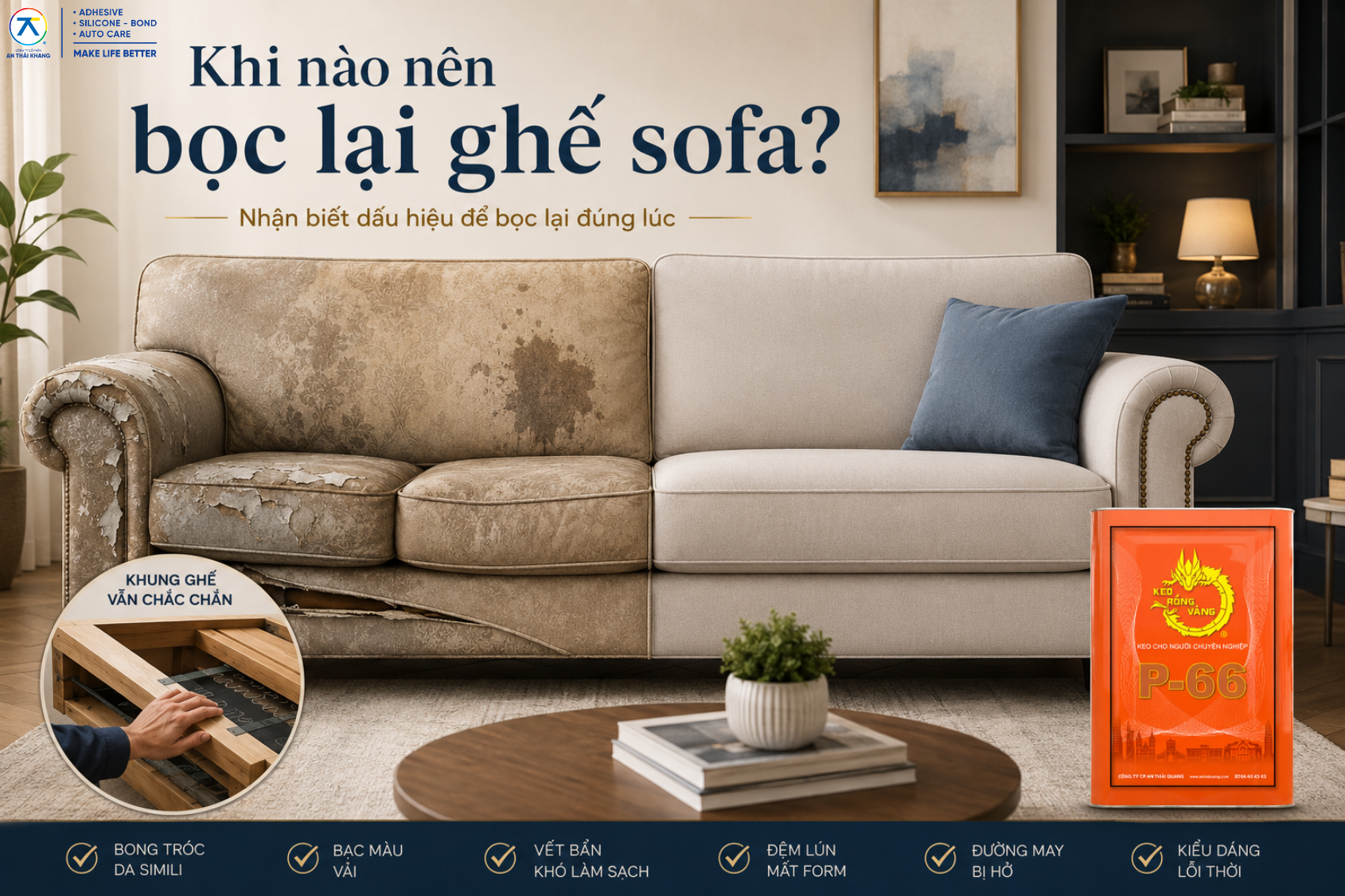
Not every old sofa needs to be completely replaced. If the frame remains strong and the design still suits the surrounding space, reupholstering can extend the sofa’s service life at a more reasonable cost.
Some signs that indicate your sofa may need reupholstering include:
Leather or simili surfaces are peeling, cracking, or flaking.
The upholstery fabric has faded, become worn, or developed stains that are difficult to remove.
The seat foam has shifted or the seating surface is no longer even.
Seams or upholstery edges have come apart.
The sofa’s colour no longer matches the interior design.
The household wants to refresh the living room without purchasing a new sofa.
Before starting, carefully inspect the frame. If a wooden frame is only slightly loose, certain areas can be reinforced before installing the new upholstery. However, if the frame is severely rotten, extensively broken, or structurally deformed, repair costs may be high and the sofa may no longer be safe to use.
Reupholstering is most suitable when the damage is mainly limited to the fabric, leather, simili, foam, or internal bonding points. Correctly assessing the sofa’s condition from the beginning helps prevent additional material costs and avoids having to dismantle the sofa multiple times.
2. Preparation Before Reupholstering a Sofa
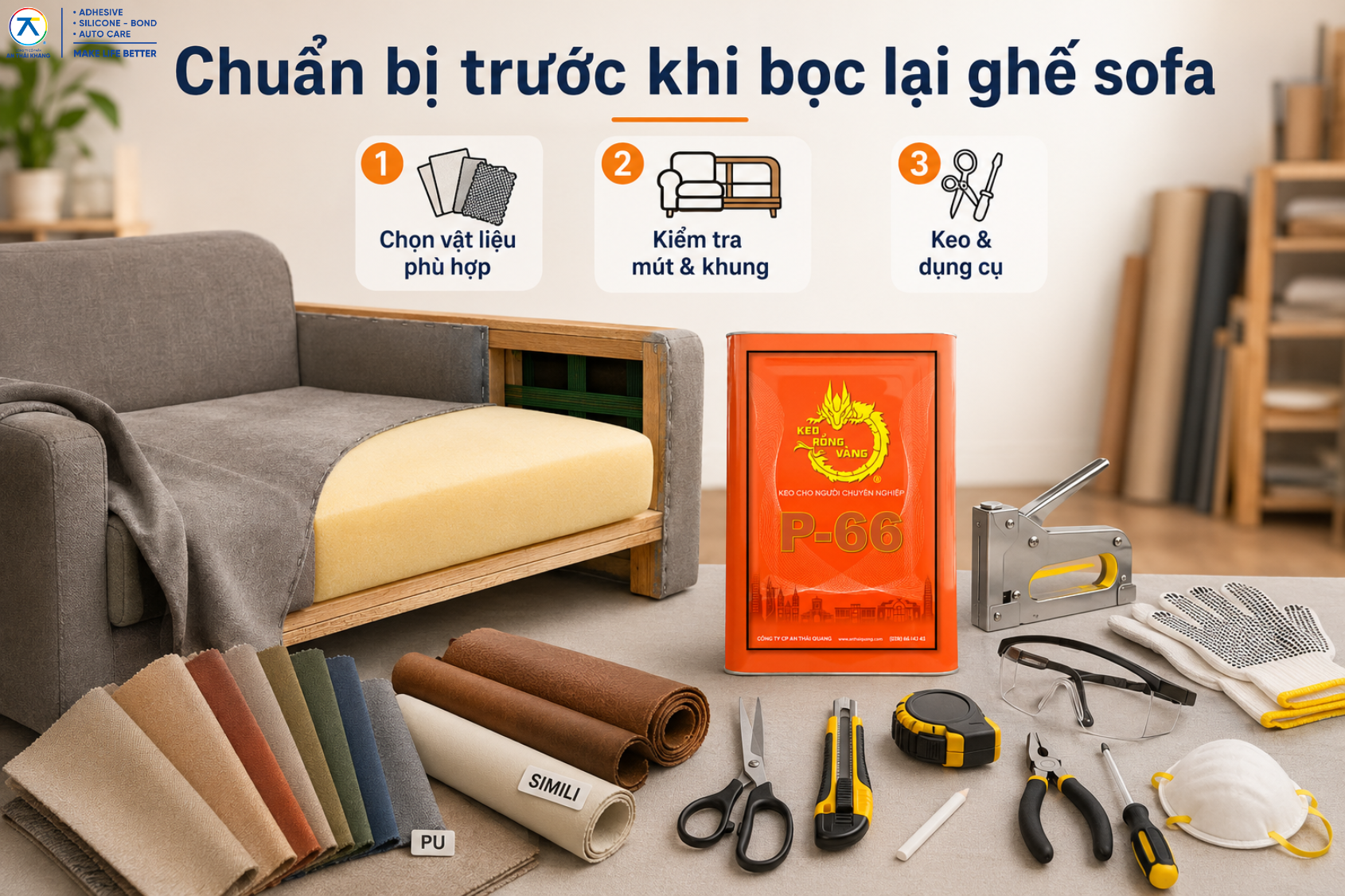
Proper preparation plays a major role in determining the smoothness, durability, and overall appearance of the finished sofa. Before removing the old upholstery, take photographs of each side of the sofa to record the positions of seams, folds, and the original assembly sequence.
2.1. Select a Suitable Upholstery Material
The three most commonly used upholstery material groups are fabric, genuine leather, and synthetic leather such as simili or PU leather. Each material has its own characteristics:
Sofa upholstery fabric: Available in a wide range of colours, breathable, and easy to coordinate with different interior styles.
Simili: Easy to clean, reasonably priced, and available in various surface patterns.
PU leather: Soft and more visually refined, but it must be used and maintained correctly.
The chosen material should have a suitable thickness, resist tearing when stretched, and match the expected frequency of use. Households with young children or pets should prioritise easy-to-clean surfaces that resist pet hair and withstand frequent friction.
When measuring, allow additional material around the edges for folding and fastening to the back or underside of the sofa. Do not cut the material to the exact size of the visible surface, as it may become too small once stretched.
2.2. Inspect the Foam and Sofa Frame
After removing the old upholstery, inspect the internal foam layers. Foam that remains resilient and is not crumbling or severely deformed may continue to be used. Sunken areas can be repaired by adding a new layer of foam before reupholstering.
Clean dust, loose foam particles, old staples, and peeling adhesive from the frame. If a thick adhesive layer remains, remove only enough to create a clean bonding surface. Avoid scraping too aggressively, as this may damage the frame or tear the foam.
Sharp corners on the frame should also be treated carefully. A thin foam layer or polyester padding can be added to prevent the new upholstery from rubbing against hard edges and tearing prematurely.
2.3. Prepare the Adhesive and Tools
Basic materials and tools commonly include:
New fabric, leather, or simili.
Additional foam, if required.
Screwdrivers and staple-removal pliers.
A utility knife, fabric scissors, and measuring tape.
Tailor’s chalk or a specialised marking pen.
A staple gun and suitable staples.
A clean brush or adhesive applicator.
Protective gloves, safety glasses, and a mask.
Adhesive for bonding foam, simili, and upholstery materials.
Adhesive does not completely replace stitching or staples in areas exposed to significant pulling forces. During sofa reupholstering, adhesive is generally used to secure foam, shape corners, bond material layers, and prevent movement before the materials are permanently fastened with staples or stitching.
3. Why Is Rồng Vàng P-66 Suitable for Sofa Repairs?
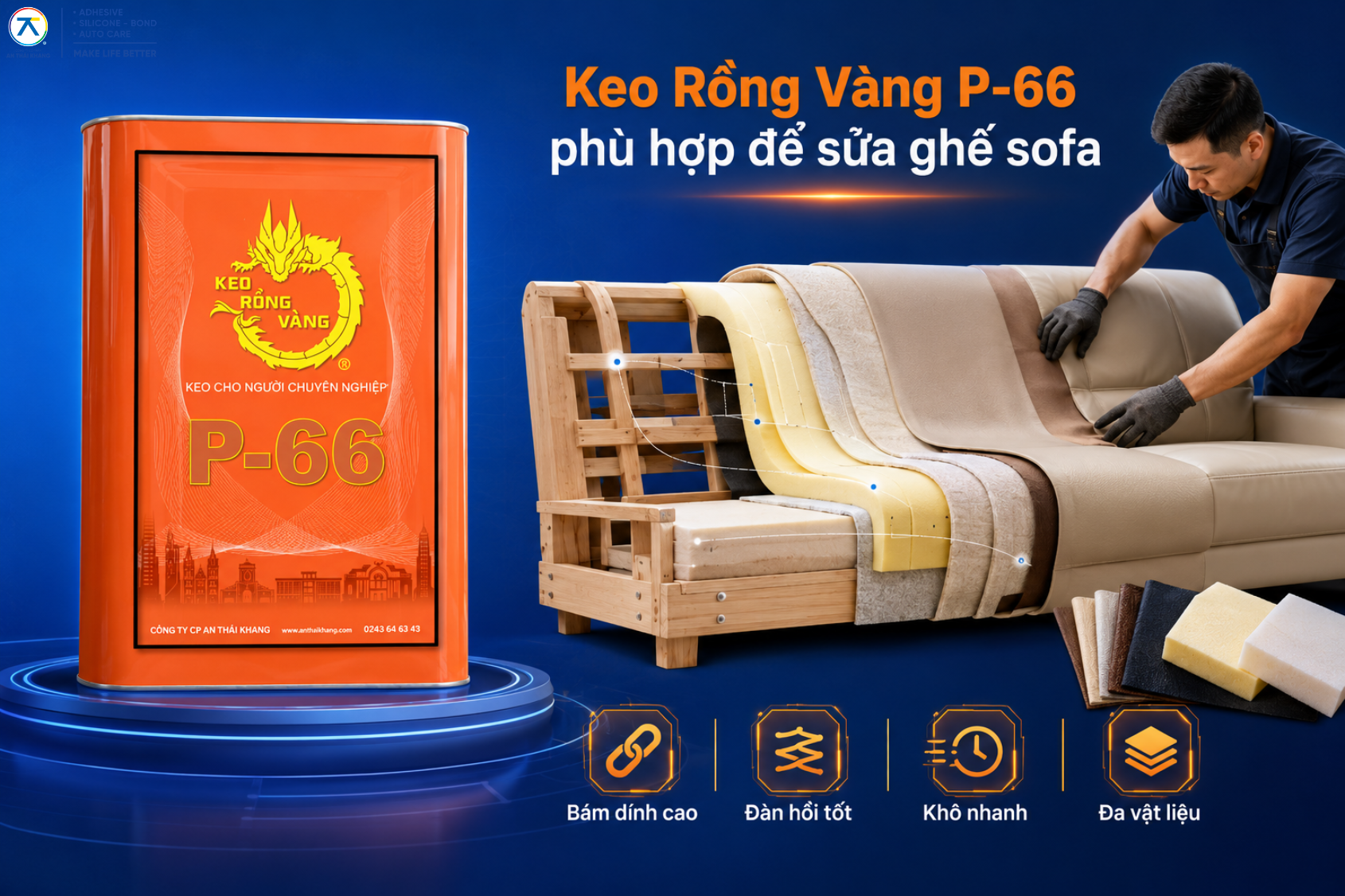
Sofas are usually made from several materials, including wood, foam, fabric, synthetic leather, and simili. These materials have different levels of softness, elasticity, and absorbency. The adhesive must therefore create a strong bond without becoming excessively brittle after drying.
Rồng Vàng P-66 Adhesive offers high bonding strength, good flexibility, and fast drying. It can be used on foam, simili, furniture, chairs, sofas, and many other materials. Its flexibility allows the adhesive layer to adapt more effectively to the natural movement and compression of the foam and upholstery when the sofa is used, leaned against, or moved.
Criterion | Information |
|---|---|
Adhesive type | Solvent-based contact adhesive |
Colour | Yellow |
Surface-drying time | Approximately 10–15 minutes |
Full curing time | No more than 24 hours |
Theoretical coverage | Approximately 3–4 m²/kg |
Solvent dilution ratio | Approximately 5–10% when necessary |
The suitable surface-drying time allows the installer to adjust the materials before pressing them together. Only a thin and even adhesive layer should be applied to prevent raised areas or prolonged drying. When working with thin or light-coloured fabric, test the adhesive on a small sample before applying it to the entire surface.
In addition to sofa repairs, the product can support many other interior repair and upholstery applications.
4. How to Reupholster a Sofa Correctly
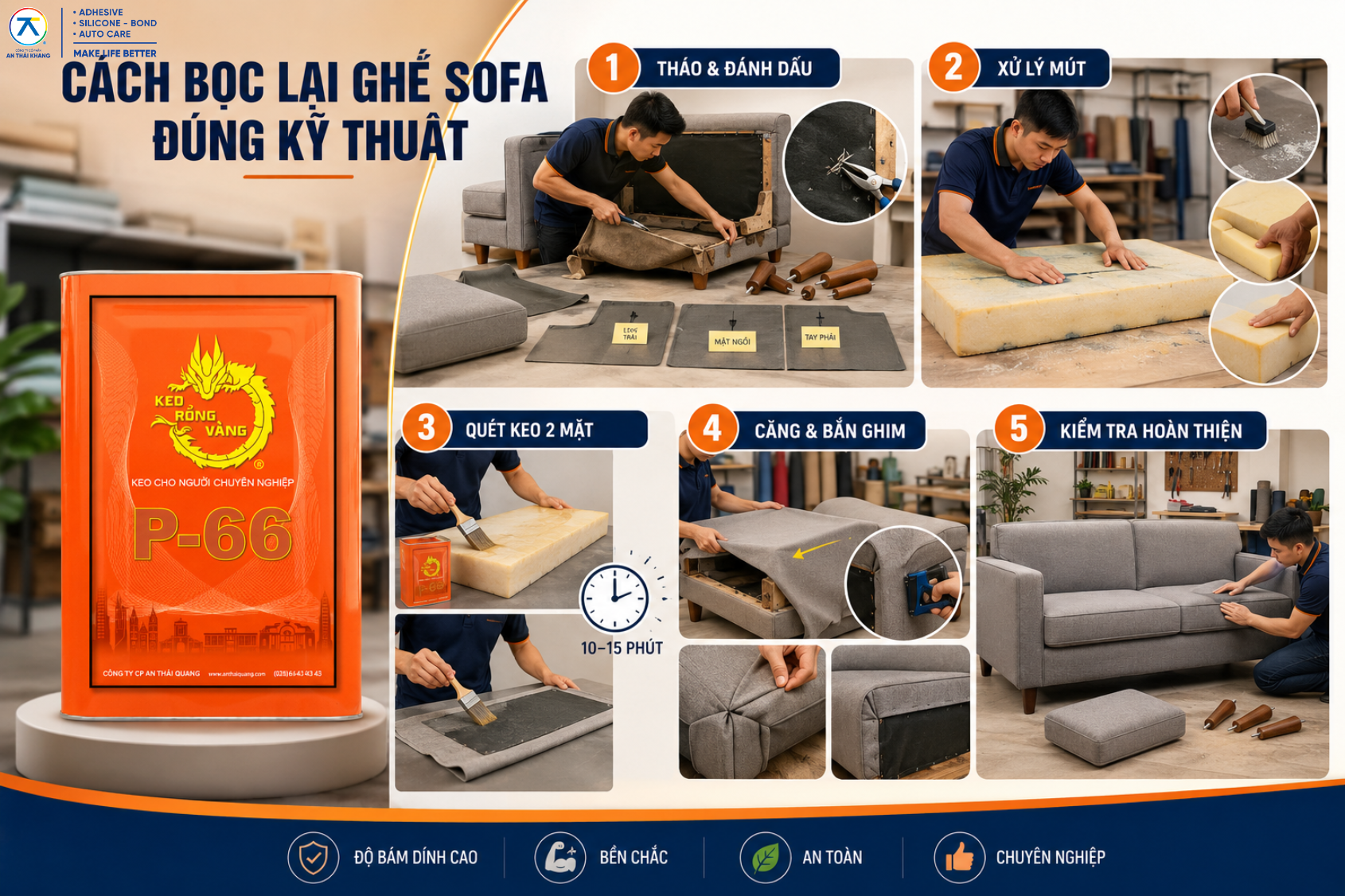
The following procedure is suitable for sofas with a basic structure and a solid frame. Sofas with pull-out, lifting, electric adjustment, or other complex mechanisms should be handled by a professional service provider to avoid damaging the operating components.
4.1. Remove the Old Upholstery and Label Each Component
Begin by removing the sofa legs, detachable cushions, and any components that can be separated. Then, use pliers to remove the staples securing the upholstery to the underside and back of the sofa.
Do not immediately cut or tear away the old upholstery. The removed fabric, leather, or simili pieces can be used as templates for cutting the new material. Clearly label each piece according to its position, such as the seat, armrest, backrest, or rear panel.
Pay attention to the order of the material layers. Sections that were upholstered last usually need to be removed first. When reinstalling the new upholstery, follow the reverse order.
4.2. Repair the Foam and Prepare the Bonding Surfaces
Remove dirt, grease, peeling adhesive, and deteriorated foam. All bonding surfaces must be clean and dry before applying the adhesive.
If the foam has shifted, reposition it correctly and use a suitable amount of adhesive to secure it. For sunken areas, cut additional foam to match the exact shape. Avoid stacking multiple small foam pieces, as this can create an uneven seating surface.
When replacing the foam, slightly round the corners and inspect the surface by hand to ensure there are no raised areas. Fabric or simili upholstery can only achieve a smooth finish when the underlying surface has been properly prepared.
4.3. Apply Adhesive to Both Surfaces
Stir or shake Rồng Vàng P-66 Adhesive thoroughly before use. Using a clean brush, apply a thin and even layer to both surfaces that need to be bonded.
After application, wait approximately 10–15 minutes for the solvent to evaporate and for the adhesive surfaces to reach the appropriate bonding condition. Align the two materials correctly and apply even pressure. This procedure follows the manufacturer’s instructions and helps achieve stronger adhesion.
Do not join the surfaces while the adhesive is still excessively wet. Pressing them together too early may cause the materials to slide, force the adhesive to one side, or increase the time required for the bond to stabilise.
4.4. Stretch and Secure the New Upholstery
Place each new upholstery piece in its labelled position. Begin securing the material from the centre of each edge, then gradually stretch it towards both sides. This method distributes tension evenly and reduces wrinkles.
Use a staple gun to firmly attach the edges to the frame on the underside or back of the sofa. Maintain even spacing between the staples and avoid placing them too far apart in areas that regularly experience pulling forces.
At the sofa corners, create several small folds rather than gathering the material into one large fold. A moderate amount of adhesive may be used to hold the folds in place before stapling. Avoid overstretching the material, as fabric or simili may eventually tear around the staples.
4.5. Inspect and Complete the Sofa
After finishing the upholstery, inspect the entire surface under adequate lighting. Seams should be straight, the sofa corners should be balanced, and the seating surface should be free from wrinkles or raised areas.
Reinstall the cushions, sofa legs, and all previously removed accessories. Excess adhesive should be cleaned with a suitable solution before it hardens. The manufacturer recommends T-99 solvent for thinning or cleaning Rồng Vàng P-66 Adhesive when necessary.
Although the adhesive becomes surface-dry after approximately 10–15 minutes, the sofa should not be exposed to heavy loads immediately. Allow all bonded areas to stabilise and wait until the adhesive is fully cured before returning the sofa to regular use.
5. Common Mistakes When Reupholstering a Sofa
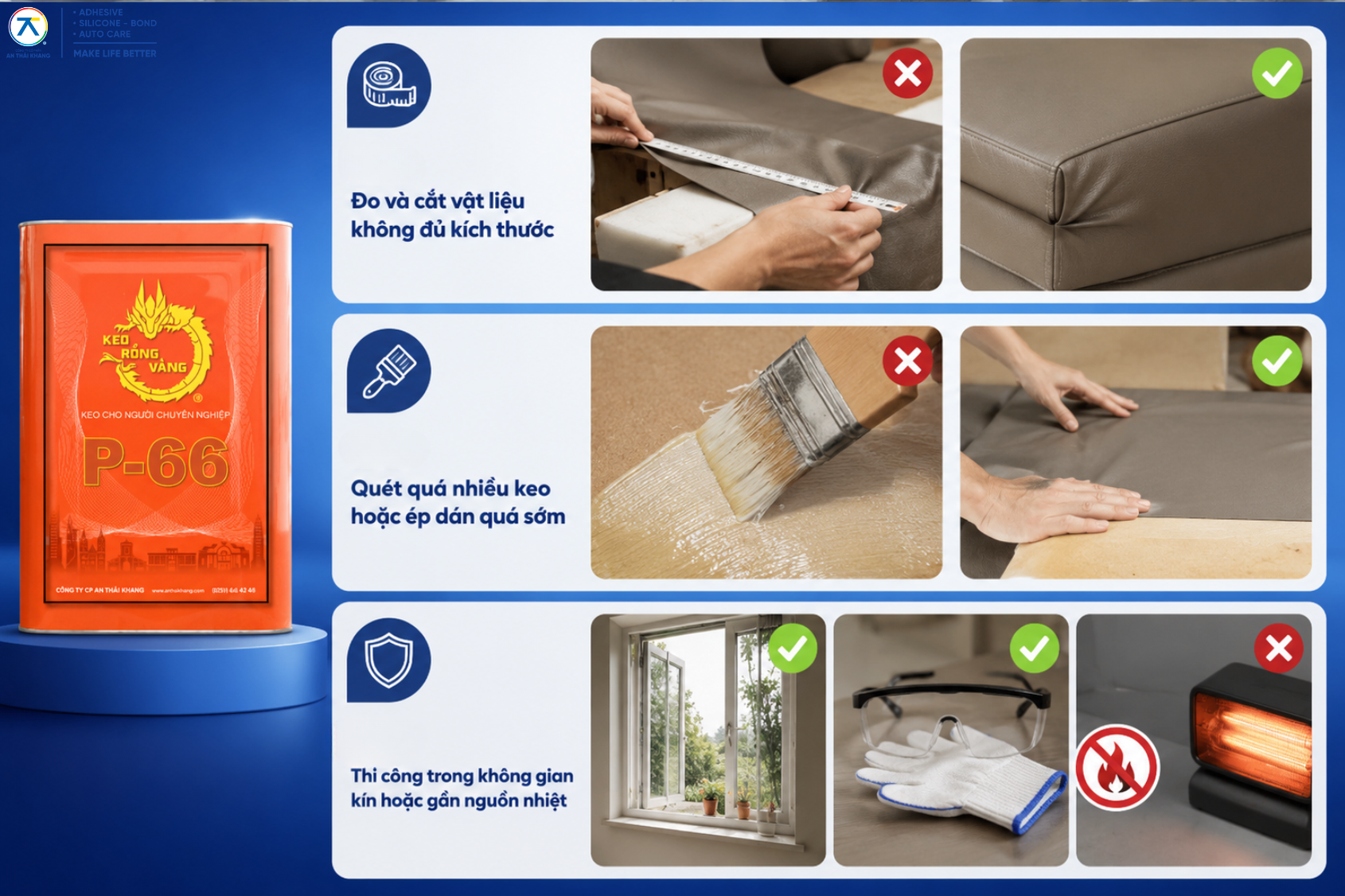
5.1. Measuring and Cutting Insufficient Material
A common mistake is measuring only the visible surface without accounting for folded edges, foam thickness, and the material required for stapling. Once stretched, the upholstery piece may become too small or may not allow the corners to be formed correctly.
Use the old upholstery as a cutting template and leave additional material around the edges. Excess material can be trimmed later, whereas material that is too small is difficult to repair without exposing seams or joins.
5.2. Applying Too Much Adhesive or Pressing the Surfaces Together Too Early
An excessively thick adhesive layer may create uneven surfaces, prolong drying, and increase the risk of the adhesive seeping through thin materials. Conversely, applying too little adhesive or failing to coat one of the surfaces may reduce the stability of the bond.
Apply a thin and even layer to both surfaces, then wait for the recommended period before joining them. Once the materials are correctly positioned, press evenly from the centre towards the edges to minimise air bubbles and folds.
For workshops that need to coat large surfaces quickly, manual brush application may be less efficient than a spray adhesive system.
>>> Read more: What Is Spray Adhesive? A Solution for the Furniture Industry to identify the most suitable application method for each production scale. Spray adhesives are commonly used for sofa foam, fabric, leather, MDF, and other furniture surfaces that require an even adhesive coating.
5.3. Working in an Enclosed Area or Near Heat Sources
Rồng Vàng P-66 is a solvent-based product. The working area must therefore be well ventilated and kept away from flames, sparks, and heat sources. Users should wear gloves, safety glasses, and other suitable protective equipment. The container must be tightly closed after use.
NIOSH guidance on working with solvents also recommends improving ventilation, avoiding the inhalation of solvent vapours, limiting skin contact, and using appropriate personal protective equipment.
After use, close the container securely and store the adhesive in a dry, cool, and well-ventilated location away from direct sunlight. Keep the product away from children and areas where there is a risk of fire.
6. Conclusion
Reupholstering is a practical solution when the sofa frame remains structurally sound but the fabric, leather, simili, or foam has deteriorated. To achieve an attractive and durable result, the material must be measured accurately, the underlying surface must be prepared evenly, and the upholstery must be stretched consistently. Adhesive should also be correctly combined with stitching and staples.
During the repair process, Rồng Vàng P-66 Adhesive helps bond foam, simili, and various upholstery materials due to its high bonding strength, good flexibility, and surface-drying time of approximately 10–15 minutes. The product is suitable for household repairs, professional upholsterers, and interior contractors requiring flexible and durable bonds.
AN THAI KHANG JSC
- • Fanpage: An Thái Khang JSC
- • Hotline: 0764 644 245
- • Email: support@anthaikhang.com
- • Website: https://anthaikhang.com/