
What You Need to Know About the Composition of Two-Part Adhesives
Learn about the composition of two-part adhesives, the roles of epoxy resin and hardener, the bonding mechanism, practical applications, and the correct way to use S-EPOXY adhesive.
In mechanical repairs, household appliance maintenance, and the repair of items made from rigid materials, initial adhesion is not the only factor that determines the quality of a bonded joint. A durable bond also depends on its load-bearing capacity, vibration resistance, stability after curing, and compatibility between the adhesive and the substrate. For this reason, two-part adhesives are often selected for applications that require a strong and stable bond.
The term “two-part adhesive” refers to a product composed of two components that are packaged separately. In epoxy adhesives, these components are usually epoxy resin and a hardener. Only when they are mixed in the correct ratio does the mixture begin to change from a soft state into a solid material and form a bond between the surfaces.
Understanding the composition of a two-part adhesive helps users understand why the adhesive must be mixed before application, why thorough mixing is essential, and why the bond should not be subjected to force immediately after the surface appears dry. The following sections explain the composition, working mechanism, range of applications, and correct technical use of S-EPOXY Two-Part Adhesive.
1. What Is a Two-Part Adhesive?
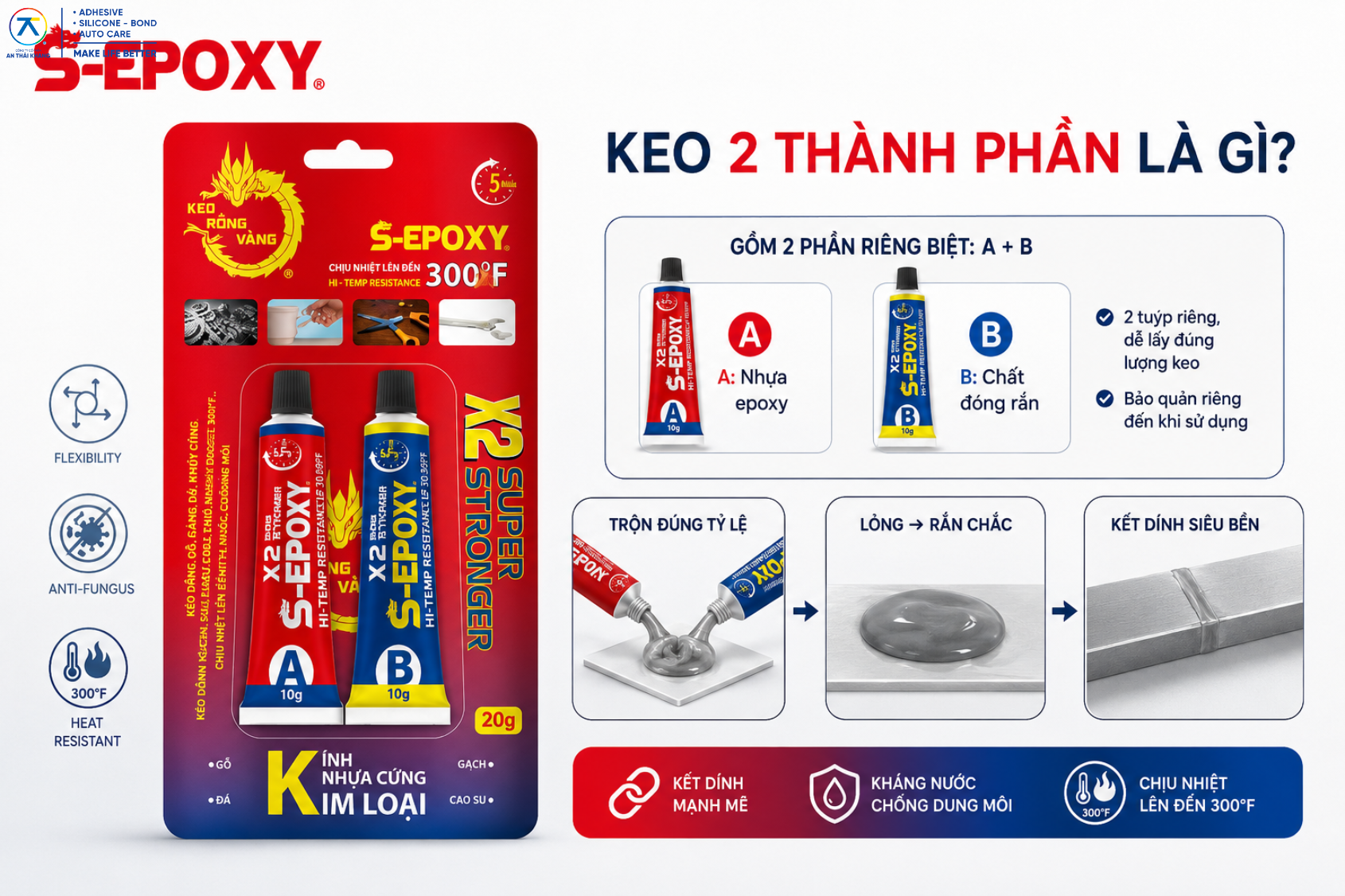
A two-part adhesive consists of Part A and Part B, which are packaged separately to prevent a reaction from occurring before use. In an epoxy adhesive system, Part A is the epoxy resin, while Part B is the hardener. When mixed in the correct ratio, the mixture gradually changes from a liquid into a solid and forms a strong bond.
Unlike single-component adhesives that can be applied directly, two-part adhesives must be mixed thoroughly before use. S-EPOXY is supplied in two separate tubes, allowing users to dispense an appropriate amount of adhesive for each repair area.
2. What Does a Two-Part Adhesive Consist Of?
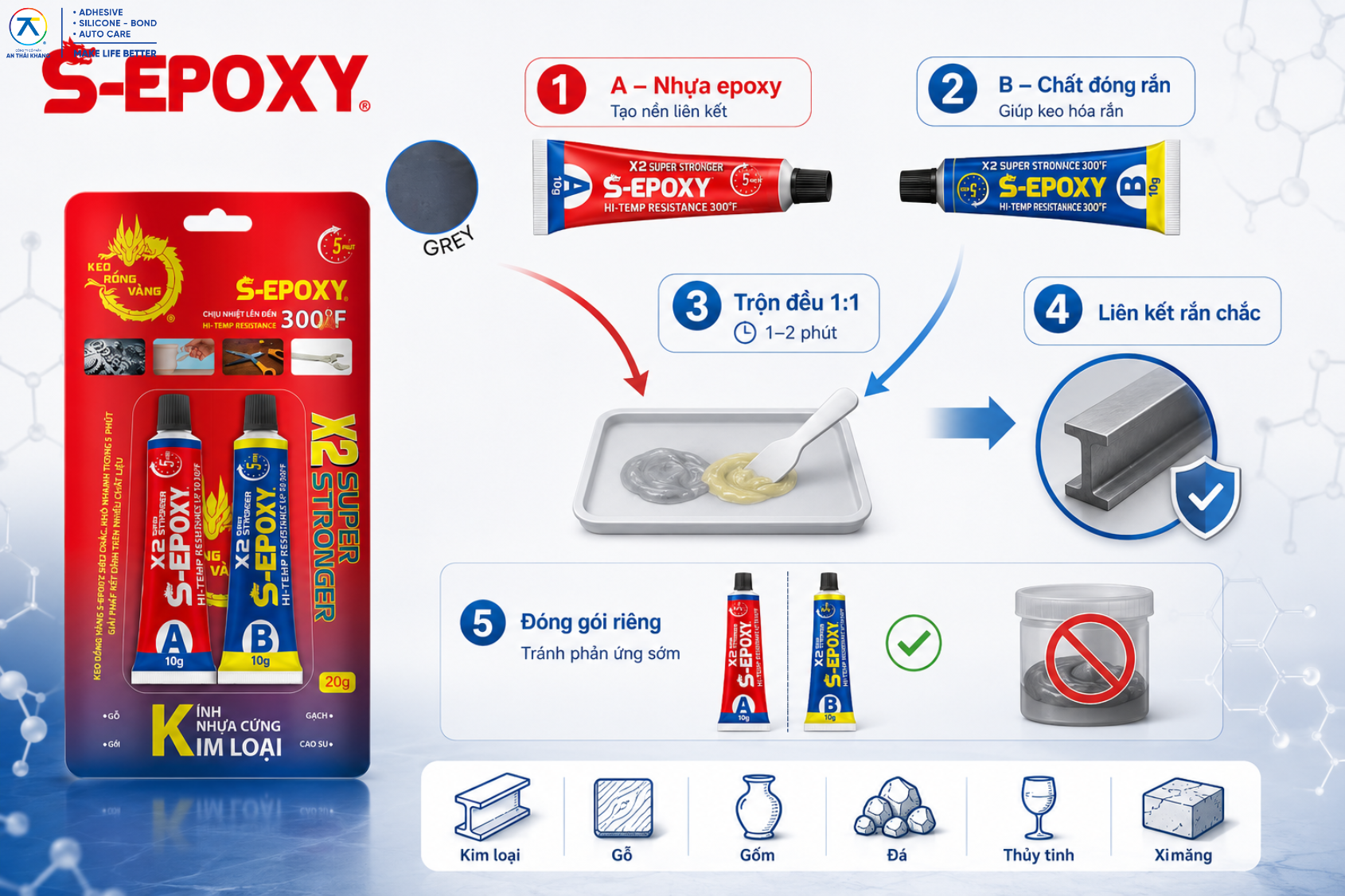
The basic composition of a two-part epoxy adhesive includes epoxy resin and a hardener. Each component performs a different function, but a complete bond is only formed when the two components are combined in the correct ratio and mixed evenly.
2.1. Epoxy Resin – Part A That Forms the Bonding Base
Epoxy resin is the main base component of the adhesive system. Before mixing, it is usually in liquid or paste form, allowing the adhesive to spread across the surface and penetrate small contact areas between the two materials.
When combined with the hardener, the epoxy resin helps form a solid bonding layer. This allows epoxy adhesives to be used on various rigid materials, including metal, wood, ceramic, stone, glass, cement, rubber, and certain types of rigid plastic.
However, Part A cannot form a complete bond on its own without Part B. Using epoxy resin alone or mixing the two components in the wrong ratio may cause the mixture to cure slowly, cure unevenly, or fail to achieve the expected bond strength.
2.2. Hardener – Part B That Enables the Adhesive to Solidify
The hardener is Part B of the epoxy adhesive system. It reacts with the epoxy resin and gradually transforms the mixture from a workable material into a solid and durable bonding layer.
Once the two components have been mixed, users have only a limited amount of time to apply the adhesive, align the parts, and secure them in position. As the reaction continues, the mixture gradually thickens, becomes more difficult to work with, and eventually forms a solid adhesive layer.
Users should therefore avoid mixing excessive amounts of adhesive when only a small area needs to be repaired. Any mixed adhesive that is not used in time will continue to cure and cannot be returned to the original tubes.
The amount of hardener should not be increased or reduced arbitrarily in an attempt to adjust the curing speed. Each product has its own specified mixing ratio. For S-EPOXY, the manufacturer recommends dispensing equal amounts from Tubes A and B and mixing them thoroughly for approximately one to two minutes. This ratio is specific to S-EPOXY and should not automatically be applied to every two-part adhesive.
2.3. Why Must the Two Components Be Packaged Separately?
If epoxy resin and hardener were premixed in the same container, the curing reaction could begin before the user was ready to apply the adhesive. Keeping the two components separate allows the product to remain usable during storage and ensures that curing only begins after they are mixed.
The two-tube design also allows users to control the amount of adhesive required. For a small repair area, only a suitable amount needs to be dispensed from each tube. The remaining adhesive can continue to be stored, provided that the tube openings are kept clean, the caps are tightly closed, and the two components are not allowed to contaminate each other.
After use, Part A must not be allowed to come into contact with the opening of Tube B, and vice versa. Even a small amount of contact between the two components around the tube openings may trigger a reaction and cause the adhesive in that area to harden.
3. How Does a Two-Part Adhesive Work?
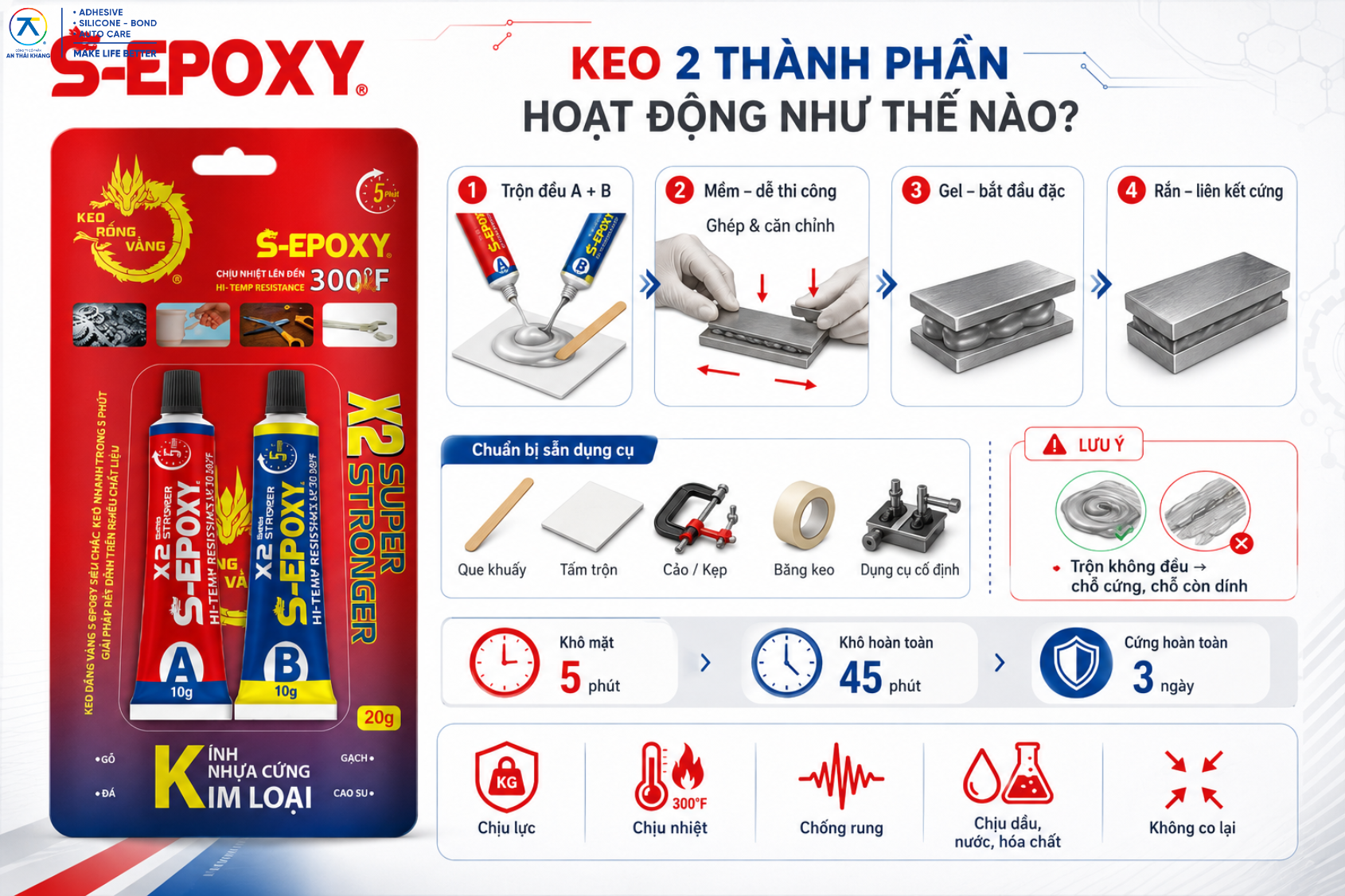
3.1. From a Soft Mixture to a Solid Bonding Layer
The curing reaction begins immediately after Parts A and B have been mixed thoroughly. During the initial stage, the mixture remains soft enough to be applied to the surfaces, allowing users to join the two parts and adjust their positions. Most application and alignment work should be completed during this stage.
The mixture then enters a gel stage. The adhesive begins to thicken and is no longer suitable for further spreading or significant adjustment. Finally, the adhesive becomes solid and forms a bonding layer between the two surfaces.
This transition from liquid to gel and then to a solid state explains why users should prepare mixing sticks, mixing surfaces, clamps, adhesive tape, and other securing tools before mixing the adhesive. Once the adhesive begins to thicken, searching for tools or readjusting the parts may affect the bonding layer that is forming.
Insufficient mixing may cause the epoxy resin and hardener to be distributed unevenly. Some areas may harden quickly, while others may remain soft or sticky. The components must therefore be mixed thoroughly for the recommended period rather than being stirred only briefly before use.
3.2. A Dry Surface Does Not Mean the Adhesive Has Fully Hardened
According to the product information, S-EPOXY becomes surface-dry after approximately five minutes, dries completely after approximately 45 minutes, and reaches full hardness after approximately three days. These three stages have different meanings, so the bonded joint should not be subjected to heavy loads immediately after the adhesive surface appears dry.
Surface drying means that the outer layer of the adhesive has begun to stabilise and feels less sticky when lightly touched. Complete drying indicates that the bond has progressed further through the curing process. However, parts that will be exposed to force, vibration, or impact should still be left for the full recommended period so that the adhesive can develop its final hardness.
Once fully cured, S-EPOXY forms a hard, non-shrinking adhesive layer that can resist heat, force, vibration, oil, water, chemicals, and impact under suitable operating conditions. These properties allow the product to be used for mechanical repairs, household appliances, and items made from rigid materials.
4. What Applications Is S-EPOXY Two-Part Adhesive Suitable For?
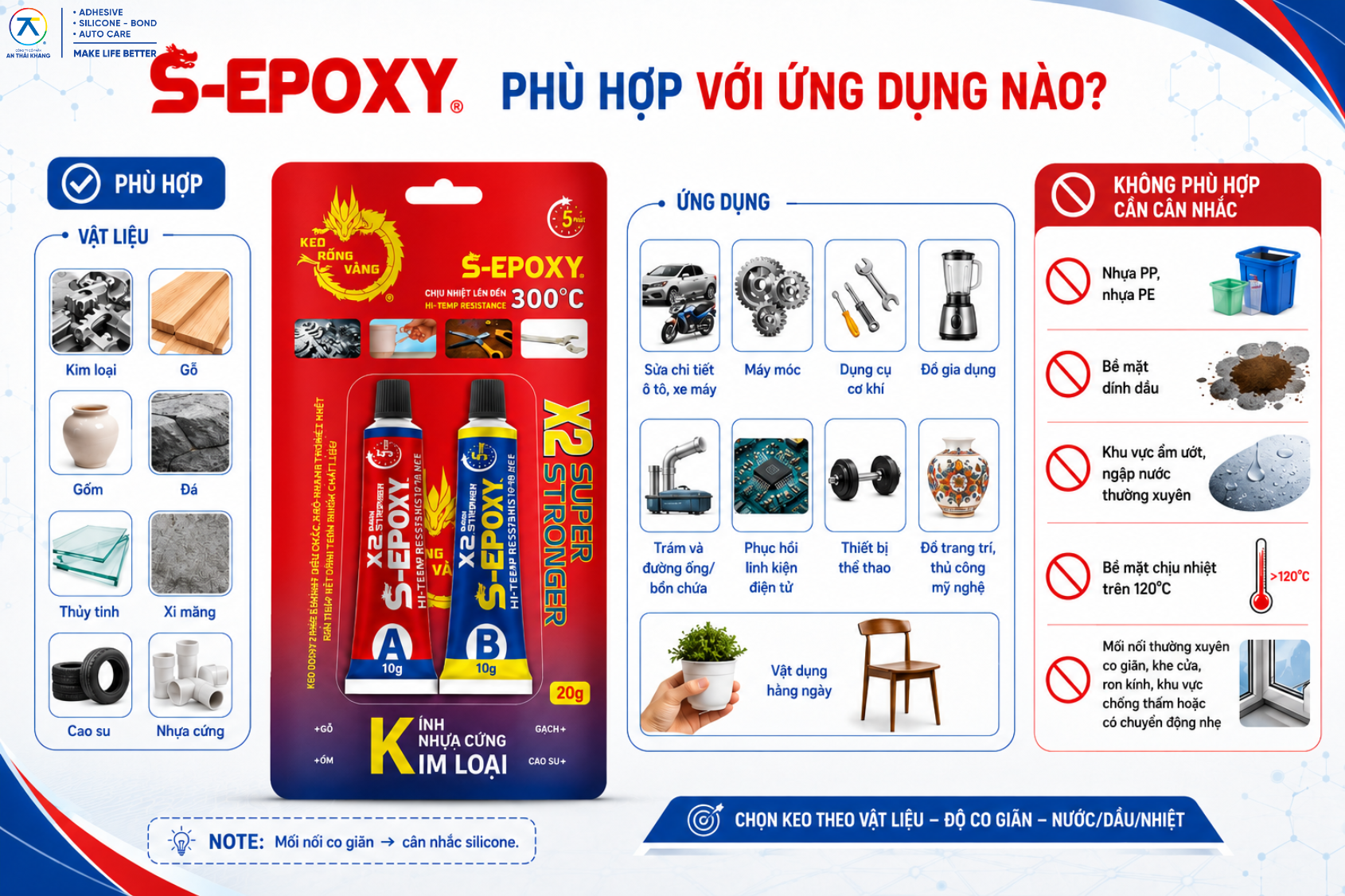
Because it forms a hard bonding layer after curing, S-EPOXY can be used on various materials, including metal, wood, ceramic, stone, glass, cement, rubber, and rigid plastic.
The product may be used to repair metal components on cars, motorcycles, machinery, mechanical tools, and household appliances. It is also recommended for patching certain pipes and storage tanks, restoring electronic components, repairing sports equipment, decorative items, handicrafts, and other everyday objects.
However, the ability to bond different materials does not mean that the product is suitable for every surface. The manufacturer advises against using S-EPOXY on PP or PE plastics or on surfaces contaminated with oil. The product should also not be applied in wet areas, locations that are frequently submerged in water, or on surfaces exposed to temperatures above 120°C.
Because epoxy forms a hard layer after curing, it should also be carefully considered for joints that frequently expand, contract, or move. For door gaps, glass seals, waterproofing areas, or joints requiring slight flexibility, an elastic silicone sealant may be more suitable.
You may also refer to the article “What Is Silicone? Its Composition and How to Choose the Right Product” in the Always Take Care section. The article explains the difference between epoxy adhesives, which form rigid bonds, and silicone products, which form flexible seals after curing.
Before selecting a two-part adhesive, users should identify three main factors: the material to be bonded, the amount of movement or expansion in the joint, and the joint’s exposure to water, oil, or heat. Correctly assessing the application requirements helps prevent users from selecting an unsuitable product based only on its high initial adhesion.
5. How to Mix and Use S-EPOXY Two-Part Adhesive
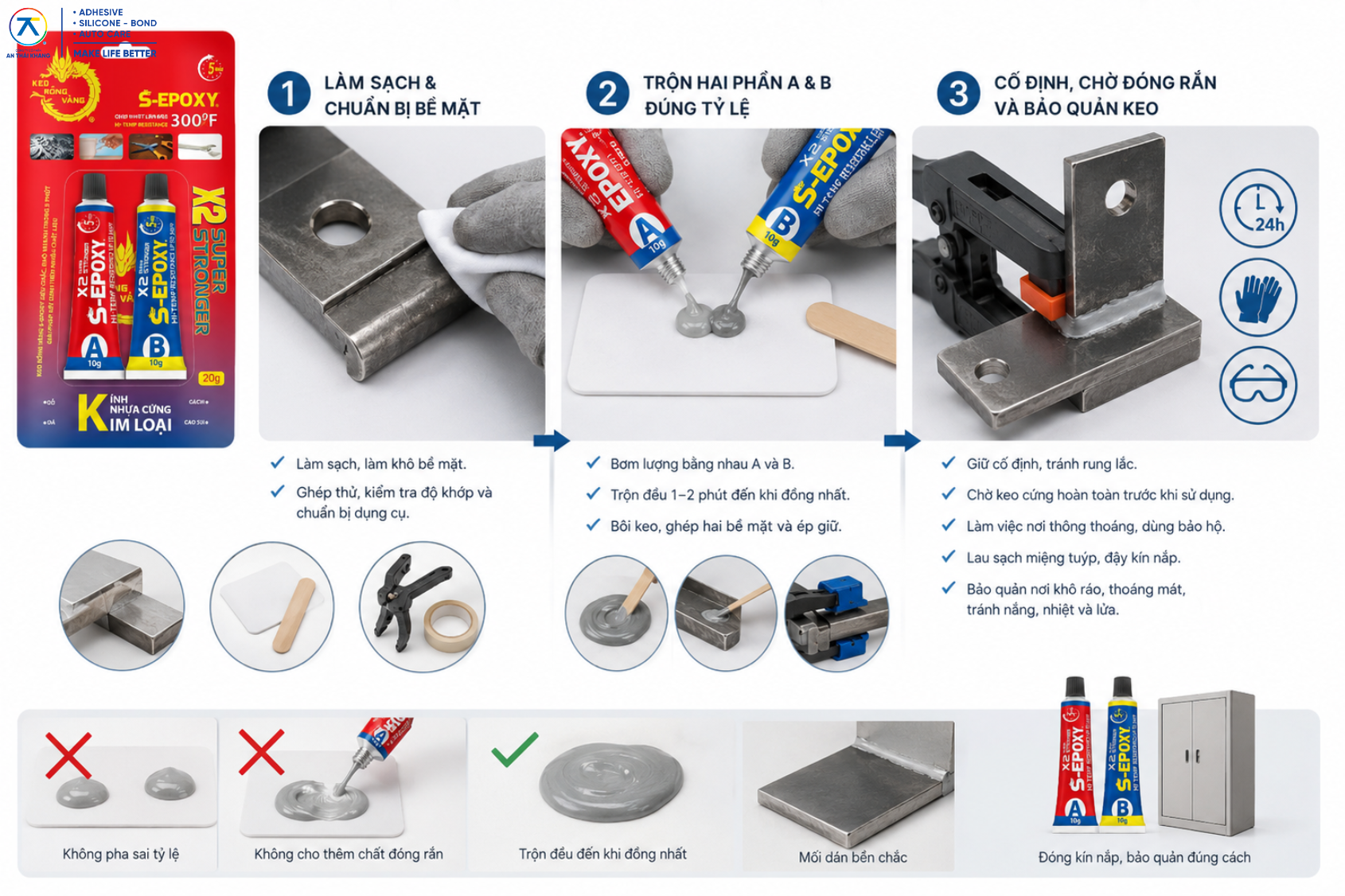
5.1. Clean and Prepare the Surfaces
The surfaces to be bonded must be clean and dry before application. Dust, grease, rust, loose paint, old adhesive, and other debris must be removed. If a weak underlying layer remains, the bonded joint may detach together with that layer even after the adhesive has cured.
For excessively smooth metal surfaces, users may lightly roughen the area and then remove any resulting dust. The two parts should be test-fitted before mixing the adhesive to check their alignment, positioning, and the method that will be used to hold them in place.
A mixing surface, mixing stick, clamps, or adhesive tape should also be prepared in advance. Having all the necessary tools ready allows the application process to continue without interruption after Parts A and B have been mixed.
5.2. Mix Parts A and B in the Correct Ratio
Dispense equal amounts of adhesive from Tubes A and B onto a clean, dry, and non-absorbent surface. Only prepare enough adhesive for the work that can be completed in a single application.
Use a mixing stick to blend the two components thoroughly for approximately one to two minutes. Make sure to scrape and mix the adhesive from both the edges and the centre of the mixing area to prevent unmixed portions of Part A or Part B from remaining separate.
Once the mixture is uniform, apply the adhesive to the bonding area, join the two surfaces, and press or hold them in the correct position. These instructions are specifically recommended by An Thai Khang for S-EPOXY.
Do not add extra hardener in an attempt to make the adhesive dry more quickly. Changing the mixing ratio may prevent the curing reaction from proceeding as designed. When using a different two-part adhesive, always follow the ratio stated on its packaging rather than automatically applying S-EPOXY’s 1:1 mixing ratio.
5.3. Secure the Joint, Allow It to Cure, and Store the Adhesive Properly
After joining the two surfaces, keep the parts stable and avoid vibration, pulling, or testing the bond too early. Clamps, adhesive tape, or other supporting tools may be used to maintain the correct position during the initial curing period.
For components that will be subjected to force, users should wait until the adhesive has reached full hardness before putting them into service. Applying force when the adhesive is only surface-dry may shift the bonded parts or affect the bonding layer that is still forming.
Work in a well-ventilated area and wear protective gloves and safety glasses. Avoid contact with the eyes and skin. The product must be kept away from flames, heat sources, and children.
After use, clean the opening of each tube and close the caps tightly. Do not allow Part A to contaminate the opening of Tube B, or vice versa. Store the product in a cool, dry, and well-ventilated location away from direct sunlight, heat sources, and flames.
6. Conclusion
A two-part adhesive consists of a resin component and a hardener component that are stored separately. In an epoxy adhesive system, Part A forms the bonding base, while Part B activates the curing process. When the two components are mixed in the correct ratio and allowed sufficient time to cure, the mixture changes from a soft material into a strong and solid adhesive layer.
S-EPOXY Two-Part Adhesive uses an epoxy resin and hardener system and is suitable for various bonding, repair, and sealing applications involving metal, wood, ceramic, stone, glass, cement, rubber, and rigid plastic.
To achieve effective results, users must clean the surfaces, dispense equal amounts from the two tubes, mix them thoroughly for approximately one to two minutes, secure the bonded joint, and allow sufficient curing time.
Understanding the composition of two-part adhesives also helps users avoid common mistakes, such as using only one component, mixing the components in the wrong ratio, failing to mix them thoroughly, applying the adhesive to oily surfaces, or testing the bond too early. When users are uncertain about the material or operating conditions, they should contact An Thai Khang for advice on selecting the appropriate product before application.
AN THAI KHANG JSC
- • Fanpage: An Thái Khang JSC
- • Hotline: 0764 644 245
- • Email: support@anthaikhang.com
- • Website: https://anthaikhang.com/