
What Is Tile Grout? Uses and How to Choose the Right Product
Tile grout is a material used to seal the gaps between tiles, helping floor and wall surfaces look clean and refined while improving water resistance, limiting mold growth, and increasing the durability of interior projects.
1. What Is Tile Grout?
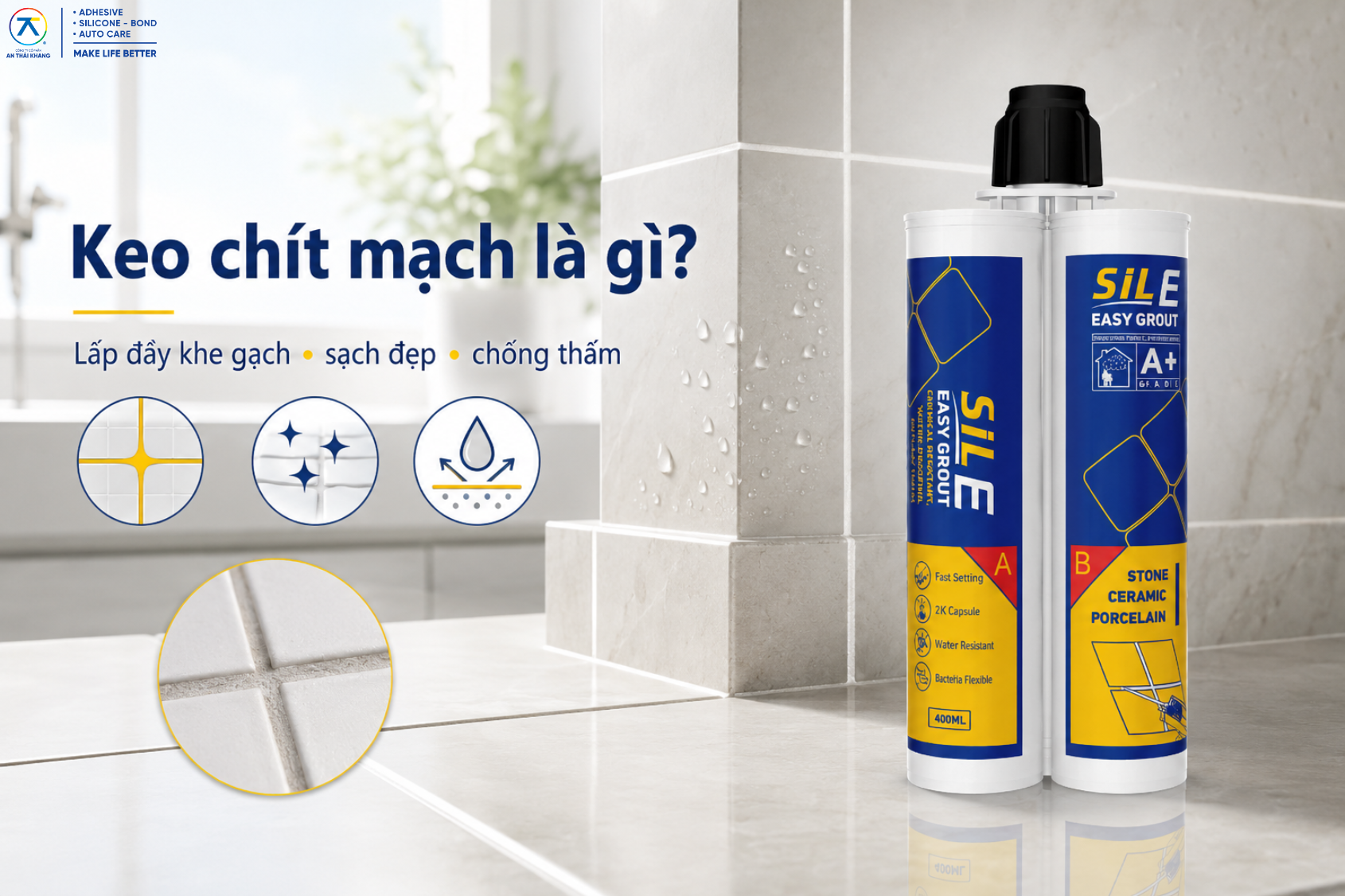
Tile grout is a material used to fill the gaps between tiles or stone slabs after installation. These gaps are commonly known as grout lines or tile joints.
If not treated properly, grout lines can easily collect dust, absorb water, become discolored, or develop mold after a period of use. Therefore, tile grout plays an important role in finishing surfaces, protecting the project, and keeping the space clean and visually appealing.
Today, tile grout is not only used for filling joints, but also contributes to enhancing the aesthetics of floors, walls, kitchens, bathrooms, and other interior spaces.
2. Why Use Tile Grout Instead of Conventional Grouting Materials?
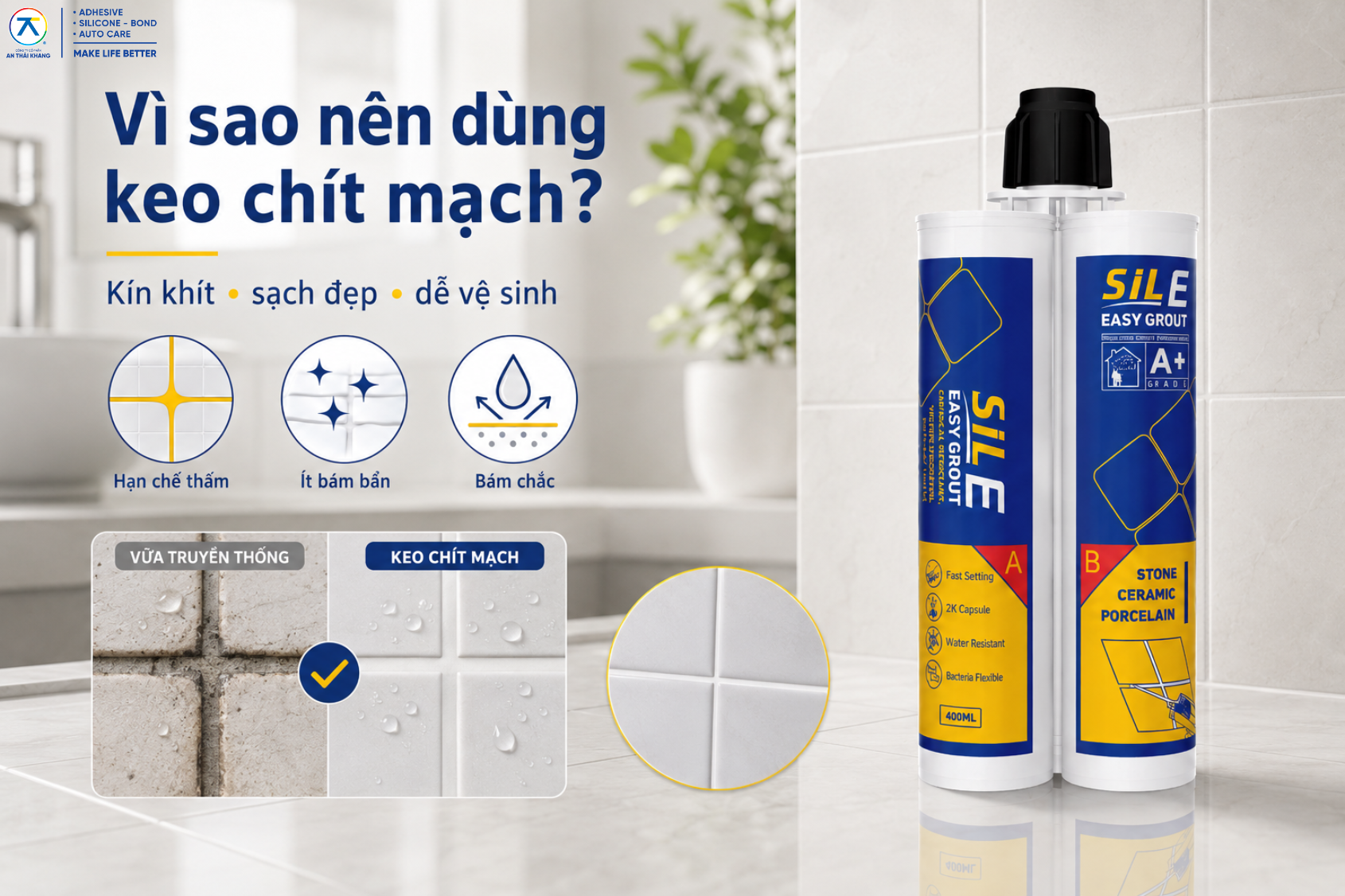
In the past, many projects commonly used white cement or traditional grout powder to fill tile joints. However, these materials may become discolored, stained, or absorb water when used in humid environments.
Modern tile grout has been improved to better meet interior construction needs. The product adheres firmly to tile joints, creates a smooth surface, helps prevent water from seeping beneath the tiled surface, and keeps grout lines clean and attractive for longer.
2.1. Improving the Tightness of Tile Joints
Tile grout helps fill the gaps between tiles, limiting dust, water, and moisture from penetrating beneath the tiled surface.
2.2. Keeping Surfaces Clean and Easy to Maintain
When grout lines are applied evenly, smoothly, and are less prone to staining, cleaning floors or walls becomes easier, especially in areas frequently exposed to water.
3. Uses of Tile Grout in Interior Construction
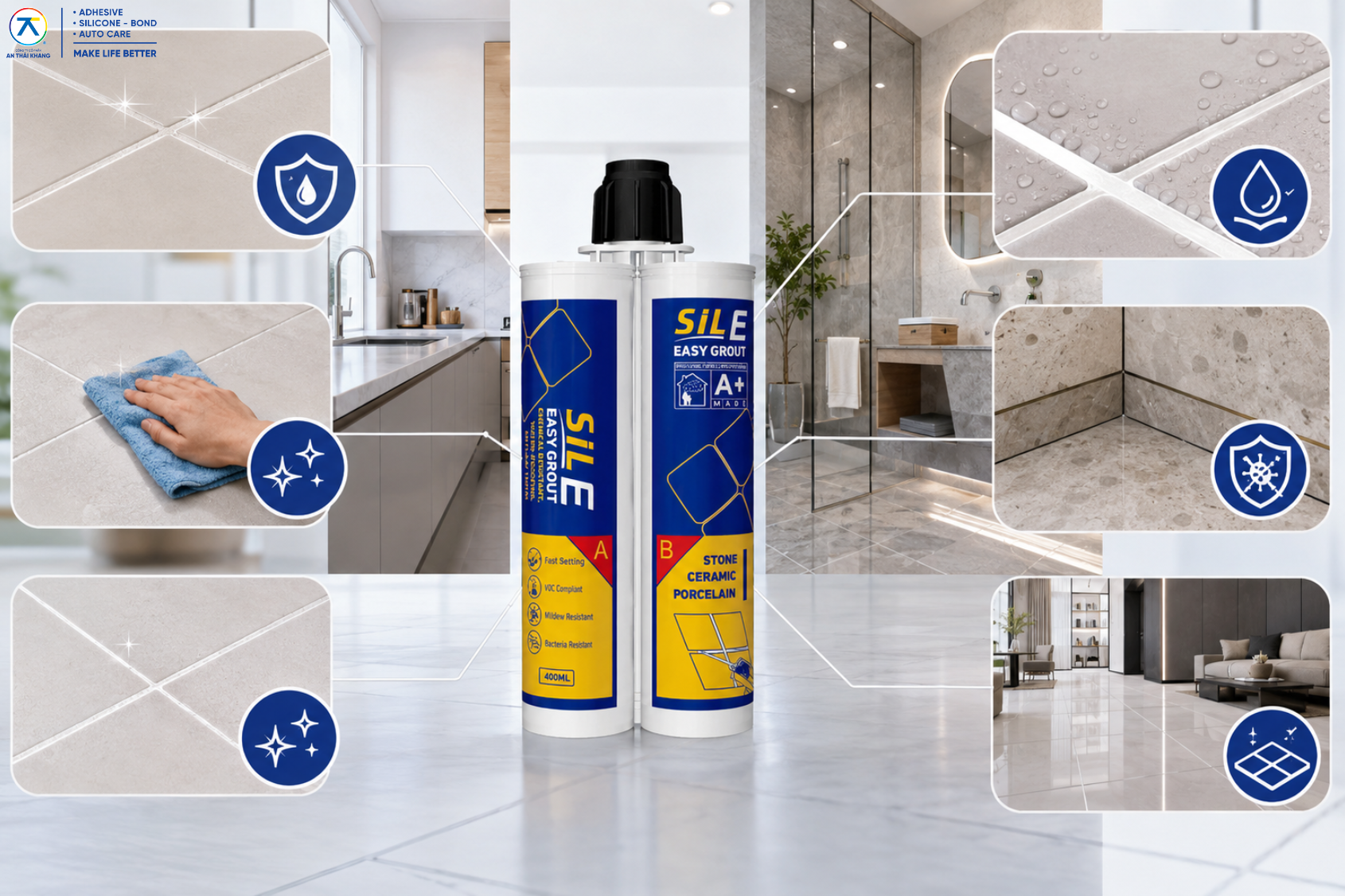
Tile grout is widely used in many finishing applications for residential and civil construction projects. It is suitable for areas that require cleanliness, tight sealing, and high aesthetic value.
Some key uses of tile grout include:
Sealing gaps between tiles and stone slabs.
Limiting water penetration into floors or walls.
Reducing staining and discoloration along grout lines.
Limiting mold growth in humid environments.
Enhancing the finished look of floor and wall surfaces.
Helping interior spaces look more uniform and visually appealing.
In areas such as kitchens, bathrooms, living rooms, showrooms, or restaurants, tile grout helps tiled surfaces become not only more durable but also more aesthetically pleasing.
4. What Makes An Thai Khang’s SIL E Tile Grout Stand Out?
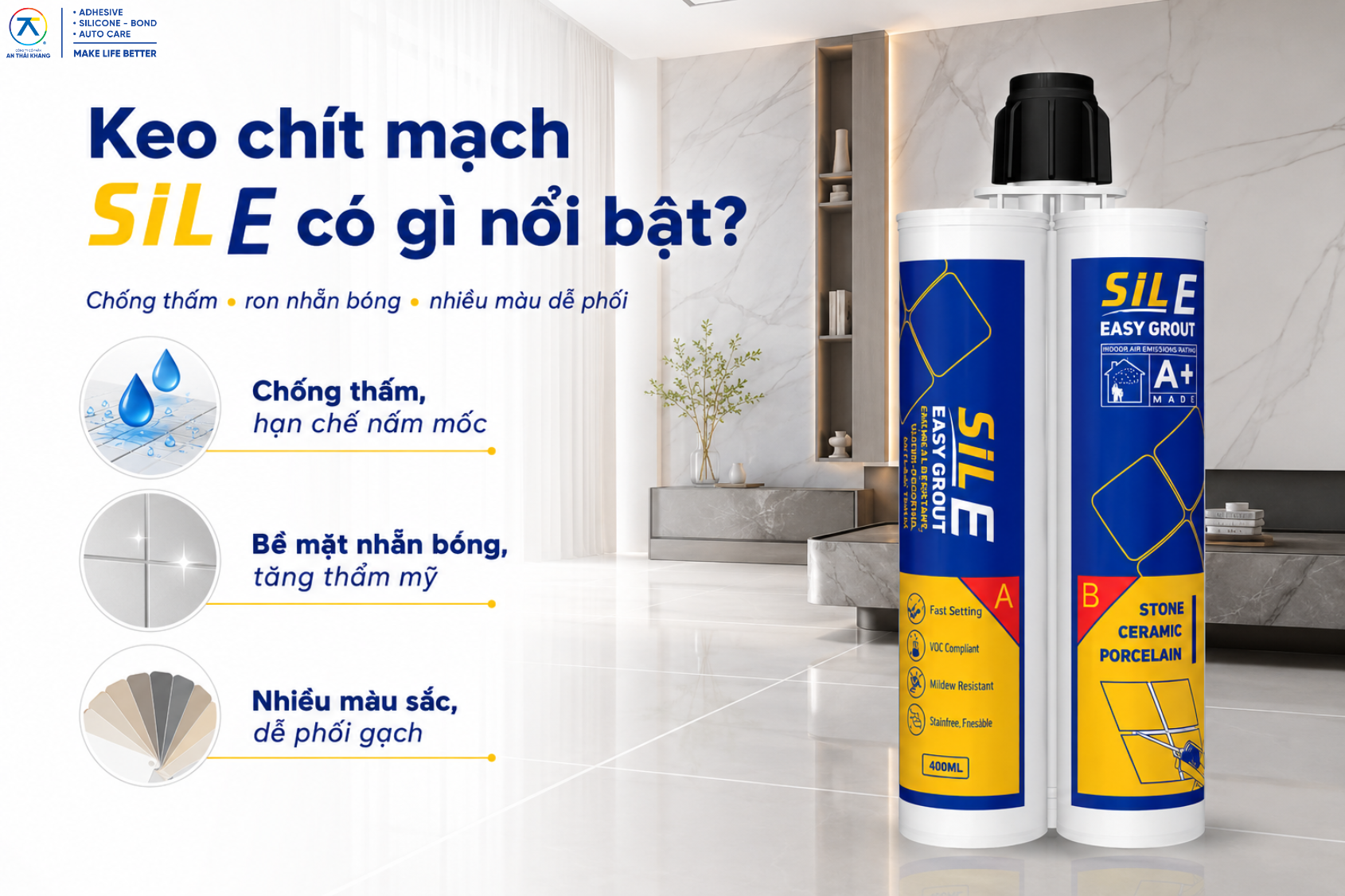
SIL E Tile Grout is a two-component, high-tech polymer-based grout designed to seal tile and stone joints in interior construction projects.
The product is suitable for applications that require beautiful, strong, smooth, glossy grout lines with good water resistance. Thanks to its diverse color range, including metallic shades, SIL E Tile Grout can be paired with many tile styles, from simple to premium designs.
4.1. Water Resistance and Mold Reduction
SIL E Tile Grout helps limit water from penetrating tile joints, thereby reducing the risk of moisture and mold while keeping the applied area cleaner during use.
4.2. Smooth, Glossy Surface for Enhanced Aesthetics
After application, the grout line has a smooth, even, and attractive finish. This is an important factor for spaces that require high aesthetic standards, such as living rooms, restaurants, hotels, or showrooms.
4.3. A Wide Range of Colors for Easy Tile Matching
The product is available in many colors, allowing users to easily choose a grout color that matches the tile, stone, and overall design style.
5. Where Is Tile Grout Commonly Used?
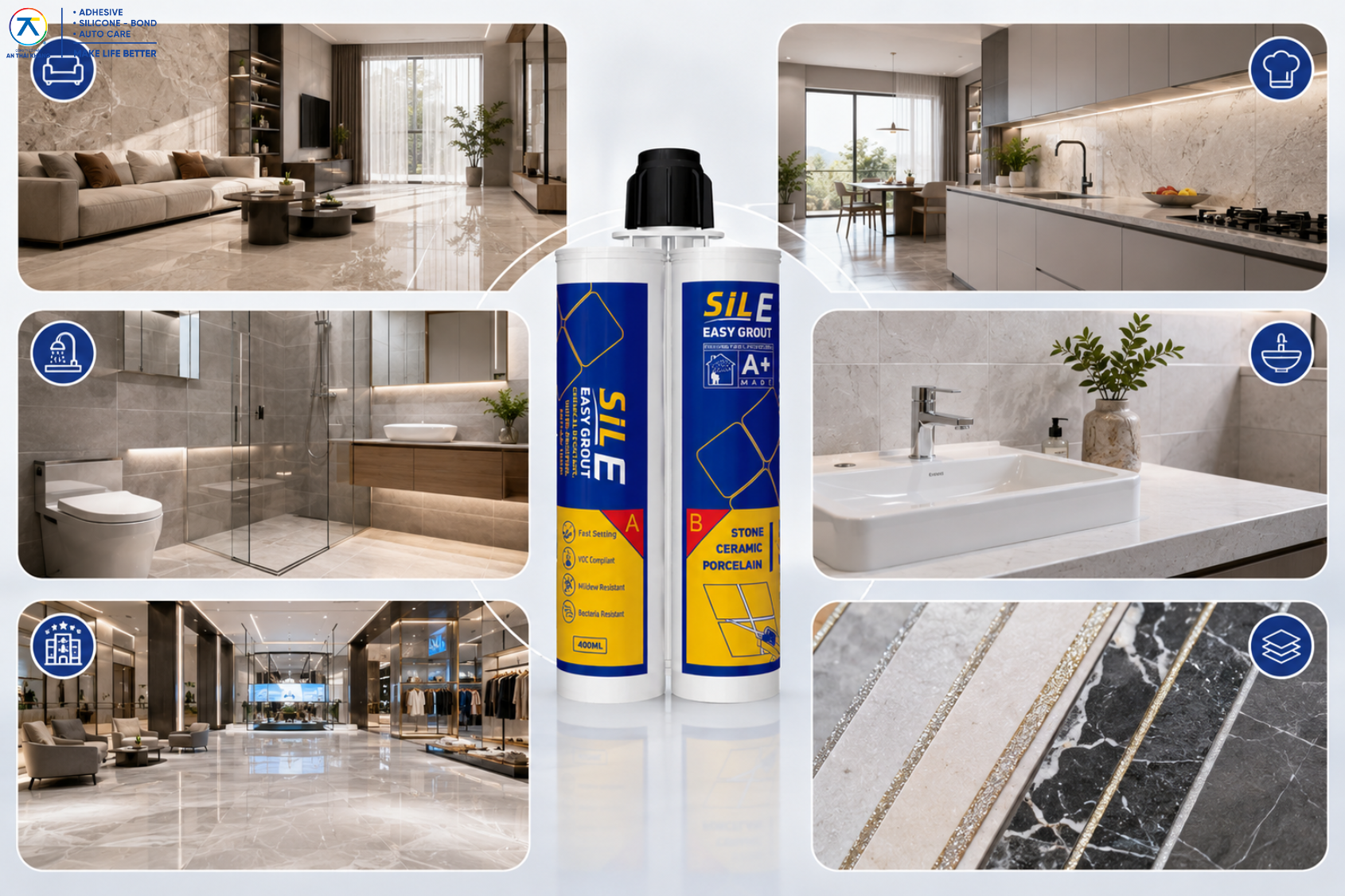
Tile grout can be applied in many different interior areas. Depending on the tile type, application area, and aesthetic requirements, users can choose a suitable grout color to create a consistent surface finish.
Common areas where tile grout is used include:
Living room floors.
Kitchen walls and floors.
Bathroom walls and floors.
Lavabo and sink areas.
Stone cladding, marble-look tiles, and premium ceramic tiles.
Hotels, restaurants, shopping centers, and showrooms.
Residential projects that require clean, attractive, and color-stable grout lines.
For areas frequently exposed to moisture, using the right tile grout helps reduce the risk of grout lines turning black, becoming stained, or losing color over time.
6. Notes When Using Tile Grout
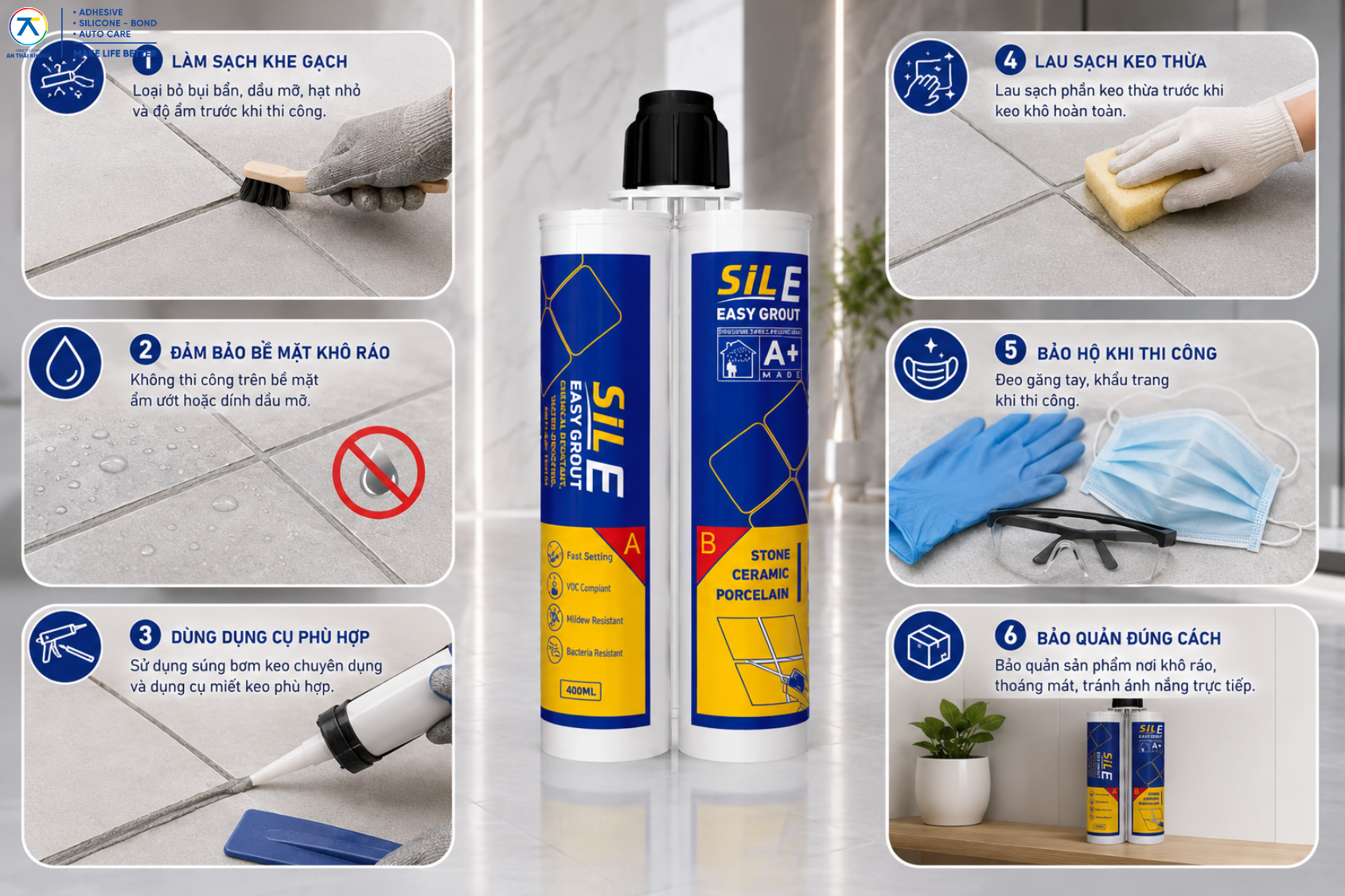
To ensure tile grout performs effectively, the application surface should be properly prepared. Tile joints should be cleaned of dust, grease, small particles, and moisture before application.
Users should also follow the manufacturer’s instructions to ensure the grout lines are even, strong, and visually appealing. For SIL E Tile Grout, the product should be used on dry and clean joints; it should not be applied to submerged joints or surfaces with oil, dust, or dirt.
Some important notes include:
Clean the tile joints before grouting.
Do not apply on wet surfaces or surfaces contaminated with oil or grease.
Use suitable tools to apply and smooth the grout.
Wipe off excess grout before it dries completely.
Wear gloves and a mask during application.
Store the product in a dry and well-ventilated place.
Proper application techniques will help the grout lines achieve better durability, improve the finished surface, and reduce application defects during use.
7. Conclusion
Tile grout is an important material in the finishing process of tile and stone installation. It not only helps seal tile joints, but also contributes to water resistance, mold reduction, surface cleanliness, and improved aesthetics for interior spaces.
If you are looking for a grouting solution for residential, civil, or commercial areas, An Thai Khang’s SIL E Tile Grout is a recommended choice thanks to its water resistance, smooth glossy finish, diverse color options, and flexible application.
AN THAI KHANG JSC
- • Fanpage: An Thái Khang JSC
- • Hotline: 0764 644 245
- • Email: support@anthaikhang.com
- • Website: https://anthaikhang.com/