
Strong and Durable Shoe Sole Bonding with Specialized Adhesives
Shoe sole bonding requires the right specialized adhesive to increase adhesion, reduce peeling, and help footwear remain durable and well-finished during production, processing, or repair.
1. Shoe sole bonding is an important step in the footwear industry
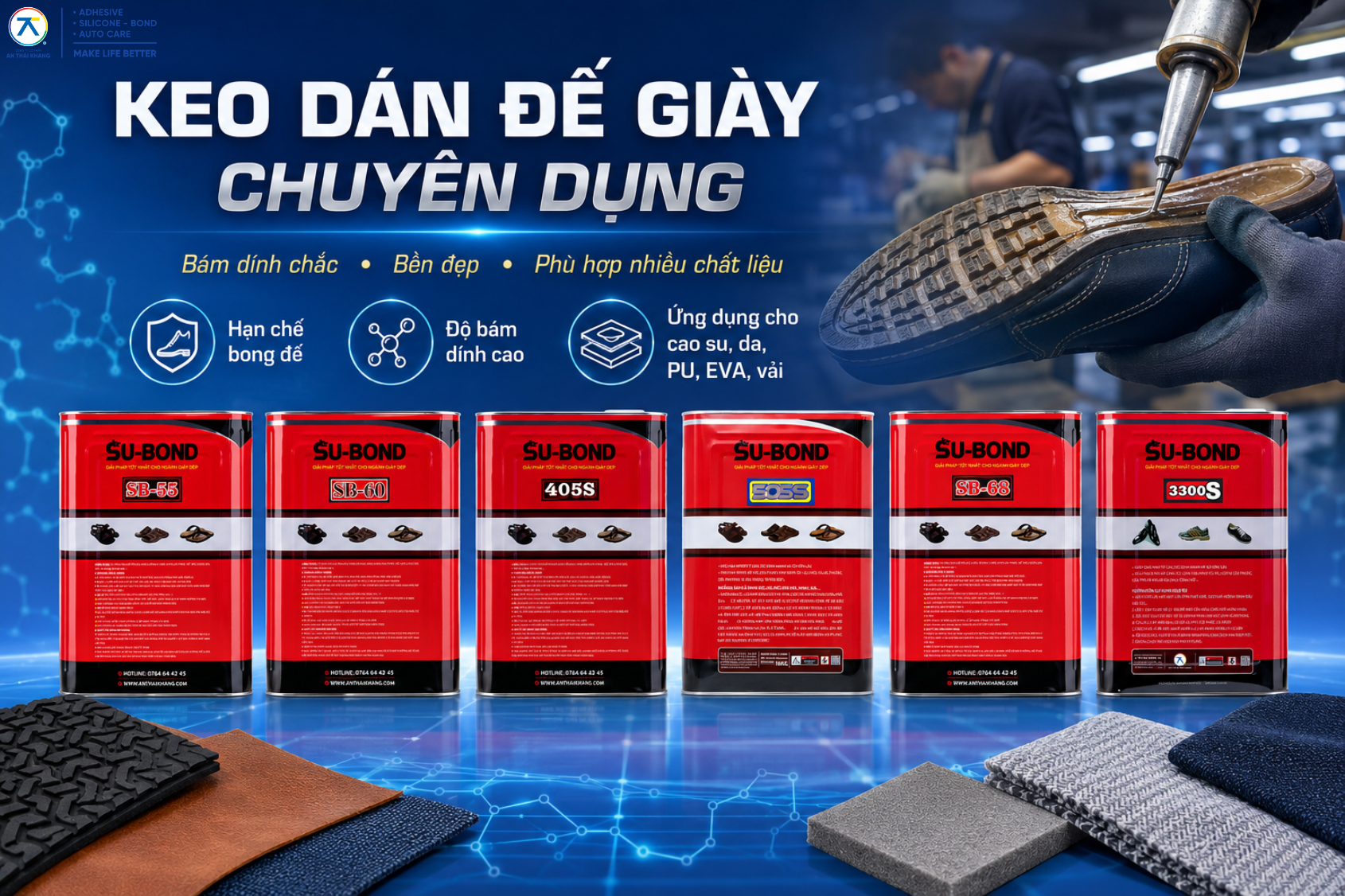
Shoe sole bonding is one of the most important steps in footwear production, directly affecting the durability, appearance, and user experience of the finished product. The sole is the part that frequently comes into contact with the ground and is exposed to friction, bending force, and external environmental impacts. Therefore, if the adhesive layer is not strong enough or is not compatible with the material, the shoe can easily experience sole separation, open edges, adhesive failure, or a shorter service life during use.
In footwear manufacturing and processing, choosing an adhesive for shoe sole bonding is not simply about selecting a product with bonding ability. The adhesive must be suitable for different materials such as rubber, leather, synthetic leather, fabric, PU, EVA, or other composite materials. In addition, it must meet requirements for adhesion strength, elasticity, load-bearing capacity, and stability after the product is completed.
For manufacturing workshops, footwear processing facilities, or shoe repair units, using the right specialized adhesive helps improve the effectiveness of the shoe sole bonding process. The finished product will have stronger adhesion, fewer technical defects, and a more polished appearance when delivered to users.
2. Why should specialized adhesives be used for shoe sole bonding?
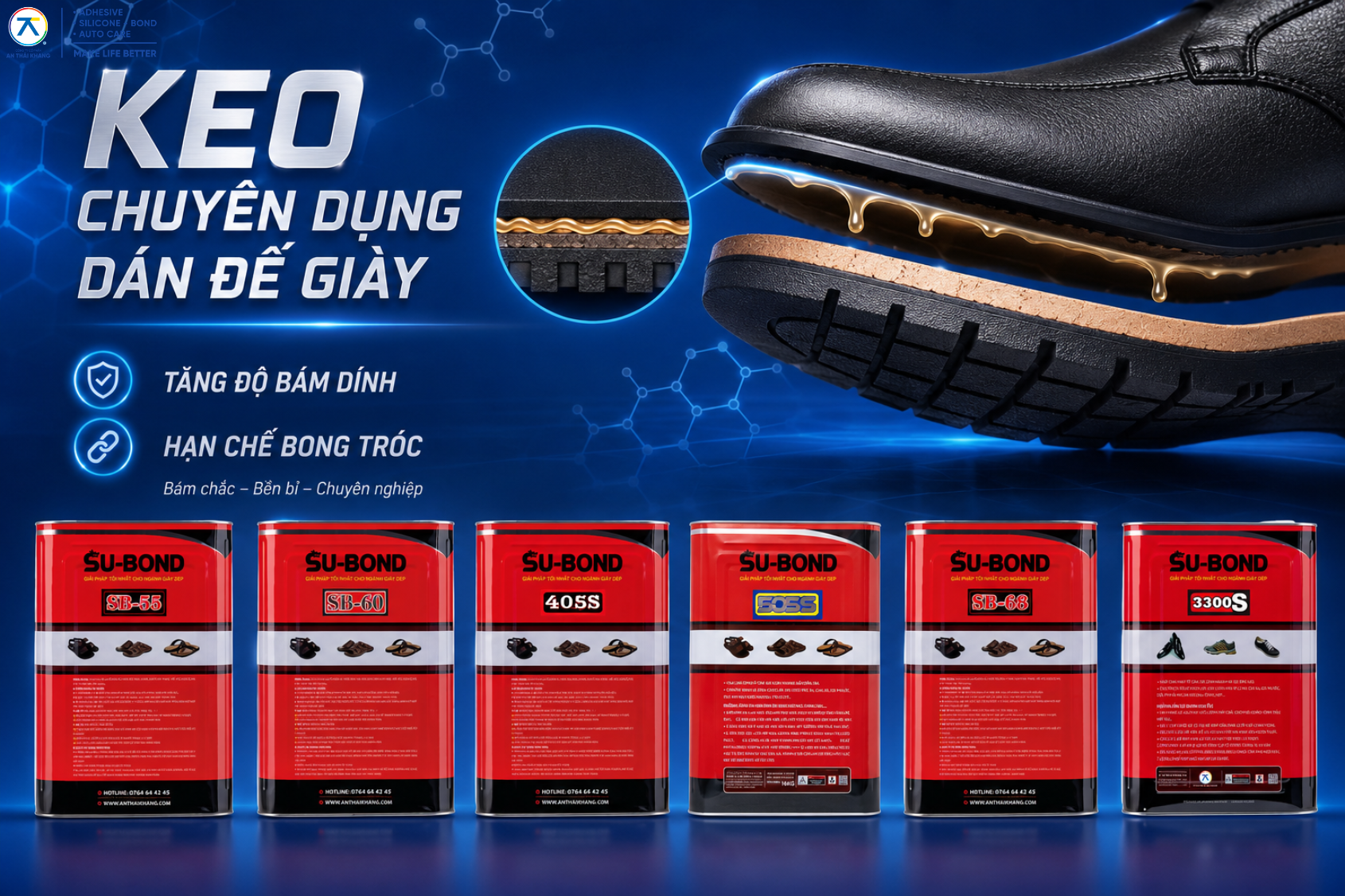
Not every type of adhesive is suitable for bonding shoe soles. Some common adhesives may provide initial tack, but after a period of use, the sole may still peel off due to pulling force, friction, or exposure to moisture. This is why footwear workshops often prioritize specialized adhesives instead of general-purpose adhesives.
Specialized adhesives for footwear are developed to meet the specific requirements of shoe production. These adhesives need to create a strong bond between the sole and the upper while maintaining durability as users move. For footwear products that require a high level of finish, a suitable adhesive also helps create neater, stronger bonding lines and reduces adhesive overflow or edge separation after use.
2.1. Increasing adhesion between the sole and the upper
One of the key advantages of specialized footwear adhesives is their ability to create a strong bond between different material surfaces. When bonding shoe soles, the adhesive layer needs to adhere evenly to both the sole and the upper to minimize adhesive gaps along the outer edges.
If the adhesive does not provide sufficient adhesion, the sole may separate when the user walks frequently. In contrast, when the right adhesive is used, the bond between the surfaces becomes more stable, helping the product maintain its shape and durability after completion.
2.2. Reducing peeling during use
Footwear is continuously affected by walking force, bending, friction, and environmental conditions. Therefore, shoe sole adhesives need to maintain strong bonding performance under various usage conditions.
With specialized adhesives, the risk of sole peeling can be reduced more effectively compared to using unsuitable adhesives. This is especially important for sports shoes, slippers, sandals, or footwear products that are used frequently in daily life.
3. ATK footwear adhesives for shoe sole bonding needs
For shoe sole bonding applications, adhesive selection should be based on the application process, surface material, and technical requirements of each product line. Depending on the intended use, users can consider suitable groups of specialized adhesives to increase adhesion, reduce peeling, and help the sole bond more firmly to the upper.
For footwear manufacturers and processing units, adhesive is not only a supporting material but also a factor that directly affects the quality of the finished product. A suitable adhesive helps reduce sole separation defects, minimize rework time, and contribute to a more optimized production process.
4. Practical applications of footwear adhesives
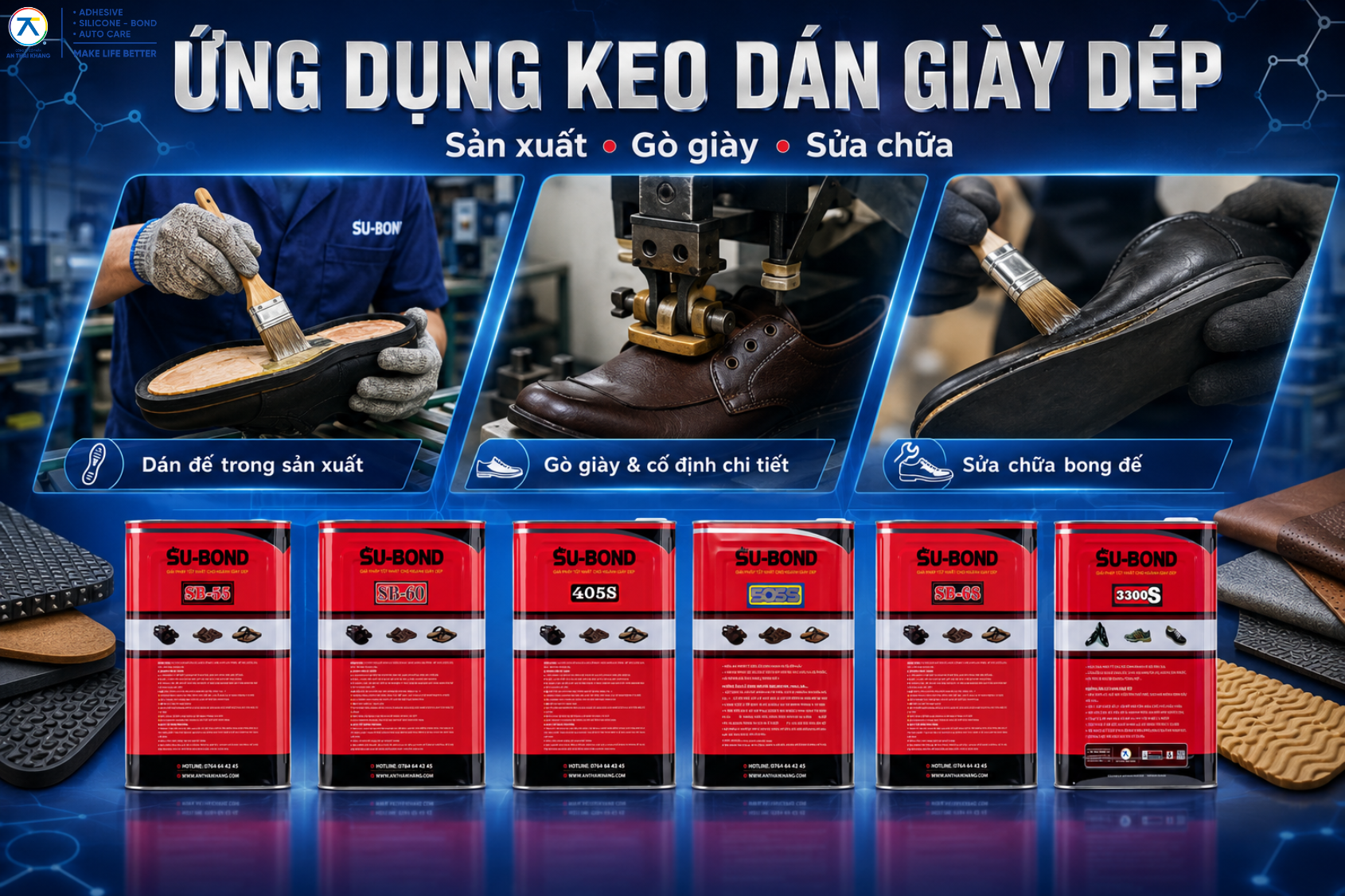
Footwear adhesives can be used in many different stages, from new production, processing, and finishing to repairing used shoes. Depending on the application purpose, users can choose a suitable adhesive line to achieve the best bonding performance.
4.1. Shoe sole bonding in production
In footwear production, the shoe sole bonding process must be carried out carefully to ensure that the sole is firmly attached to the upper. If the adhesive layer is uneven or the wrong type of adhesive is used, the finished product may have open edges, sole separation, or aesthetic defects.
Specialized footwear adhesives help support the bonding process between different material surfaces, making the finished product stronger and more durable. This is an important factor for manufacturers that need to ensure consistent quality across large quantities of products.
4.2. Shoe lasting and detail fixing
In addition to sole bonding, adhesives are also used in the shoe lasting process and for fixing certain details on the upper. This step helps the product maintain its shape while supporting a more accurate finishing process.
Lasting adhesives are often selected for stages that require firmness, stability, and compatibility with the specific materials used in the footwear industry. When used properly, the adhesive helps secure details effectively and minimizes shifting during processing.
4.3. Repairing shoes with detached soles
For used footwear, sole separation or open edges are fairly common issues. In this case, using a suitable shoe sole adhesive helps reinforce the bond between the sole and the upper.
However, before re-bonding, the surface must be cleaned to remove dust, old adhesive layers, or remaining impurities. This helps the new adhesive bond better and reduces the risk of peeling again after a short period of use.
5. How to choose the right shoe sole adhesive
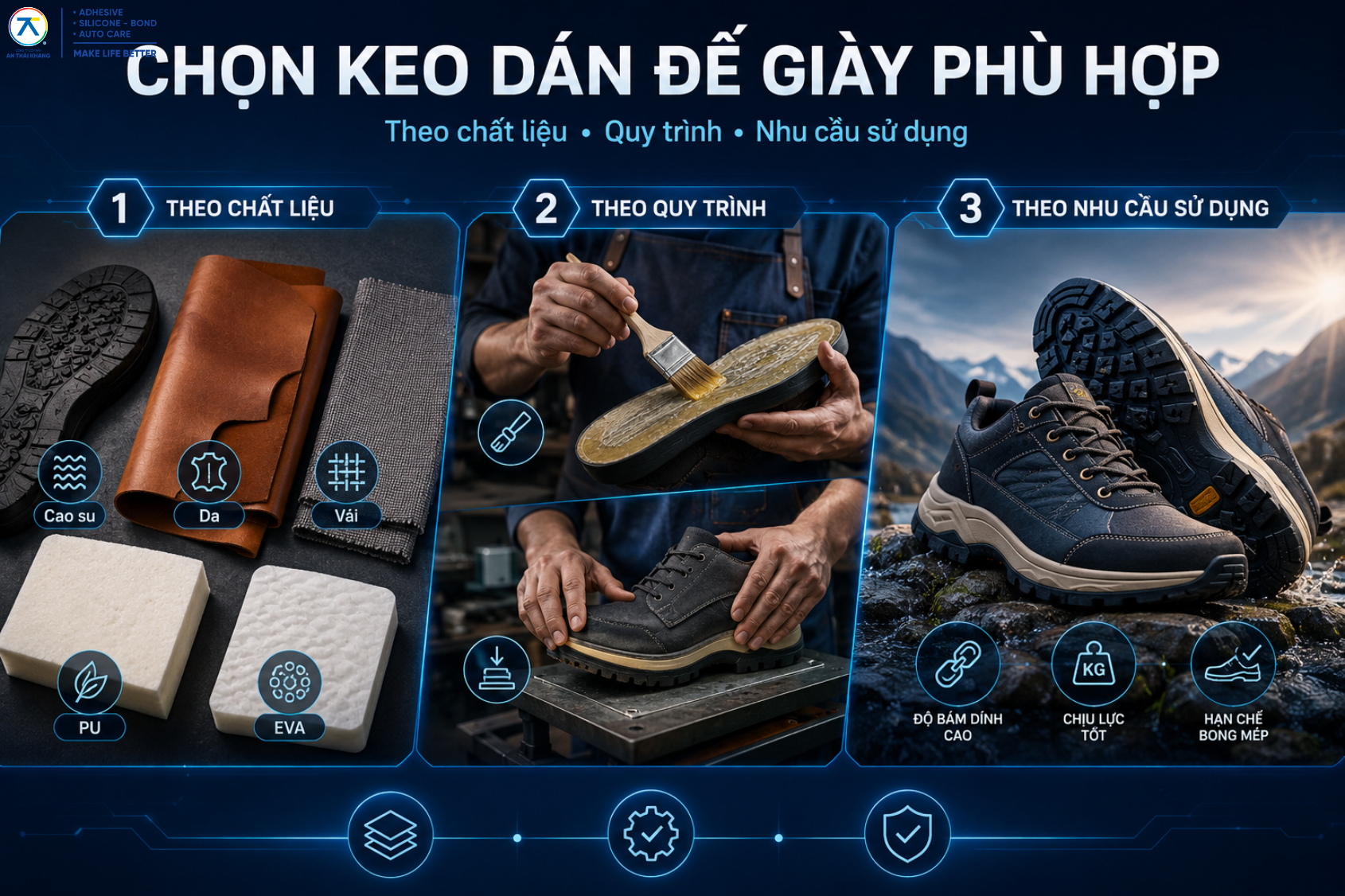
To achieve good results when bonding shoe soles, users should choose an adhesive based on the material, application process, and usage requirements of the product. For each type of footwear, the sole and upper may be made from different materials, so adhesive selection should not be based on guesswork or initial tack alone.
First, it is necessary to identify whether the bonding surface is rubber, leather, fabric, PU, EVA, or a composite material. Users should then choose an adhesive line that is compatible with those surfaces. If the product is used in a production process, priority should be given to adhesives that match the working speed, processing method, and finishing standards of the workshop.
In addition, attention should be paid to the usage conditions of the footwear after completion. Products that are frequently exposed to force, friction, or outdoor conditions require adhesives with more stable bonding performance. Choosing the right adhesive from the beginning helps reduce peeling defects, save repair costs, and improve product quality.
6. Notes for more effective shoe sole bonding
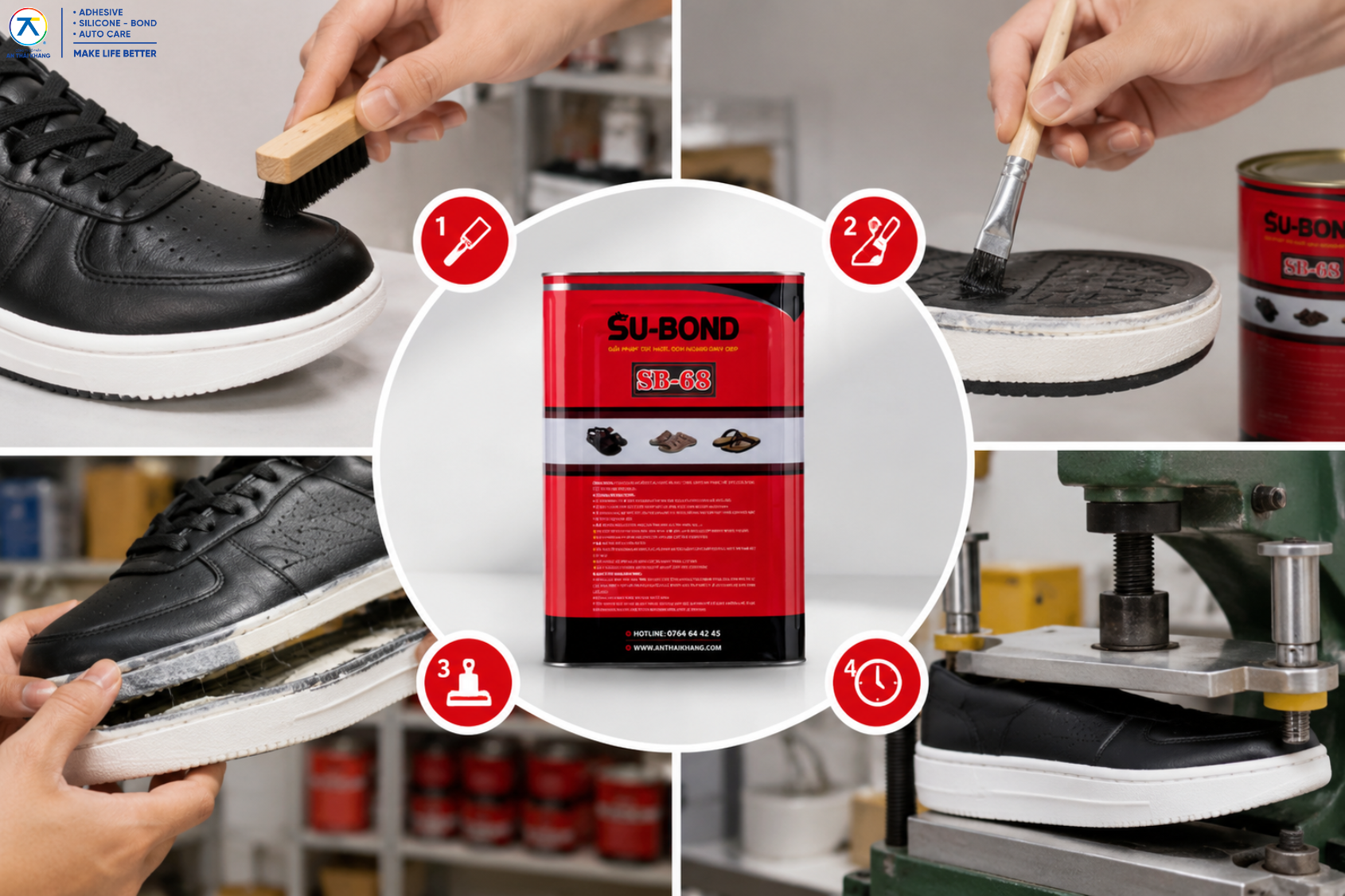
In addition to choosing the right adhesive, the application process also has a major impact on the durability of the bonded layer. Before bonding, the surfaces of the sole and upper should be cleaned to remove dust, oil, old adhesive, or impurities that may reduce adhesion. This is an important step but is often overlooked in manual repair processes.
When applying adhesive, it should be spread evenly across the bonding surface. An adhesive layer that is too thick may cause overflow, take longer to dry, or affect the appearance of the product. On the other hand, a layer that is too thin may not create a sufficiently strong bond. Therefore, the appropriate amount of adhesive should be used according to the bonding area and material characteristics.
After bonding, the two surfaces should be pressed firmly together so the adhesive can form a stable bond. Depending on each adhesive type and application process, the waiting time, pressing force, or treatment conditions may vary. Users should follow the product’s technical instructions to achieve the best results.
7. Conclusion
Shoe sole bonding is an important process that directly determines the durability and finishing quality of footwear products. To reduce peeling, open edges, or a shorter product lifespan, users need to choose a specialized adhesive that is suitable for the material and application process.
An Thái Khang provides specialized adhesive solutions for shoe lasting, bonding, and processing needs in the footwear industry. Depending on the material, application process, and intended use, users can choose a suitable adhesive line to support shoe sole bonding with strong adhesion, reduced peeling, and a more durable, well-finished, and aesthetically pleasing final product.
AN THAI KHANG JSC
- • Fanpage: An Thái Khang JSC
- • Hotline: 0764 644 245
- • Email: support@anthaikhang.com
- • Website: https://anthaikhang.com/