
Bond Adhesive: How to Check Quality Before Application
Learn how to check the quality of bond adhesive through adhesion strength, drying speed, load-bearing capacity, bond stability, and how to choose the right bond adhesive for each application.
Bond adhesive is a group of structural adhesives commonly used in construction, interior work, decoration, and household repairs thanks to its ability to create fast bonds on various types of materials. On surfaces such as wood, metal, plastic, glass, rubber, or alloys, bond adhesive helps fix components more quickly, reduces waiting time, and supports cleaner application compared with many traditional joining methods.
However, a bond that looks firm to the naked eye does not always meet the required quality. The adhesive may grip quickly at first but peel off after a period of use, especially when the surface still contains dust, oil, moisture, or when the wrong adhesive is chosen for the material. Therefore, before applying it on a large scale, users should know how to check bond adhesive quality through simple signs such as adhesion strength, setting speed, bond stability, and load-bearing ability after curing.
This article will guide you on how to check bond adhesive in a practical way that can be easily applied on-site. It also suggests how to choose structural adhesive products such as Super S-Bond, WynnBond, and WhiteBond according to the right usage needs.
1. Why Should You Check Bond Adhesive Quality Before Use?
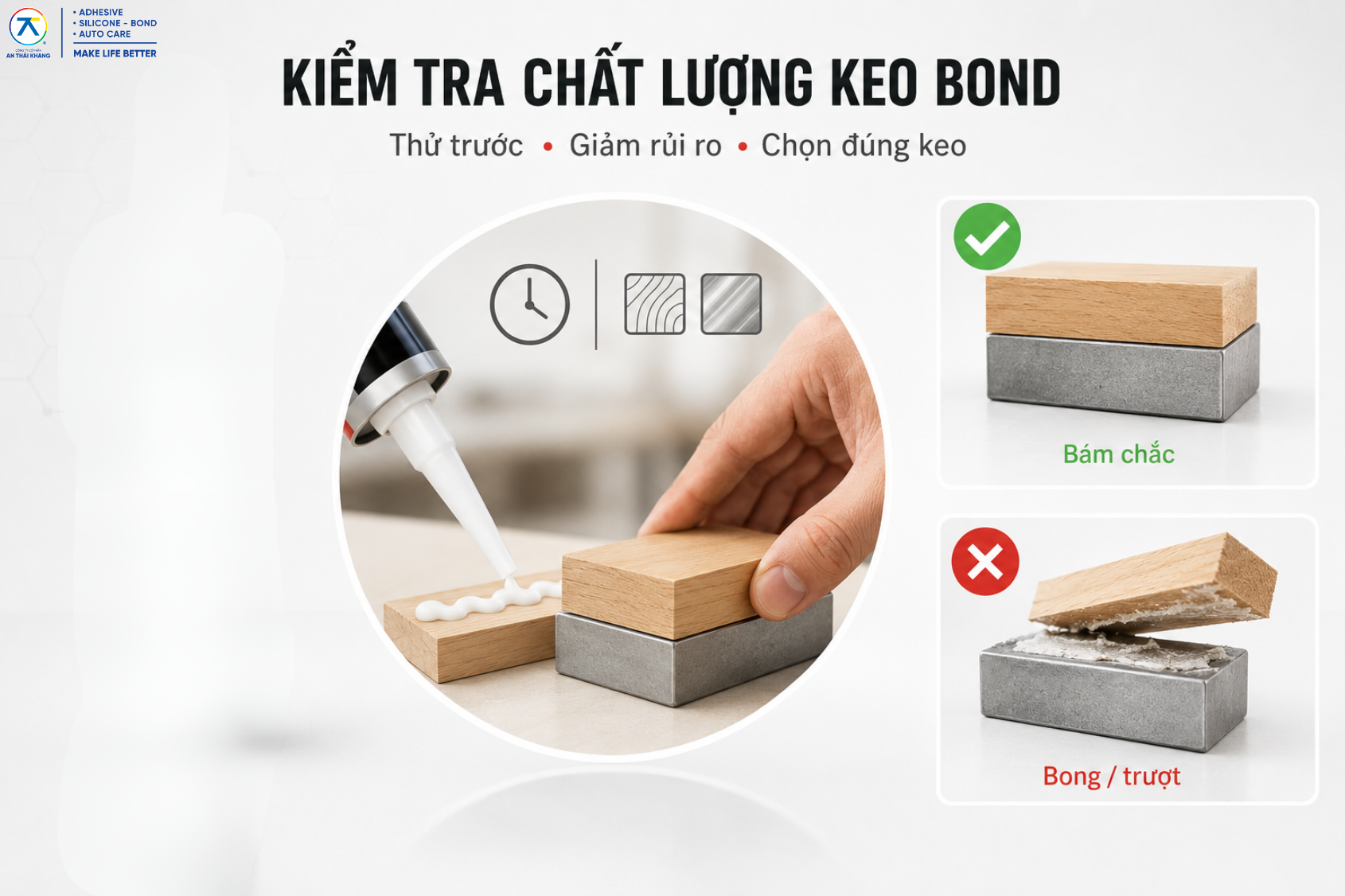
Bond adhesive is often selected for applications that require fast bonding, strong adhesion, and good load-bearing performance. For this reason, the quality of the bond directly affects the durability of the component after installation. If an unsuitable adhesive is used or the surface is not properly prepared, the bond may peel, slip, crack, or lose its fixing ability.
Checking bond adhesive quality before application helps users reduce risks. Instead of applying the adhesive directly to the project and discovering problems later, you can test it first on small material samples. This step is especially necessary when working on difficult-to-bond surfaces, very smooth surfaces, coated materials, or applications that must withstand vibration, pulling force, or shear force.
A basic test does not require complicated equipment. You only need to prepare material samples similar to the actual surfaces, clean them properly, apply a suitable amount of adhesive, press the two surfaces together, and observe the adhesive’s reaction during curing. The results will help determine whether the adhesive is suitable for that specific application.
2. How to Prepare Bond Adhesive Test Samples Properly
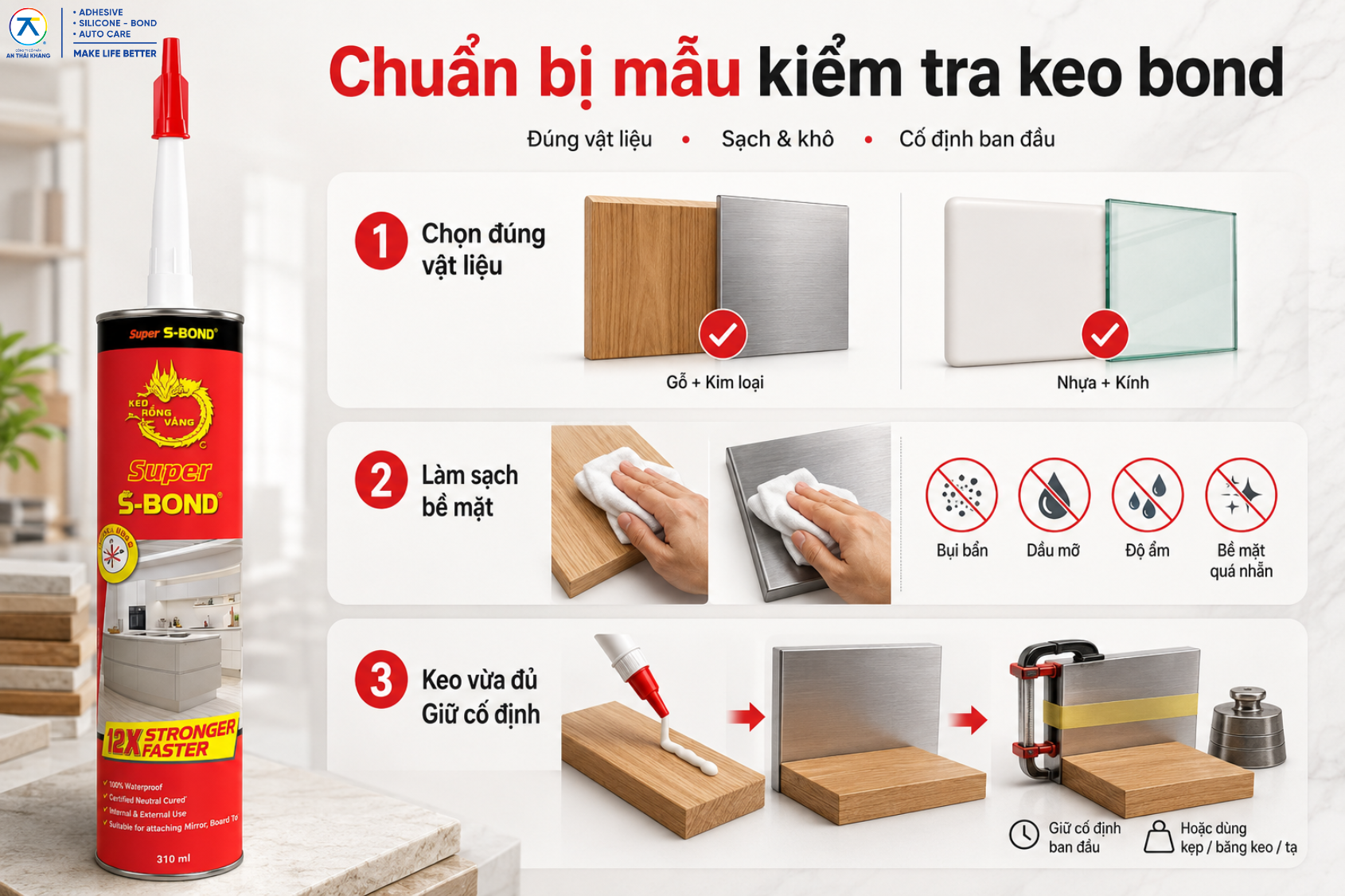
To check bond adhesive accurately, preparation is very important. If the sample surface does not match the actual application or has not been cleaned properly, the test result can easily be inaccurate. In that case, you may mistakenly assume that the adhesive is poor quality, while the real problem lies in the preparation stage.
Before testing, you should choose two material samples that represent the actual bonding application. For example, if the project requires bonding wood to metal, the test sample should also include wood and metal. If you need to bond plastic to glass, the test should use the same or similar types of plastic and glass. You should not test on a different material and then apply the result to the entire project.
2.1. Clean and Dry the Surface
The test surface must be clean, dry, and free from oil and dust. This is the basic condition that allows bond adhesive to deliver its adhesion performance. If the surface contains oil, moisture, or fine dust, the adhesive may bond weakly, create a false bond, and peel off easily after being exposed to force.
If the surface is too smooth, it should be lightly sanded before bonding. Creating a moderate surface roughness gives the adhesive more grip points, thereby improving the stability of the bond. After sanding, the dust generated must be wiped away before applying the adhesive.
2.2. Use a Suitable Amount of Adhesive
When testing bond adhesive, you should not apply too much adhesive. An overly thick adhesive layer may take longer to stabilize, overflow from the edges, and make the observation result less accurate. On the other hand, if too little adhesive is used, there will not be enough bonding material between the two surfaces, causing gaps or poor load-bearing performance.
A suitable amount of adhesive is enough to cover the contact point between the two surfaces. After pressing the materials together, the adhesive may spread slightly but should not overflow excessively from the edges. This also helps create a cleaner and neater bond that is easier to evaluate.
2.3. Keep the Sample Fixed During the Initial Stage
Bond adhesive has the advantage of fast bonding, but the joint still needs to remain stable during the initial stage. When the two surfaces are first joined, they should be pressed firmly and kept in the correct position so the adhesive can form a proper bond. If the component moves too early, the bond may become weak or misaligned.
For applications that require high precision, tape, clamps, or weights can be used to temporarily hold the sample in place. This helps the test sample reflect the true adhesion performance of the adhesive instead of being affected by movement while the adhesive has not fully stabilized.
3. How to Check the Adhesion Strength of Bond Adhesive
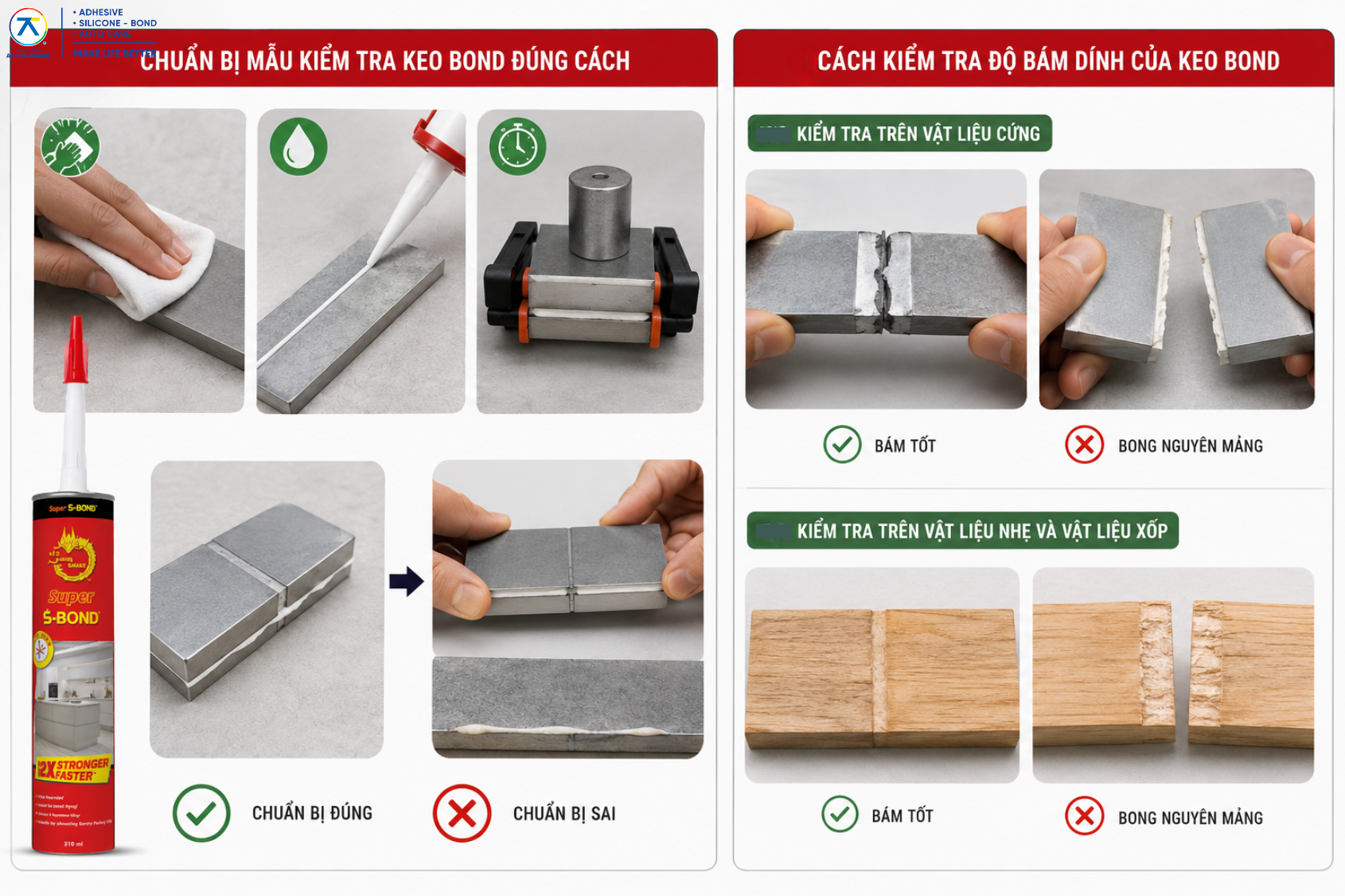
Adhesion strength is the most important factor when evaluating the quality of bond adhesive. A good product should create a firm bond between two surfaces and reduce the risk of full-layer peeling or slipping from the material after being exposed to force.
A simple way to test adhesion is to bond two material samples together, keep them fixed during the initial stage, and then allow the adhesive to stabilize according to the usage instructions. Once the bond has cured, use pulling, bending, or separating force to observe the reaction.
If the adhesive bonds well, the joint will usually not peel cleanly from the surface immediately. The adhesive may stretch, tear within the adhesive layer, or slightly deform a lightweight material. If the adhesive peels off as a whole layer and the surface remains almost as clean as before, this indicates that the adhesion is insufficient or that the surface was not properly prepared.
3.1. Testing on Hard Materials
For hard materials such as metal, glass, alloys, or tiles, you should check both adhesion and resistance to shear force. After bonding, try pushing the two surfaces in opposite directions. If the joint slips easily, the adhesive may not be suitable for applications that need to withstand horizontal force.
When used for decorative components, interior accessories, or installation materials, this test helps reduce the risk of parts becoming misaligned after a period of use. This is a common issue when the surface is too smooth, still contains dust, or when the amount of adhesive is insufficient.
3.2. Testing on Lightweight and Porous Materials
For wood, plastic, rubber, or certain lightweight materials, users should observe how the adhesive interacts with the surface and how stable the bond is after curing. A qualified bond should hold the component firmly without edge peeling, layer separation, or surface damage when used correctly.
For sensitive materials, testing on a small area first is recommended. This helps check whether the adhesive is compatible with the surface, especially when the surface has paint, a finishing layer, or plastic components that are difficult to bond.
4. How to Check Drying Speed and Bond Stability
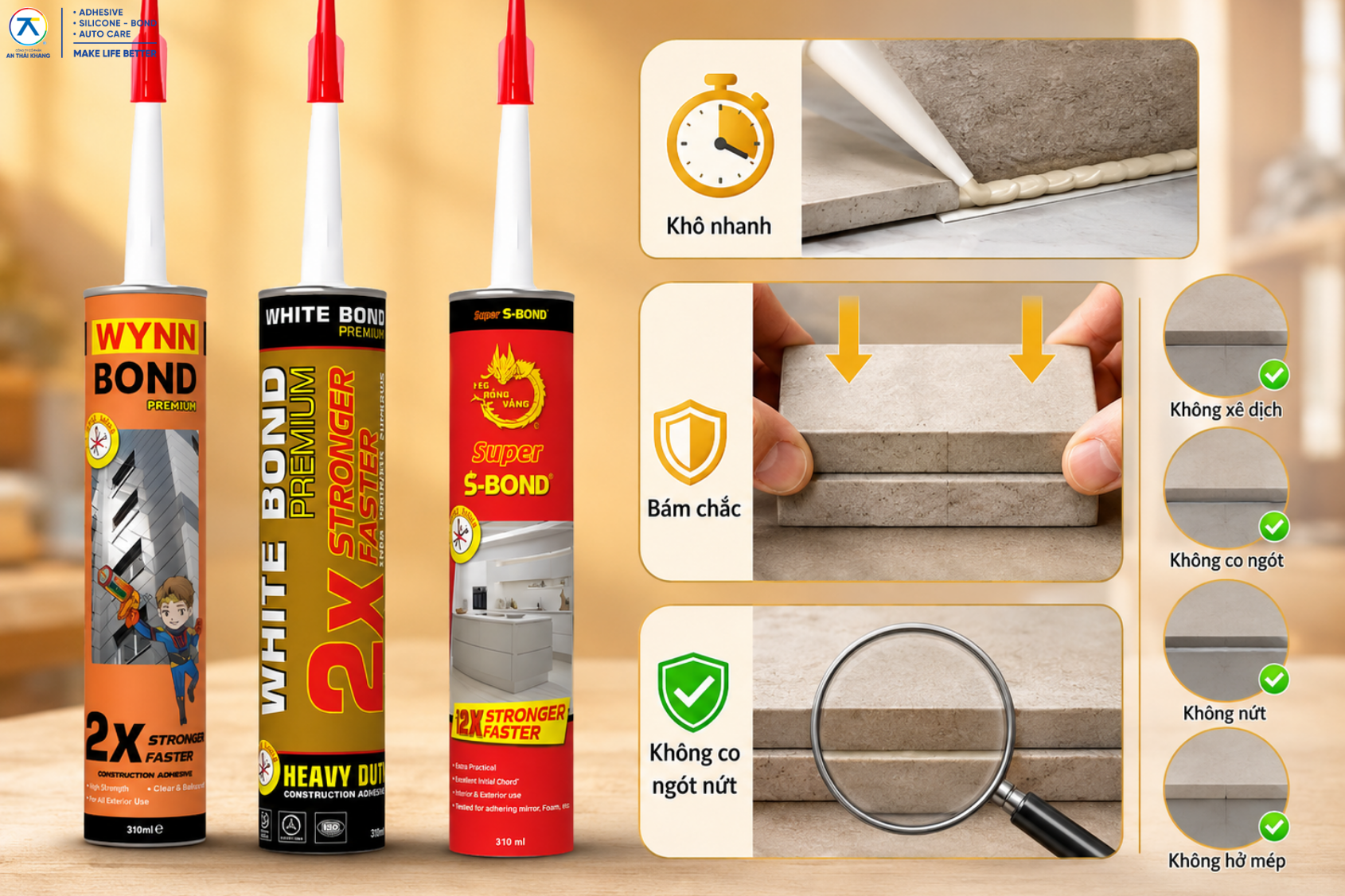
Bond adhesive is often preferred for applications that require fast installation. Therefore, setting speed is an important factor to test. However, fast drying does not mean bond stability can be ignored. A good product should both shorten waiting time and maintain a strong bond after curing.
To test this, apply the adhesive to the material sample, join the two surfaces, and keep them fixed during the initial stage. After a short period, check whether the component slips, shifts, or comes apart. Continue observing after the adhesive has cured more deeply to evaluate whether the bond remains stable over a longer period.
4.1. Do Not Evaluate Adhesive Based Only on Drying Speed
Some users only care whether the adhesive dries quickly or slowly. This is not enough. An adhesive that dries quickly but bonds weakly can still cause problems when the component is exposed to force. In contrast, an adhesive that needs more time to stabilize but creates a stronger bond may be more suitable for applications that require durability.
Therefore, when checking bond adhesive quality, both initial fixing speed and bond strength after curing should be considered. This is a more practical evaluation method than simply touching the adhesive to see whether it has dried.
4.2. Observe Shrinkage and Cracking in the Bond
After the adhesive has cured, observe whether the bond shows signs of shrinkage, cracking, edge gaps, or unusual discoloration. For bond adhesive used in interior decoration, these issues may affect appearance. For components that need to withstand force, shrinkage or cracking can reduce bonding durability.
A qualified bond should retain its thickness, have no gaps at the base, and not cause the component to shift. If the adhesive shrinks significantly after curing or gaps appear in the joint, you should recheck the amount of adhesive used, the cleanliness of the surface, and the type of adhesive being applied.
5. Testing Bond Adhesive Under Actual Usage Conditions

Bond adhesive should not be evaluated only under ideal conditions and then immediately applied to every type of project. A better approach is to test it under conditions that closely resemble the actual application environment. If the project is located outdoors, the test sample should be placed in an environment with changes in temperature, humidity, or wind. If the bond is used for interior applications, you should also check its stability when the component is exposed to slight vibration or For adhesive lines such as Super S-Bond, WynnBond, and WhiteBond, their common advantage is that they are designed for fast bonding, good adhesion, and flexible application on many materials. However, each project still has its own requirements. An adhesive that is suitable for fixing interior accessories may not necessarily be suitable for surfaces that are frequently immersed in water or for structural glazing applications.
It is especially important to avoid using bond adhesive in environments that fall outside the product’s recommended applications. Surfaces that are frequently immersed in water, areas that come into direct contact with food, or structural glass applications should be handled with more specialized solutions. If the adhesive is used in the wrong environment, the bond may deteriorate quickly even if it appears to adhere well at first.
6. Suggestions for Choosing Bond Adhesive by Application Need
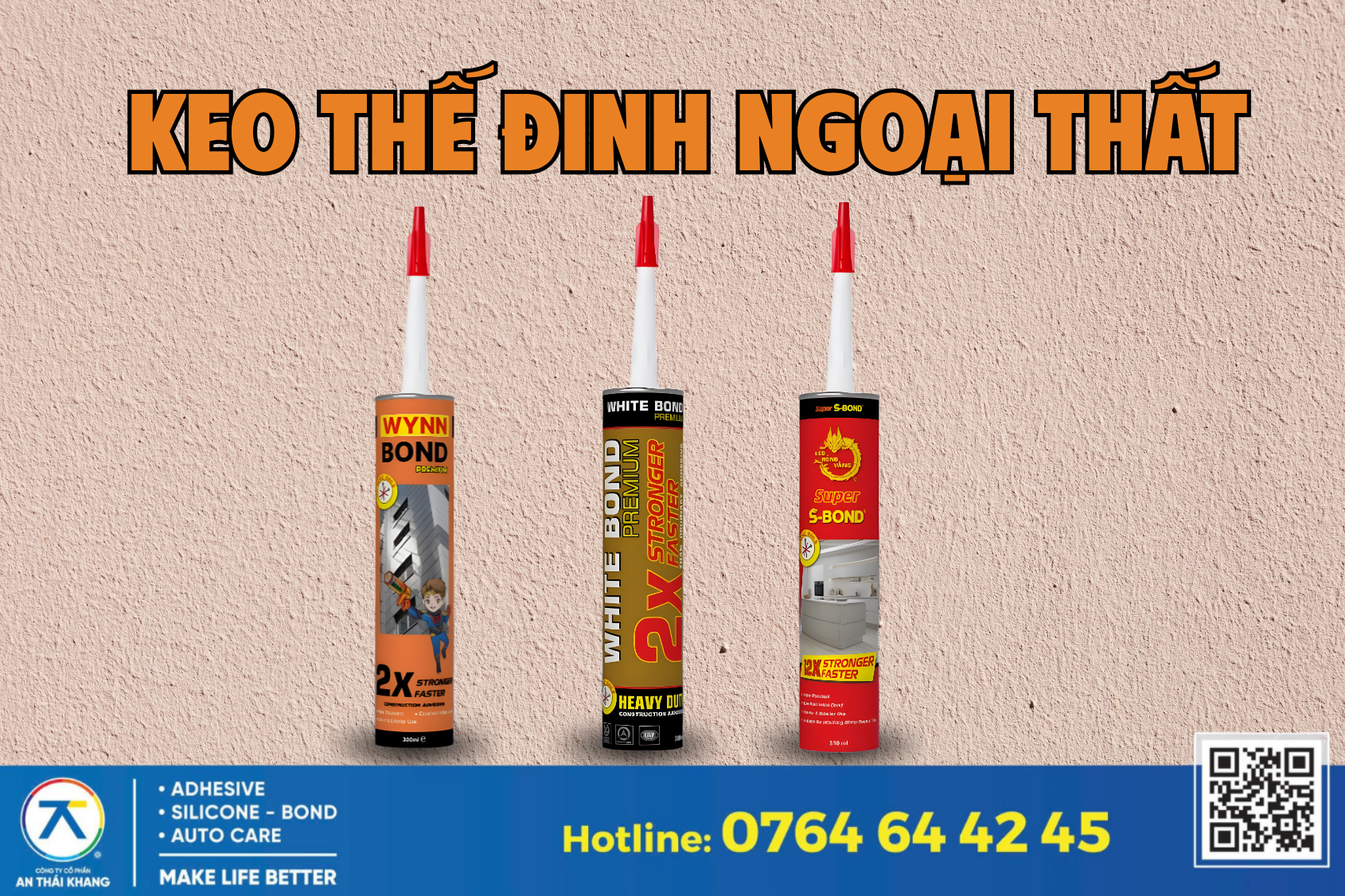
When choosing bond adhesive, you should not rely only on the product name or choose based on habit. A more reasonable approach is to consider the material to be bonded, appearance requirements, application speed, and usage conditions after completion.
If you need a structural adhesive for various interior and exterior applications, assembly work, or fast fixing of materials such as wood, metal, plastic, glass, rubber, and alloys, Super S-Bond is a suitable option to consider. This product line is appropriate for tasks that require quick handling and strong bonding in a short time.
For applications that require high adhesion, good load-bearing capacity, and flexible use in construction, decoration, or household repairs, WynnBond can be selected for positions that need fast bonding while still maintaining bond stability. This group is suitable for users who need a product that is easy to apply and works on many common surfaces.
WhiteBond is suitable when users need a milky-white adhesive joint that can be easily applied in areas requiring a clean and bright appearance. For interior components, accessories, or positions that need a neat finished surface, adhesive color should also be considered alongside adhesion strength and drying speed.
6.1. When Application Speed Is the Priority
If the application requires fast fixing, prioritize an adhesive with quick setting ability and easy handling. However, it should still be tested first on the actual material to ensure that the adhesive not only bonds quickly but also holds firmly after curing.
6.2. When Bond Appearance Is the Priority
If the bonding position is visible, the color and neatness of the adhesive joint should be considered. In this case, users should choose an adhesive color that matches the material and check for overflow, surface staining, or marks left after wiping.
6.3. When Long-Term Durability Is the Priority
For applications that must withstand vibration, pulling force, or shear force, more careful testing is needed instead of simply bonding by hand. Allow the sample to cure for the required time, then test it with pulling force, sliding force, and observe the bond after impact. If the joint remains stable, does not peel at the edges, and does not slip, the product may be suitable for the intended application.
7. Conclusion
Bond adhesive is a suitable choice for many applications that require fast bonding, strong adhesion, and flexible installation. However, for the product to perform effectively, users need to check its quality before applying it on a large scale. A simple test of the surface, adhesion strength, drying speed, stability, and load-bearing capacity can help detect many risks early.
When testing bond adhesive, always start with a clean, dry surface that is free from oil and dust. Then, apply a suitable amount of adhesive, keep the sample fixed during the initial stage, and observe the bond after curing. If the adhesive bonds firmly, does not peel at the edges, does not slip, does not show abnormal shrinkage, and is suitable for the actual material, these are signs that the product can meet the application requirements.
With product lines such as Super S-Bond, WynnBond, and WhiteBond, An Thái Khang offers structural adhesive options suitable for many materials and applications. Choosing the right adhesive, testing it properly, and applying it under the right conditions will help create a more durable, cleaner bond while saving time on error correction later.
AN THAI KHANG JSC
- • Fanpage: An Thái Khang JSC
- • Hotline: 0764 644 245
- • Email: support@anthaikhang.com
- • Website: https://anthaikhang.com/