
Repairing Office Chairs with Specialized Adhesives
Repairing office chairs requires choosing the right adhesive to fix issues such as peeling edges, detached synthetic leather, exposed foam, or loose components. Learn how Gold Dragon Adhesive can support stronger and more durable.
1. What should you pay attention to when repairing office chairs?
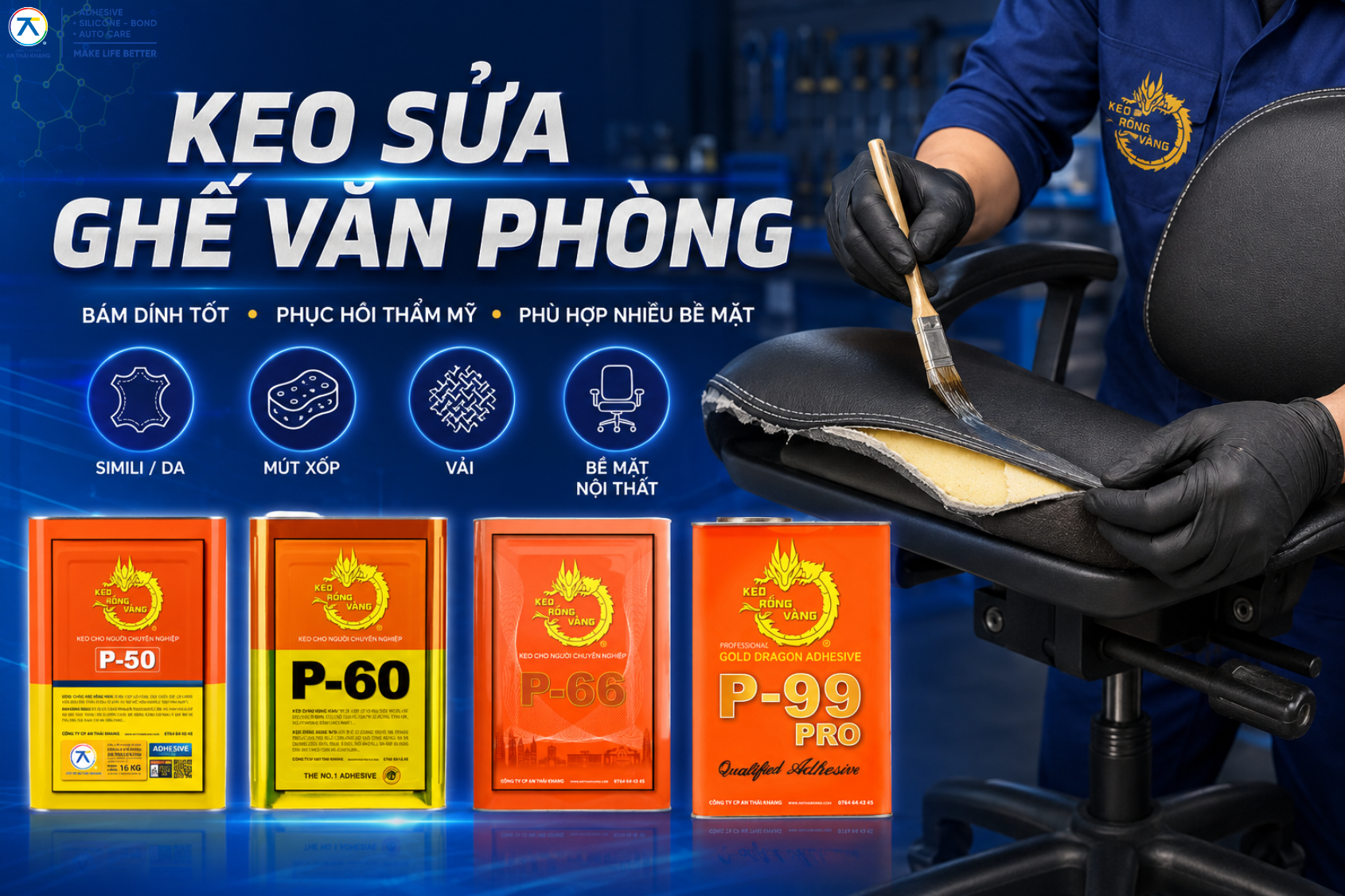
Office chair repair is a common need in companies, workplaces, furniture workshops, and units specializing in equipment maintenance. After a period of use, office chairs may develop various issues such as peeling synthetic leather, detached leather edges, exposed foam, loose upholstery details, or reduced firmness in areas that are frequently in contact with the user. These problems not only affect the appearance of the chair but also reduce sitting comfort and overall durability.
In many cases, users often think that replacing the chair is the quickest solution. However, if the chair frame is still in good condition, repairing the office chair with specialized adhesive can help save costs and extend its service life. This is especially useful for issues related to upholstery surfaces, chair foam, or decorative material layers, where choosing the right adhesive can make the repair process more effective.
An important point when repairing office chairs is to correctly identify the materials that need to be bonded. Office chairs often combine synthetic leather, faux leather, fabric, foam, plastic, wood, or other interior components. Therefore, the adhesive used for chair repair must provide stable adhesion on various surfaces while maintaining enough elasticity to prevent peeling during use.
2. Why should specialized adhesives be used for office chair repair?
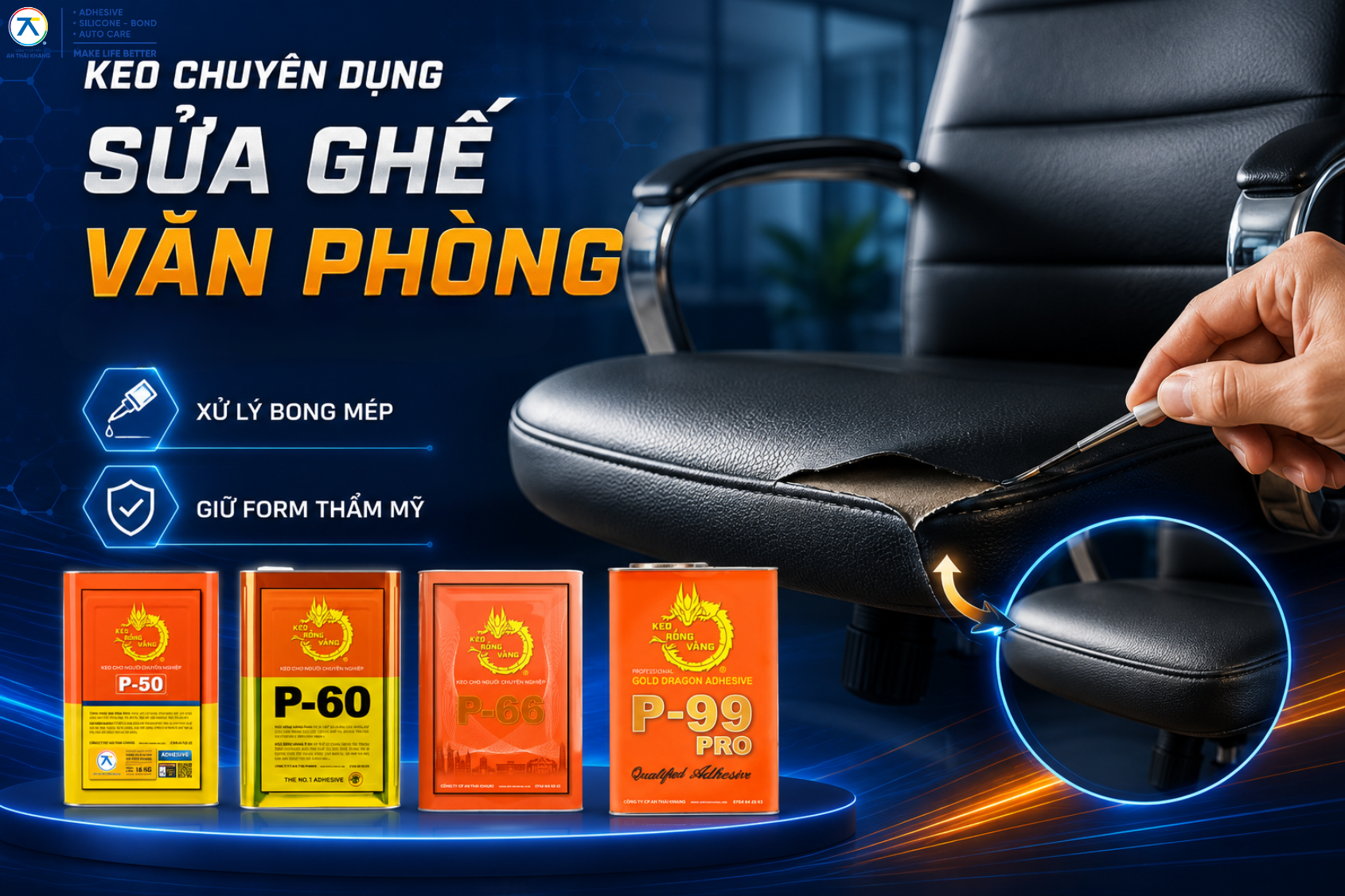
Not every type of adhesive is suitable for repairing office chairs. Some common adhesives may provide quick initial tack, but after a period of use, they can easily peel, harden, or affect the chair’s appearance. Office chairs are products that are frequently exposed to sitting pressure, friction, and movement, so the adhesive layer needs to maintain strong adhesion under repeated daily use.
Specialized adhesives help make the repair process more stable because they are designed to bond materials with different characteristics. In areas such as chair edges, backrests, seats, or synthetic leather upholstery, the adhesive layer needs to spread evenly, resist edge peeling, and avoid affecting the original shape of the chair.
2.1. Helping fix peeling edges and detached upholstery
One of the most common issues when repairing office chairs is the outer upholstery layer separating from the foam or supporting frame. If the material is only pressed back without using a suitable adhesive, the surface may come loose again after a short time. Specialized adhesive helps create a stronger bond between the upholstery and the base layer underneath, thereby reducing repeated peeling.
2.2. Supporting chair shape retention after repair
When repairing areas with foam or soft upholstery, the adhesive needs to have a certain level of elasticity so the chair can still provide a natural sitting feel. If the adhesive is too hard, the chair surface may develop creases, uneven bumps, or lose its original softness. Therefore, choosing the right adhesive helps the repaired chair become both firm and aesthetically pleasing.
3. Gold Dragon Adhesive for office chair repair needs
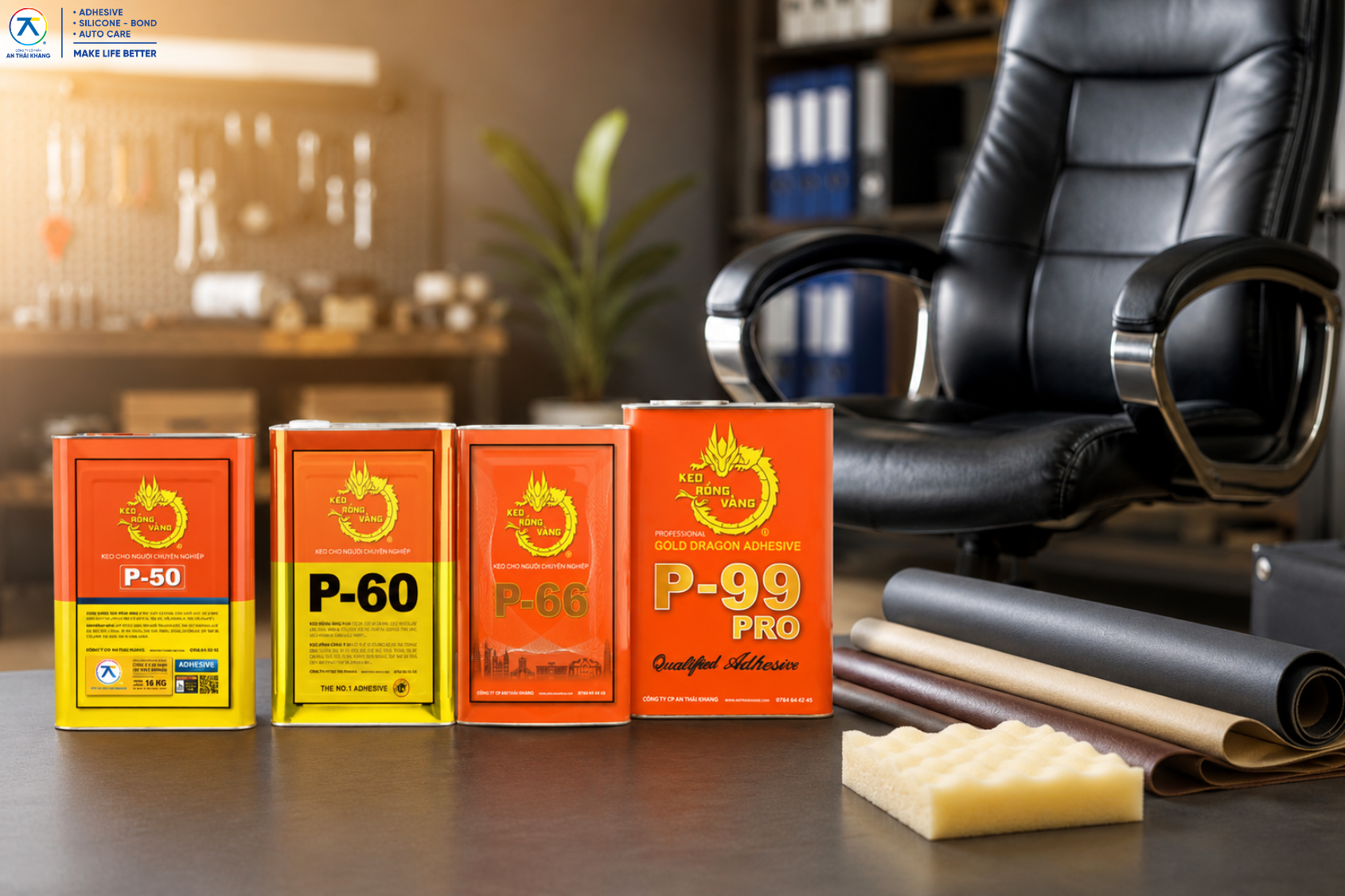
Gold Dragon Adhesive is a solvent-based yellow adhesive developed by An Thai Khang, offering stable bonding performance on many types of materials. This adhesive line provides high adhesion, good elasticity, fast drying, and can be applied in various fields such as furniture, footwear, foam, synthetic leather, construction materials, and certain other industrial materials.
For office chair repair needs, features such as strong adhesion, elasticity, and compatibility with synthetic leather, foam, and furniture materials are highly important. Areas such as the seat, backrest, upholstery edges, or inner foam often require a stable adhesive layer to reduce peeling during use. When applied properly, the adhesive can help fix common defects and keep the chair looking neat and well-finished.
For furniture repair units, office maintenance teams, or chair manufacturing facilities, adhesive is not only a supporting material but also a factor that directly affects the quality of the finished repair. A suitable adhesive helps save rework time, reduce edge-peeling defects, and improve the final appearance after repair.
See An Thai Khang’s Gold Dragon Adhesive lines here.
4. Cases where adhesive can be used for office chair repair
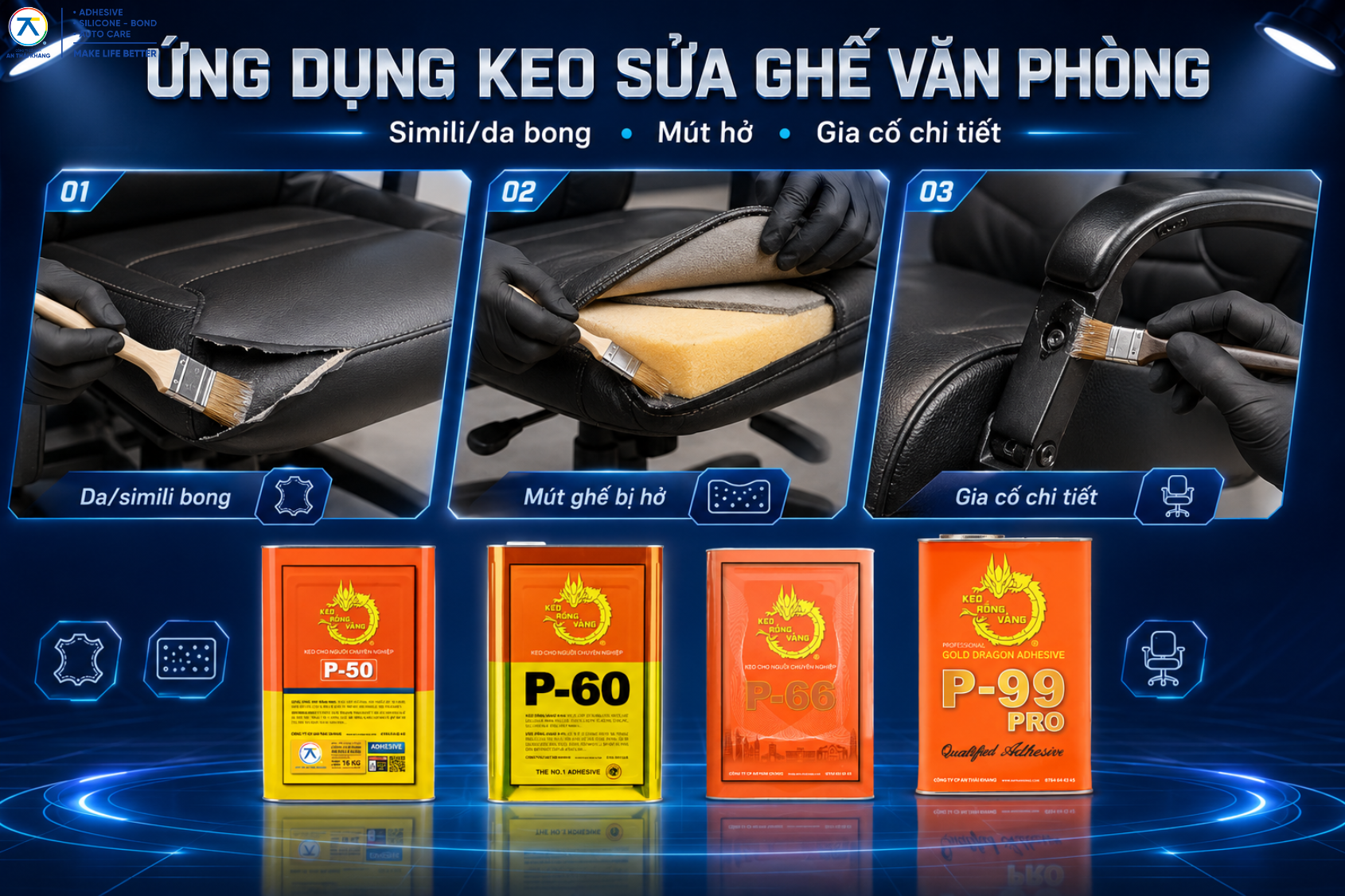
Specialized adhesive can be used in many different office chair repair situations. Depending on the level of damage, users can carry out localized repairs or combine adhesive with other reinforcement steps to improve the chair’s firmness.
4.1. Repairing peeling synthetic leather or chair upholstery
Office chairs upholstered with synthetic leather or faux leather are often prone to edge peeling after long-term use, especially around the seat and backrest areas. When the upholstery layer separates from the foam, adhesive can be used to secure the surface again, helping the chair look neater and preventing the damage from spreading.
Before bonding, dust, old adhesive, or debris on the surface should be cleaned thoroughly. This helps the adhesive spread more evenly and reduces the risk of peeling again after repair.
4.2. Rebonding exposed chair foam
Some office chairs may develop exposed foam or separation between the foam and upholstery surface after long-term use. In this case, the adhesive needs to provide good bonding performance while still maintaining a certain level of softness so the seat does not become hard or uncomfortable.
A suitable adhesive helps secure the foam, reduce shifting, and support the chair in retaining its original shape. This is an important step if users want the repaired office chair to be both sturdy and comfortable to use.
4.3. Reinforcing interior details on the chair
In addition to upholstery and foam, some interior details on the chair may also need to be bonded or reinforced. Depending on the specific material, users should choose an adhesive with good compatibility to ensure strong adhesion and a clean appearance after completion.
5. How to use adhesive for more effective office chair repair
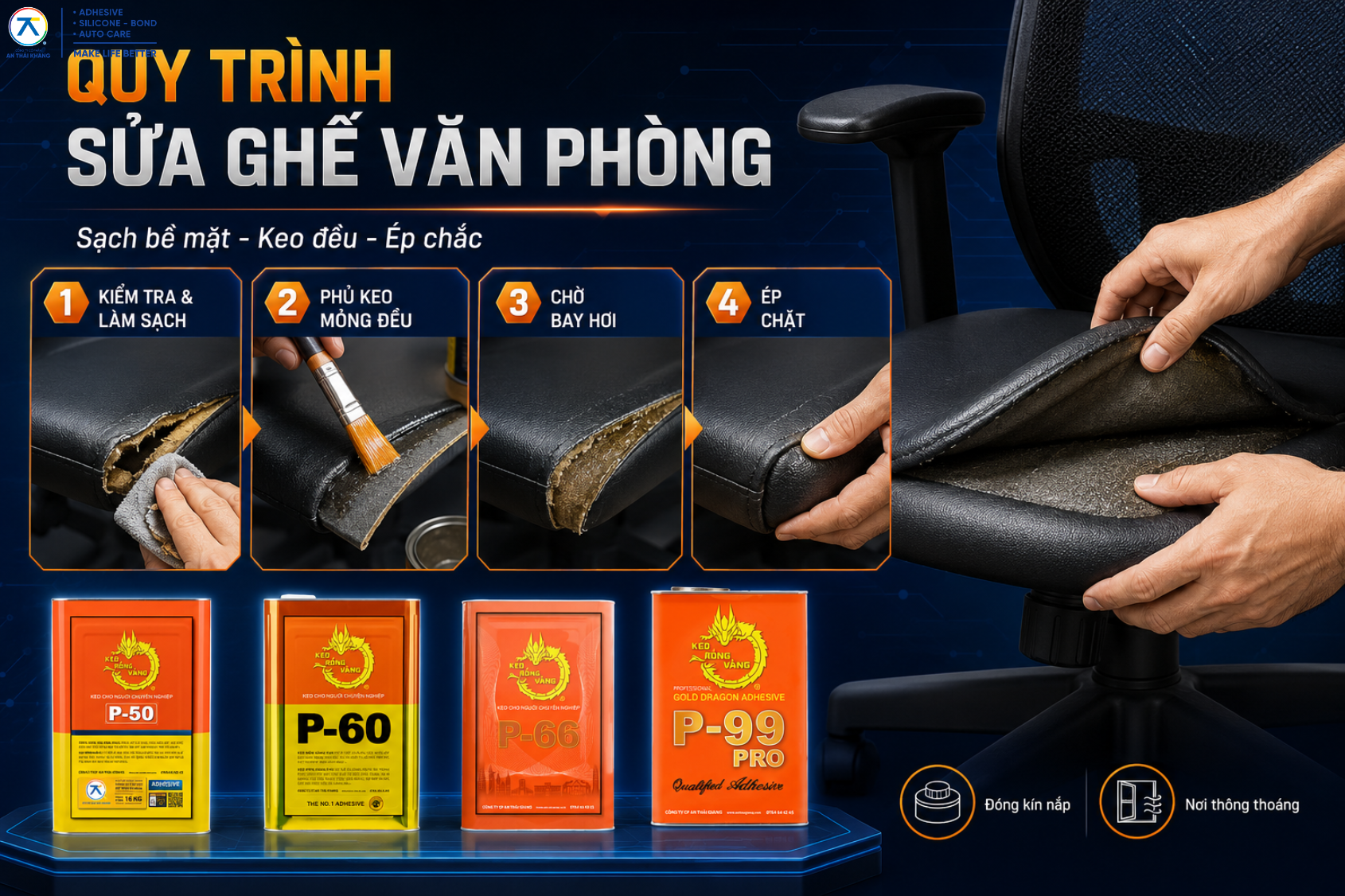
To achieve good results when repairing office chairs, proper application is just as important as choosing the right adhesive. First, the chair should be inspected to identify peeling, open, or separated areas. If the surface contains dust, oil, old adhesive, or impurities, it must be cleaned thoroughly before bonding.
After the surface is dry and clean, a thin and even layer of adhesive can be applied to the area that needs to be bonded. Using too much adhesive is not recommended, as it may cause overflow, take longer to dry, or affect the appearance of the chair. For soft surfaces such as synthetic leather, faux leather, or foam, an even adhesive layer will help create a more stable bond.
Users should clean the surfaces, apply adhesive to both sides, wait for the solvent to evaporate, and then press the surfaces firmly together to achieve better adhesion. When using solvent-based adhesives, the lid should be tightly closed after use, and application should be carried out in a well-ventilated area to ensure safety.
6. Notes when choosing adhesive for office chair repair
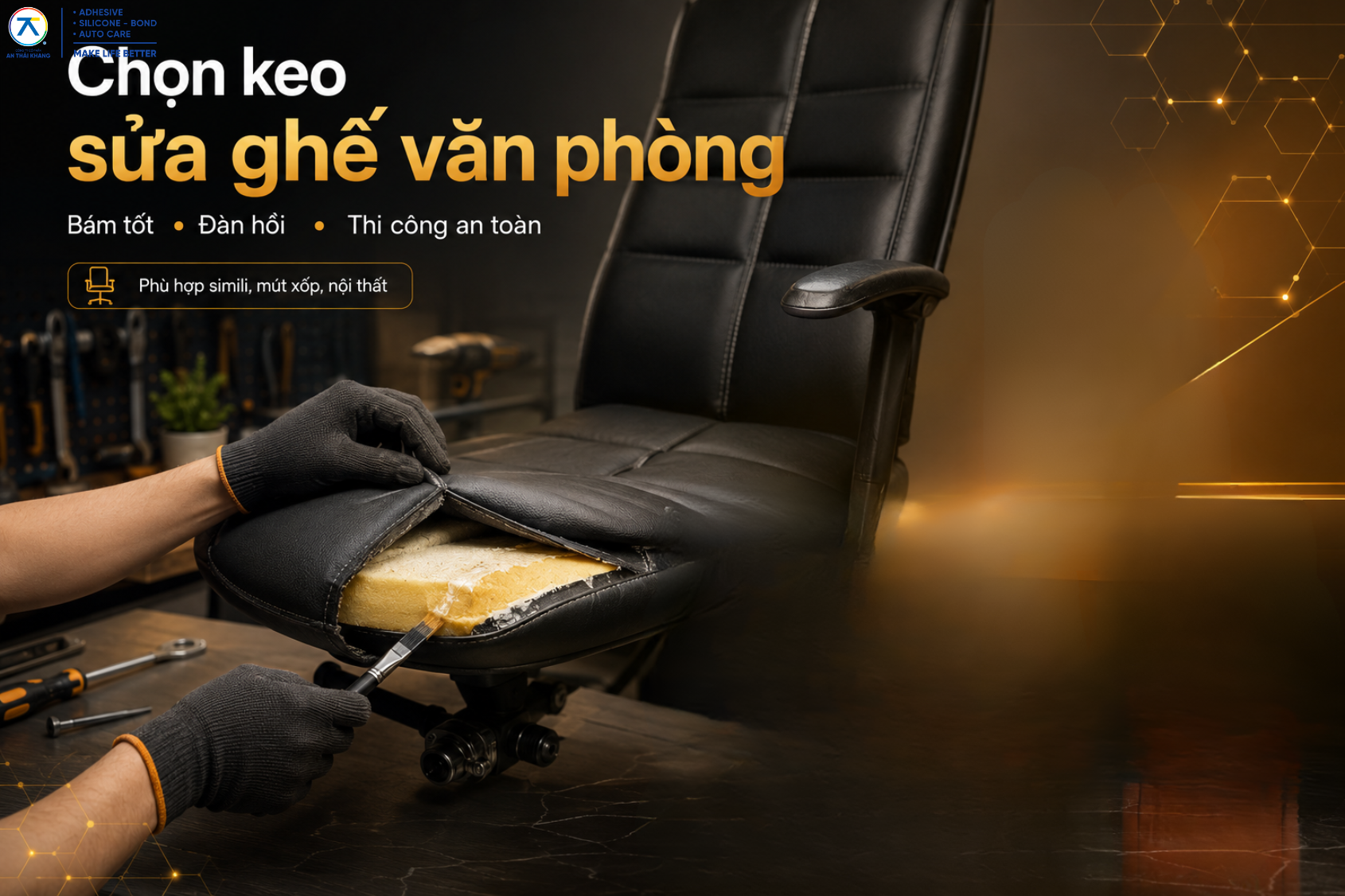
When choosing an adhesive for office chair repair, users should prioritize products that are suitable for the actual materials of the chair. If the chair is upholstered with synthetic leather, faux leather, or contains foam parts, the adhesive should have good adhesion on these surfaces. If the chair also includes wood, plastic, or decorative furniture components, material compatibility should be considered to avoid peeling after repair.
In addition to adhesion, elasticity is also an important factor. Office chairs are frequently exposed to sitting pressure and movement, so the adhesive layer needs to remain stable without becoming too hard. A bonded layer that is too rigid may cause the surface to crease or create an unnatural feeling during use.
Users should also pay attention to storage conditions and application safety. Solvent-based adhesives should be stored in a dry, cool, and well-ventilated place, away from heat sources and direct sunlight. During application, the adhesive should be used in a well-ventilated area, and smoking or placing it near heat sources should be avoided to ensure safety.
7. Conclusion
Office chair repair is a suitable solution when chairs have peeling upholstery, exposed foam, detached edges, or certain interior details that need reinforcement. Instead of replacing the entire chair, users can choose a specialized adhesive to fix common issues, helping the chair become sturdier and more aesthetically pleasing after repair.
Gold Dragon Adhesive by An Thai Khang is a suitable choice for many furniture bonding needs, especially for common materials such as synthetic leather, foam, and surfaces that require stable adhesion. When the right adhesive is selected and applied properly, the office chair repair process can achieve better results, reduce peeling, and help extend the chair’s service life.
AN THAI KHANG JSC
- • Fanpage: An Thái Khang JSC
- • Hotline: 0764 644 245
- • Email: support@anthaikhang.com
- • Website: https://anthaikhang.com/