
What is Silicone? Its Composition and How to Choose the Right Type
Silicone is a common sealing, bonding, and waterproofing material used in construction. Learn about its composition, curing mechanism, and how to choose the right silicone for each surface.
Silicone is widely used for sealing gaps, bonding materials, and waterproofing in construction, interior and exterior applications, aluminum-glass systems, and many residential projects. Thanks to its elasticity, adhesion, and excellent sealing performance, silicone helps treat gaps between glass, aluminum, ceramic tiles, metal, concrete, mortar, and many other surfaces.
A properly applied silicone sealant bead can help prevent water, dust, moisture, and air from entering through joints. On the other hand, if the wrong type of silicone is selected, the sealant bead may peel, crack, become discolored, or fail to achieve the expected durability.
Therefore, to choose the right product, users need to understand what silicone is, what silicone sealant is made of, and which type of silicone is suitable for each application.
1. What is Silicone and Why Is It Widely Used?
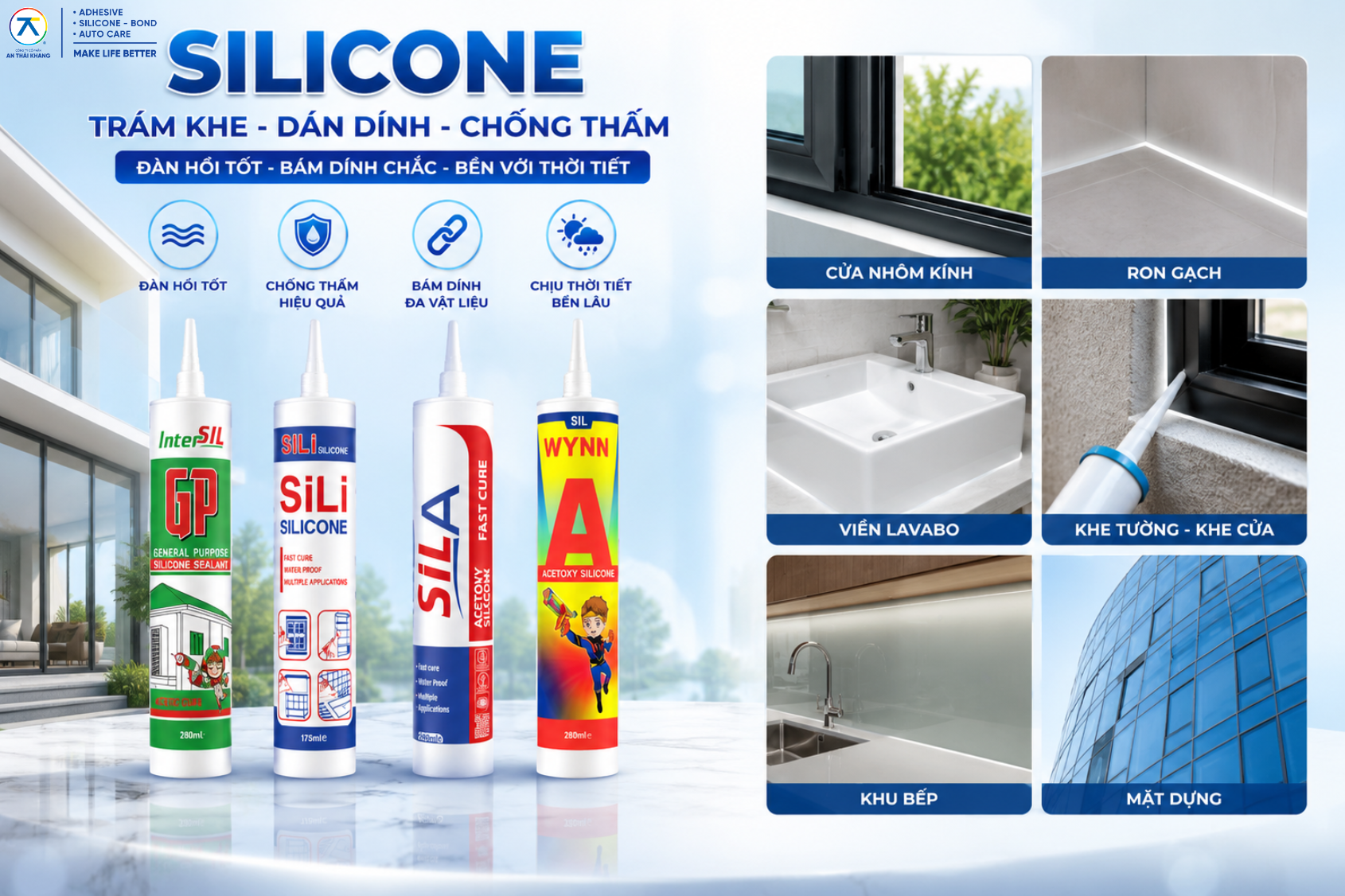
Silicone is an adhesive-like material that can cure when exposed to moisture in the air. After curing, it forms an elastic rubber-like layer with good adhesion to various surfaces such as glass, aluminum, ceramic tiles, ceramics, metal, painted wood, concrete, and mortar.
In construction, materials often expand and contract slightly due to temperature, humidity, or environmental impact. If rigid materials are used to fill gaps, the joints may crack or peel over time. Silicone solves this problem thanks to its elasticity, allowing the sealant bead to remain tight even when the surface moves slightly.
As a result, silicone is commonly used for aluminum-glass doors, glass partitions, tile joints, wall edges, washbasins, bathrooms, kitchens, façades, and many other areas that require a clean and aesthetic finish.
2. Basic Composition of Silicone Sealant
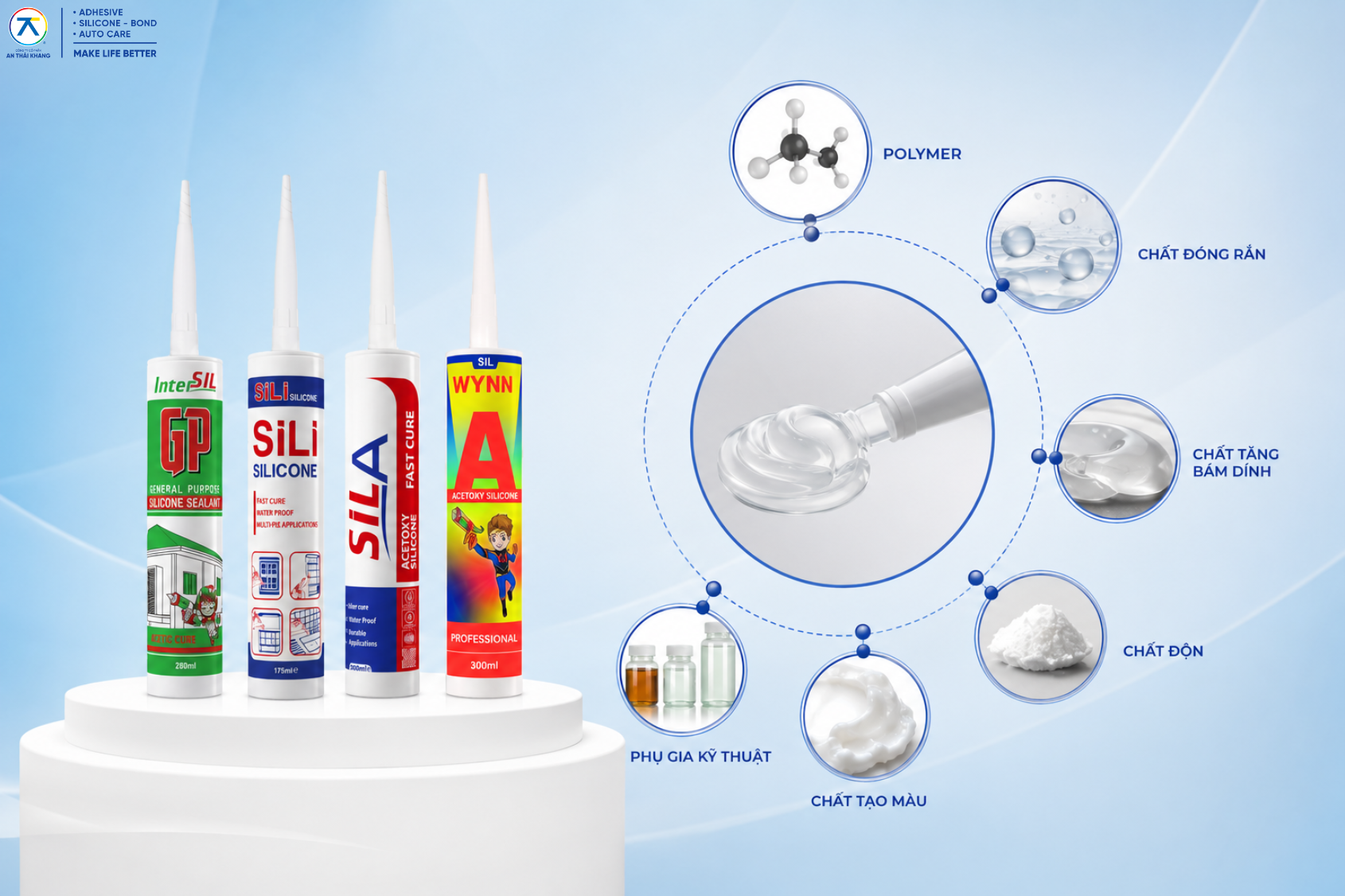
Silicone sealant is not made from just one single component. A typical silicone product is usually composed of a silicone polymer base, curing agents, adhesion promoters, fillers, colorants, and technical additives.
2.1. Silicone Polymer Provides Elasticity
Silicone polymer is the most important base component. It is the factor that gives the sealant flexibility, elasticity, and the ability to adapt to slight movement of materials after curing.
Thanks to this component, silicone does not become brittle like some conventional gap-filling materials. The sealant bead can maintain long-term tightness, especially in areas such as door frames, glass partitions, wall gaps, or tile joints.
2.2. Curing Agents Help the Sealant Dry and Become More Durable
When first dispensed from the cartridge, silicone is soft and easy to shape. When exposed to moisture in the air, the curing agent helps the sealant gradually transform into an elastic rubber-like layer.
Depending on the formula, silicone can be classified as acid-cure or neutral-cure. Acid-cure silicone usually cures quickly and is suitable for many non-porous surfaces. Neutral-cure silicone is less corrosive and is more suitable for metal, concrete, mortar, wood, and projects that require high durability.
3. Why Does Silicone Provide Good Waterproofing and Adhesion?
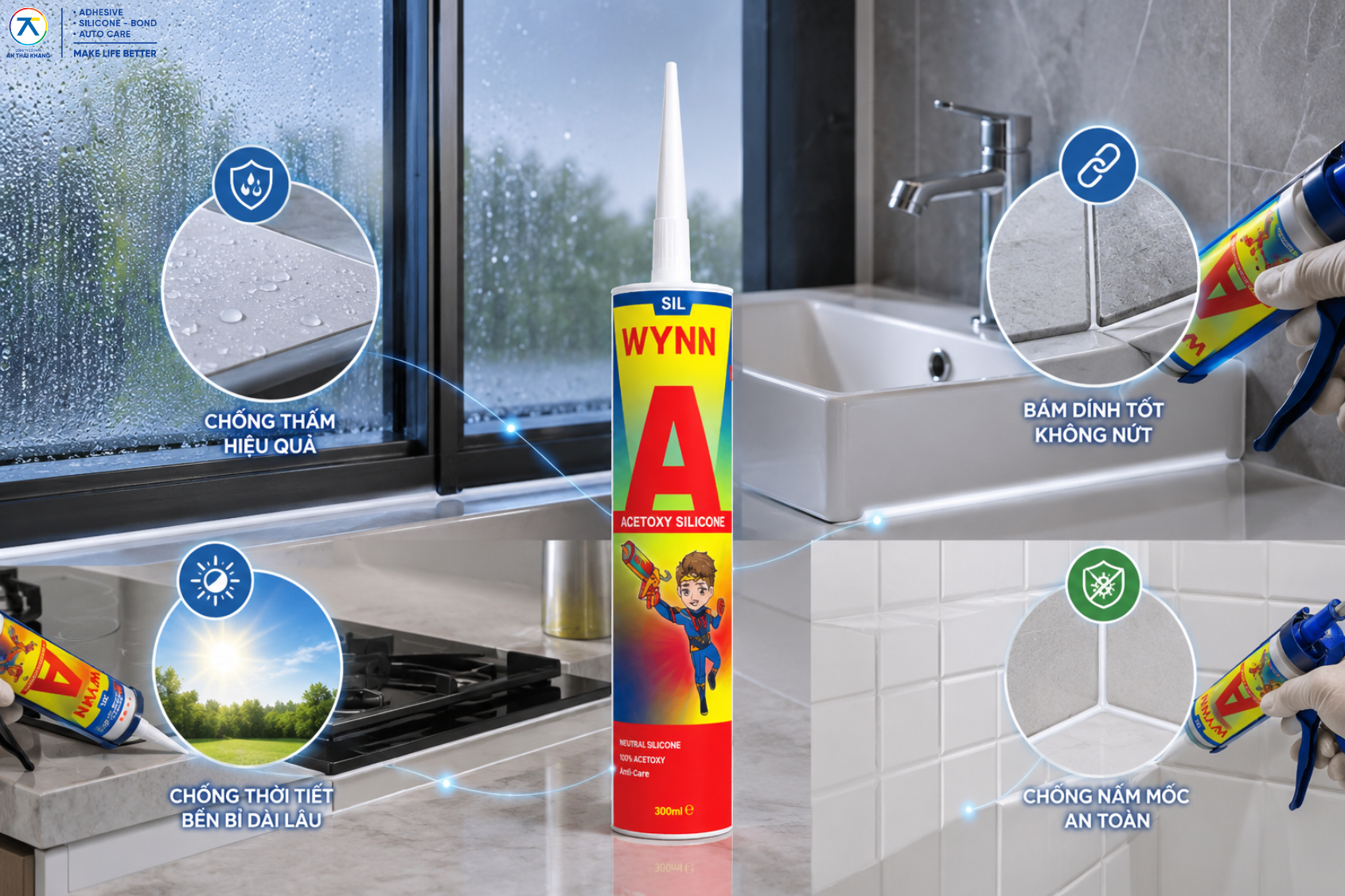
Silicone provides waterproofing because, after curing, it forms a continuous elastic film that covers gaps and helps prevent water from passing through joints. This is why silicone is commonly used around doors, glass, kitchens, bathrooms, balconies, and outdoor areas.
In addition, additives in silicone help improve adhesion, crack resistance, sag resistance, weather resistance, or mold resistance, depending on each product line. Therefore, each type of silicone is suitable for a different group of applications.
For dry areas and general residential applications, acid-cure silicone can be used. For outdoor areas, metal, concrete, mortar, or positions requiring higher durability, neutral-cure silicone or specialized Wacker silicone should be prioritized.
4. Common Types of Silicone
To choose the right sealant, users need to distinguish between three main groups: acid-cure silicone, neutral-cure silicone, and specialized silicone.
4.1. Acid-Cure Silicone
Acid-cure silicone is suitable for general applications such as gap sealing, glass bonding, door joints, tile joints, and residential repairs. This group is usually easy to apply, cures quickly, and adheres well to non-porous surfaces such as glass, ceramic tiles, aluminum, metal, or rigid plastic.
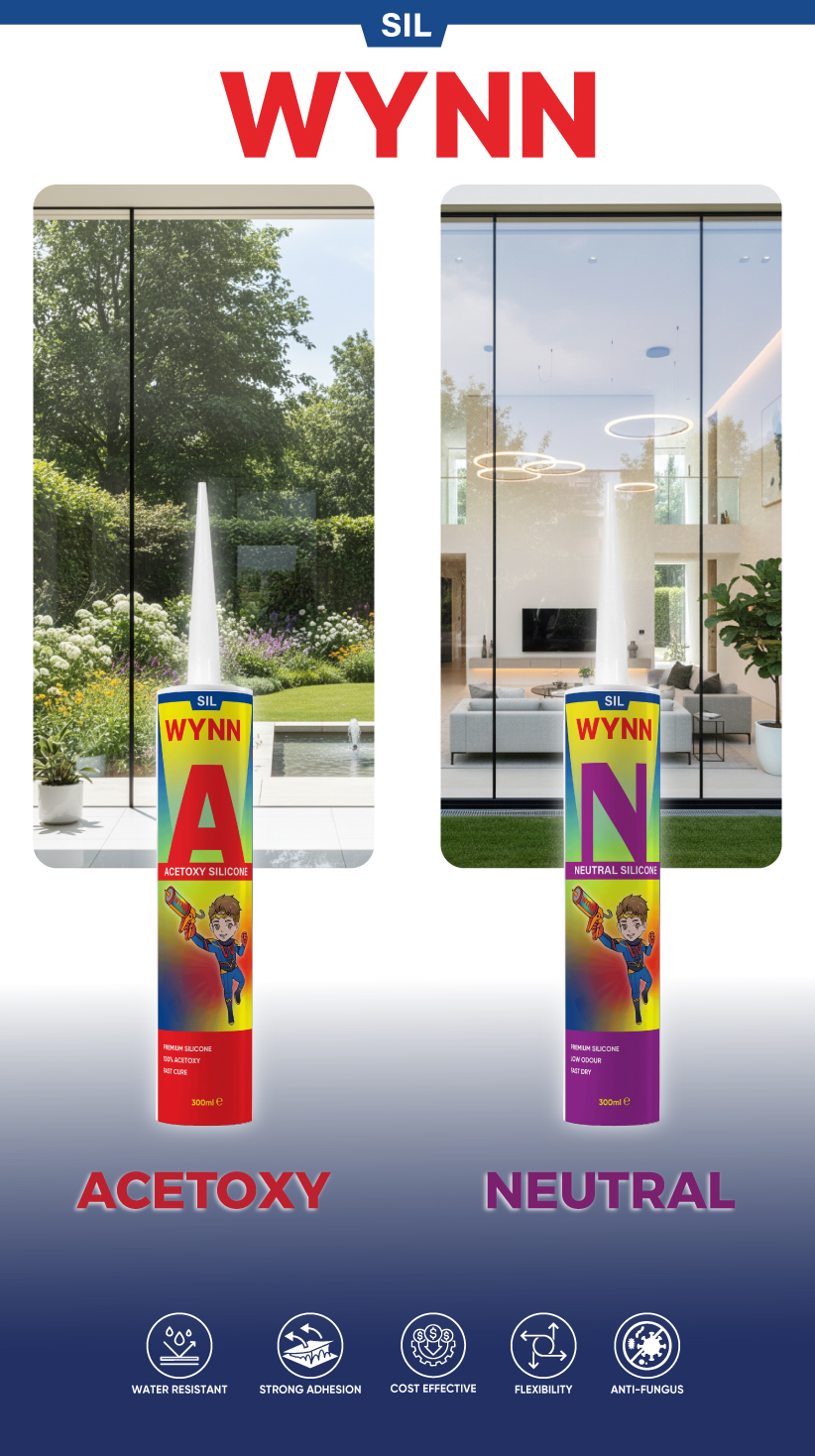
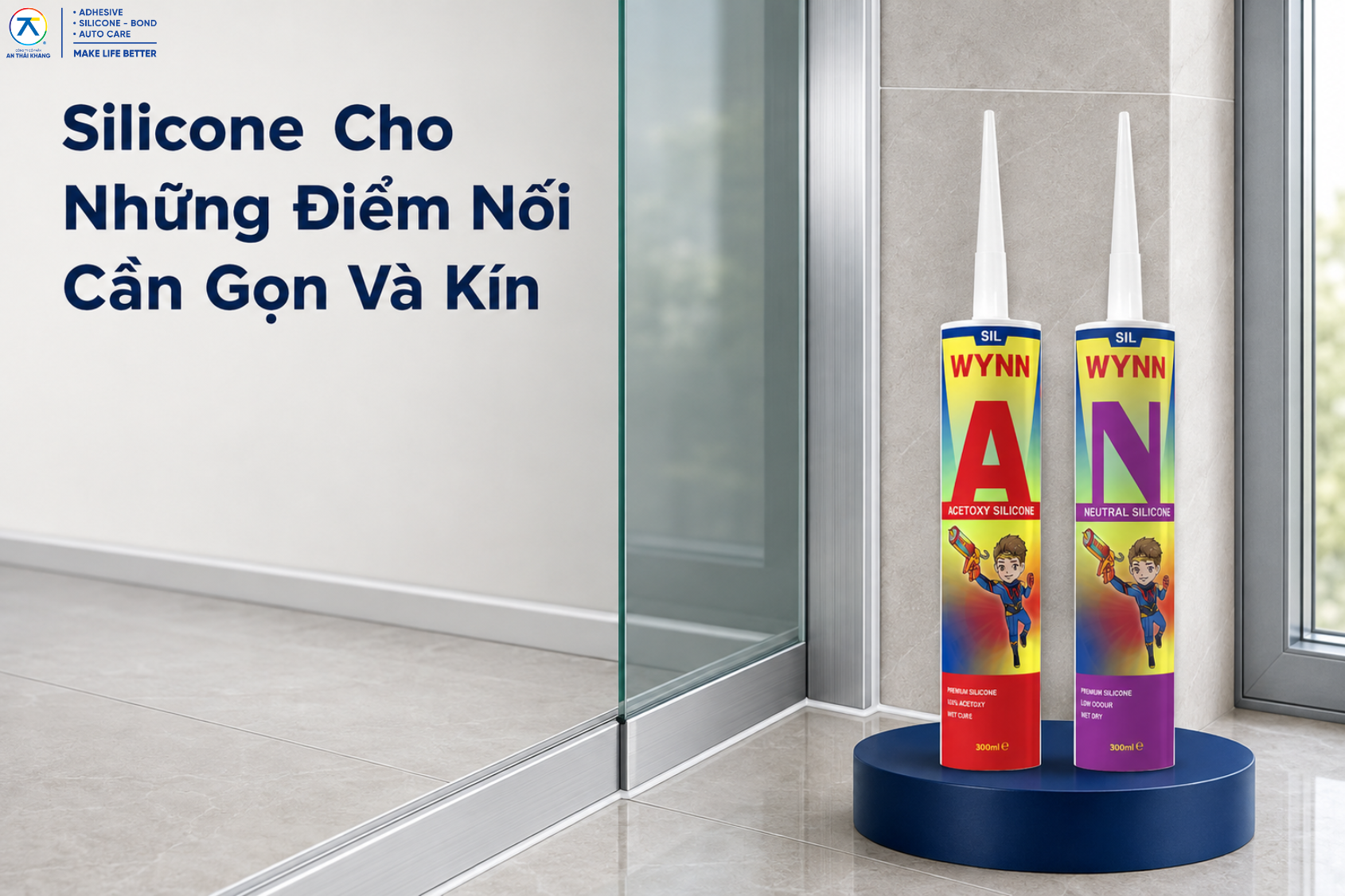
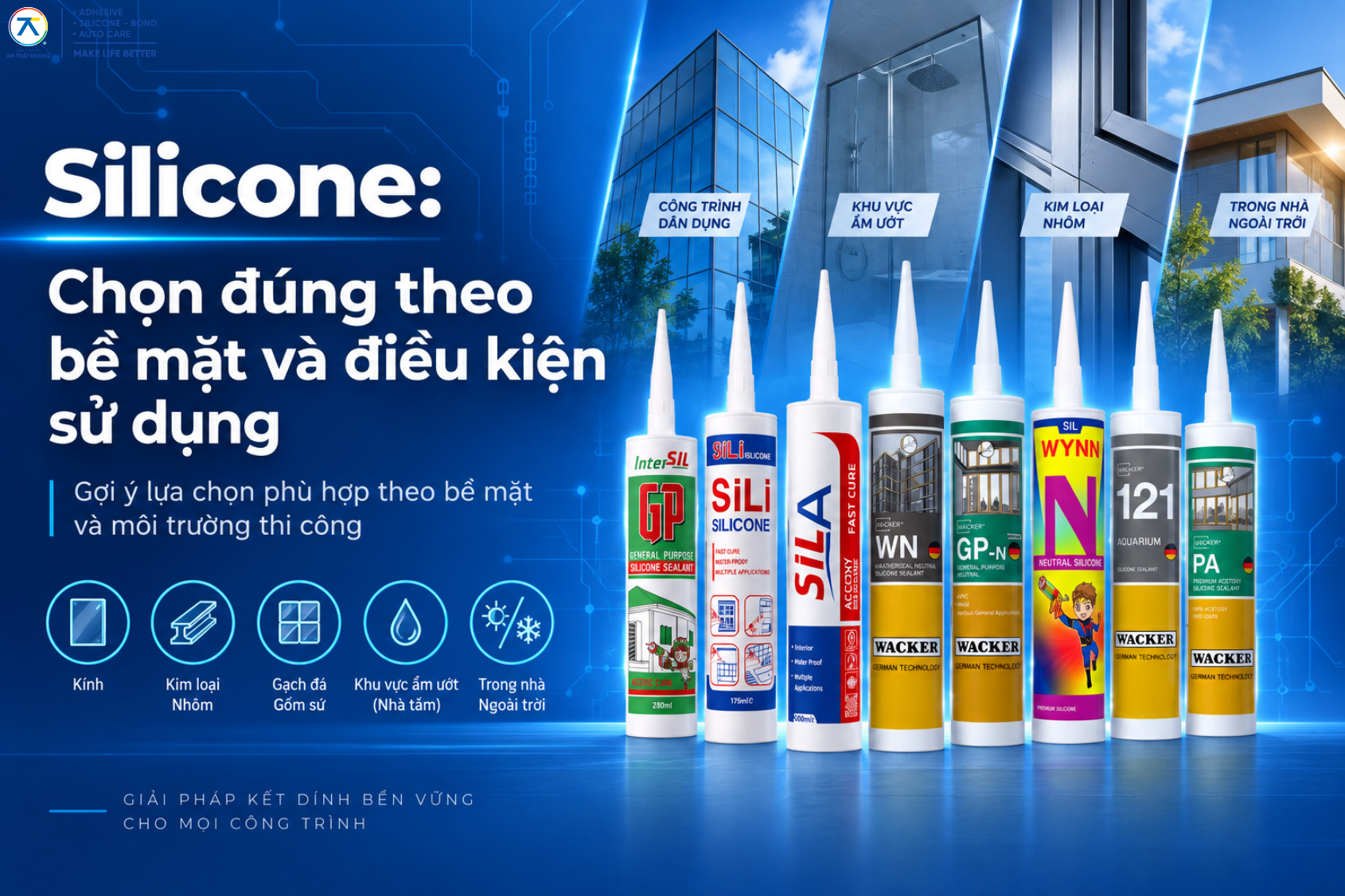
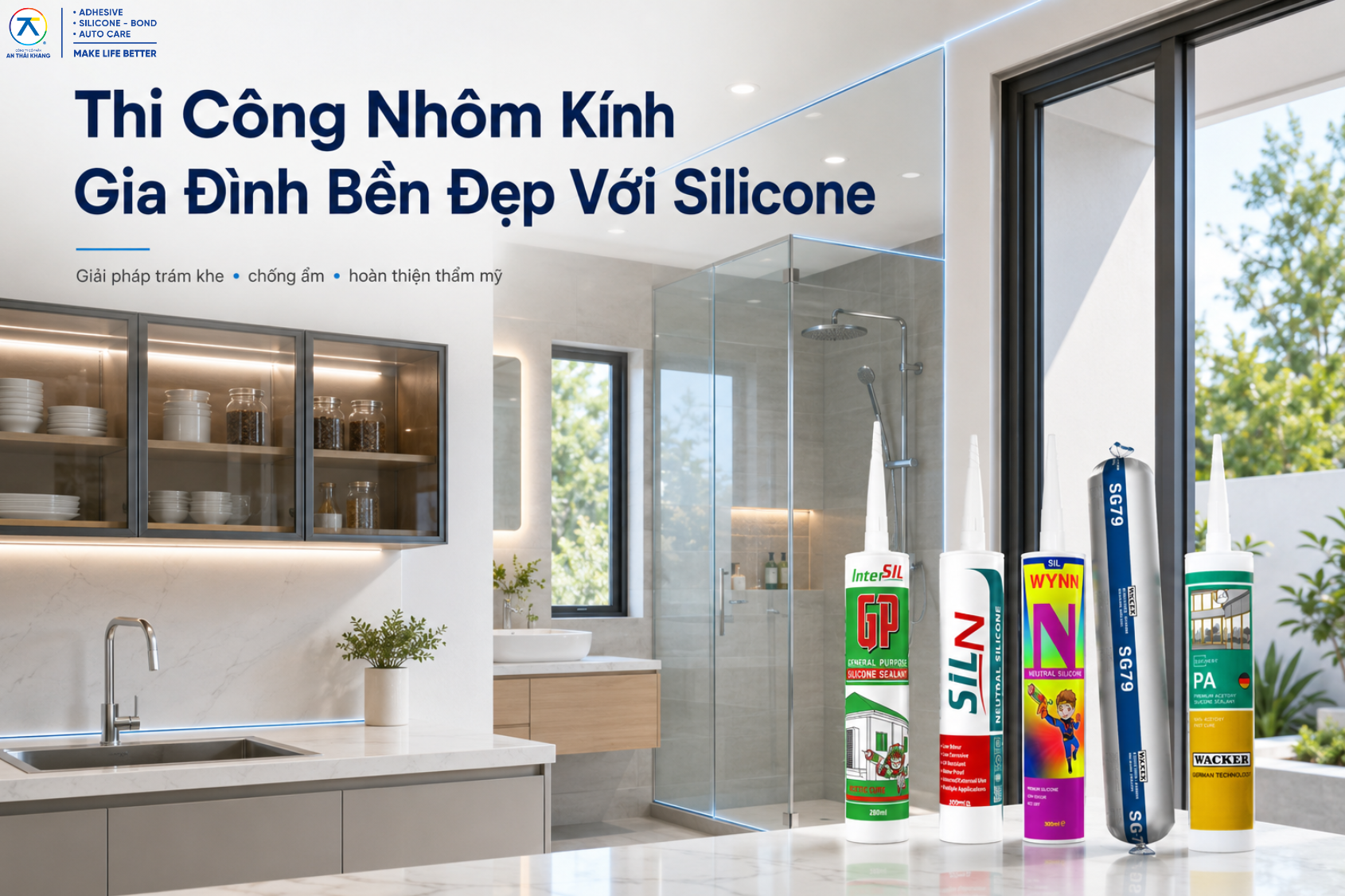
Recommended products include Silicone GP - Acid, Silicone SILI - Acid, Silicone SIL A - Acid, Silicone WYNN A - Acid, and Silicone WACKER PA - Acid.
However, acid-cure silicone should not be used for structural glazing, continuously submerged areas, natural stone, easily oxidized metals, or PP/PE materials unless recommended by the product instructions.
4.2. Neutral-Cure Silicone
Neutral-cure silicone is suitable for projects that require high durability, reduced surface corrosion, and application on various types of materials. This group is commonly used for aluminum-glass systems, stainless steel, alloys, wood, concrete, mortar, ceramic tiles, and alkaline surfaces.
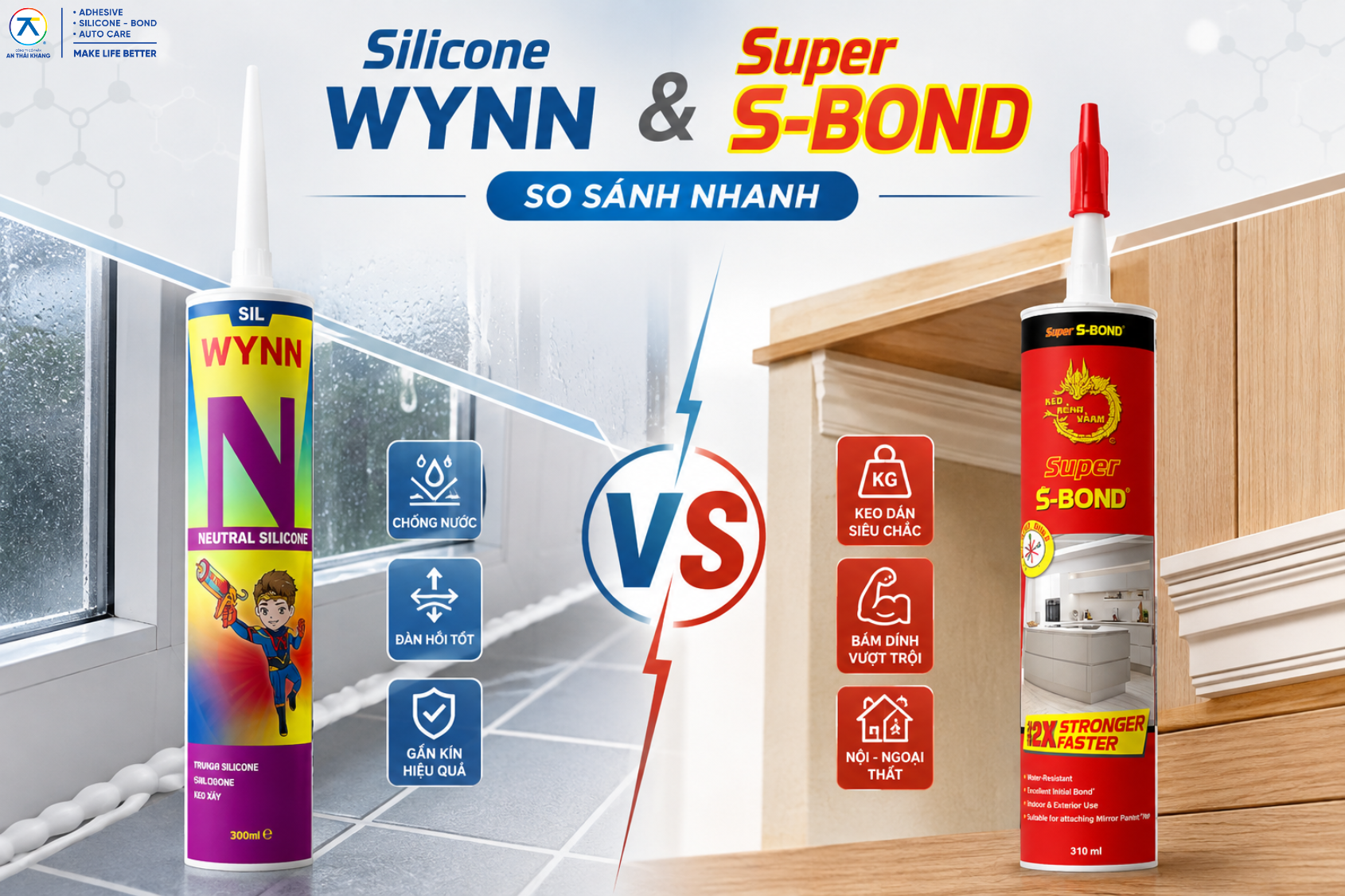
Recommended products include Silicone SIL N - Neutral, Silicone WYNN N - Neutral, Silicone WACKER WN - Neutral, and Silicone WACKER GP-N - Neutral.
Neutral-cure silicone is a suitable choice for interior and exterior applications, windows, doors, wall joints, weather-exposed areas, or projects that require long-term stability.
5. Recommended Silicone Product Lines at An Thái Khang
After understanding the characteristics of each silicone type, users should choose products based on the application surface, usage environment, and technical requirements of the project. For general residential applications such as sealing small gaps, tile joints, glass bonding, or quick repairs, acid-cure silicone is an easy-to-apply product group suitable for many non-porous surfaces such as glass, ceramic tiles, aluminum, or rigid plastic.
For projects requiring higher durability, especially outdoor areas, metal surfaces, concrete, mortar, or positions where corrosion should be minimized, neutral-cure silicone is the more suitable choice. This group helps the sealant bead maintain stable elasticity, good adhesion, and long-term tightness.
For technically demanding applications such as structural glazing, façades, load-bearing glass partitions, aquariums, or glass tanks, users should choose the correct specialized silicone. Using the wrong sealant in these areas may affect the durability, waterproofing performance, and safety of the project.
To choose the right product for each construction need, you can refer to An Thai Khang silicone sealant lines, including acid-cure silicone, neutral-cure silicone, and specialized Wacker silicone for various applications in construction, aluminum-glass systems, interior and exterior works, and aquariums.
6. Notes When Applying Silicone
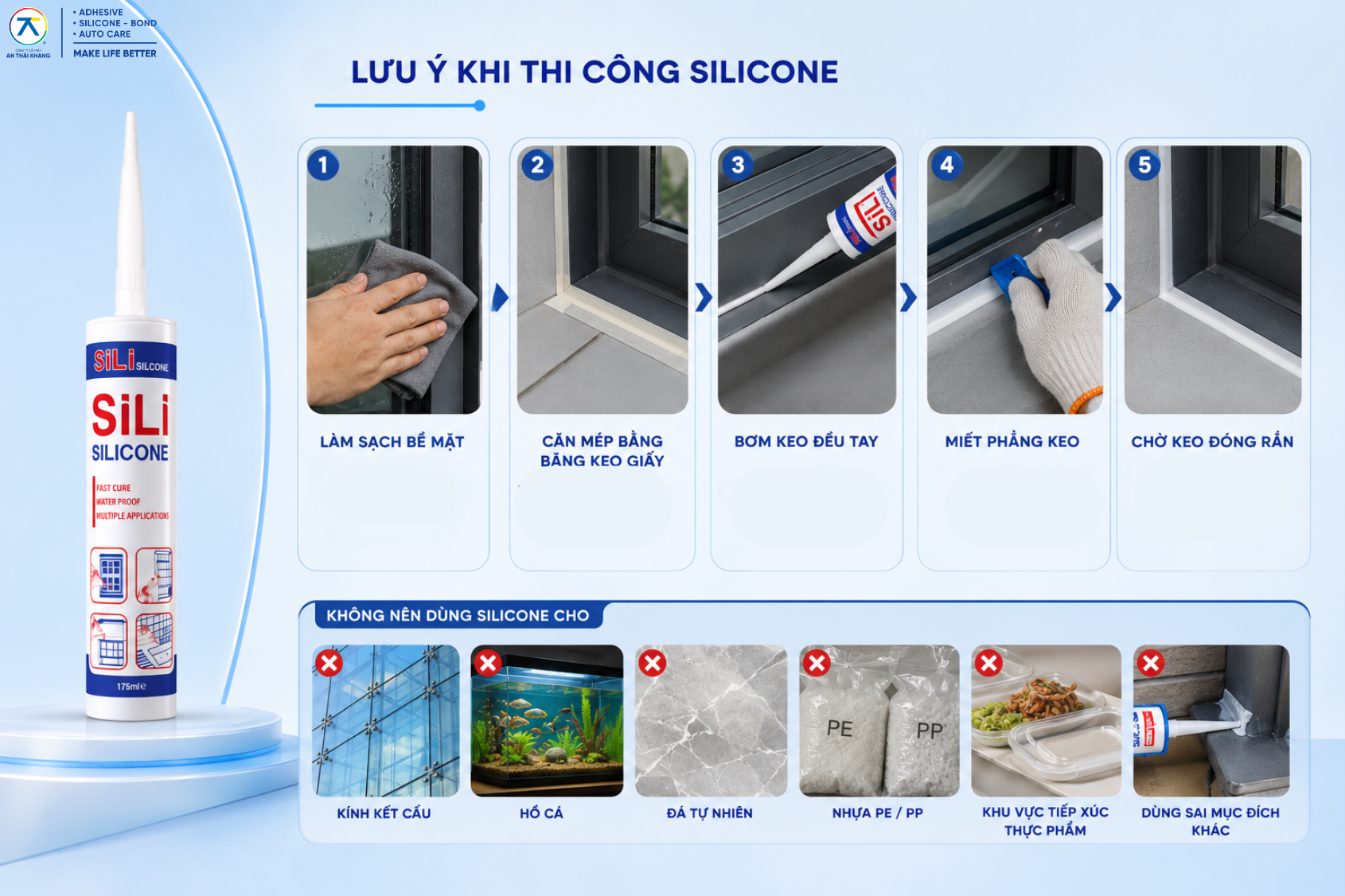
To achieve a durable and aesthetic sealant bead, the surface must be cleaned before application. Users should remove dust, grease, rust, old sealant, and other contaminants. If the surface is not clean, the sealant may have poor adhesion, peel quickly, or fail to achieve proper tightness.
For areas requiring straight and sharp sealant lines, masking tape can be used to align the edges before applying the sealant. During application, silicone should be dispensed evenly, avoiding interruptions or air bubbles inside the joint. After that, the sealant bead should be tooled while it is still wet to create a smooth and even finish.
After completion, silicone should be allowed to cure according to the recommended time before being put into use or exposed to water. Silicone should not be used for the wrong purpose, especially in structural glazing, aquariums, natural stone, PE/PP plastics, or food-contact areas.
7. Conclusion
Silicone is an important material in construction thanks to its ability to seal gaps, bond materials, provide waterproofing, prevent dust, and finish surfaces. Its composition allows it to form an elastic sealant bead with good adhesion and suitability for various usage conditions.
However, each silicone type has its own application range. Acid-cure silicone is suitable for general applications such as gap sealing, glass bonding, door joints, and residential repairs. Neutral-cure silicone is suitable for projects requiring high durability, reduced corrosion, and compatibility with various surfaces. Wacker silicone is suitable for more technically demanding applications such as outdoor joint sealing, structural glazing, or aquariums.
When choosing silicone, users should clearly identify the application surface, usage environment, and technical requirements of the project. Choosing the right product from the beginning will help the sealant bead last longer, look better, and reduce the risk of future repairs.
AN THAI KHANG JSC
- • Fanpage: An Thái Khang JSC
- • Hotline: 0764 644 245
- • Email: support@anthaikhang.com
- • Website: https://anthaikhang.com/