
PU Foam: Guide to Use and Optimize Effectiveness for Any Construction Project
Learn how to properly use PU foam to seal gaps, provide thermal insulation, soundproofing, and save material. Practice shaking the can thoroughly, test spraying, and choose the appropriate product.
1. What is PU Foam and the Role of Proper Mixing
PU foam is a single-component polyurethane sealant that, when exposed to moisture in the air, expands into a porous foam capable of filling gaps, joints, or cavities in construction works. Due to its closed-cell foam structure, the product not only fills gaps but also delivers superior thermal insulation and soundproofing compared to conventional materials.
Inside the PU foam can, the two key elements responsible for its effectiveness are the liquid polyurethane compound and the propellant gas. If left static for too long, these two components may separate due to weight differences, causing the gas and liquid not to mix uniformly. This directly affects the foam expansion and structure after application, leading to suboptimal performance.
2. Why Shaking PU Foam Before Use is Important
2.1 Mixing the Compound and Propellant Evenly
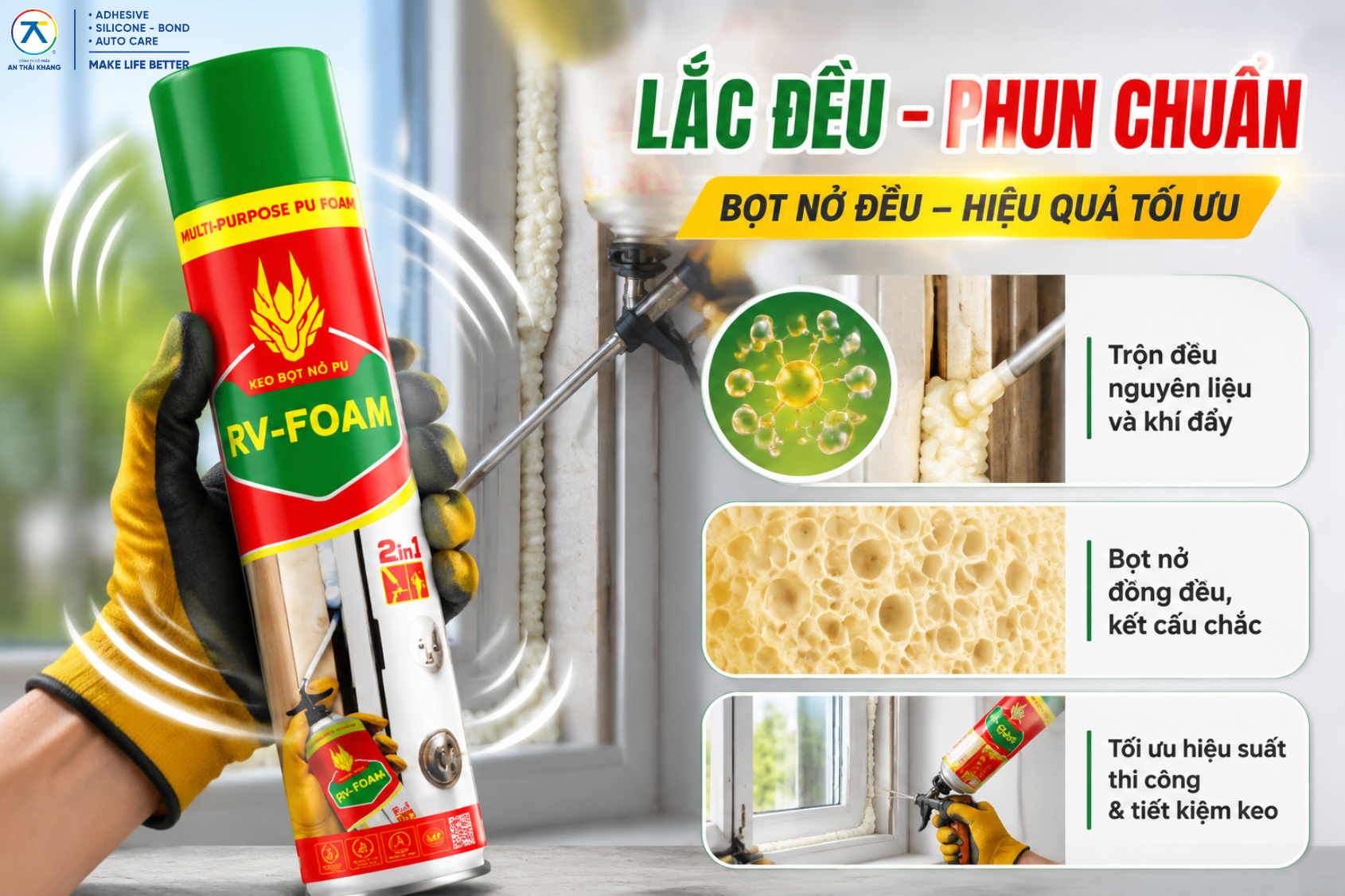
During storage, the contents of a PU foam can naturally separate between the propellant gas and the liquid compound. Shaking the can before use ensures thorough mixing, creating a uniform mixture so that the foam dispensed has consistent structure without voids or weak spots.
2.2 Preventing Uneven Foam Structure
If the foam is not properly mixed, the expanded foam can have irregular cell size or even hollow spots, reducing thermal insulation and soundproofing effectiveness. This directly impacts application efficiency, leaving gaps unsealed and compromising the intended protective functions.
2.3 Improving Efficiency and Ease of Application
Shaking the can ensures maximum and consistent foam expansion, saving material, reducing the need for additional applications, and allowing precise control over the amount dispensed. A well-mixed product also makes the spraying process smoother and lowers the risk of nozzle blockage.
3. Instructions for Proper Shaking and Application of PU Foam
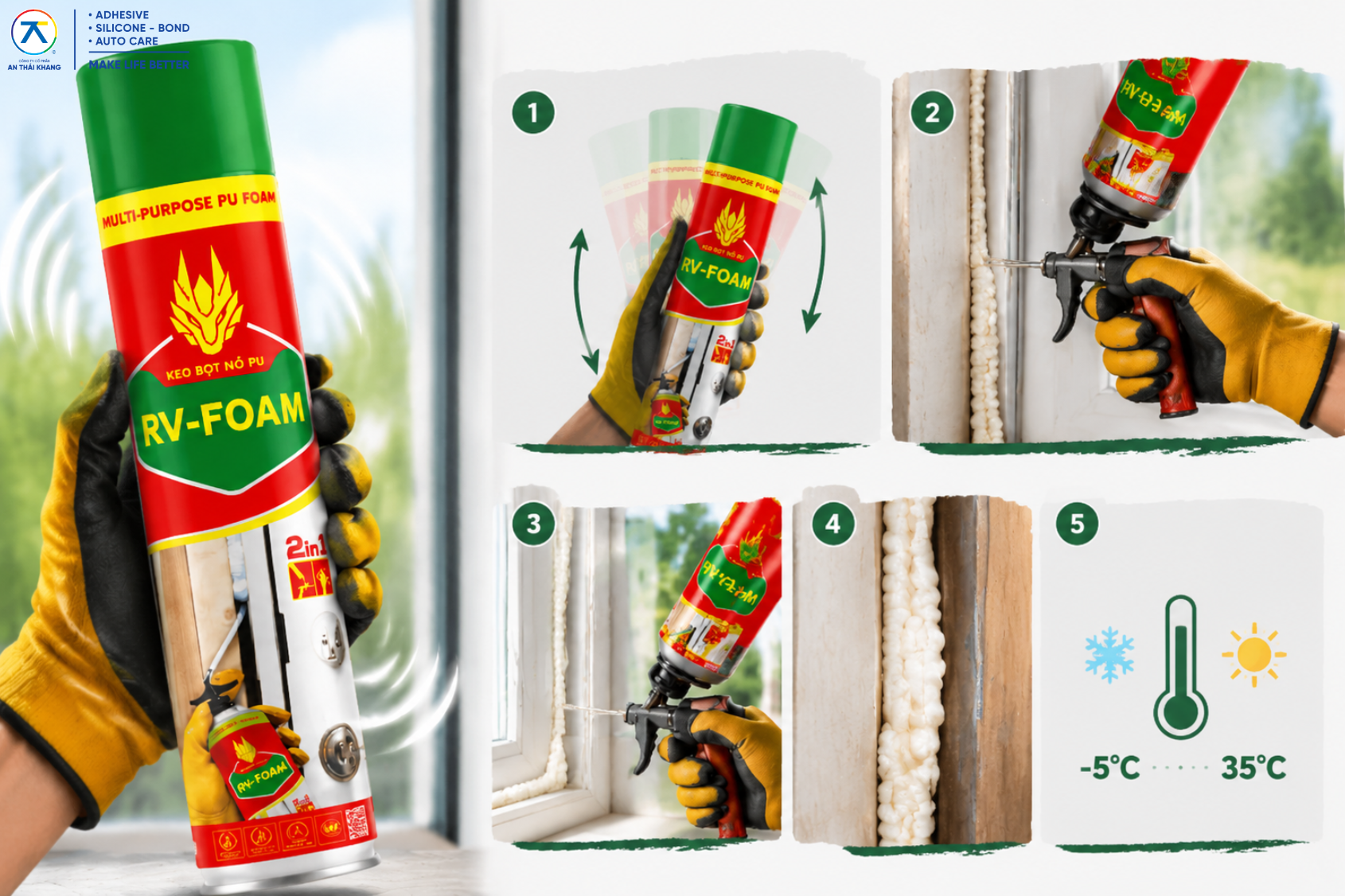
To fully utilize the capabilities of PU foam, follow these guidelines before spraying:
Shake the can for approximately 1 minute (30–60 times): This is the optimal time for the propellant and liquid compound to mix thoroughly, producing fine foam from the first spray.
Hold the can upside down while spraying: Once the can is shaken, maintaining the inverted position ensures continued mixing during application.
Test spray before applying to the target gap: This helps control the amount of foam applied and prevents waste.
Pay attention to temperature and humidity: Ideal application temperatures range from –5°C to 35°C to ensure consistent foam expansion and stability.
Following this procedure ensures the foam fills gaps effectively, adheres properly, traps minimal air, and cures into a solid and stable structure over time.
4. Common Mistakes When Using PU Foam and Their Consequences
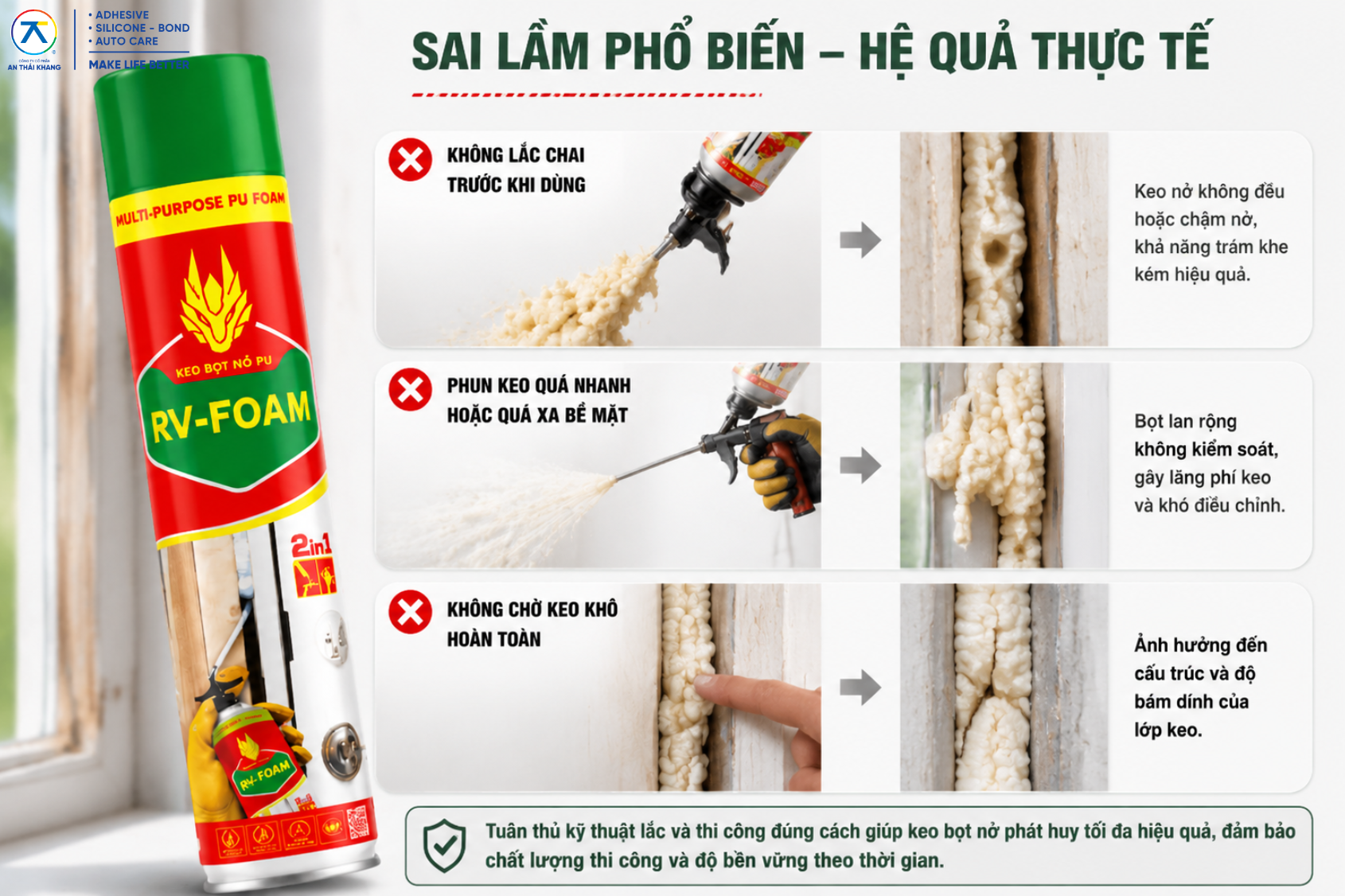
Even experienced users often make basic errors that significantly impact final performance:
Not shaking the can before use: Without proper mixing, the foam may expand unevenly or slowly, leading to insufficient gap sealing.
Spraying too quickly or from too far away: This can cause the foam to spread uncontrollably, wasting material and making adjustment difficult.
Not waiting for foam to fully cure before finishing: PU foam requires time to harden completely. Intervening too early can compromise its structure and adhesion.
Adhering to proper shaking and application techniques ensures PU foam achieves its full functionality and maintains quality and durability.
5. Effects of Proper Shaking on Soundproofing and Thermal Insulation
The foam structure of PU foam is critical for its soundproofing and thermal insulation properties. When thoroughly mixed, the cured foam cells form a uniform pattern, effectively reducing heat and sound transfer. Uneven foam results in voids within the material, reducing insulation and soundproofing performance.
High-quality foam also dries quickly on the surface and can be trimmed shortly after application, facilitating professional and efficient finishing. This effectiveness stems directly from the proper mixing of the compound and propellant before application.
6. Conclusion
Shaking PU foam before use is not merely a procedural step but a decisive factor in the quality of the application. A properly mixed can ensures the foam expands evenly and adheres firmly to gaps, forming a stable and durable foam layer. This step is essential for optimizing soundproofing, thermal insulation, gap filling, and air sealing. Understanding the internal mechanics of the product and following correct application techniques will not only achieve the desired results but also save material, reduce risks, and ensure long-lasting effectiveness for any PU foam project.
AN THAI KHANG JSC
- • Fanpage: An Thái Khang JSC
- • Hotline: 0764 644 245
- • Email: support@anthaikhang.com
- • Website: https://anthaikhang.com/