
Fluted panel cladding: Strong, beautiful installation with S-Bond Neo
Fluted wall panels make interior spaces look more modern and distinctive. Learn how to choose, install, and securely bond fluted wall panels with S-Bond Neo structural adhesive.
Fluted wall panels are a popular interior decorative solution used in homes, showrooms, offices, cafés, spas, and commercial projects. With raised vertical grooves on the surface, this material helps wall areas gain more depth, elegance, and modernity compared with ordinary flat painted walls.
However, a beautiful fluted wall panel installation does not depend only on the design or color of the panels. The durability of the project also depends on surface preparation, alignment technique, and especially the type of adhesive used to secure the panels. If an unsuitable adhesive is used, the fluted panels may peel at the edges, leave gaps, warp, or shift after a period of use.
For applications that require strong bonding, fast installation, and compatibility with various materials, S-Bond Neo structural adhesive is a suitable product to consider. According to information from An Thái Khang, S-Bond Neo is a fast-drying structural adhesive with high bonding strength, multi-material adhesion, and suitability for both interior and exterior applications.
1. What are fluted wall panels?
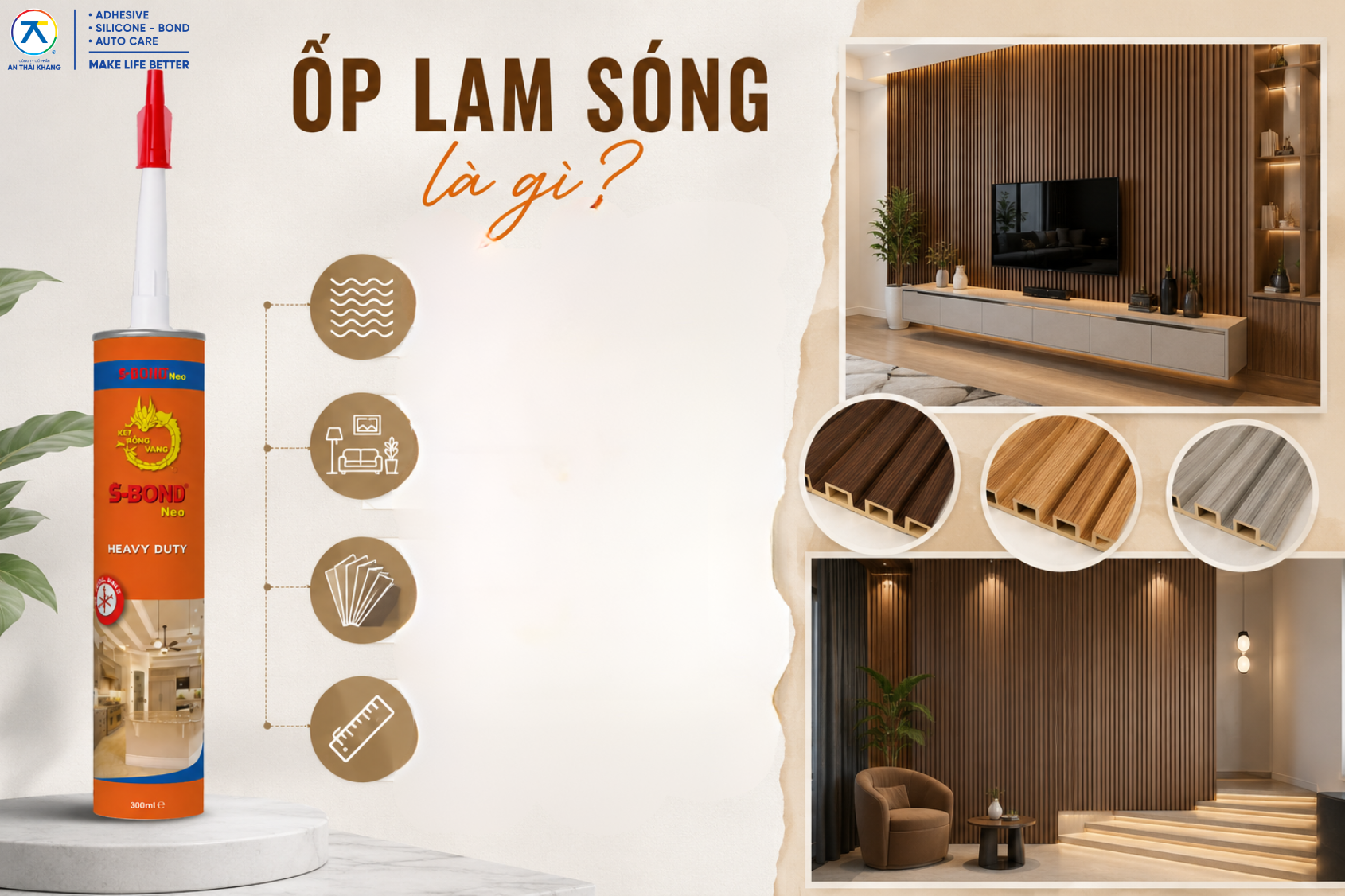
Fluted wall panels are decorative cladding materials with a wave-like, grooved, or raised-rib surface. When installed on walls, partitions, or ceilings, the fluted lines create a sense of depth, making the space look more modern, neat, and visually striking.
In interior design, fluted wall panels are often used for large wall areas or spaces that may otherwise feel plain or empty, such as living rooms, bedrooms, hallways, reception counters, and showrooms. This is a solution that helps make the space stand out without requiring overly complicated renovation work.
Fluted wall panels usually feature vertical ribs, creating a taller and more open visual effect. They are available in many designs, from narrow and wide flutes to wood-grain finishes, neutral colors, and modern tones.
During installation, the panels must be aligned very carefully because the grooves can easily reveal any misalignment. Therefore, measuring, marking, and fixing the panels must be done with precision to ensure a beautiful and balanced finished surface.
2. Why are fluted wall panels widely used in interiors?
Fluted wall panels are favored because they can quickly refresh a space, making simple wall areas more distinctive and dimensional. With their raised-rib design, this material suits many interior styles, including modern, minimalist, luxurious, and warm wood-inspired designs.
In residential spaces, fluted wall panels are commonly used for TV feature walls, walls behind sofas, or headboard areas. In showrooms, offices, spas, or reception counters, this material helps create a more professional, refined space with a clearer brand impression.
In addition to aesthetics, fluted wall panels also offer the advantage of fast installation without requiring complicated renovation. If the wall surface is solid, flat, and dry enough, installers can use specialized adhesive to bond the panels directly, helping reduce drilling, dust, and overall completion time.
3. When should adhesive be used to install fluted wall panels?
Using adhesive to install fluted wall panels is suitable for projects that require fast, clean installation while minimizing drilling. Compared with using many screws or nails, adhesive helps create a neater finished surface, reduces visible fixing marks, and preserves the aesthetics of the wall cladding.
This method is often applied in interior areas such as TV feature walls, headboard walls, reception counters, display cabinets, showroom partitions, or decorative wall sections that do not bear heavy loads. For areas requiring higher strength, installers may combine adhesive with trims, temporary fixing tape, or additional reinforcement methods depending on actual site conditions.
When bonding fluted wall panels, the substrate should be carefully checked, whether it is painted wall, gypsum board, engineered wood, plastic, or metal. The surface must be clean, dry, solid, and free from grease or oil. If the substrate is dusty, damp, peeling, or chalky, the adhesive will have difficulty bonding firmly and may cause the panel edges to peel over time.
4. How is S-Bond Neo structural adhesive suitable for fluted wall panels?
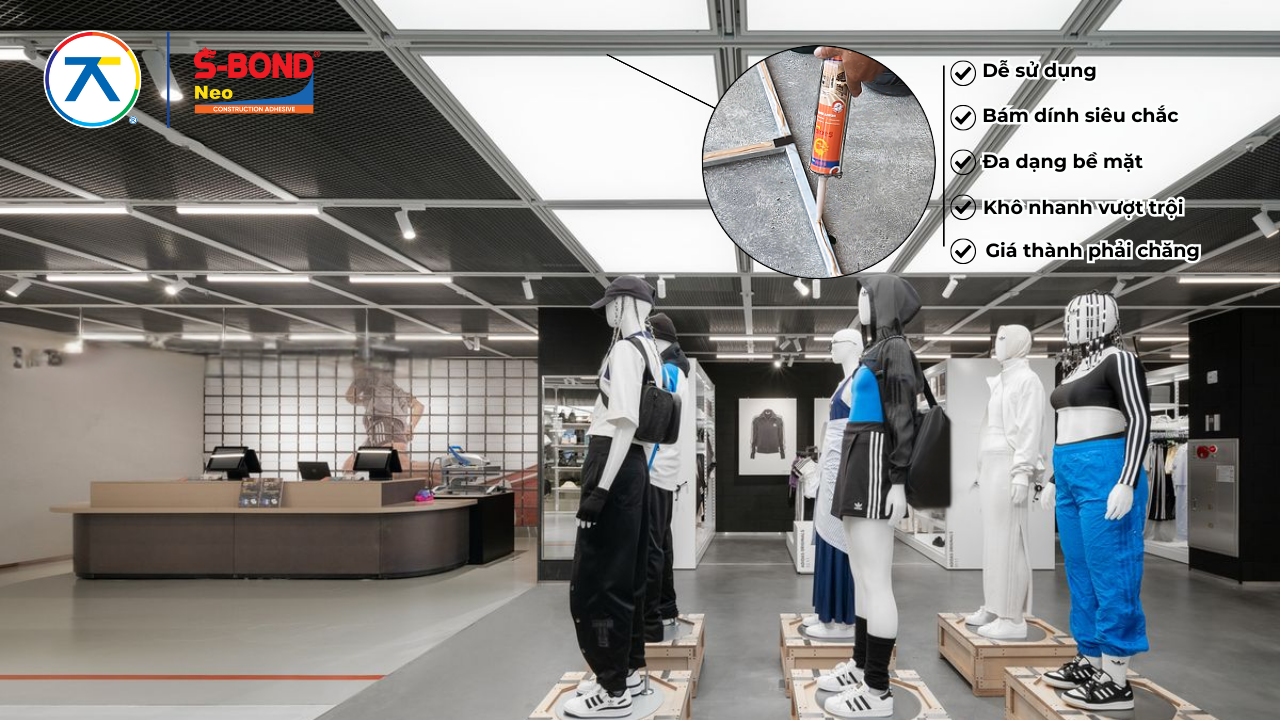
In fluted wall panel installation, S-Bond Neo structural adhesive can be used as a supporting solution to fix panels onto suitable surfaces. The product is introduced by An Thái Khang as having high adhesion, fast drying speed, and the ability to create a strong bond within a short time.
A notable advantage of S-Bond Neo is its ability to bond various types of materials. According to the product information, the adhesive can bond rubber, aluminum, steel, glass, copper, plastic, wood, stone, ceramic, and composite materials. This is an advantage in fluted wall panel installation, as real construction sites often involve more than one type of surface.
4.1 Advantages of using S-Bond Neo for decorative cladding applications
S-Bond Neo is suitable for applications that require fast bonding and a clean finished surface. The product offers benefits such as saving installation time thanks to its fast-drying capability, creating a strong bond, delivering an aesthetic bonding surface, and allowing easy finishing.
For fluted wall panels, these factors are very important. The cladded surface is usually located in highly visible areas, so adhesive overflow, exposed edges, or misaligned panels can directly affect the final appearance. Using an adhesive with good adhesion and easy workability helps installers control the bond more effectively.
5. Installation process for fluted wall panels using S-Bond Neo adhesive
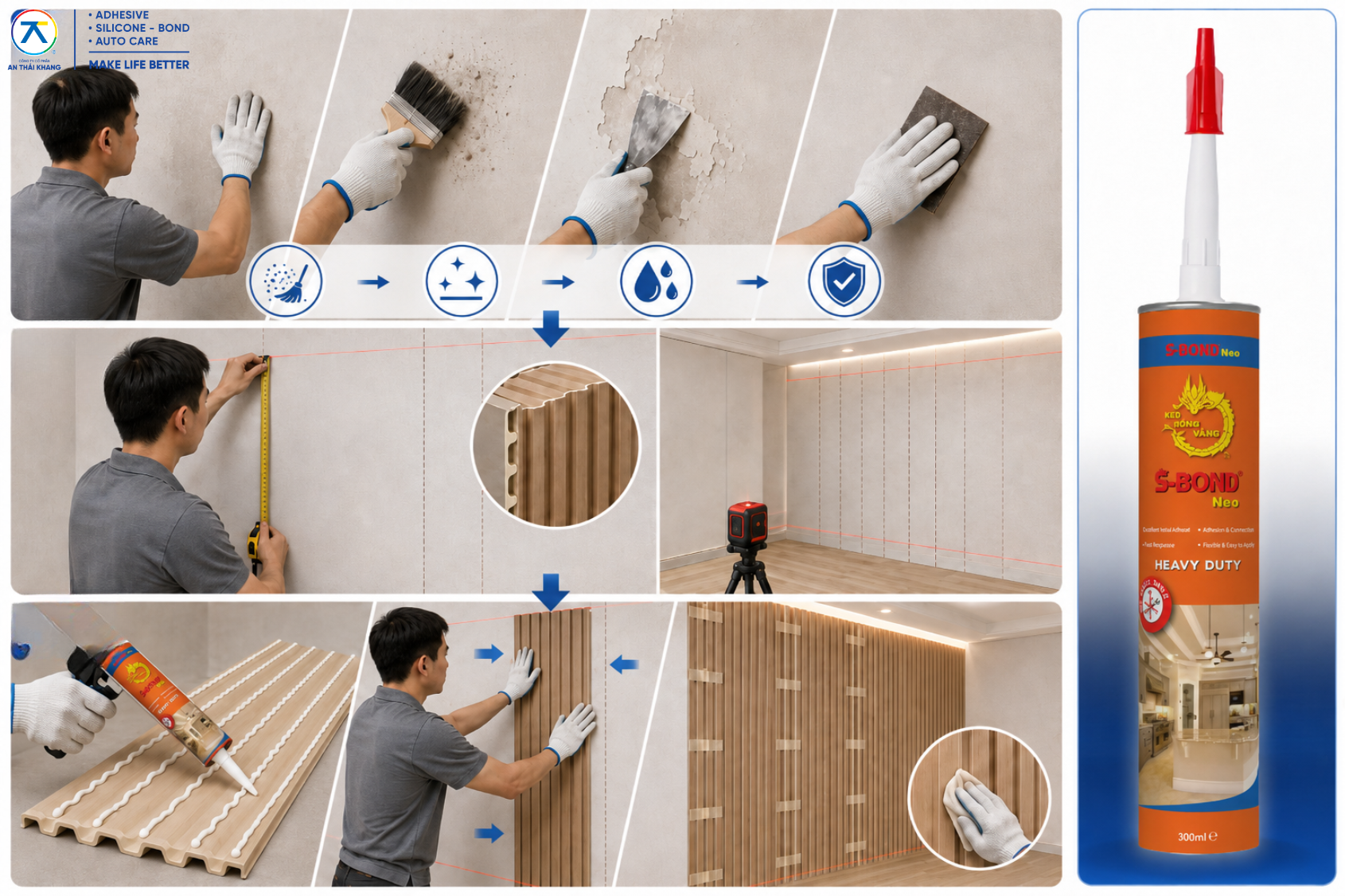
To achieve good durability and aesthetics, fluted wall panel installation should follow a clear step-by-step process. Panels should not be bonded directly without first checking the wall, measuring dimensions, or determining the direction of the panel grooves.
5.1 Step 1: Check and prepare the surface
Before bonding, make sure the substrate is clean, dry, solid, and free from grease or oil. If the wall is dusty, has a weak paint layer, or shows signs of peeling, it should be treated before installation. If the surface is too uneven, it should be leveled so that the panel can make better contact with the substrate.
The bonding surface should be cleaned and sanded if necessary, ensuring that it is dry and free from grease or oil. The product is recommended for application in temperatures from +5°C to +45°C.
5.2 Step 2: Measure dimensions and align the layout
After surface preparation, accurately measure the height, width, and area to be covered. For large wall sections, the layout should be planned in advance to avoid having the final panel too narrow or panel joints falling in unattractive positions.
Installers should use a ruler, chalk line, or laser level to establish reference lines. This is a very important step because fluted wall panels have vertical grooves that can easily reveal alignment errors. If the first panel is installed crooked, the following panels can also become misaligned.
5.3 Step 3: Apply adhesive and fix the panel
After cutting the panel to the required size, place the adhesive into a suitable dispensing tool. Apply a sufficient amount of adhesive to the back of the panel or to the bonding surface. Do not apply too little adhesive, as this may reduce the contact area. Do not apply too much either, as excess adhesive may overflow at the edges and affect the appearance.
Apply the adhesive evenly to one bonding surface, then press the two surfaces together and hold firmly for about 15 seconds or until the adhesive has fully set. Temporary fixing tape may be used if necessary.
After bonding, recheck the straightness, joint tightness, and groove direction. If there is excess adhesive, clean it immediately before it dries. Uncured excess adhesive can be cleaned with acetone.
6. Technical notes to prevent fluted wall panels from peeling at the edges
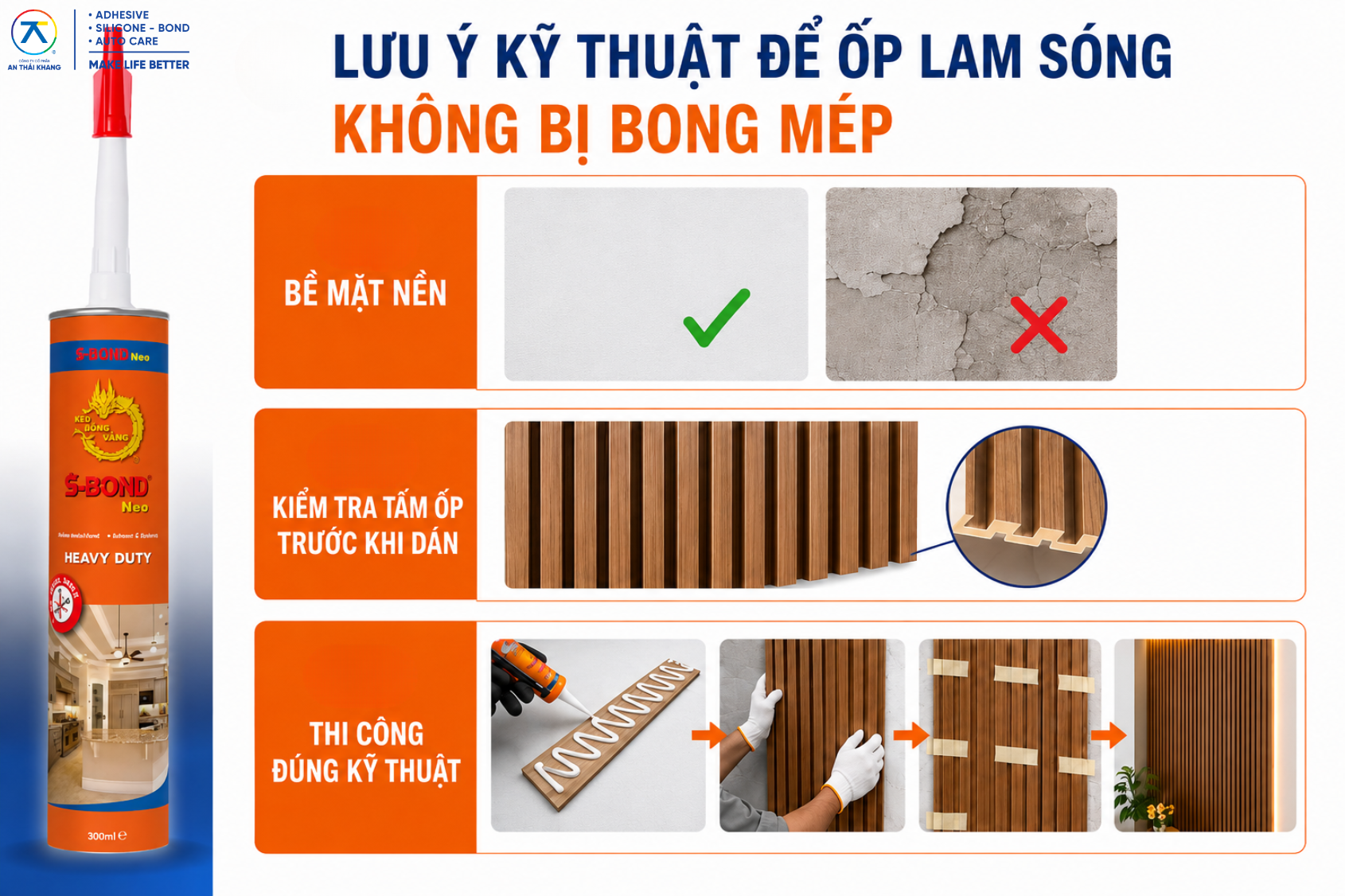
Edge peeling is a common problem when fluted wall panels are installed incorrectly. The causes often include a weak substrate, dusty or damp surfaces, unsuitable adhesive, insufficient adhesive application, warped panels, or panels that are not firmly fixed during the initial bonding stage.
To reduce this issue, the panel edges should be carefully checked before bonding. Edges that are warped, unevenly cut, or irregular should be corrected before installation. During bonding, pressure should be applied evenly across the entire surface, especially along the edges and corners. For long panels or areas prone to slipping, tape, trims, or support tools can be used for temporary fixing.
In addition, installation should not be carried out when the wall is still damp, the substrate is peeling, or the area is frequently exposed to moisture. Do not use excessive adhesive to cover surface defects, because if the substrate is weak, the adhesive layer may still detach together with the substrate. Adhesive only performs well when applied to a clean, dry, solid surface that has been properly prepared.
7. Applications of fluted wall panels in homes and commercial projects
Fluted wall panels can be used in many different spaces, from residential interiors to commercial projects. Depending on the location, this material helps enhance aesthetics, create focal points, and make the space look more refined.
7.1 Applications of fluted wall panels in homes
In residential interiors, fluted wall panels are commonly used for living room TV walls, walls behind sofas, or headboard areas. These are highly visible positions, making them suitable for creating a focal point in the overall interior design.
For living rooms, fluted wall panels can be combined with TV cabinets, indirect lighting, or decorative stone to create a modern and luxurious look. For bedrooms, colors such as light wood grain, light brown, cream, gray, or beige should be prioritized to create a warm and relaxing atmosphere.
7.2 Applications of fluted wall panels in commercial projects
In commercial projects, fluted wall panels are often used for reception counters, logo walls, guest reception areas, showrooms, spas, offices, or cafés. These areas require high aesthetics, neat installation, and the ability to leave a strong impression on customers.
Using fluted wall panels in the right location also helps make the space look more professional. Especially in showrooms or offices, a fluted wall panel feature can be combined with a brand logo to enhance brand recognition and create a more trustworthy impression.
7.3 Combining fluted wall panels with the right adhesive
To achieve durable and beautiful fluted wall panel installation, it is important to choose an adhesive that is suitable for the material and the installation surface. For decorative interior applications, S-Bond Neo can be considered because the product is used for bonding door frames, wall cladding, cabinets, electrical panels, and decorative accessories.
Before large-scale installation, the adhesive should be tested on a small area to check bonding strength, drying speed, and compatibility with the actual surface. This step is especially necessary for old wall substrates or panel types that have not been used before.
8. Conclusion: For durable and beautiful fluted wall panels, choose the right material and the right adhesive
Fluted wall panels are a suitable choice for spaces that need enhanced aesthetics, added depth, and a stronger design identity. This material can be used in homes, offices, showrooms, spas, cafés, and many other commercial projects.
However, to achieve good installation quality, attention should not be focused only on the panel design. Installers need to consider the substrate, measuring and cutting method, groove direction, fixing technique, and adhesive selection. A visually attractive panel installation may still peel, open at the edges, or lose its appearance after a short period if it is bonded incorrectly.
S-Bond Neo structural adhesive is a worthwhile solution to consider for bonding fluted wall panels thanks to its high adhesion, fast drying, and multi-material bonding capability. When used according to instructions, under proper surface conditions, and with the correct installation process, the product can help create a strong, clean, and aesthetic bond for interior projects.
AN THAI KHANG JSC
- • Fanpage: An Thái Khang JSC
- • Hotline: 0764 644 245
- • Email: support@anthaikhang.com
- • Website: https://anthaikhang.com/