
Xingfa Aluminium and Glass Doors: What You Need to Know Before Installation
Learn the key considerations when installing Xingfa aluminium and glass doors, from site measurement and frame installation to glass selection and the use of silicone sealant for gap sealing and waterproofing.
Xingfa aluminium and glass doors are widely used in houses, apartments, shops and offices because of their modern appearance, ease of cleaning and suitability for a wide range of spaces. These systems can be used for entrance doors, windows, casement doors, sliding doors, balcony doors and partitions.
However, door quality does not depend solely on the aluminium profiles and glass panels. The dimensions of the wall opening, frame installation method, hardware system, gaskets, fixing screws and silicone sealant beads all directly affect airtightness, operation and the final appearance of the installation.
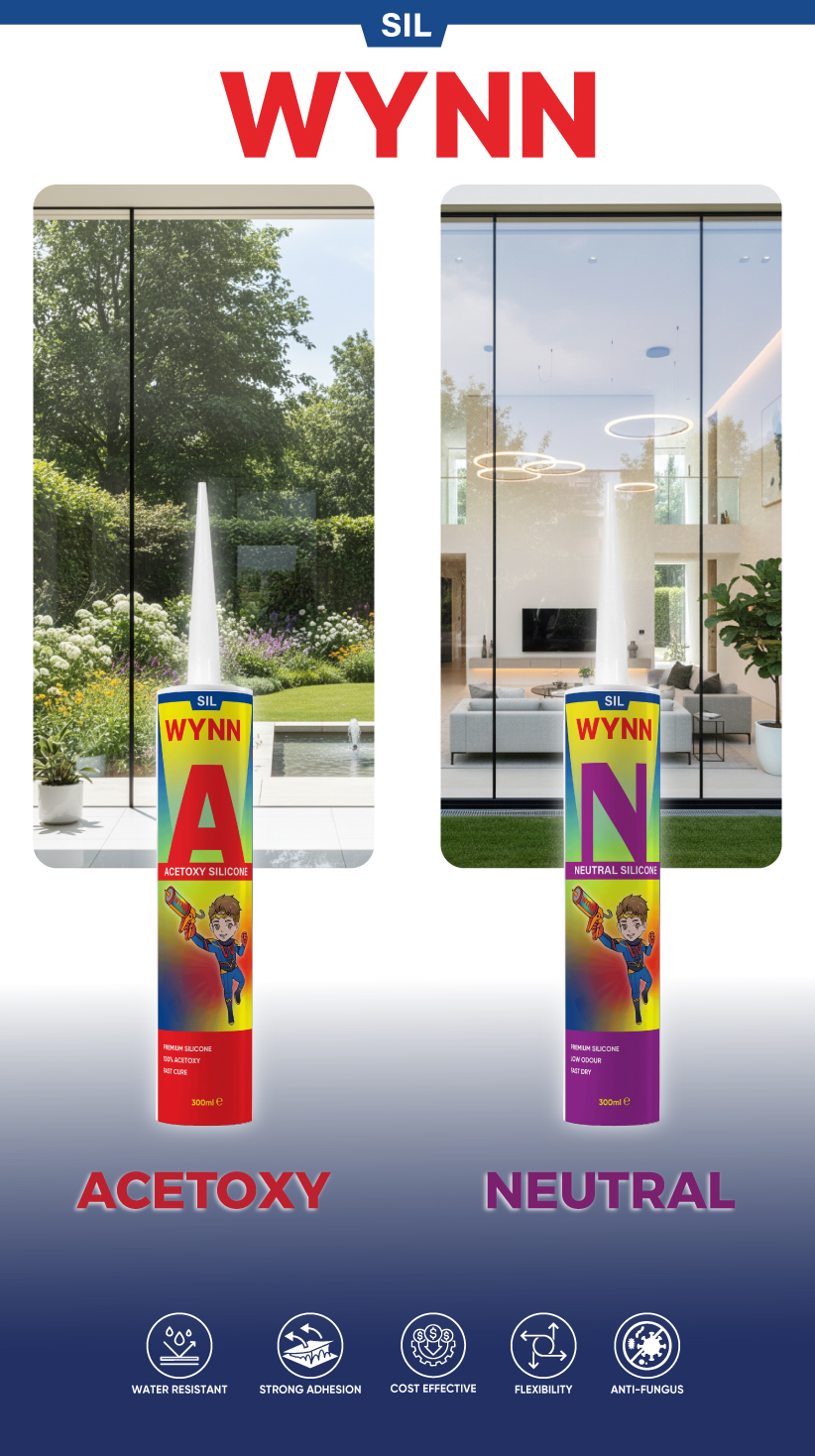
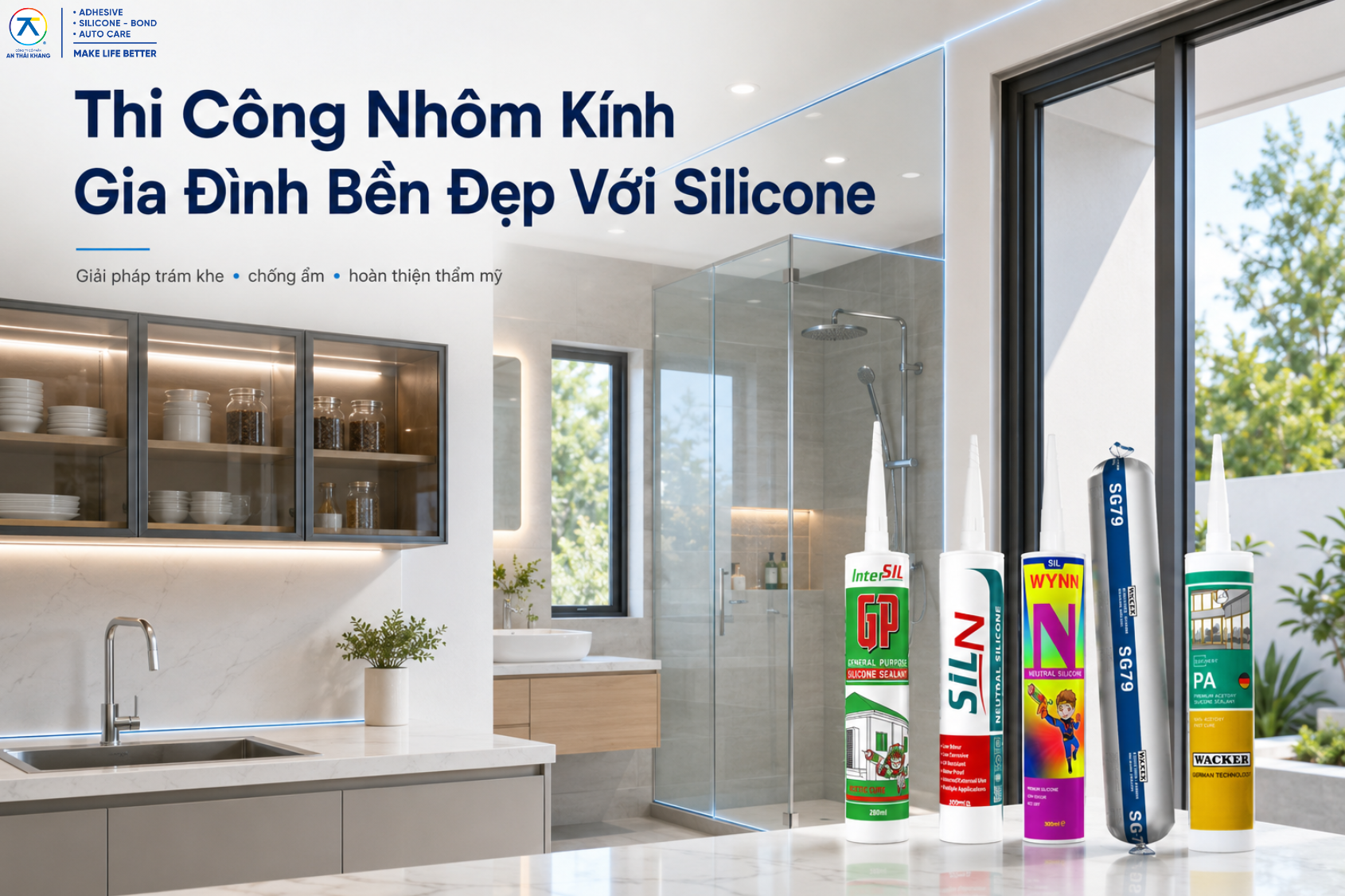
Silicone is used to seal gaps between the glass and aluminium frame, between the door frame and wall, and at other locations where water or dust may penetrate. Users can explore acid-cure silicone, neutral-cure silicone and Wacker Silicone products in the An Thái Khang silicone sealant category.
1. What Should Be Prepared Before Installing Xingfa Aluminium and Glass Doors?

Before fabrication and installation, the work area must be measured and inspected accurately. An opening that is not square, a leaning wall or incorrect measurements can make the door frame difficult to align, create large gaps and reduce the overall visual quality of the finished installation.
The following items should be checked:
The width and height of the wall opening.
The squareness of the wall corners.
The flatness of the installation surface.
The finished floor level.
The opening direction of the door leaf.
The positions of handles, locks and hinges.
Drainage conditions at windows or balcony doors.
The clearance required for opening and closing the door.
Measurements should be taken at several points rather than at only one location. If the wall has not yet been finished, any dimensional changes resulting from plastering, tiling or floor installation must be clearly determined.
For bathroom doors, toilet doors and other areas frequently exposed to water, the drainage direction and finished floor level should be planned in advance. The door frame should not become a point where water accumulates or causes water to flow back into the interior.
In addition to dimensions, the glass type, aluminium colour, opening style and hardware system should be agreed upon before fabrication. Changes made after the door has already been manufactured may result in additional costs or affect the original structure.
A complete door system usually consists of an aluminium frame, glass, gaskets, operating hardware, fixing screws and joint-sealing materials. These components must be compatible with one another so that the door opens and closes smoothly, does not sag and maintains an effective seal during use.
2. Areas That Require Silicone Sealing on Xingfa Aluminium and Glass Doors
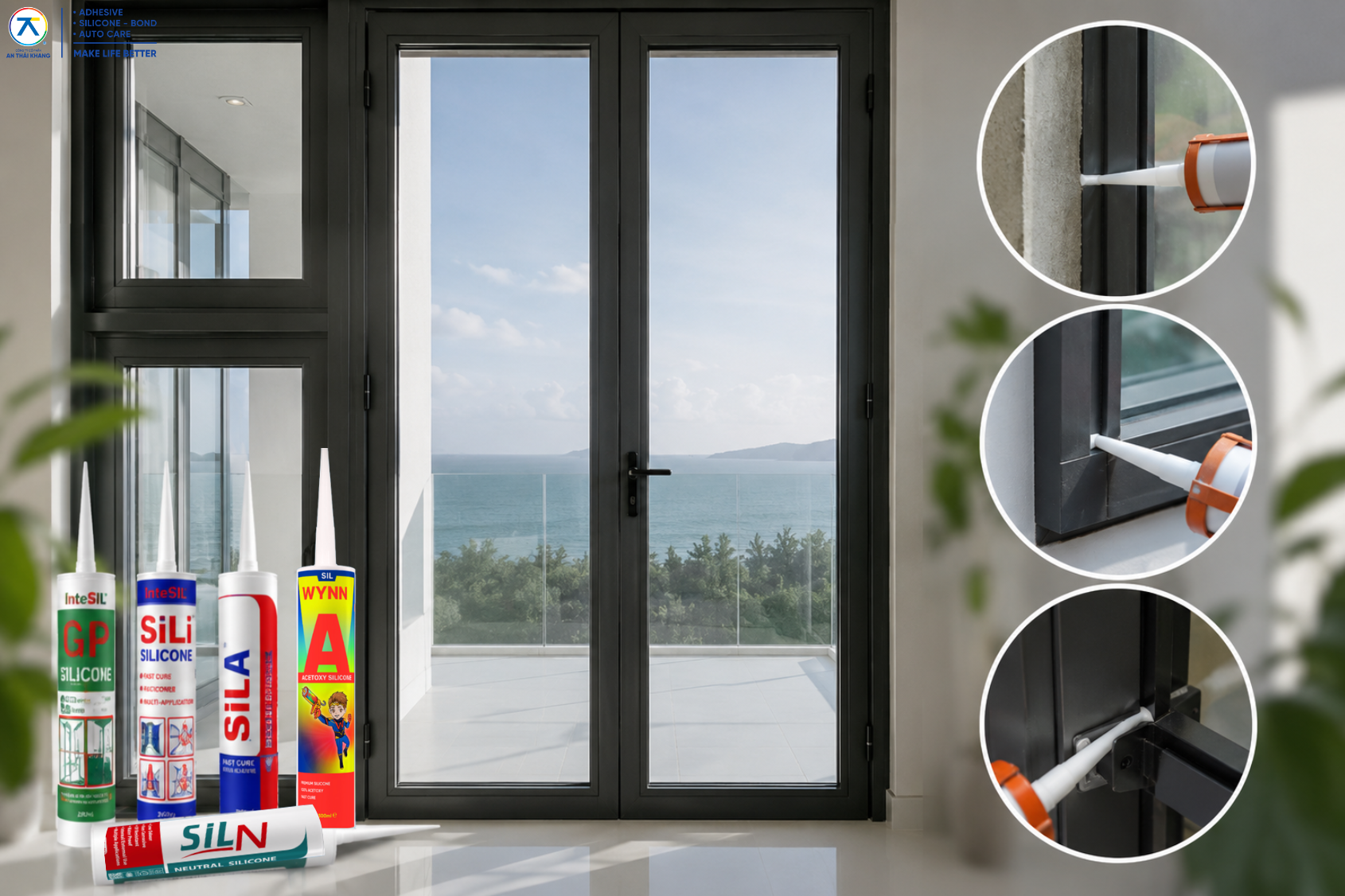
Silicone is used to seal gaps, improve airtightness and finish joints. After curing, it forms a flexible layer that helps prevent water, dust, moisture and air from passing through small openings.
2.1. Gaps Between the Door Frame and Wall
After the door frame has been secured, a certain gap usually remains between the aluminium frame and the wall. This gap results from dimensional tolerances in the wall opening and the clearance required to align the frame.
If the gap is not properly sealed, rainwater may penetrate around the edges of windows or balcony doors. Dust and wind may also enter the building, particularly in locations directly exposed to outdoor conditions.
Before applying silicone, the depth of the gap should be checked. For large gaps, the entire space should not be filled with an excessively thick layer of silicone. The installer should use suitable backing material or another appropriate gap-filling solution before finishing the surface with silicone.
The silicone bead should remain continuous around areas that require waterproofing. However, it must not block the drainage holes in the door system. Accidentally sealing these drainage routes may cause water to collect inside the frame and overflow into the interior.
2.2. Gaps Between the Glass and Aluminium Frame
Glass is held within the frame by gaskets, glazing beads or another fixing system appropriate for the specific door design. At certain locations, silicone is used to improve sealing performance and finish the junction between the glass and aluminium.
The glass and frame surfaces must be clean before the sealant is applied. Dust, oil, water or remnants of old sealant can reduce adhesion and cause the silicone bead to peel away prematurely.
The silicone bead should have a consistent size, remain uninterrupted and contain no air bubbles. If the silicone merely covers the outer surface without adhering properly to both sides of the joint, the required level of water resistance will not be achieved.
For large glass panels, curtain-wall glazing or load-bearing applications, a specialist silicone system must be used in accordance with the design requirements. General-purpose household silicone should not be used as a substitute for structural sealant.
2.3. Frame Corners and Connection Joints
Frame corners, joints between aluminium profiles and areas adjoining hardware components must also be inspected carefully. Small gaps or water paths can develop in these locations if the fabrication process has not produced a sufficiently tight connection.
Silicone may be used to finish certain gaps, but it cannot replace mechanical connections, screws or the technical construction of the door system. If a frame corner is misaligned, loose or incorrectly fabricated, the structure must be repaired rather than simply covered with sealant.
After finishing, door corners should appear neat, with no excess silicone or voids, and the sealant must not interfere with the movement of the door leaf or hardware.
3. How to Choose Silicone for Xingfa Aluminium and Glass Doors
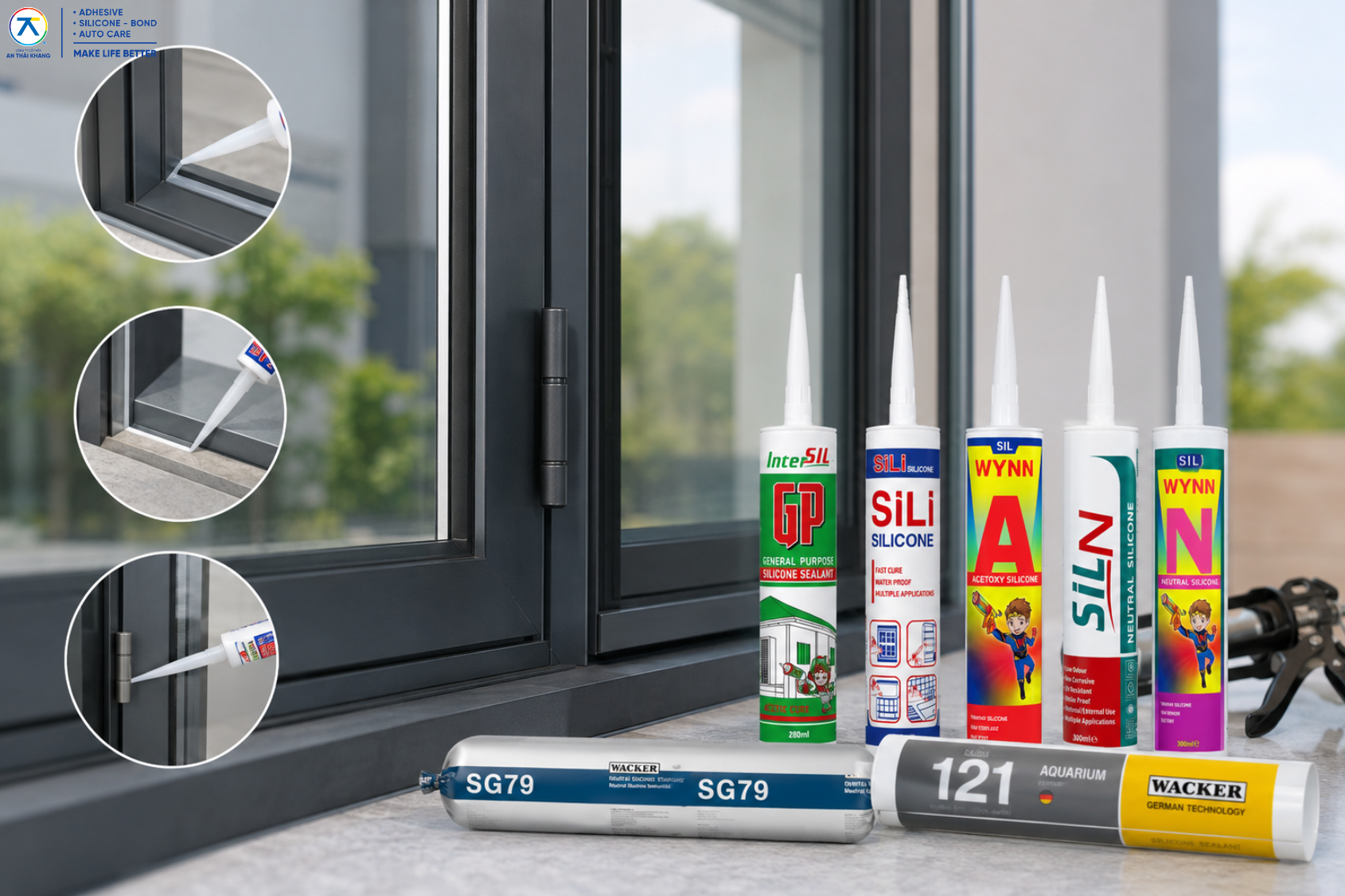
The An Thái Khang silicone sealant range currently includes three main categories: acid-cure silicone, neutral-cure silicone and Wacker Silicone. Each category has a different range of applications, so products should not be selected solely on the basis of colour or price.
Acid-cure silicone generally cures quickly and adheres well to many non-porous surfaces, such as glass, ceramic tiles and certain types of aluminium. This category may be suitable for common residential applications, but compatibility with metals, surface coatings and surrounding materials should be checked.
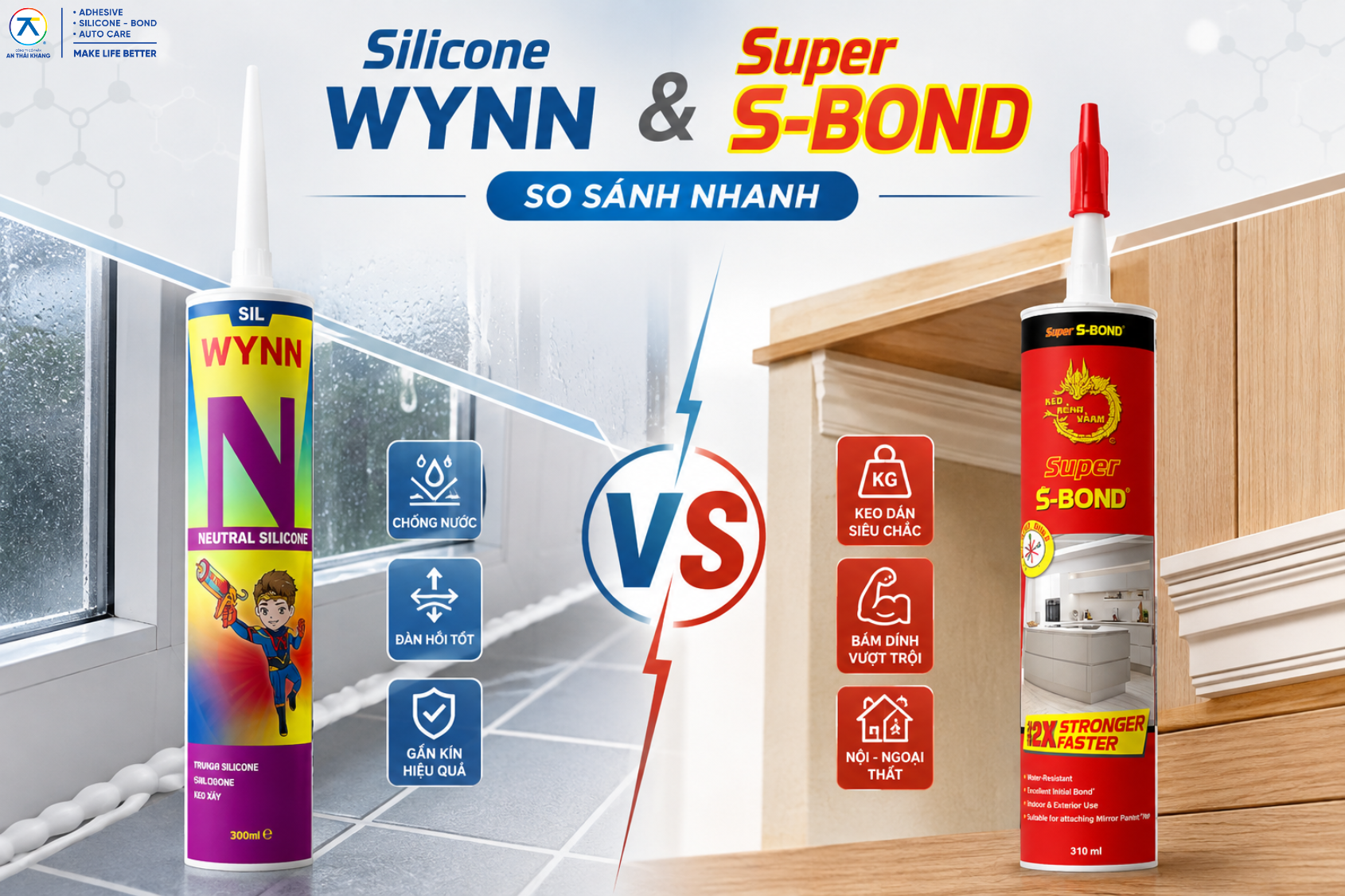
Neutral-cure silicone is often preferred for aluminium and glass doors because it is less likely to affect metal surfaces and is compatible with a wider range of construction materials. It can be used on aluminium, glass, stainless steel, concrete, mortar and areas requiring greater long-term stability.
Selection should be based on the following factors:
Whether the installation is indoors or outdoors.
Whether the adjoining surfaces are aluminium, glass, walls or tiles.
Whether the area is frequently exposed to water.
Resistance requirements for sunlight, rain and temperature changes.
The required colour of the finished silicone bead.
The expected movement of the joint.
The technical requirements of the door system.
For windows, balcony doors and exterior building surfaces, a product with clearly stated weather-resistance properties should be selected. For bathroom doors and other damp areas, the water-resistance and mould-resistance properties of each sealant should be checked.
It should not be assumed that all neutral-cure silicone products have the same characteristics. Technical specifications and recommended applications may vary between products. Installers should read the instructions on the packaging or in the technical data sheet before use.
For a clearer explanation of the differences between acid-cure silicone, neutral-cure silicone and specialist products, refer to the article What Is Silicone? Its Composition and How to Choose the Right Type.
4. Installation and Inspection Procedures for Aluminium and Glass Doors
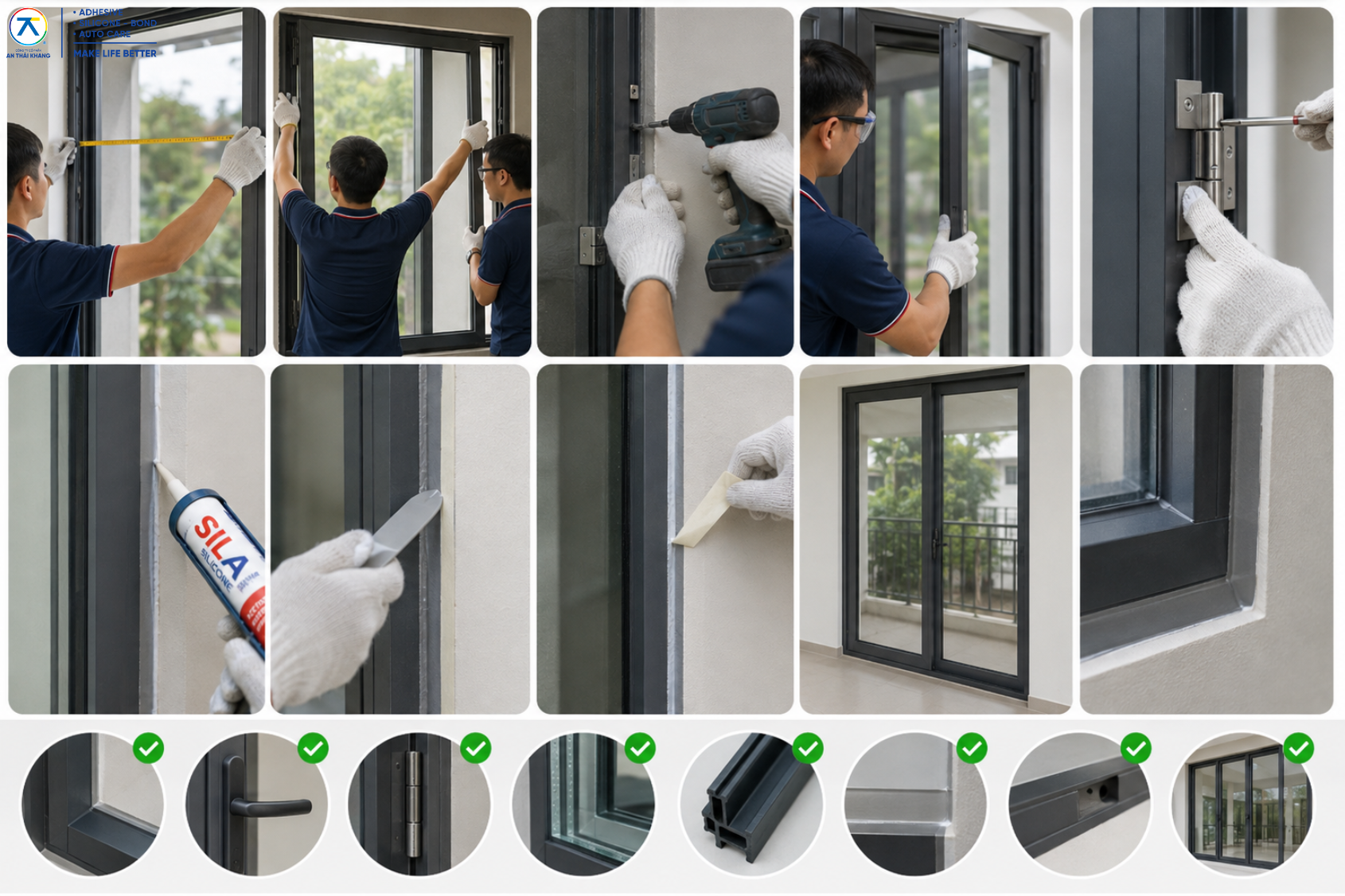
The door frame must be installed in the correct orientation and at the correct level, and it must be securely fixed before silicone is applied. A silicone bead should not be used to hold a door frame that has not been properly secured.
4.1. Basic Installation Steps
The installation process may be carried out as follows:
Inspect the product: Confirm the dimensions, aluminium colour, glass and hardware before installation.
Position the frame in the wall opening: Align the frame so that it is straight, square and installed at the correct level.
Secure the frame: Use fixing methods suitable for the wall and the door construction.
Install the door leaf and glass: Check the positions of the gaskets, glazing beads and glass support points.
Install the hardware: Complete the installation of hinges, locks, handles and operating mechanisms.
Seal the gaps: Clean the surfaces and apply silicone to the required locations.
Check operation: Open and close the door several times and make adjustments where necessary.
Complete final cleaning: Remove protective film, excess sealant and dirt.
Before applying silicone, all dust, water, grease and old sealant must be removed. Masking tape may be applied along both sides of the joint to create straighter edges.
The nozzle should be cut to match the required bead width. During application, the sealant gun should be held steadily, with even trigger pressure and continuous movement. The silicone must fill the joint rather than merely form a thin layer over the surface.
After application, the silicone should be tooled while it is still wet. The masking tape must be removed before the silicone begins to form a surface skin to prevent the edges from tearing.
4.2. Inspecting the Door After Installation
After installation, Xingfa aluminium and glass doors should be inspected for both operating performance and finishing quality.
Basic inspection criteria include:
The door frame is straight and not twisted.
The door leaf opens and closes smoothly without scraping the floor or frame.
The gaps between door leaves are reasonably even.
Handles and locks operate normally.
Hinges are securely fixed.
The glass is free from cracks, scratches and unusual movement.
Gaskets are continuous, untwisted and complete.
Silicone beads are even, well adhered and free from gaps.
Drainage holes are not blocked by sealant or dirt.
There are no signs of water penetration around the exterior edges of the frame.
For doors directly exposed to rain, a water test may be carried out after the silicone has cured for the period recommended by the manufacturer. Water testing should not be performed too early because an uncured seal may deform.
A common mistake is applying new silicone directly over old sealant that has already peeled away. This only conceals the surface temporarily and does not address the cause of adhesion failure. The damaged sealant must be removed, and the surface must be cleaned and dried before resealing.
The quality of the silicone bead should be assessed according to its adhesion, joint fill, shape retention and resistance to edge peeling after curing. Detailed guidance on cutting the nozzle, holding the sealant gun, tooling the bead and checking its quality is available in the article How to Apply a Neat Silicone Bead and Test Silicone Sealant Correctly.
5. Conclusion
The installation of Xingfa aluminium and glass doors should be carried out as a coordinated process, from site measurement and fabrication to frame installation and silicone finishing. Even a small error in dimensions or level can make the door difficult to operate, create gaps or reduce its waterproofing performance.
In addition to aluminium profiles, glass and hardware, silicone plays an important role in sealing joints between the glass and frame and between the door frame and wall. A properly applied bead helps prevent water, dust and moisture from entering through gaps while producing a cleaner finished appearance.
For aluminium and glass doors, neutral-cure silicone is often the preferred product category because of its compatibility with metals and a wide range of construction surfaces. However, the specific product must still be selected according to whether the location is indoors or outdoors, the level of water exposure and the technical requirements of the project.
After installation, the squareness of the frame, door operation, hardware, gaskets, drainage holes and all silicone beads should be inspected. Careful inspection from the beginning helps identify areas requiring adjustment and reduces the need for future repairs.
AN THAI KHANG JSC
- • Fanpage: An Thái Khang JSC
- • Hotline: 0764 644 245
- • Email: support@anthaikhang.com
- • Website: https://anthaikhang.com/