
Durable and Attractive Residential Aluminium and Glass Installation with Silicone
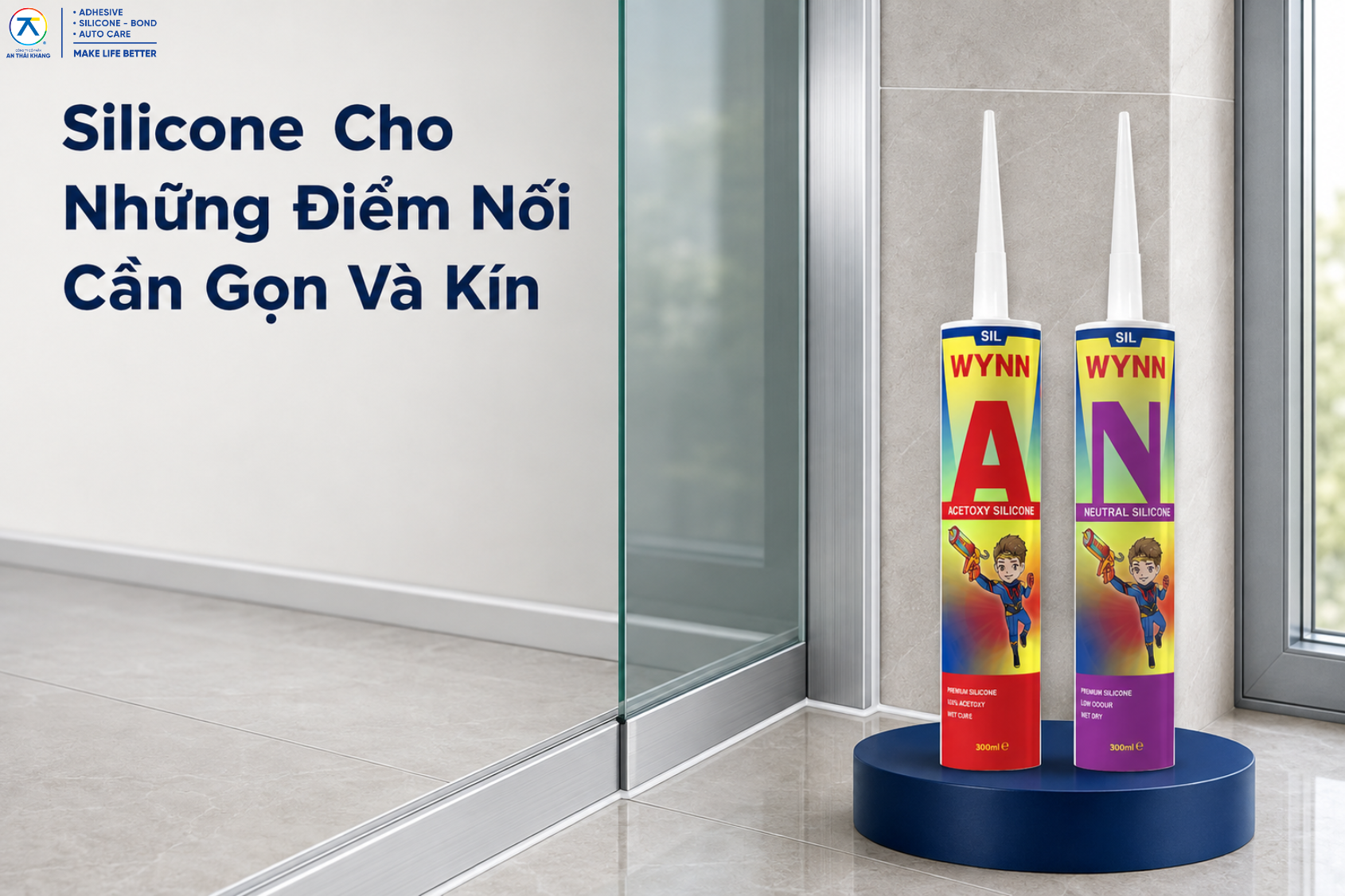
Discover how silicone sealant is used in residential aluminium and glass installation, from kitchen cabinets and windows to bathroom glass partitions, helping to seal gaps, prevent water penetration and create a clean, aesthetically pleasing finish.
Aluminium and glass are increasingly used in residential properties because of their modern appearance, ease of maintenance and suitability for a wide range of spaces. From entrance doors, windows and kitchen cabinets to bathroom glass partitions, these materials help make interiors brighter, more spacious and better organised.
However, the quality of an aluminium and glass installation does not depend solely on the aluminium frame or glass panel. Junctions between the glass and aluminium, the door frame and wall, or fixtures and countertops must also be properly sealed to prevent water, dust and moisture from entering.
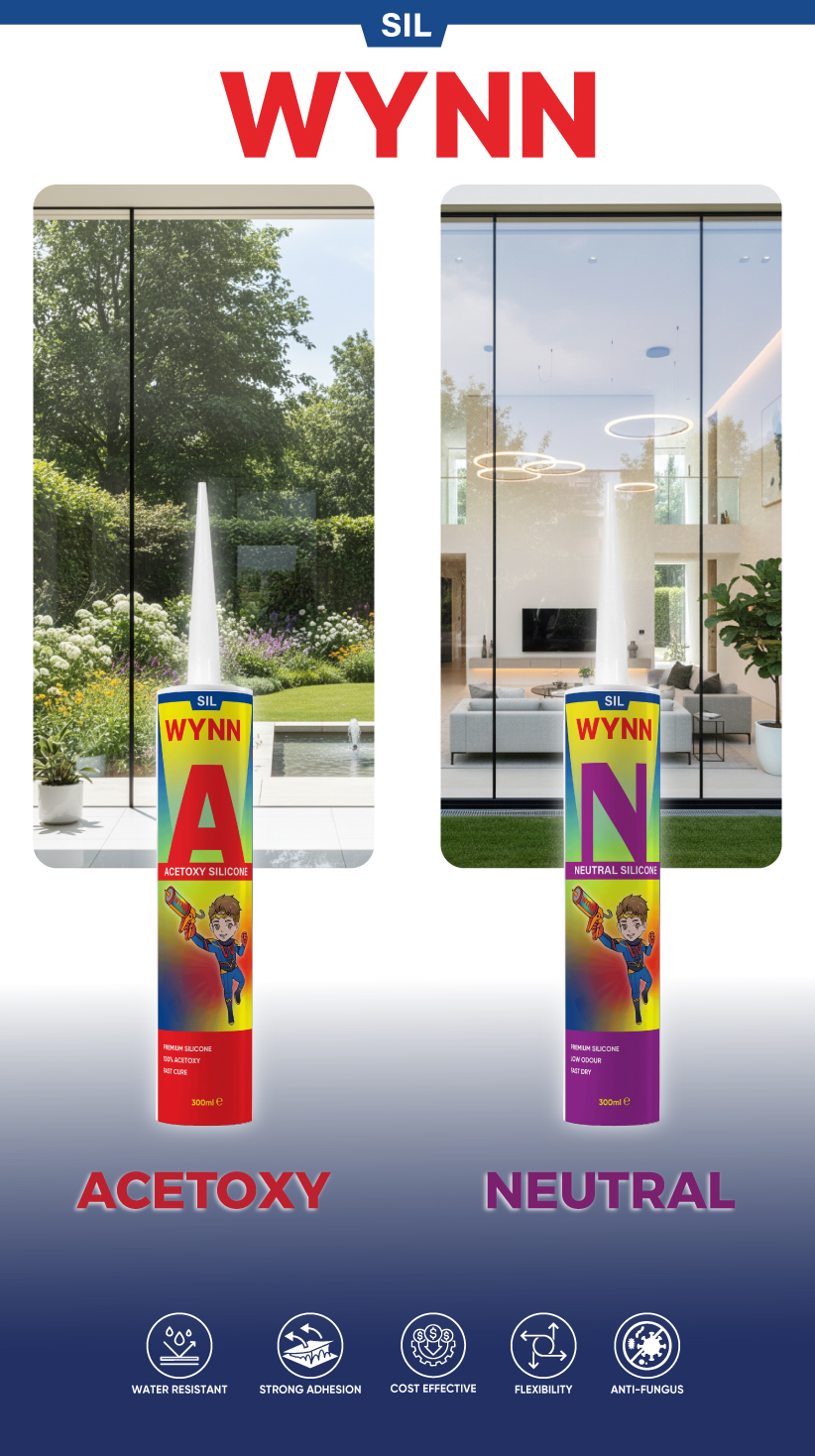
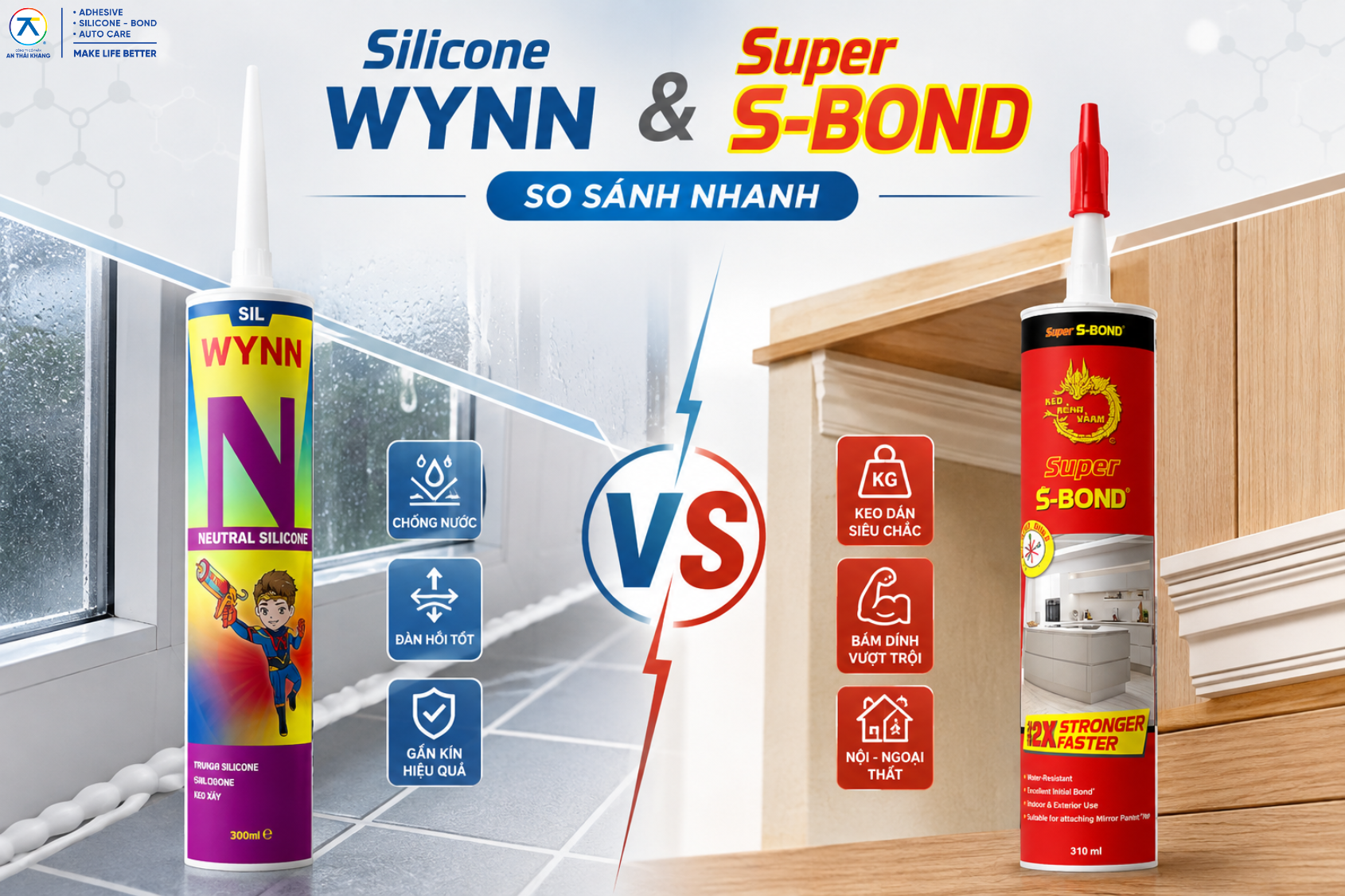
Silicone sealant is commonly used to seal, bond and finish these areas. Once cured, silicone forms a flexible seal that can adhere to various surfaces and accommodate minor movements between materials. Users can explore acid-cure silicone, neutral-cure silicone and Wacker Silicone products in the An Thái Khang silicone sealant category.
1. Why Is Silicone Important in Aluminium and Glass Installation?
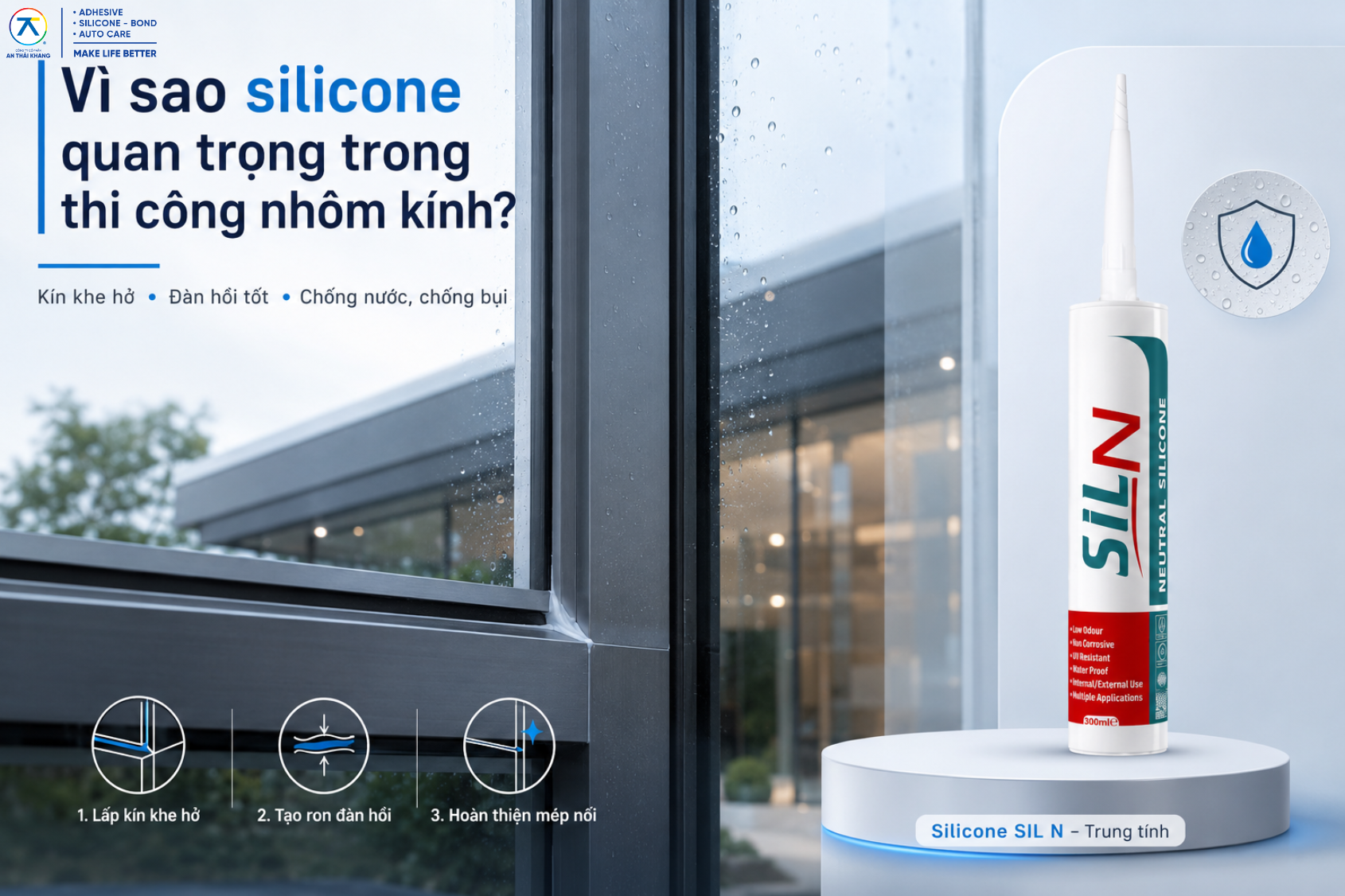
Aluminium and glass both have relatively smooth surfaces. During installation, small gaps may still remain between components because of dimensional tolerances, uneven walls or adjustments made when positioning the frame.
If these gaps are not properly treated, rainwater, moisture, dust or air may pass through the joints. In kitchens and bathrooms, water may also penetrate the edges of cabinets, the bases of frames or the surfaces underneath, reducing the visual quality of the installation and potentially affecting surrounding materials.
Silicone is used in aluminium and glass installation for three main reasons:
To fill gaps between adjoining surfaces.
To create a flexible seal after curing.
To support water resistance, dust prevention and joint finishing.
Unlike rigid filling materials, silicone can accommodate minor expansion and contraction caused by changes in temperature and humidity. This characteristic helps reduce the risk of the seal cracking or separating from the surface when the aluminium frame and glass undergo slight movement during use.
In addition to its functional role, the silicone bead directly affects the appearance of the finished installation. A smooth, straight and appropriately coloured bead creates a more seamless finish around glass edges, door frames and kitchen cabinets. In contrast, silicone that is smeared, shrunken or peeling at the edges can make the entire installation appear poorly finished.
2. Residential Applications of Silicone for Aluminium and Glass
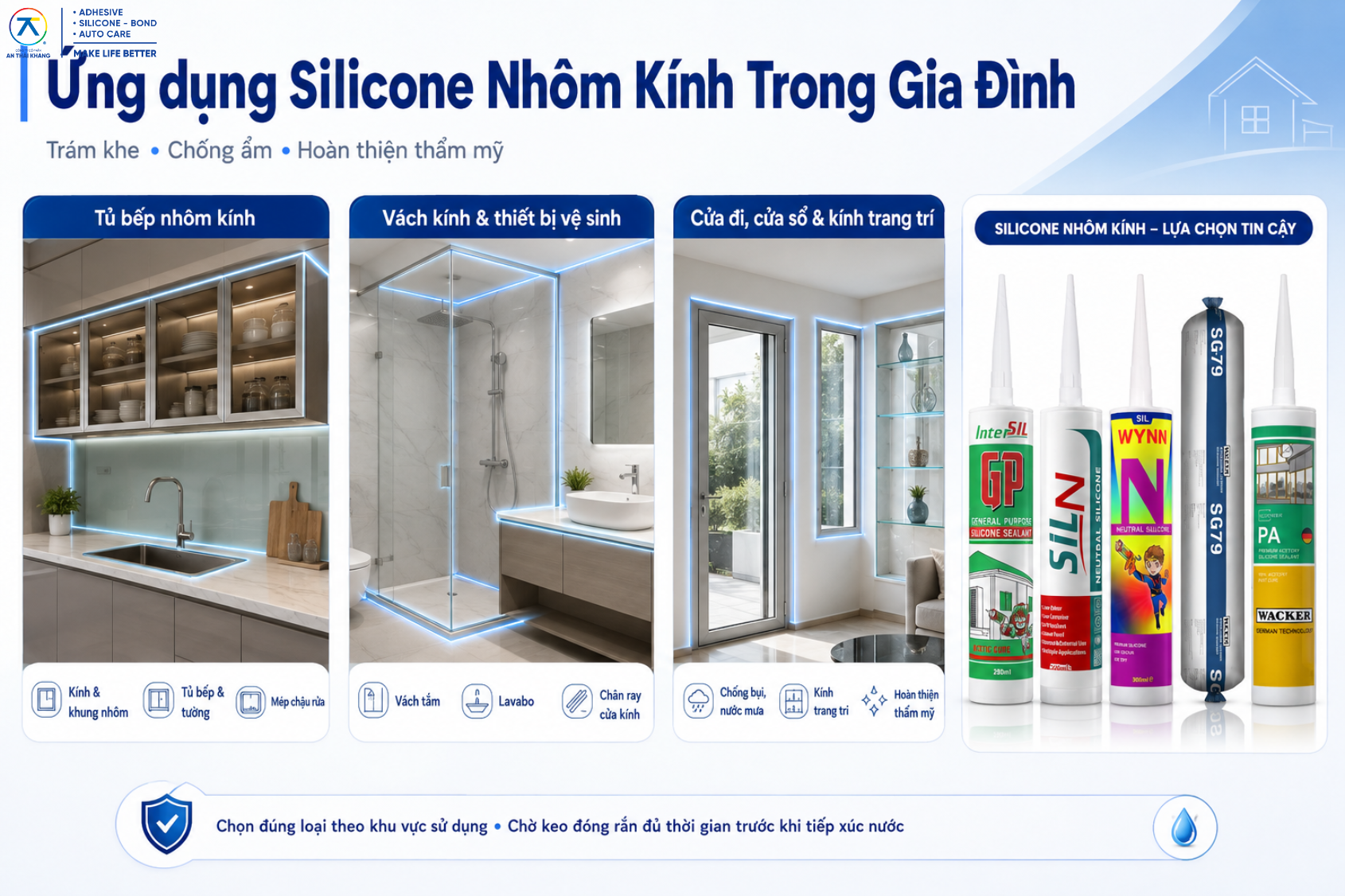
Silicone can be used in various locations throughout a home. Each area has different requirements relating to adhesion, water resistance and the long-term durability of the seal.
2.1. Sealing Gaps in Aluminium and Glass Kitchen Cabinets
Aluminium and glass kitchen cabinets typically consist of aluminium frames, glass doors and connecting components attached to walls or countertops. During installation, silicone may be used to seal gaps between:
Glass panels and aluminium frames.
Kitchen cabinets and walls.
Countertops and glass splashbacks.
Sink edges and countertops.
Decorative glass panels in the kitchen.
Sealing these gaps helps prevent water, grease and food particles from entering. These areas can be difficult to clean if dirt and debris are allowed to accumulate over time.
Around sinks and countertops that are frequently exposed to water, silicone with suitable moisture resistance and waterproofing properties should be selected. A product should not be chosen solely on the basis of its colour or price while ignoring the recommended applications stated in its technical documentation.
In food preparation areas, the silicone bead should not come into direct contact with food unless the manufacturer has specifically confirmed that the product is suitable for such use.
2.2. Installing Bathroom Glass Partitions and Fixtures
Bathrooms are high-humidity environments that are frequently exposed to water. Silicone may be applied in locations such as:
The edges of shower glass partitions.
Gaps between glass and aluminium frames.
The bases of glass door tracks.
The edges of washbasins and countertops.
Gaps between sanitary fixtures and walls.
Junctions between door frames and ceramic tiles.
The silicone bead seals open gaps and helps prevent water from flowing into the base of the frame or penetrating through joints. As a result, aluminium and glass surfaces are easier to clean, while mineral deposits and dirt are less likely to accumulate in narrow gaps.
However, not every silicone product is suitable for damp environments. For bathroom applications, priority should be given to products that clearly state their water resistance and compatibility with glass, aluminium and ceramic tiles. In areas prone to mould growth, users should verify whether the selected sealant contains mould-resistant additives rather than assuming that all silicone products provide this feature.
After application, the silicone must be allowed to cure for the period recommended by the manufacturer before water fixtures are used or the area is put into service. Premature exposure to water may deform the bead, cause the edges to peel or reduce the effectiveness of the seal.
2.3. Sealing Doors, Windows and Decorative Glass
For entrance doors and windows, silicone is commonly applied to gaps between the glass and aluminium frame or between the door frame and the surrounding building surface. These areas must be sealed evenly to prevent dust, rainwater and air from passing through.
For indoor aluminium-framed glass doors, the main requirements are usually adhesion and visual appearance. For windows, balconies and other areas exposed to sunlight and rain, a weather-resistant silicone suitable for outdoor conditions should be selected.
Silicone is also used to finish decorative glass, glass partitions, glass shelving and various interior details. However, load-bearing installations and structural glazing require specialist products applied in accordance with specific technical requirements. General-purpose silicone should not be used as a substitute for structural sealant simply because the two products appear similar.
3. How to Choose the Right Silicone for Aluminium and Glass
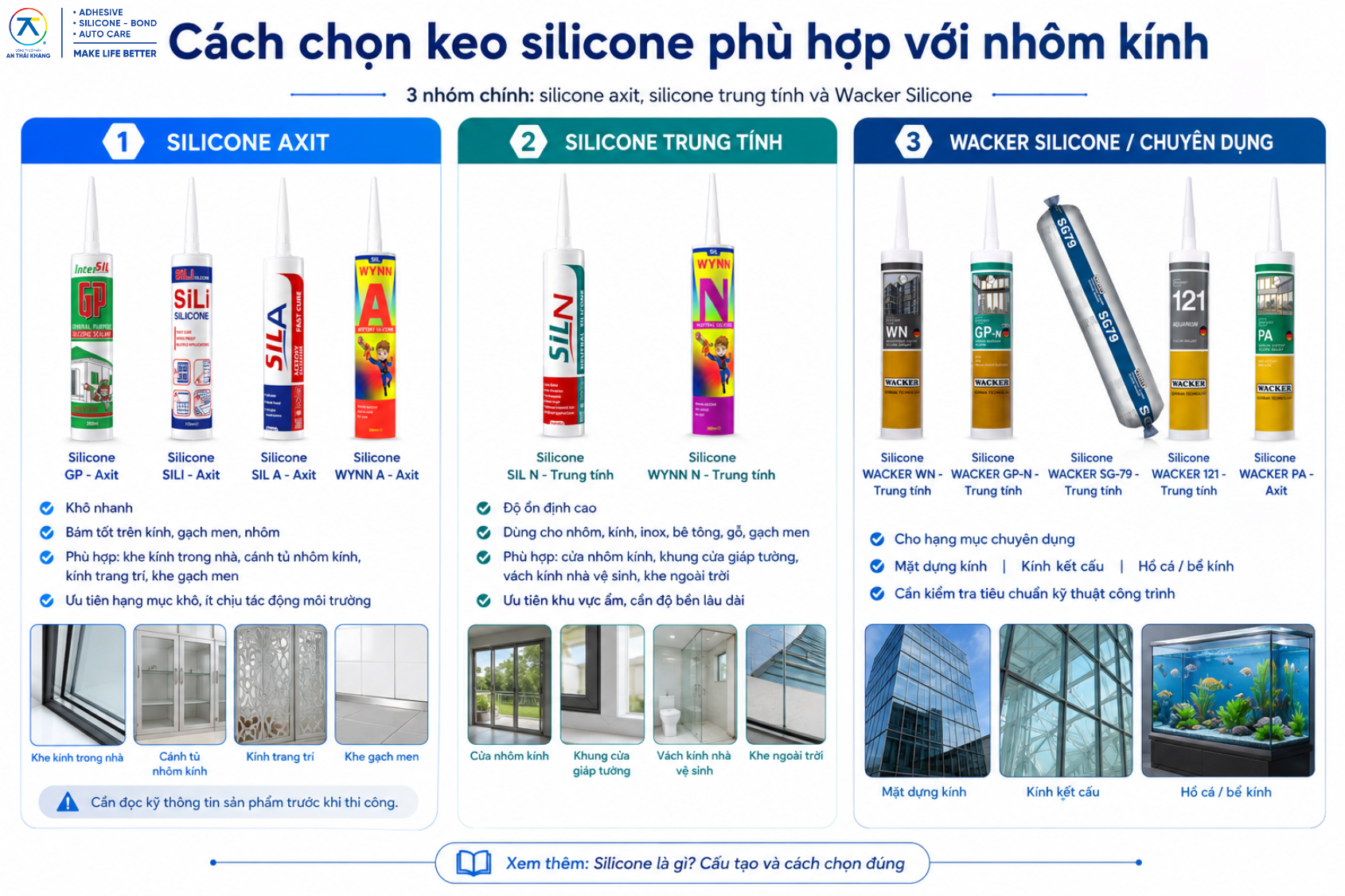
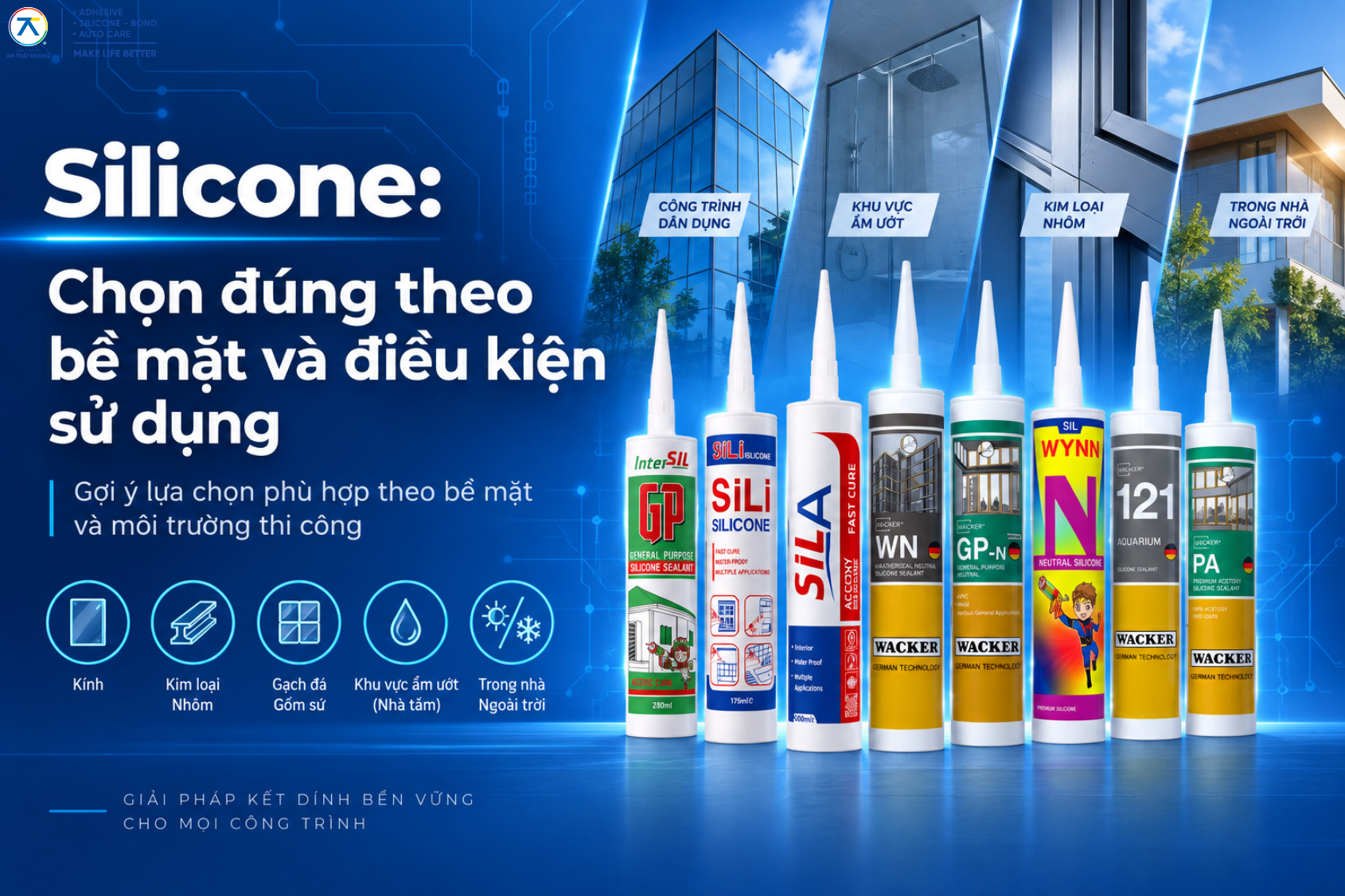
An Thái Khang’s silicone sealant range is currently divided into three main categories: acid-cure silicone, neutral-cure silicone and Wacker Silicone. This classification allows users to select a product according to the surface, environment and technical requirements of each application rather than using a single type for every location.
3.1. Acid-Cure Silicone for Common Residential Applications
Acid-cure silicone generally cures relatively quickly and adheres well to non-porous surfaces such as glass, ceramic tiles, aluminium and certain rigid plastics. This type may be considered for sealing small gaps, bonding glass or carrying out common household repairs.
In residential settings, acid-cure silicone may be suitable for areas such as:
Indoor glass joints.
Aluminium and glass cabinet doors.
Decorative glass.
Joints on ceramic tile surfaces.
Dry areas with limited environmental exposure.
It is important to note that acid-cure silicone may not be suitable for oxidation-sensitive metals, natural stone, alkaline surfaces or applications with demanding technical requirements. The product information should therefore be reviewed carefully before installation.
3.2. Neutral-Cure Silicone for Areas Requiring Greater Stability
Neutral-cure silicone is generally less likely to affect metal surfaces and can be used on a wide range of materials, including aluminium, glass, stainless steel, concrete, mortar, wood and ceramic tiles.
This type is commonly suitable for:
Aluminium-framed glass doors and windows.
Junctions between door frames and walls.
Bathroom glass partitions.
Areas exposed to moisture.
Outdoor joints.
Installations requiring long-term durability.
For kitchen cabinets, bathrooms and windows exposed to water and temperature changes, neutral-cure silicone is often the preferred option for consideration. However, users must still verify the waterproofing, mould resistance and recommended service conditions of each specific product.
Applications such as glass façades, structural glazing, aquariums and glass tanks require specialist silicone products. Selection should not be based solely on whether a product is labelled acid-cure or neutral-cure while ignoring the technical standards of the project.
For a clearer explanation of the characteristics, recommended applications and selection criteria for each product category, refer to the article What Is Silicone? Its Composition and How to Choose the Right Type.
4. How to Apply Silicone Correctly to Aluminium and Glass
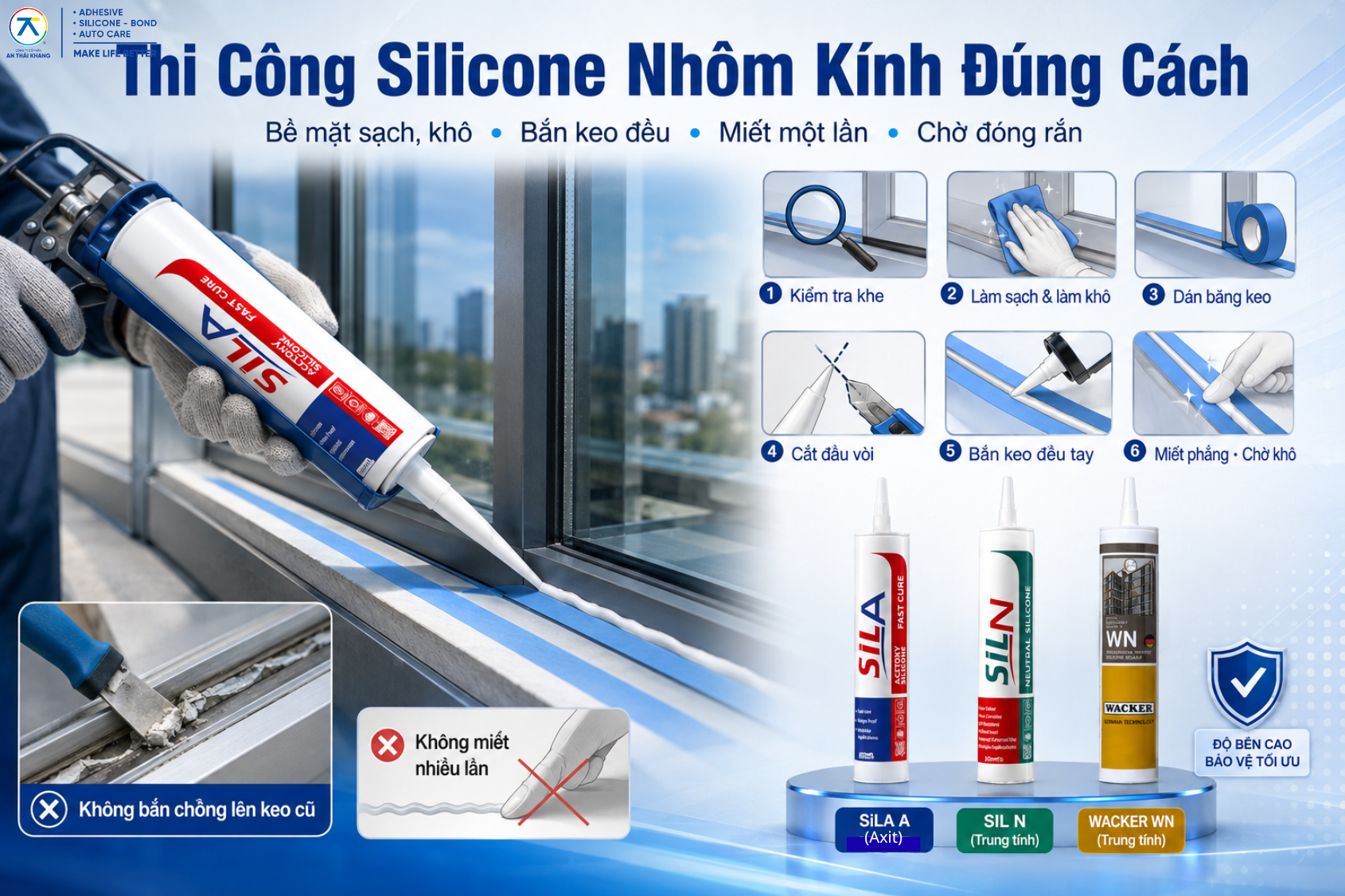
Even a suitable product may peel prematurely if the surface has not been properly prepared. Before applying silicone, all dust, grease, water, rust and damaged old sealant must be completely removed.
Aluminium and glass surfaces must be dry before application. If moisture or oil remains, the silicone may initially appear to adhere but can separate from the edges after a period of use.
The basic application process includes the following steps:
Inspect the gap: Determine its width, depth and the types of adjoining materials.
Clean the surfaces: Remove old sealant, dirt, grease and water.
Apply masking tape: Place tape along both sides of the gap to prevent silicone from spreading onto surrounding surfaces.
Cut the nozzle: Cut it at an angle and to a size appropriate for the required bead.
Apply the silicone: Hold the sealant gun steadily, squeeze the trigger evenly and move continuously along the joint.
Tool the bead: Smooth the silicone while it is still wet to create an even surface.
Remove the masking tape: Remove it before the surface of the silicone begins to dry.
Allow the sealant to cure: Do not expose the bead to water prematurely.
During application, the nozzle should be positioned close to or inside the gap so that the silicone fills the space rather than merely covering the surface. The bead should be continuous, free from air bubbles and without breaks.
A common mistake is applying new silicone directly over old sealant that has already peeled or developed mould. This method only conceals the problem temporarily. The old sealant must be removed, and the application area must be cleaned and dried before resealing.
The installer should also avoid smoothing the silicone repeatedly. Once silicone begins to form a surface skin, further tooling may cause wrinkles and reduce its gloss. Ideally, the bead should be smoothed in one steady motion, with only minor corrections made where genuinely necessary.
For larger projects, a test application should be performed on a small section to assess adhesion, curing speed, colour and the sealant’s ability to maintain the required bead shape. Detailed guidance on cutting the nozzle, holding the sealant gun, tooling the bead and checking application quality is available in the article How to Apply a Neat Silicone Bead and Test Silicone Sealant Correctly.
5. Conclusion
Silicone is an important material in residential aluminium and glass installation. It helps seal gaps, create watertight joints and finish junctions around kitchen cabinets, entrance doors, windows, bathroom glass partitions and many other interior features.
To achieve a durable and visually attractive seal, the correct silicone must be selected according to the surface and service environment. Acid-cure silicone is suitable for many common residential applications on non-porous surfaces, while neutral-cure silicone is generally considered for metals, damp areas, outdoor applications and installations requiring greater long-term stability.
In addition to product selection, application quality plays a decisive role in the durability of the seal. Surfaces must be clean and dry, the silicone must completely fill the gap, the bead must be tooled at the correct time, and the sealant must be allowed to cure before being exposed to water.
When the right product is selected and applied using the correct techniques, residential aluminium and glass installations will remain well sealed, easy to clean and visually appealing for many years.
AN THAI KHANG JSC
- • Fanpage: An Thái Khang JSC
- • Hotline: 0764 644 245
- • Email: support@anthaikhang.com
- • Website: https://anthaikhang.com/