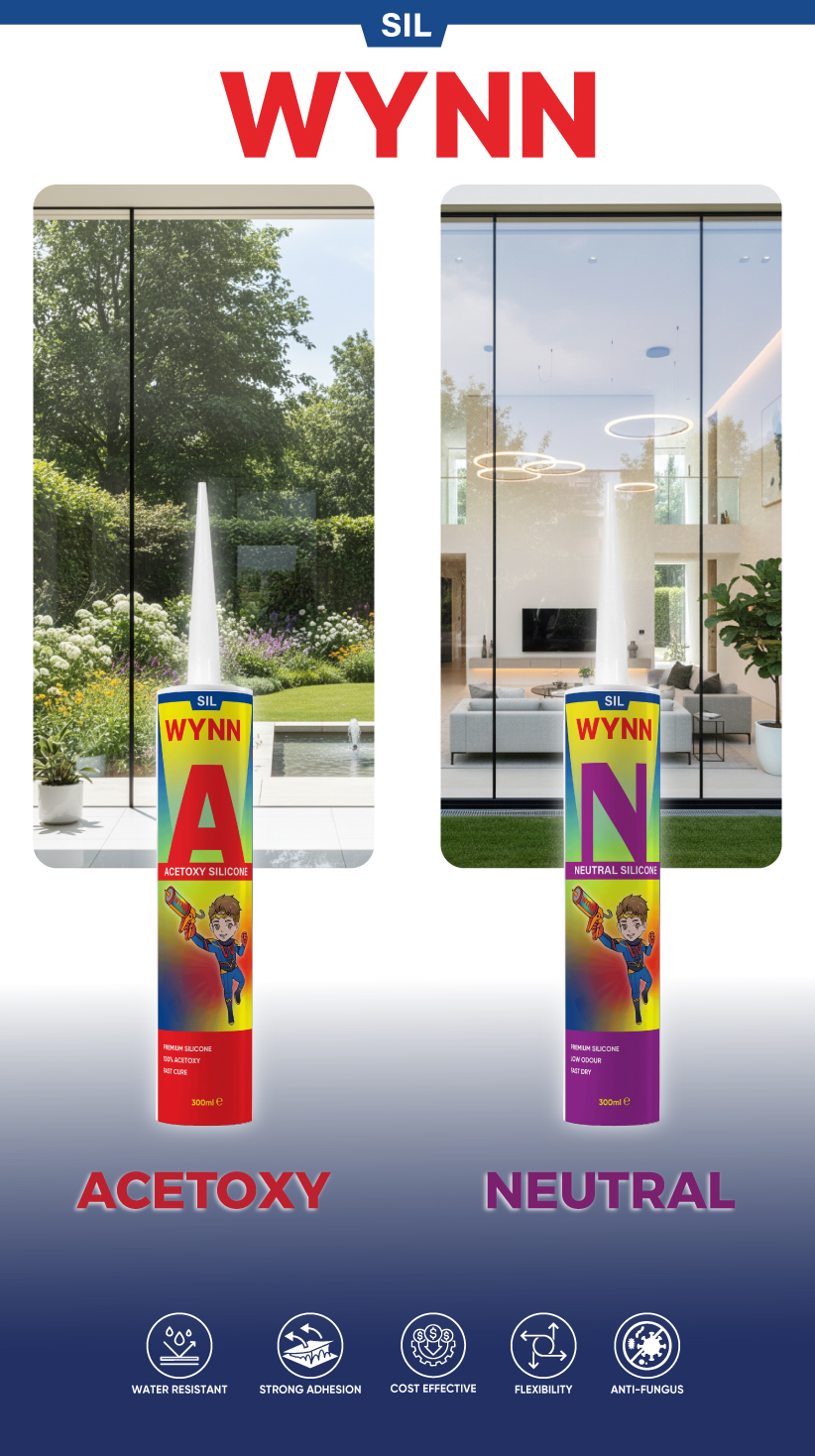

Silicone: Choosing the Right Type for Different Surfaces and Application Conditions
Silicone is widely used in construction and finishing applications thanks to its sealing performance, moisture resistance, and ability to remain flexible. Learn how to choose the right silicone based on the surface and actual application conditions.
Silicone is commonly used in a wide range of applications, from glass and aluminium doors to sanitary areas and construction joints. However, not every silicone product is suitable for every application.
Rather than choosing a product based solely on colour or price, users should consider the application surface, environmental conditions, and joint requirements. These factors directly affect adhesion, durability, and long-term sealing performance.
1. When Is Silicone Suitable?
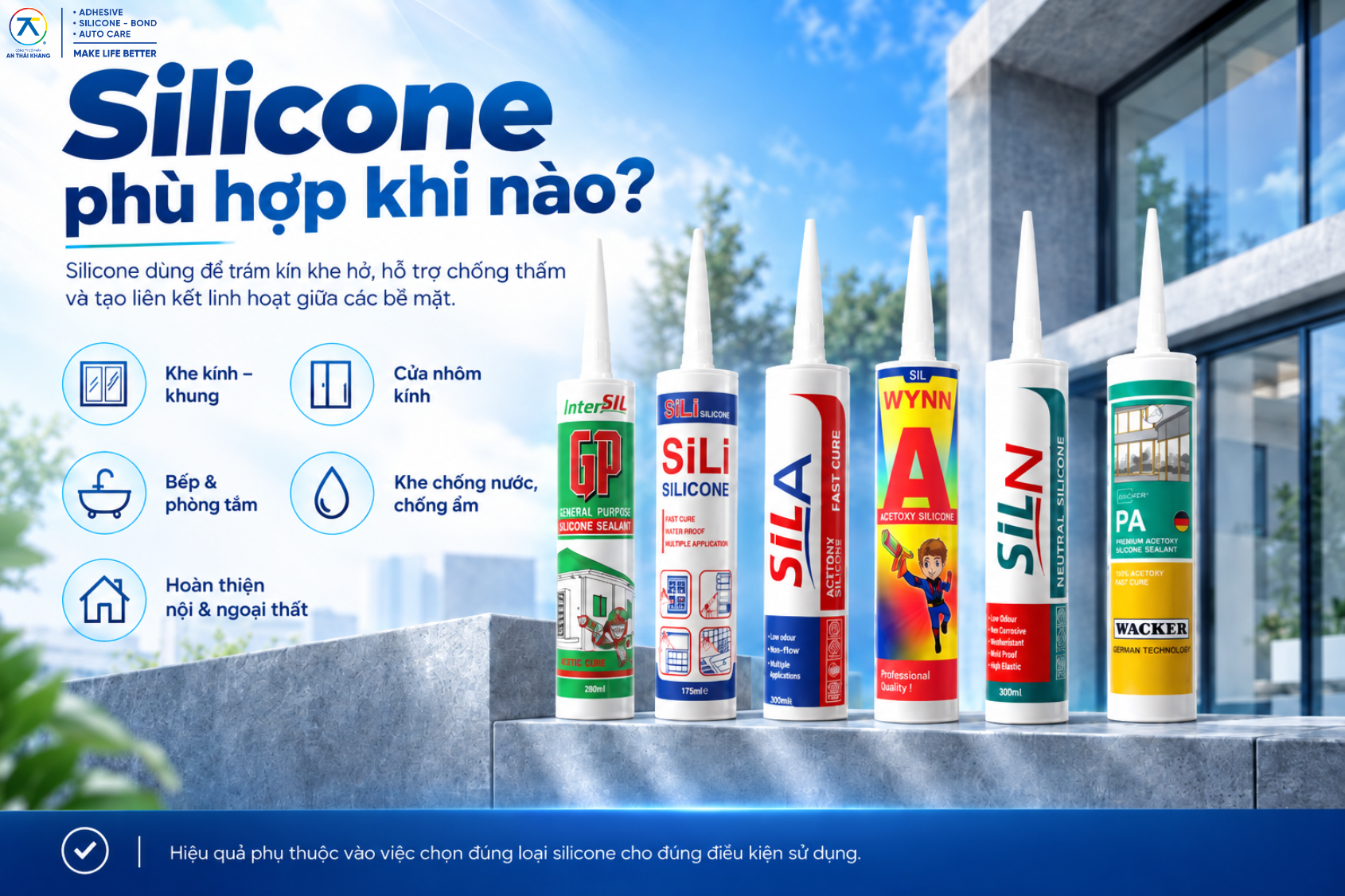
Silicone is commonly used to seal gaps, help prevent water penetration, and create flexible joints between different surfaces. One of silicone’s key advantages is its ability to remain flexible after curing. This allows the sealant to better accommodate small movements in joints caused by temperature changes, moisture, or movement of the surrounding materials.
Silicone is commonly used for applications such as:
Joints between glass and frames.
Aluminium and glass doors or windows.
Kitchen and bathroom areas.
Gaps where water or moisture penetration needs to be limited.
Certain interior and exterior finishing applications.
However, the final performance still depends on choosing the right type of silicone for the specific application conditions.
2. The Surface Is the First Factor to Consider When Choosing Silicone
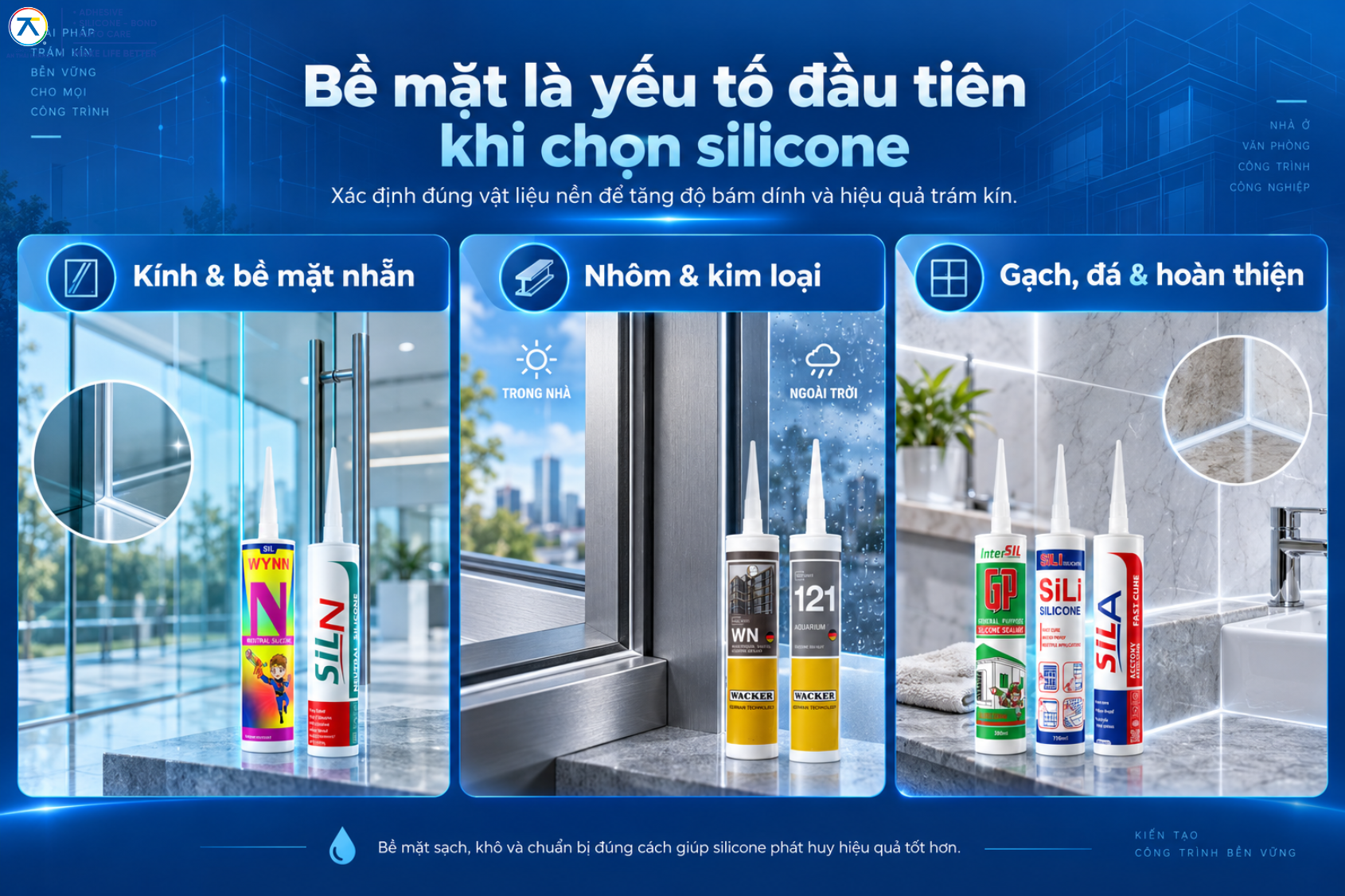
Silicone adhesion can vary depending on the substrate material. Therefore, before application, it is important to identify the type of surface the silicone will be in contact with.
2.1. Glass and Smooth Surfaces
Glass is one of the most common surfaces on which silicone is used, particularly in doors, glass partitions, and finishing applications. For these surfaces, the silicone bead must not only adhere properly but also form a continuous seal. The glass surface should be cleaned of dust, oil, and moisture before application to reduce the risk of edge lifting after the material has cured.
2.2. Aluminium and Metal
For aluminium frames and certain metal surfaces, it is important to consider the compatibility between the silicone and the substrate material. In addition to adhesion, the application environment should also be taken into account. For example, outdoor areas are generally exposed to greater fluctuations in temperature and humidity than indoor areas.
2.3. Tiles, Stone, and Finishing Materials
Tiles and stone are commonly used in kitchens, bathrooms, and other areas exposed to water. In these locations, adhesion is not the only factor to consider. Moisture levels, surface condition, and the desired appearance of the sealant joint are also important. A clean, dry, and properly prepared surface will help the silicone perform more effectively.
3. How Do Environmental Conditions Affect Silicone?
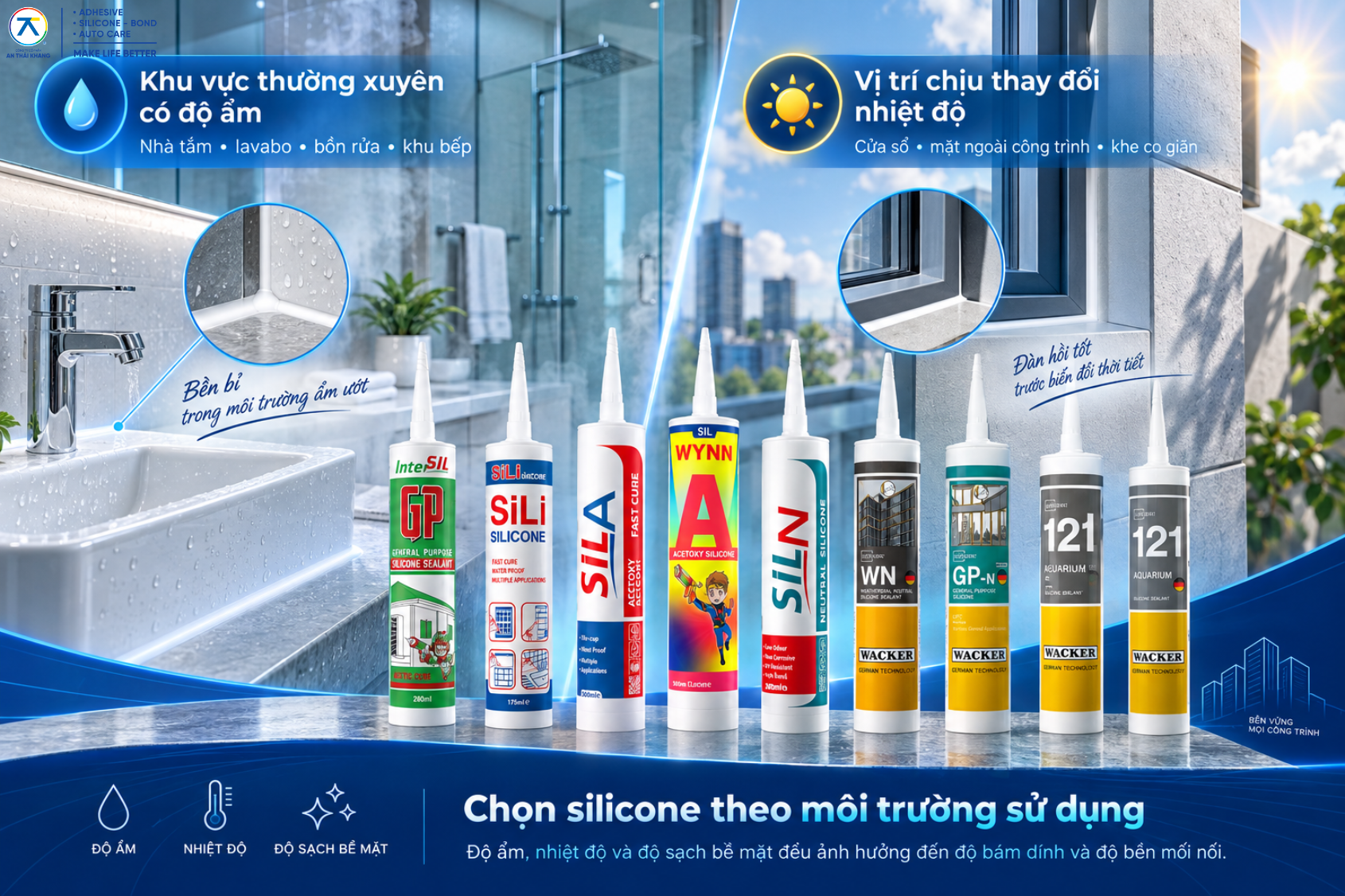
Even when applied to the same type of surface, silicone used indoors and outdoors may need to meet different performance requirements.
3.1. Areas Frequently Exposed to Moisture
Bathrooms, washbasins, sinks, and kitchen areas are frequently exposed to water and moisture. In these locations, the silicone bead should be applied continuously and without gaps to reduce the possibility of water penetrating through the joints between materials. Surface preparation before application is especially important. If water, oil, or dust remains on the surface, the adhesion of the silicone may be affected.
3.2. Areas Exposed to Temperature Changes
Areas near windows, building exteriors, or locations frequently exposed to environmental conditions may experience expansion and contraction of materials. In such cases, the silicone should maintain sufficient flexibility so that the seal does not easily crack or separate from the edges of the surrounding materials when minor joint movement occurs. Therefore, when selecting silicone, users should not consider only the conditions at the time of application. It is also important to evaluate the environment the joint will be exposed to throughout its service life.
4. Four Factors to Check Before Using Silicone
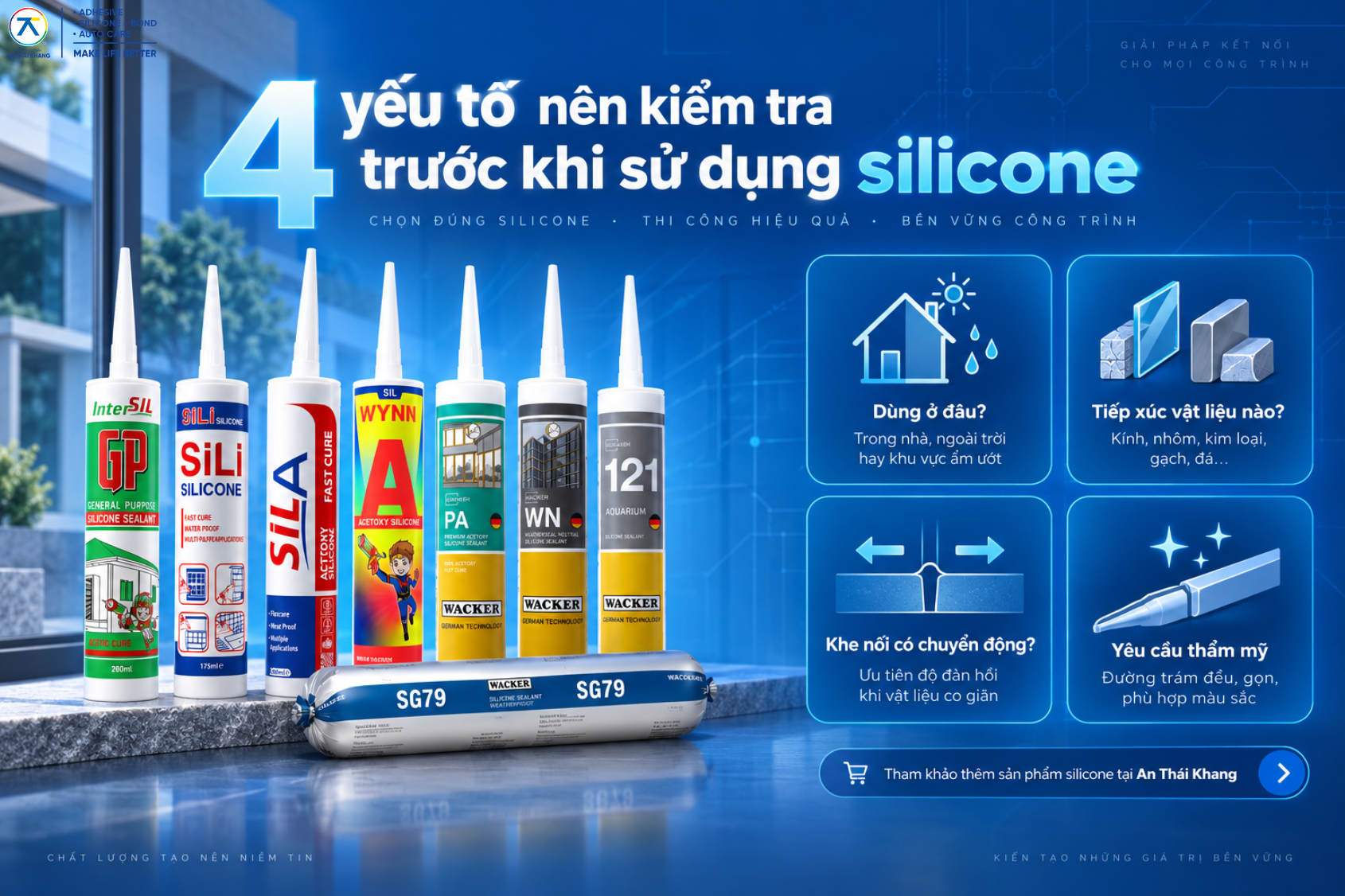
Choosing the right product becomes easier when the requirements of the application are identified in advance.
4.1. Where Will the Silicone Be Used?
First, determine whether the application is indoors, outdoors, or in an area that is frequently exposed to water.
This helps narrow down the suitable product options from the beginning.
4.2. What Material Will the Silicone Be Applied To?
Identify whether the surface is glass, aluminium, metal, tile, stone, or another material. It should not be assumed that one silicone product will provide the same level of performance on every surface.
4.3. Will the Joint Experience Movement?
Materials may expand or contract slightly due to temperature changes or environmental conditions. If the joint is likely to move, the flexibility of the silicone becomes an important factor to consider.
4.4. What Are the Aesthetic Requirements of the Application?
For visible applications, the silicone bead should be applied evenly and neatly and should match the overall colour scheme. In addition to choosing the right product, installers should also control the amount of silicone applied, keep the joint edges clean, and finish the sealant bead while the material is still within its workable time.
If you are looking for a product for a specific application, you can browse An Thai Khang’s silicone products for more information before making your selection.
5. Conclusion
Silicone can be used in a wide range of applications, but its performance depends largely on selecting the right product and using it under suitable conditions. Before choosing a silicone product, four main factors should be considered: the substrate material, application location, environmental conditions, and joint requirements. This approach helps avoid selecting silicone based solely on personal preference and improves the likelihood of achieving a stable and effective seal that meets the actual application needs. For each project, it is recommended to carefully review the product specifications and application instructions before use to ensure that the silicone is applied for its intended purpose.
AN THAI KHANG JSC
- • Fanpage: An Thái Khang JSC
- • Hotline: 0764 644 245
- • Email: support@anthaikhang.com
- • Website: https://anthaikhang.com/