
What Is White Glue? A Comparison Between Spray Adhesive and White Glue
What is white glue, how is it different from spray adhesive, and which type should you use for wood, sofas, foam, laminate, veneer, and furniture? See the detailed comparison table to choose the right adhesive.
In interior construction, sofa manufacturing, wood bonding, foam bonding, or decorative material applications, choosing the right adhesive directly affects both the durability and the appearance of the finished product. Among the most commonly used adhesives, white glue and spray adhesive are two popular options, but they have completely different properties.
So, what is white glue, how is it different from spray adhesive, when should white glue be used, and when should spray adhesive be chosen? This article will help you clearly understand the nature of each adhesive type, compare their advantages and limitations, and choose the right adhesive for each practical application.
1. What Is White Glue?
White glue is a water-based adhesive that usually has a milky white color, which is why it is commonly called white glue. This type of adhesive is often used for bonding wood, paper, cardboard, handicrafts, plywood, and certain materials with good absorbency.
The working mechanism of white glue is based on water evaporation and adhesive film formation. When the glue is applied to the surface of a material, the water in the glue either penetrates the material or evaporates into the surrounding environment. After drying, the remaining adhesive forms a bonding layer that helps the two surfaces adhere firmly to each other.
White glue usually does not provide instant bonding. To achieve a strong bond, users need to apply the glue evenly, join the two surfaces in the correct position, and press or hold them together for a certain period of time. Therefore, white glue is especially suitable for tasks that require stability, rigidity, and the ability to adjust the position before the glue dries.
2. What Is Spray Adhesive?
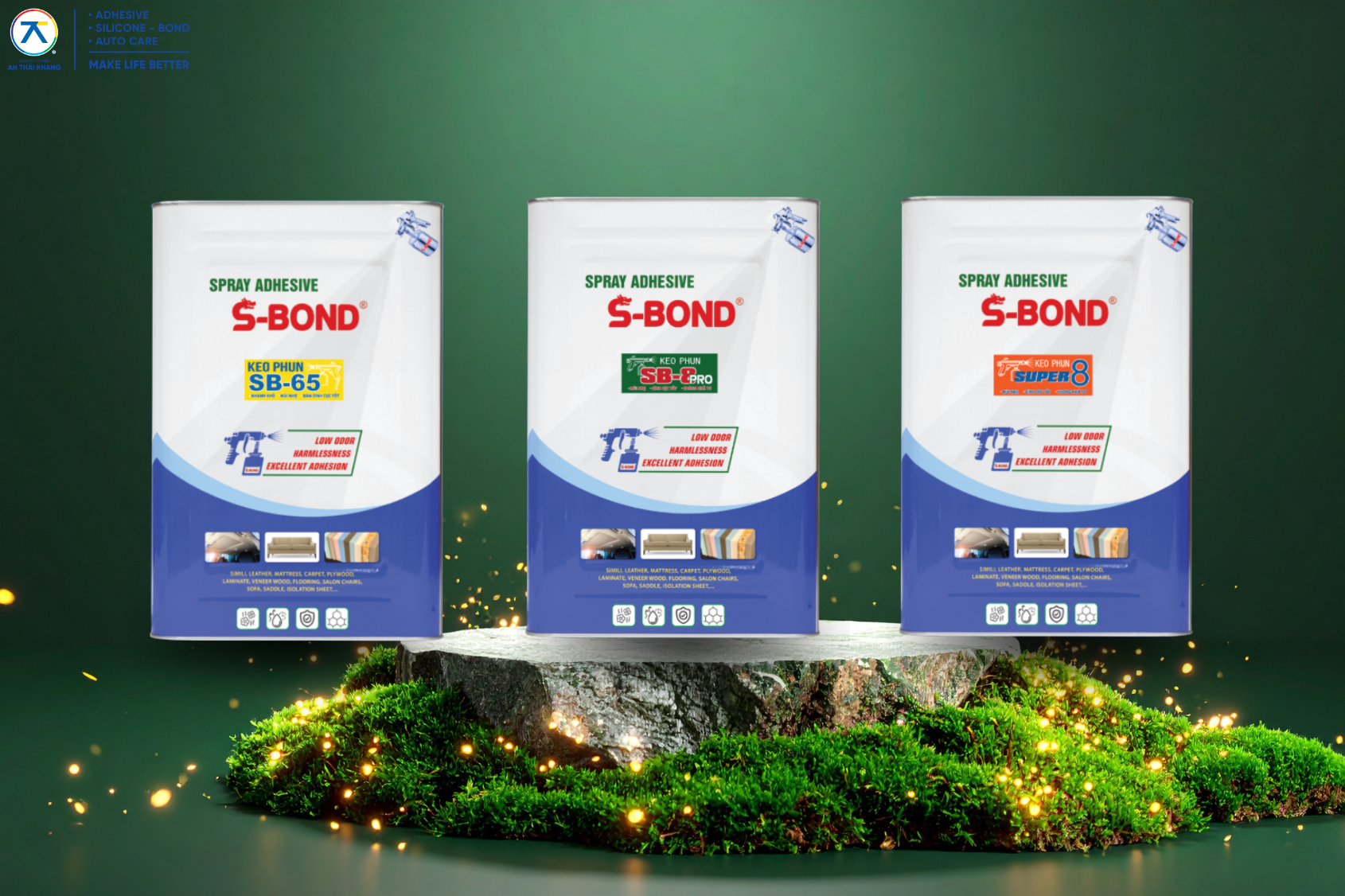
Spray adhesive is a type of adhesive applied by spraying it onto the surface of materials. It can be used in aerosol cans, with spray guns, or through industrial spray systems. When sprayed, the adhesive forms a thin and even layer, allowing it to cover large areas in a short amount of time.
Spray adhesive is commonly used in the production of sofas, mattresses, sponge foam, foam, synthetic leather, faux leather, fabric, laminate, veneer, MDF, plywood, floor carpets, and decorative materials. Its key strengths are fast application speed, a thin adhesive layer, a clean finished surface, and suitability for large-scale production.
While white glue performs well in bonds that require pressing and stability on absorbent materials, spray adhesive is more suitable for large surfaces, soft materials, or applications that require high working speed.
3. Comparison Table: White Glue vs. Spray Adhesive
Criteria | White Glue | Spray Adhesive |
|---|---|---|
Nature | Water-based adhesive | Adhesive applied by spraying |
Application method | Brushing, spreading, or rolling | Spraying with an aerosol can or spray gun |
Speed | Slower; requires pressing or holding | Faster; suitable for large surfaces |
Surface after bonding | May become uneven or bulky if applied too thickly | Thin, even, and cleaner |
Suitable materials | Wood, paper, cardboard, handicrafts | Sponge foam, foam, leather, faux leather, veneer, laminate, MDF |
Best suited for | Wood joining, small repairs, DIY projects | Sofas, furniture, and large-surface bonding |
In general, white glue is suitable for applications that require a hard, strong bond and allow time for adjustment. Spray adhesive is suitable for applications that require speed, even coverage, and a clean finished surface.
4. Advantages and Limitations of Each Adhesive Type
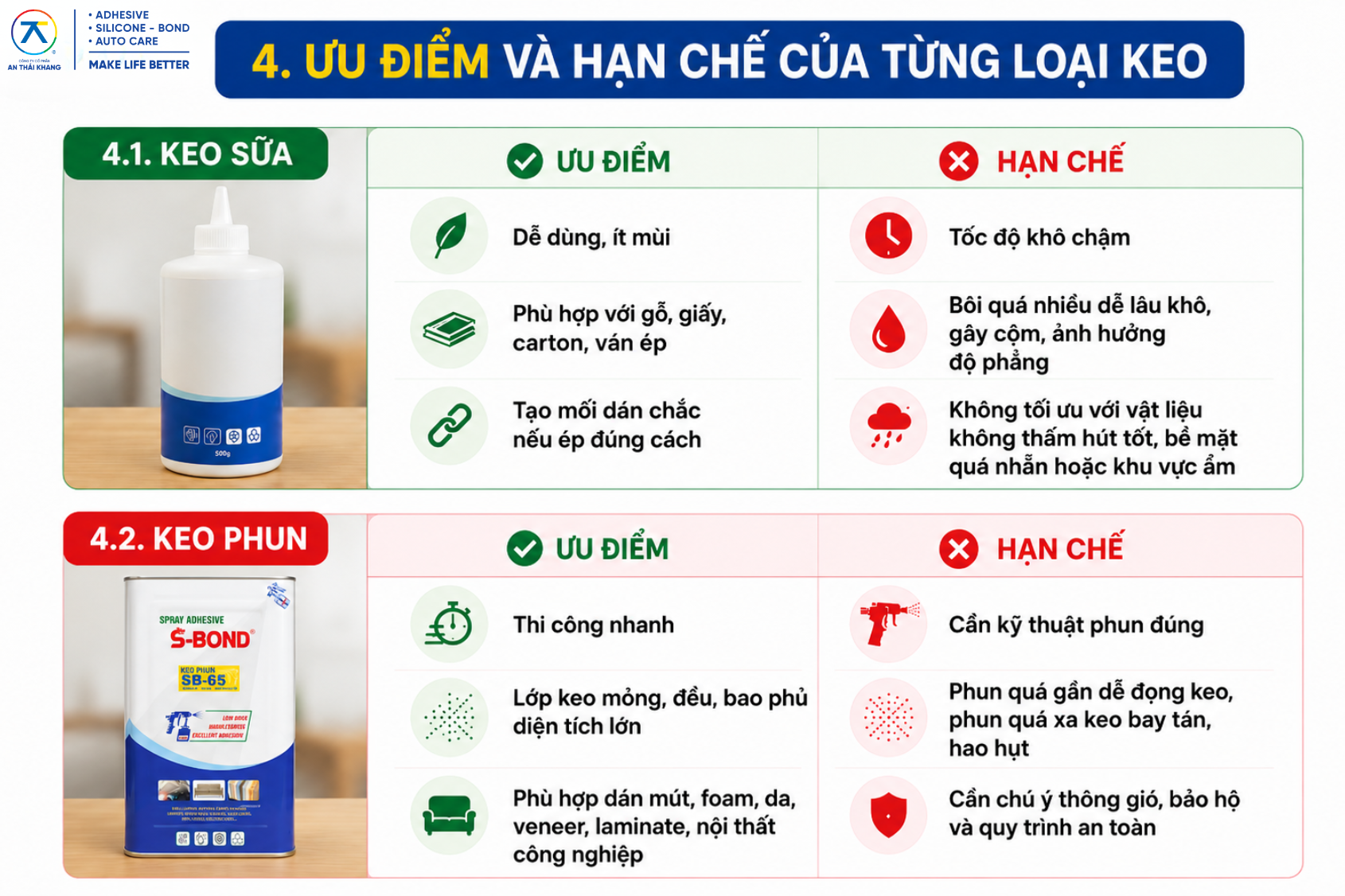
To choose the right adhesive, users should not consider only the initial tack. It is necessary to evaluate the material, application process, waiting time, durability after drying, and the aesthetic requirements of the product.
4.1. Advantages and Limitations of White Glue
White glue is easy to use, has low odor, and is suitable for many handicraft and woodworking applications. For materials such as natural wood, paper, cardboard, or plywood, white glue can create a strong bond when pressed properly.
However, white glue has a slower drying speed. If too much glue is applied, the adhesive layer may take longer to dry, become bulky, or affect the flatness of the surface. For materials with poor absorbency, overly smooth surfaces, or areas that are frequently exposed to moisture, ordinary white glue may not be the optimal choice.
4.2. Advantages and Limitations of Spray Adhesive
Spray adhesive offers a major advantage in application speed. The adhesive layer is sprayed evenly and thinly, making it easy to cover large areas. This helps save time, reduce waste, and create a cleaner finished surface, especially in sofa production, foam bonding, synthetic leather bonding, veneer bonding, laminate bonding, and industrial furniture manufacturing.
The limitation of spray adhesive is that it requires proper spraying technique. If sprayed too close, the adhesive may accumulate in one area. If sprayed too far, the adhesive may disperse into the air and lead to waste. For spray adhesives used in workshops, operators also need to pay attention to ventilation, protective equipment, and safety procedures.
5. When Should White Glue Be Used?
White glue should be used for tasks involving wood, paper, cardboard, handicrafts, or components that need to be pressed and held to create a strong bond. It is suitable for mortise and tenon joints, edge-gluing, wood edge bonding, frame assembly, model making, or repairing small parts.
White glue is also suitable for household users, small workshops, or tasks that do not require specialized equipment. It can be applied with a brush, roller, or basic glue applicator.
However, when using white glue, users need to pay attention to the amount of glue and the pressing force. Applying too much glue does not make the bond stronger; instead, it may cause the glue to dry slowly, make the surface uneven, or make the material damp. The best method is to apply a sufficient layer of glue, press evenly, and allow the glue to dry under the proper application conditions.
6. When Should Spray Adhesive Be Used?
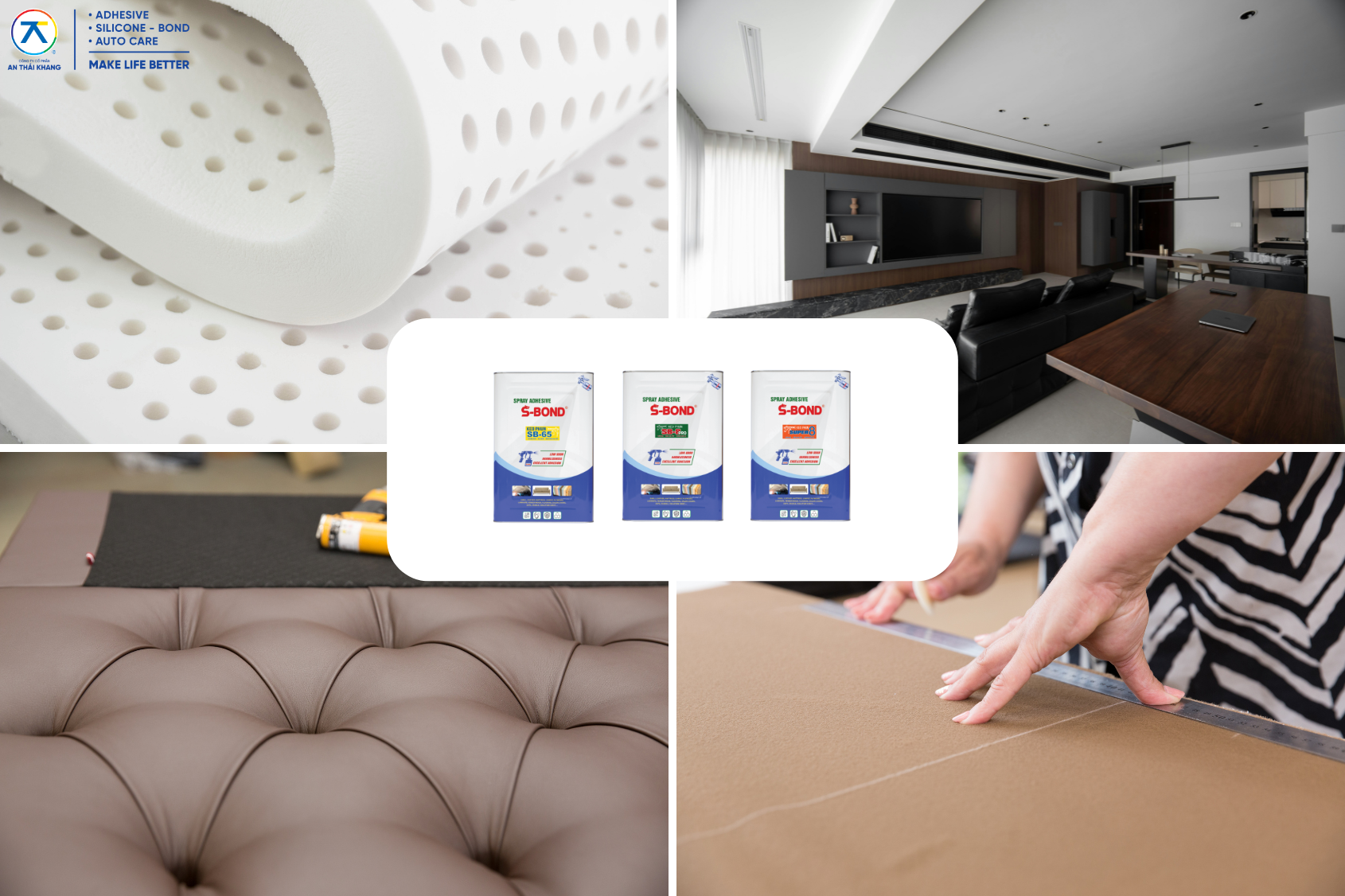
Spray adhesive should be used when bonding large surfaces, when fast application is required, or when a thin and even adhesive layer is needed. It is suitable for sofa production, bonding sponge foam, foam, synthetic leather, faux leather, fabric, veneer, laminate, MDF, plywood, floor carpets, and decorative materials.
In furniture manufacturing, spray adhesive helps create a cleaner bonded surface, reduces adhesive buildup, and shortens handling time. For workshops that need stable production output, spray adhesive is often more efficient because adhesive quantity and application speed can be controlled better than with manual spreading methods.
However, spray adhesive must be used with the correct technique. Operators need to maintain a stable spraying distance, spray evenly, wait until the adhesive reaches the proper tack condition, and then press the materials together. If the process is not properly controlled, the bond may become uneven or lose durability.
7. Conclusion: What Is White Glue and Which Adhesive Should You Choose?
White glue can be simply understood as a water-based adhesive that usually has a milky white color, is easy to use, and is suitable for wood, paper, cardboard, handicrafts, mortise and tenon joints, and component assembly. White glue performs well when a rigid bond is required, when adjustment time is needed, and when the materials can be pressed and held during drying.
Spray adhesive is a more suitable choice when fast application, even coverage, large-surface bonding, or bonding materials such as sponge foam, foam, leather, faux leather, veneer, laminate, and industrial furniture materials is required. This adhesive type is well suited for workshops that need to optimize productivity and the appearance of finished surfaces.
Users should not choose adhesive based on habit or price alone. The correct approach is to identify the materials to be bonded, the surface area, durability requirements, application speed, and usage conditions after completion. For wood, paper, and handicrafts, white glue is a reasonable choice. For sofas, sponge foam, veneer, laminate, and large-scale furniture production, spray adhesive is usually the more effective solution.
AN THAI KHANG JSC
- • Fanpage: An Thái Khang JSC
- • Hotline: 0764 644 245
- • Email: support@anthaikhang.com
- • Website: https://anthaikhang.com/