
What Is Epoxy Adhesive? Uses and How to Use S-EPOXY
What is epoxy adhesive? Learn about the features, applications, and proper use of S-EPOXY two-component epoxy adhesive for effectively bonding metal, wood, ceramic, stone, glass, and rigid plastic.
What Is Epoxy Adhesive? Uses and How to Use S-EPOXY
What is epoxy adhesive? This is a common question for users looking for a strong adhesive with excellent bonding strength, high load resistance, and compatibility with various material surfaces. In household repairs, mechanical applications, and appliance maintenance, epoxy adhesive is highly valued for its ability to create a hard, durable, and stable bond after curing.
One product in this category is S-EPOXY Two-Component Adhesive. This is a two-part metal adhesive made from epoxy resin and hardener, designed to deliver high bonding performance and strong mechanical durability.
1. What Is Epoxy Adhesive?
Epoxy adhesive is a type of adhesive made from epoxy resin and a curing agent. When these two components are mixed together, a chemical curing reaction occurs, forming a strong and durable bond.
Unlike many conventional adhesives, epoxy adhesive usually becomes very hard after drying, offering strong adhesion and good load-bearing performance. For this reason, it is commonly used for bonding, sealing, filling, patching, and repairing hard materials.
With S-EPOXY Two-Component Adhesive, the product provides strong adhesion, heat resistance, high pressure resistance, and is suitable for mechanical, industrial, and household repair applications. Once fully cured, the adhesive forms a hard, solid layer with good resistance to oil, water, chemicals, and impact.
2. What Makes Two-Component Epoxy Adhesive Special?
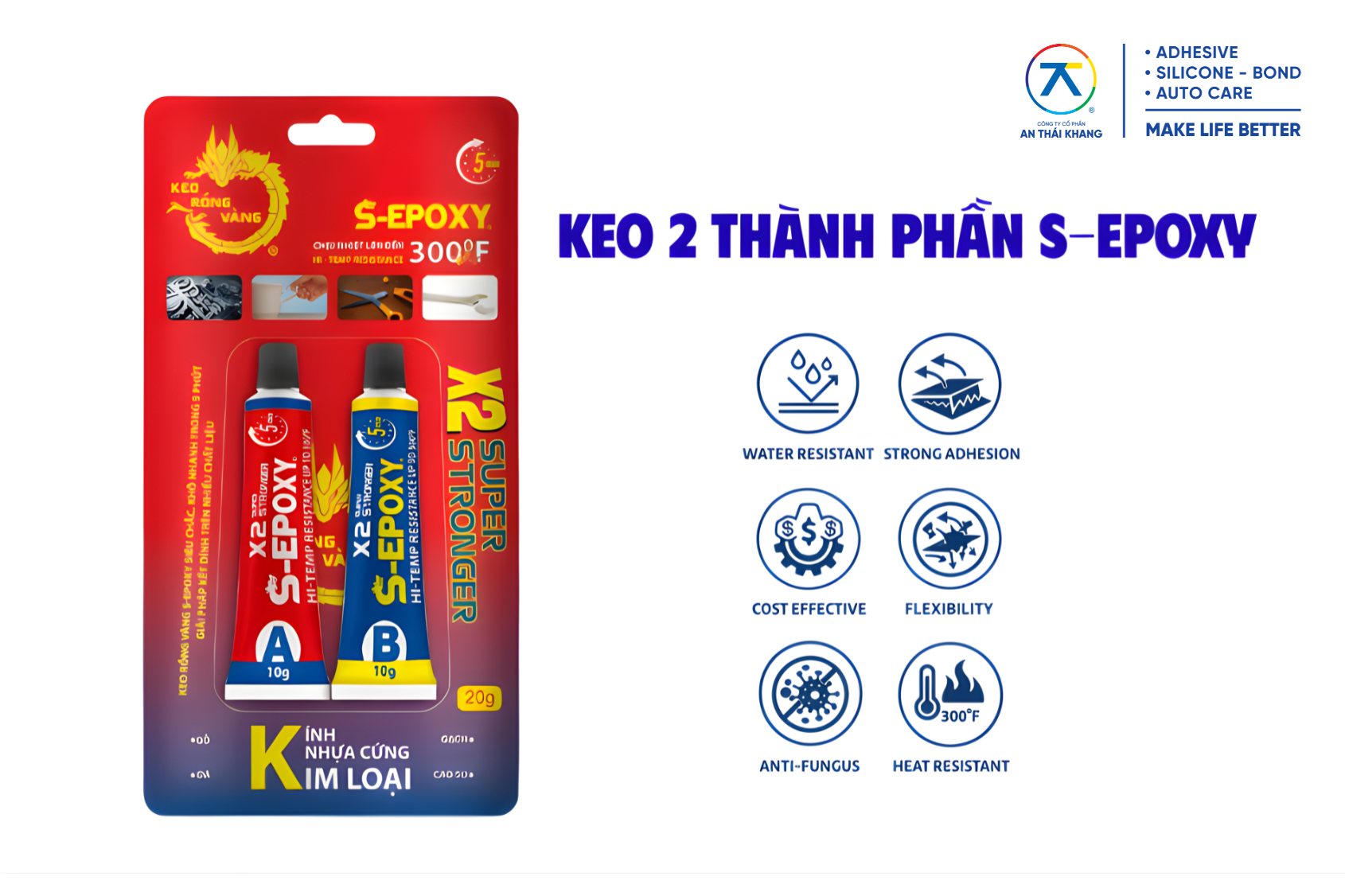
Two-component epoxy adhesive consists of two separate parts:
Part A: Epoxy resin
Part B: Hardener
To use the product, users need to dispense equal amounts from tubes A and B, then mix them thoroughly before applying the adhesive to the bonding surface. This step is very important because uneven mixing or an incorrect ratio may prevent the adhesive from achieving optimal hardness and bonding strength.
The key advantage of two-component epoxy adhesive is that the bond is usually stronger, harder, and more durable after curing compared with many common instant adhesives. Therefore, it is suitable for areas that require load resistance, vibration resistance, or long-term repair performance.
3. What Materials Can Epoxy Adhesive Bond?
3.1 Suitable Materials
Epoxy adhesive can be used on many hard materials. According to the product information, S-EPOXY Two-Component Adhesive can be used for bonding, repairing, and sealing:
Metal
Wood
Ceramic
Stone
Glass
Cement
Rubber
Rigid plastic
Thanks to its wide range of applications, the product is suitable for household repairs, mechanical workshops, equipment maintenance, and everyday item restoration.
3.2 Surfaces Not Recommended for Use
Not every material is suitable for epoxy adhesive. For S-EPOXY, it should not be used on PP, PE materials, or surfaces contaminated with oil. These surfaces are difficult to bond and may reduce the effectiveness of the adhesive joint.
4. Uses of S-EPOXY Two-Component Adhesive
4.1 Mechanical and Household Repairs
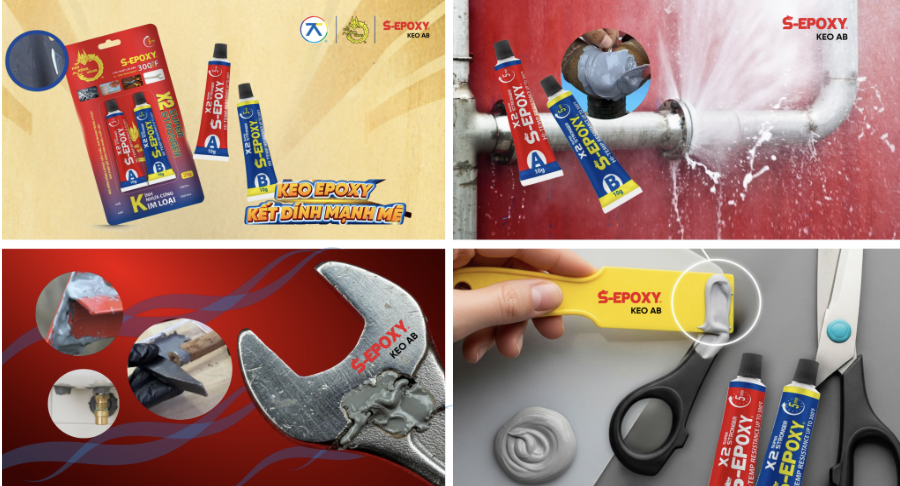
S-EPOXY can be used to bond and repair metal parts on cars, motorcycles, machinery, mechanical tools, and household appliances. This makes it suitable for applications that require a strong, stable, and load-resistant bond.
4.2 Sealing, Patching, and Item Restoration
In addition to bonding, the adhesive can also be used for sealing and patching water pipes, tanks, oil pipelines, and gas lines under suitable conditions. It can also be applied in the repair of electronic components, sports equipment, decorative items, handicrafts, and everyday household objects.
5. Key Advantages of S-EPOXY Adhesive
5.1 Strong Adhesion and No Shrinkage
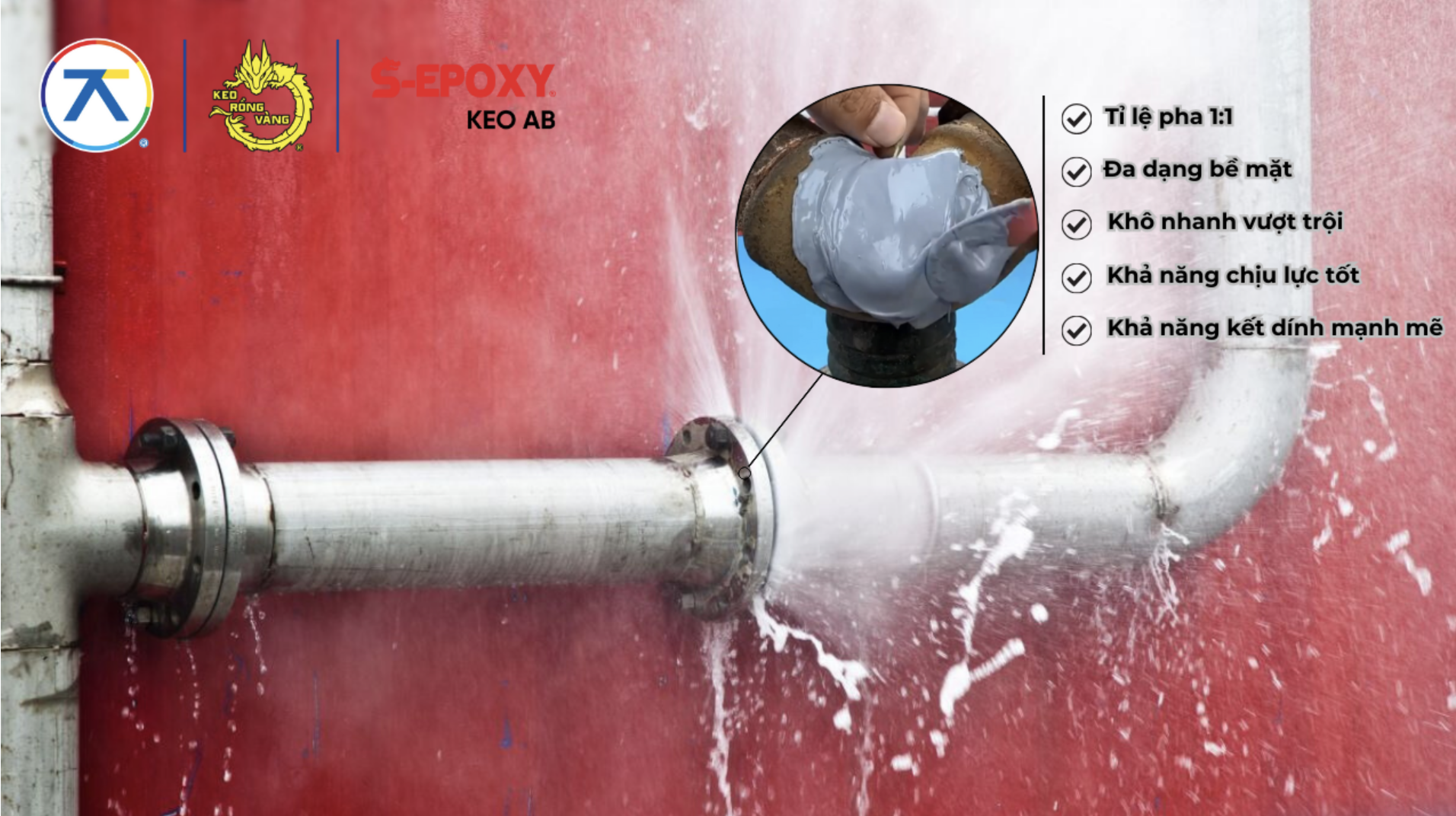
One important advantage of S-EPOXY is its strong bonding ability and non-shrinking performance after curing. This helps the adhesive joint remain stable, reducing the risk of gaps, cracks, or peeling after use.
5.2 Fast Drying for Time-Saving Repairs
S-EPOXY offers a fast drying time, making it suitable for repair jobs that need to be completed efficiently. The product becomes surface-dry in approximately 5 minutes, fully dry in about 45 minutes, and reaches complete hardness after 3 days.
5.3 Good Load, Heat, and Vibration Resistance
The adhesive provides good resistance to heat, load, and vibration, making it suitable for mechanical parts, machinery, and items that are frequently exposed to impact during use. In addition, the product offers durability against chemicals, oil, and harsh environments.
6. How to Use S-EPOXY Adhesive
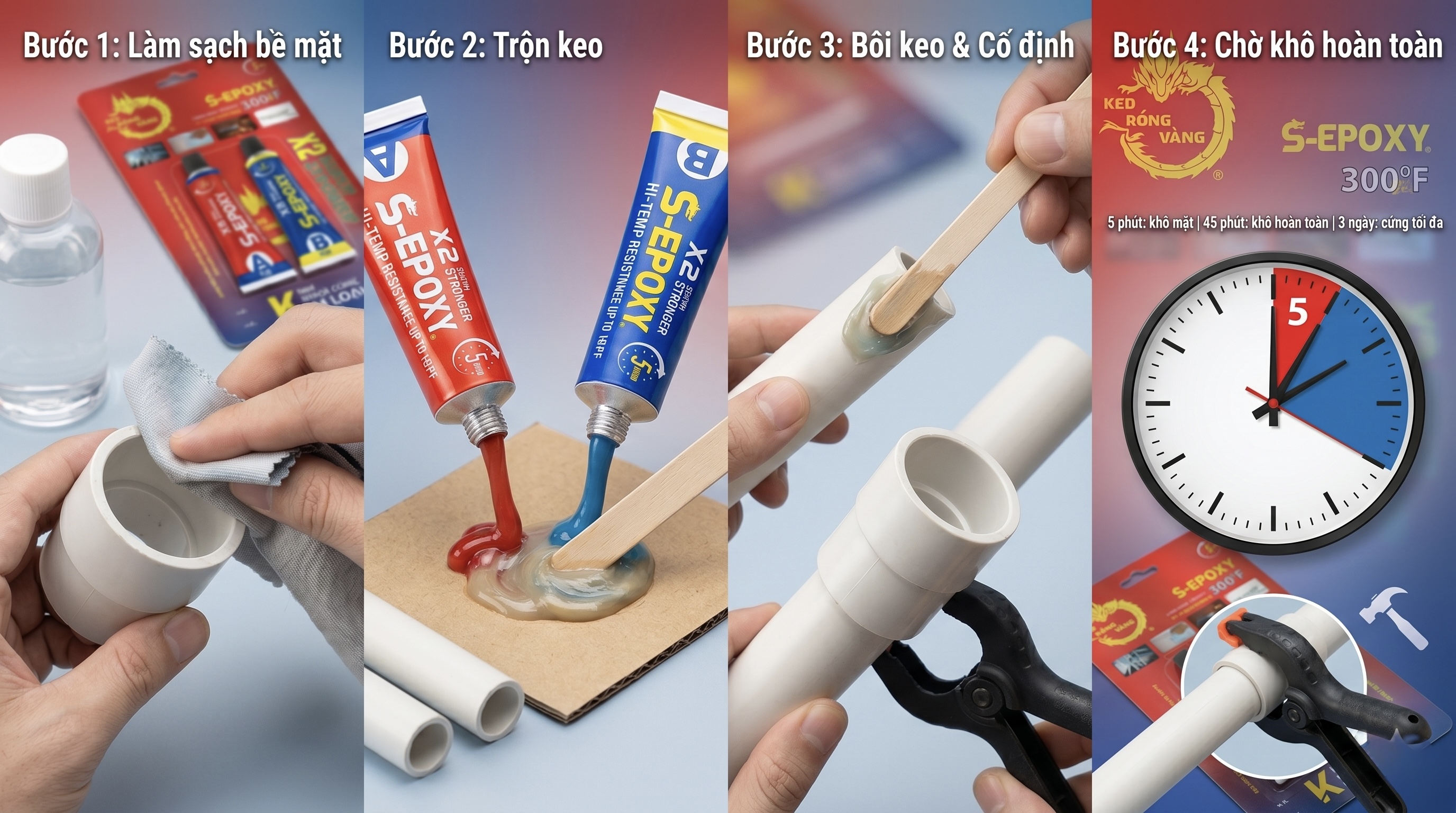
6.1 Step 1: Clean the Surface
Before bonding, clean and dry the surface thoroughly. Dust, water, oil, grease, or other contaminants can reduce the adhesive’s bonding performance.
6.2 Step 2: Mix Parts A and B Evenly
Dispense equal amounts from tubes A and B. Then mix them thoroughly on a clean surface for about 1–2 minutes until the mixture becomes uniform.
6.3 Step 3: Apply the Adhesive and Fix the Bond
Apply the adhesive mixture evenly to the surface that needs bonding, then press the two surfaces firmly together. If the parts may shift during curing, temporarily fix them in place until the adhesive dries.
6.4 Step 4: Wait for the Adhesive to Fully Cure
After application, allow the adhesive to dry according to the recommended curing time. The adhesive becomes surface-dry after 5 minutes, fully dry after 45 minutes, and reaches complete hardness after 3 days.
7. Important Notes When Using Epoxy Adhesive
7.1 Notes on Materials and Application Conditions
Do not use S-EPOXY on PP, PE plastic, or oily surfaces. In addition, avoid applying the product in wet areas, frequently submerged environments, or near high heat sources. The product is also not suitable for surfaces exposed to temperatures above 120°C.
7.2 Safety Notes During Application
When using the adhesive, work in a well-ventilated area and keep it away from flames and heat sources. Avoid contact with eyes and skin. Users should wear gloves and safety glasses, and keep the product out of reach of children.
8. Conclusion: Should You Use S-EPOXY Epoxy Adhesive?
What is epoxy adhesive? It is an adhesive that creates a hard and strong bond after epoxy resin is mixed with a hardener. It is commonly used for bonding, sealing, patching, and repairing hard materials such as metal, wood, ceramic, stone, glass, cement, rubber, and rigid plastic.
If you need a two-component epoxy adhesive that is easy to use, offers strong adhesion, dries quickly, and is suitable for household or mechanical repairs, S-EPOXY Two-Component Adhesive is a practical option to consider. For the best bonding performance, make sure to clean the surface, mix the adhesive in the correct ratio, apply it properly, and follow all safety instructions.
AN THAI KHANG JSC
- • Fanpage: An Thái Khang JSC
- • Hotline: 0764 644 245
- • Email: support@anthaikhang.com
- • Website: https://anthaikhang.com/