
How Is WYNN Silicone Sealant Different from Super S-Bond?
Compare WYNN Silicone Sealant and Super S-Bond Structural Adhesive to choose the right product for sealing or bonding applications.
At first glance, WYNN N Neutral Silicone Sealant and Super S-Bond Structural Adhesive both come in cartridge form and are applied directly at the job site. This similarity in appearance can make the two products easy to confuse when choosing between them.
However, their intended uses are clearly different.
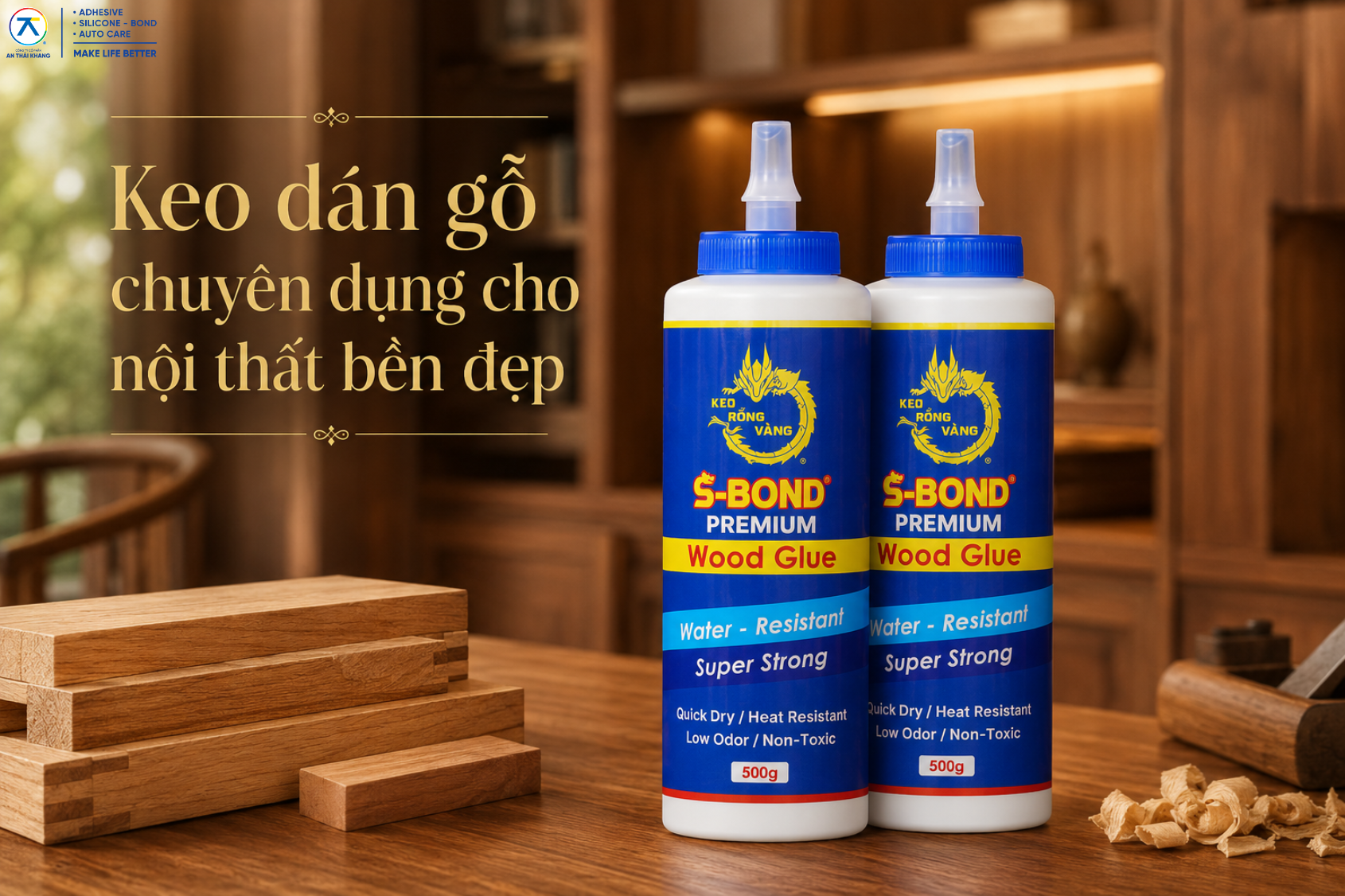
Super S-Bond Structural Adhesive focuses on bonding and joining materials, making it suitable for a wide range of construction, interior finishing, and repair applications. WYNN Silicone Sealant, on the other hand, stands out for its sealing capability, flexibility, and elasticity, making it more suitable for joints and adjoining areas that require a sealed finish.
Therefore, rather than focusing only on the fact that both products can adhere to surfaces, users should first determine whether the job requires materials to be bonded together or a flexible joint to be sealed.
1. WYNN Silicone Sealant and Super S-Bond Serve Different Purposes
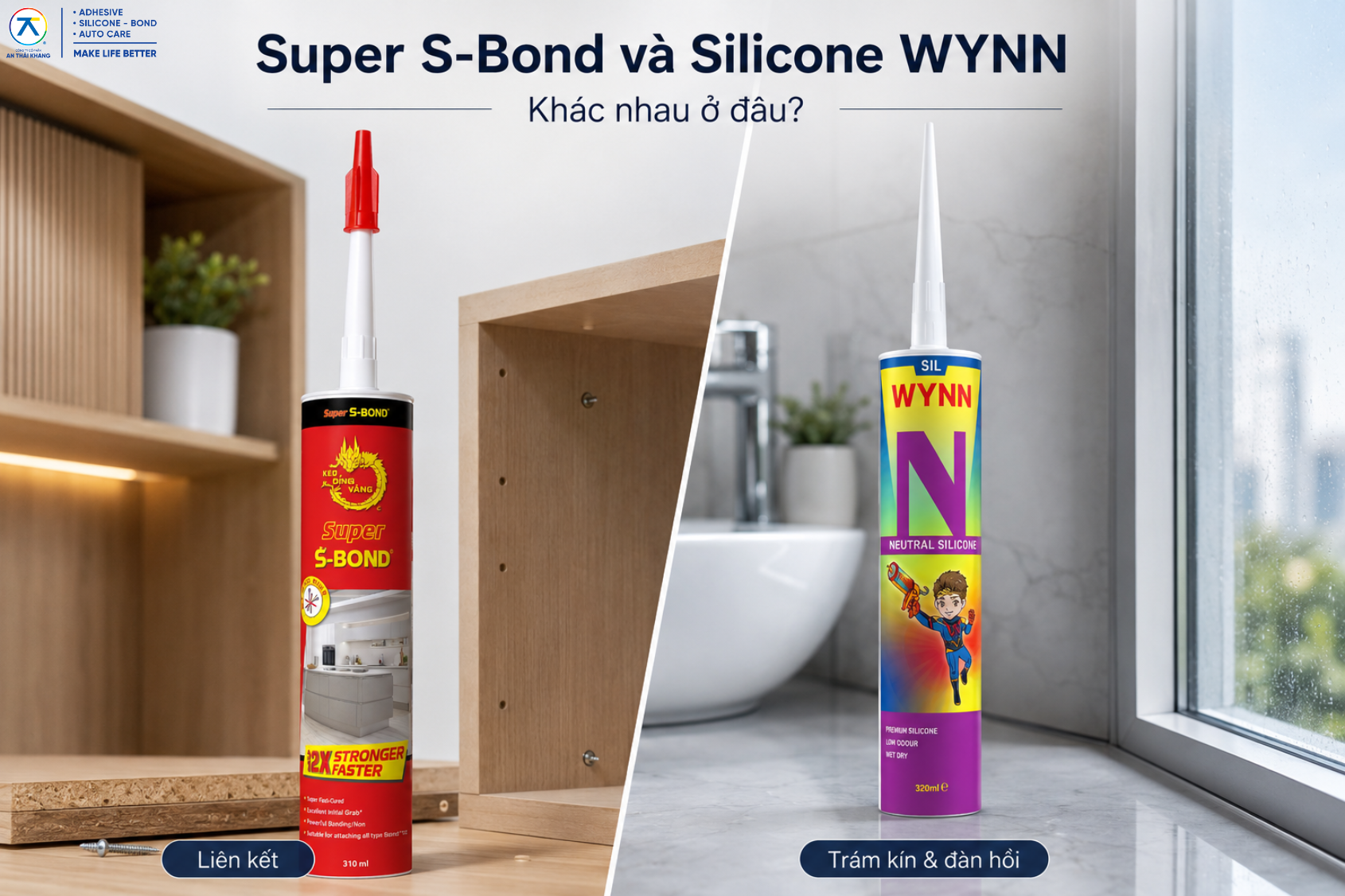
The most important difference between the two products lies in the role of the adhesive or sealant after application.
With Super S-Bond, the primary purpose is to create a bond between materials. With WYNN Silicone, the sealant is generally used to fill gaps, treat joints, and maintain flexibility at the application area.
Understanding this distinction makes product selection much easier.
1.1. Super S-Bond Focuses on Bonding
Super S-Bond Structural Adhesive is suitable for applications where materials need to be joined or fixed together.
The product can be considered for construction, interior finishing, or repair work where the main requirement is to create a bond between two surfaces.
For example, when one component needs to be secured to another surface, the key consideration is the ability to create a stable bond at the contact area. This is different from simply filling a gap.
Super S-Bond is therefore more suitable when:
Two materials need to be joined together.
A component needs to be fixed in place.
The application requires clear bonding performance.
The job involves construction, interior finishing, or repair work.
The adhesive layer plays the main role in creating the bond.
Product selection should still be based on the actual materials and the conditions of each application area to ensure that the adhesive is suitable for the intended use.
1.2. WYNN Silicone Sealant Focuses on Sealing and Flexibility
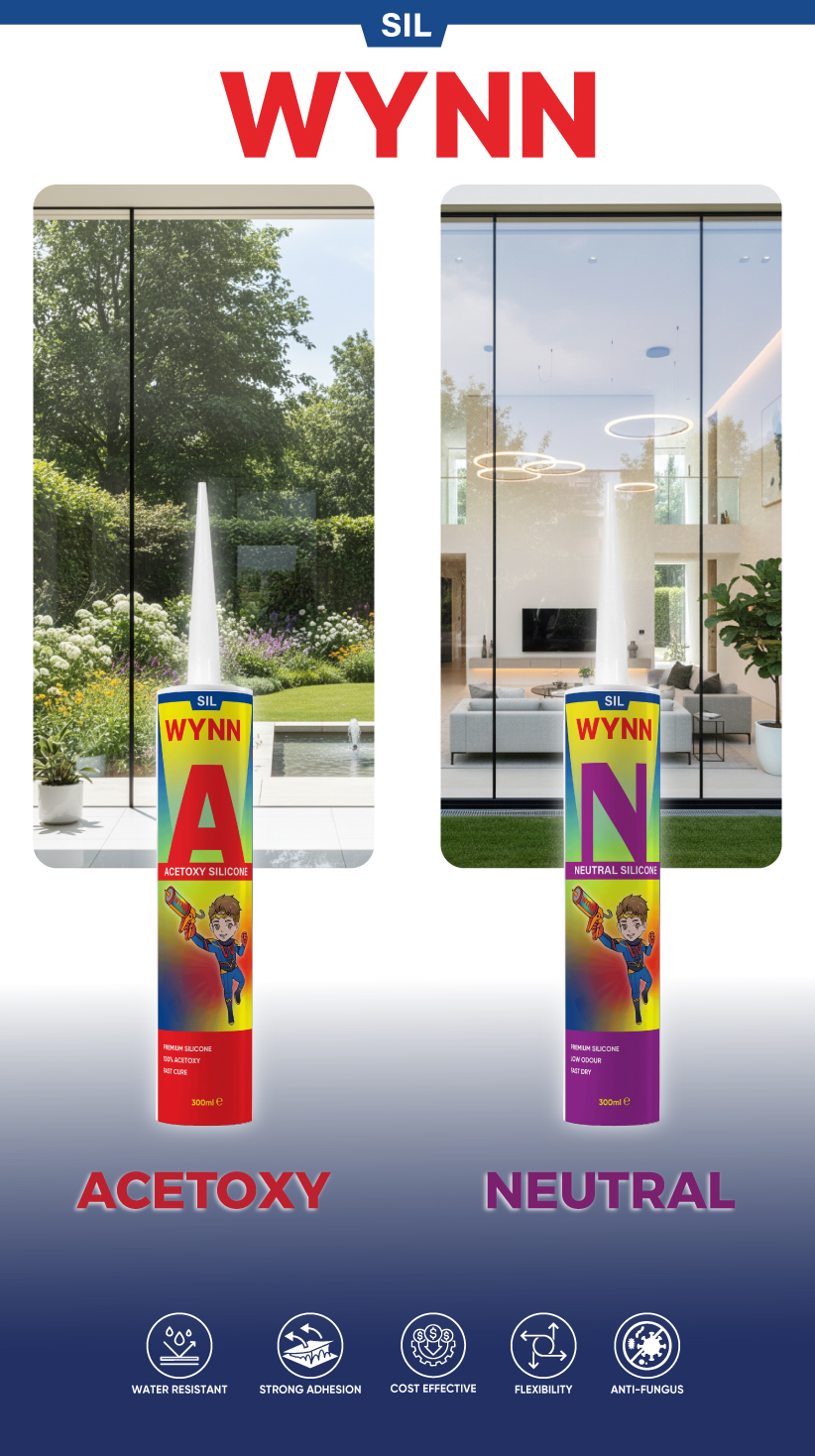
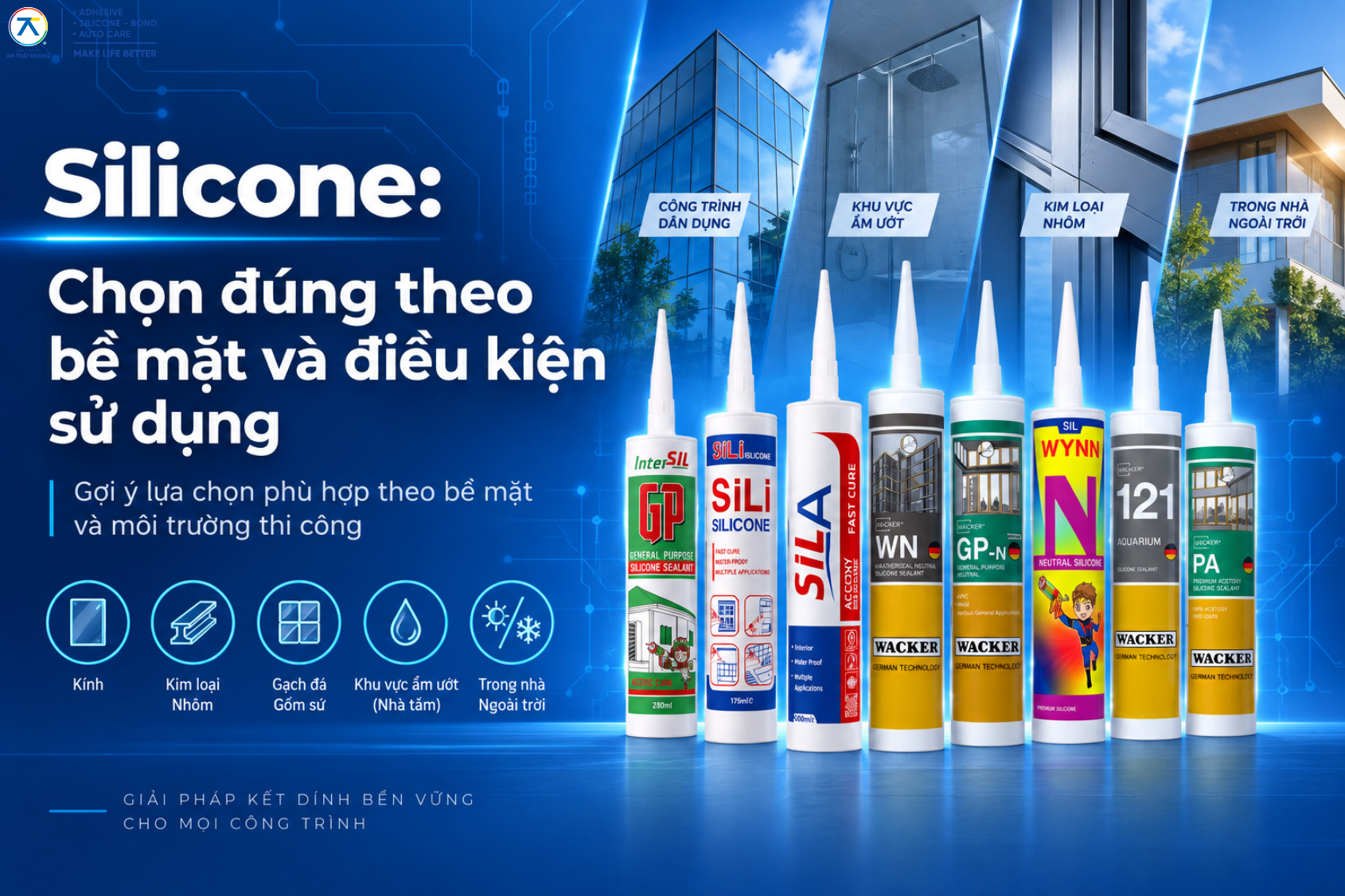
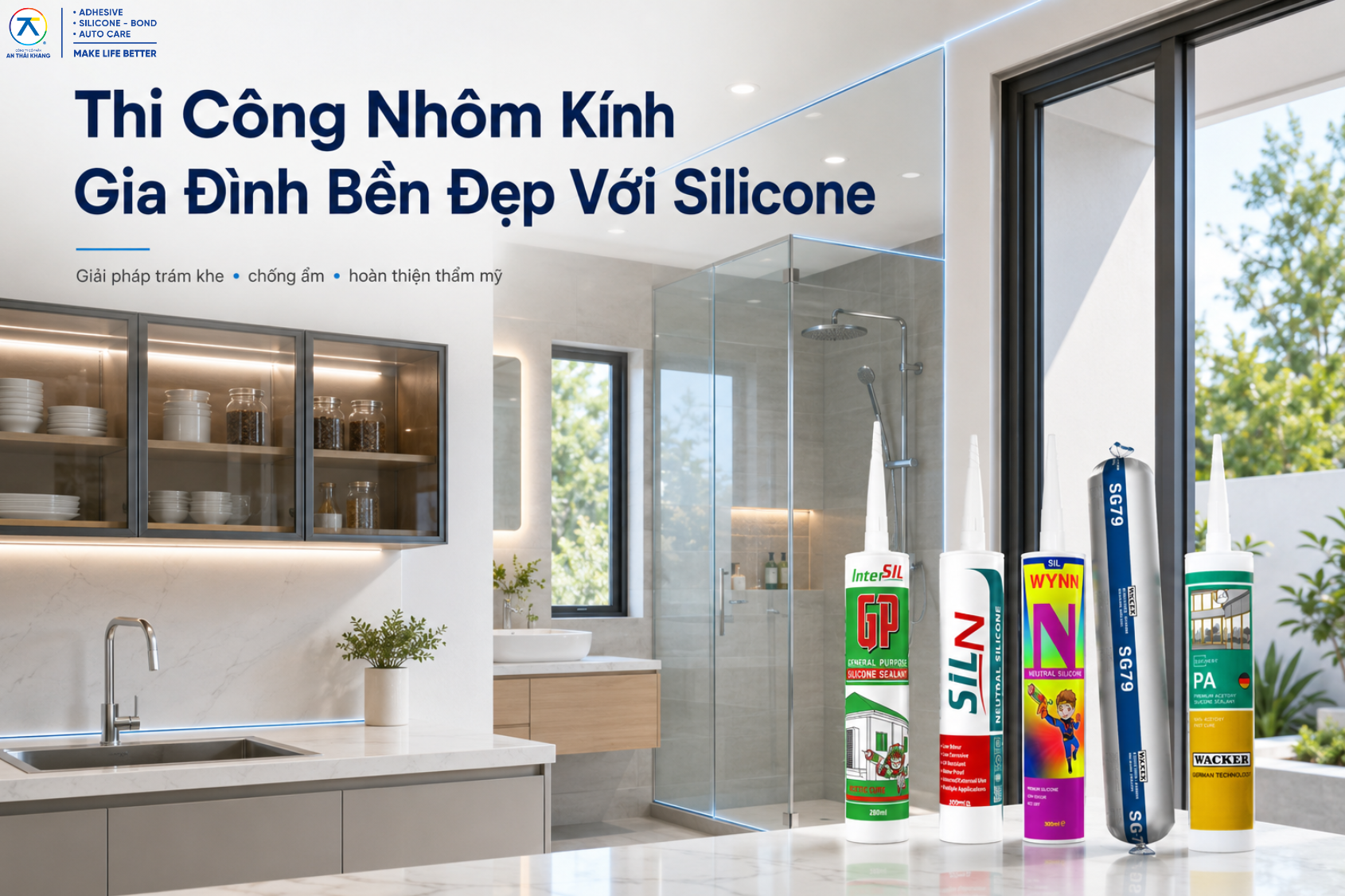
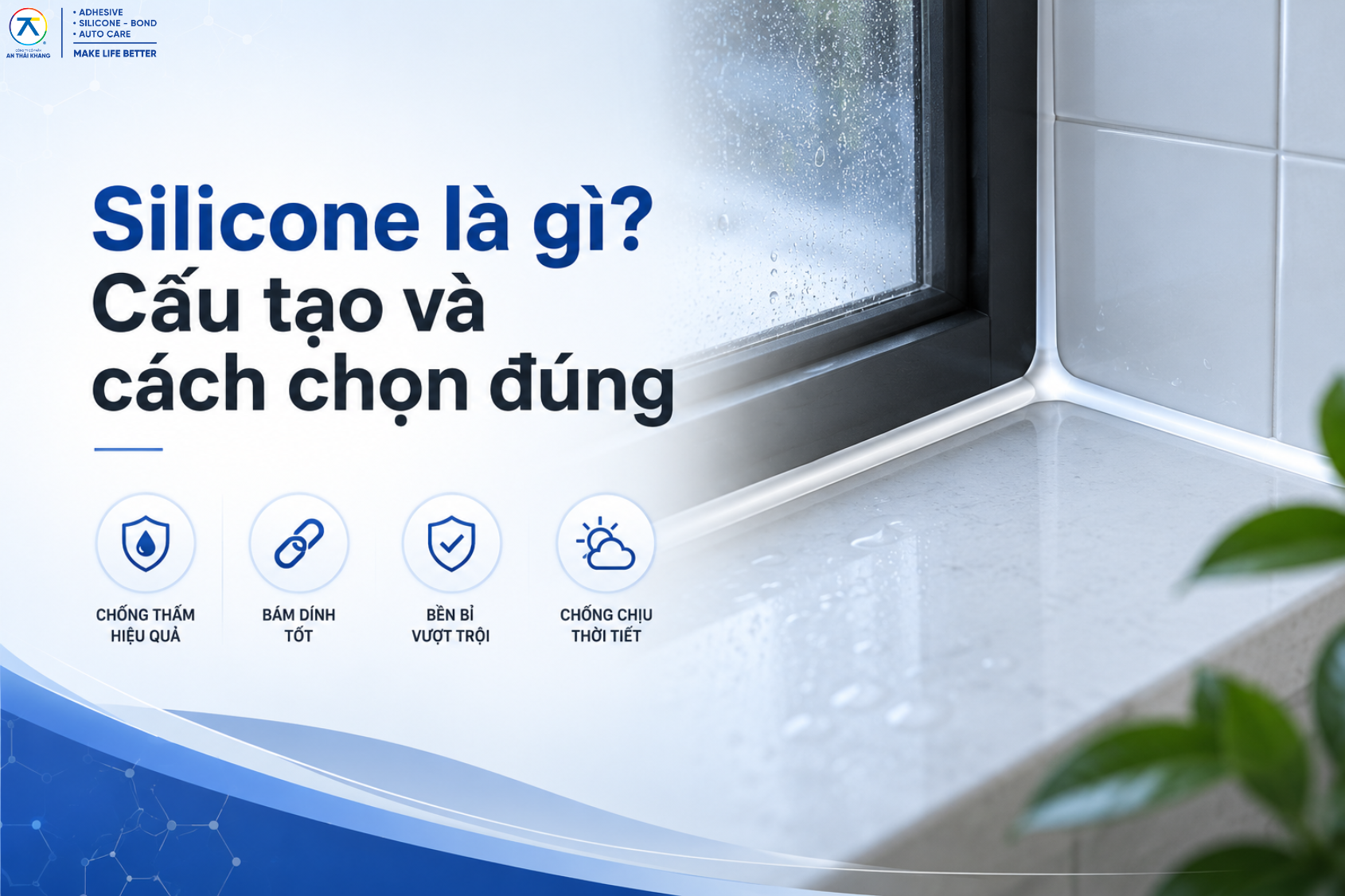
WYNN N Neutral Silicone Sealant is better suited to joints, adjoining edges, and areas that require a sealed finish.
Rather than focusing on fixing two materials together in a rigid bond, Silicone creates a seal that can retain flexibility after curing.
This characteristic makes it suitable for areas where slight expansion, contraction, or movement may occur between two surfaces.
WYNN Silicone can be considered when the application requires:
Sealing gaps between two materials.
Finishing adjoining edges.
Creating a continuous seal line.
Limiting the passage of water or moisture through joints.
Treating areas subject to slight expansion or contraction.
Maintaining flexibility in the sealed joint.
This is also why WYNN Silicone and Super S-Bond should not be viewed as interchangeable products for every application.
2. A Quick Way to Choose Based on the Application
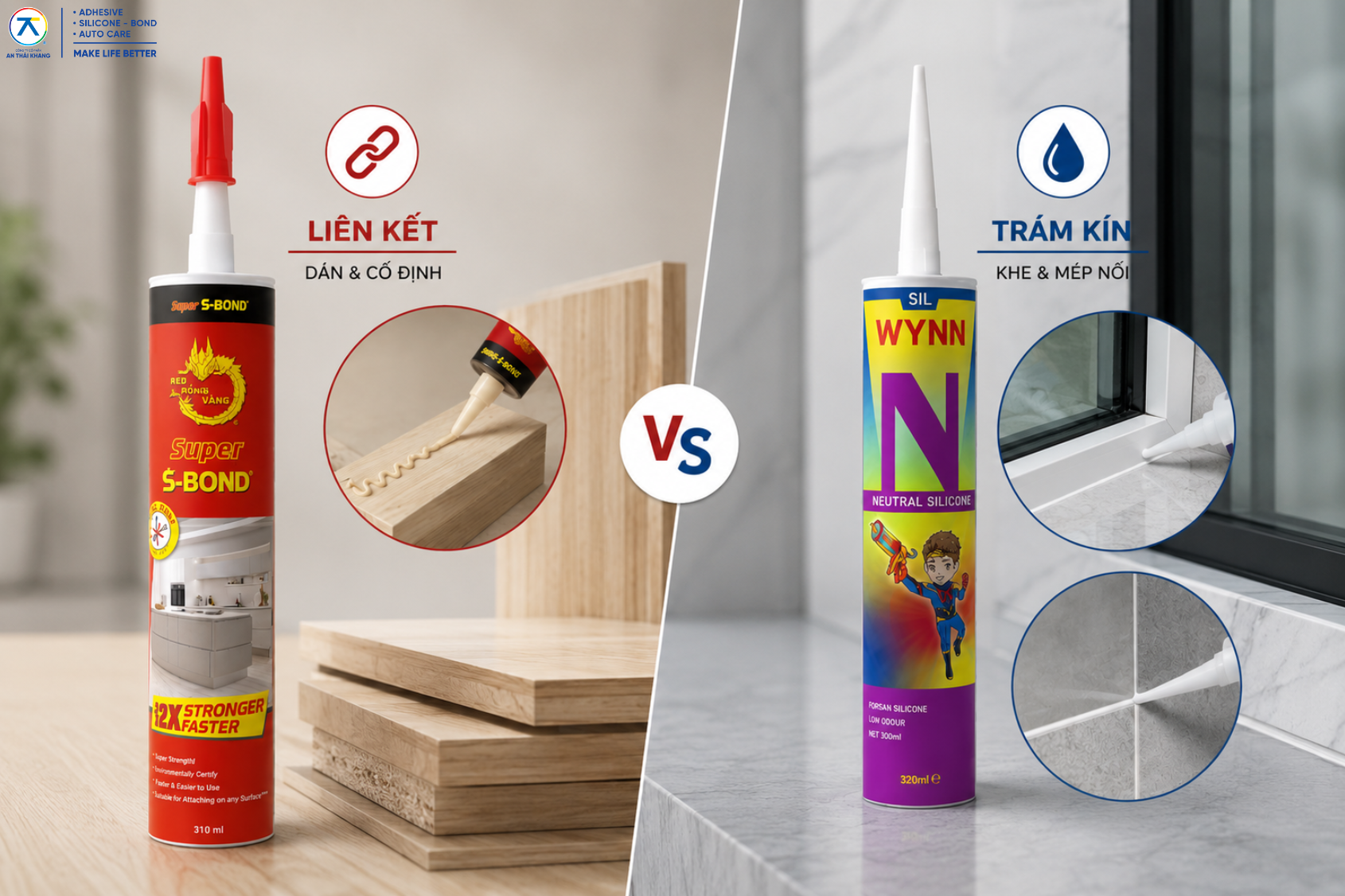
The simplest way to choose between the two products is to look at the job that needs to be done.
If two separate materials need to be joined together, Super S-Bond is worth considering.
If there is a gap between two surfaces that needs to be sealed, WYNN Silicone Sealant is generally more suitable for creating a flexible seal.
The products can be distinguished through several common situations:
Need to bond or secure a component: prioritize Super S-Bond.
Need to seal a gap: prioritize Silicone.
Need to bond materials in an interior application: consider Super S-Bond.
Need to seal an adjoining edge: consider WYNN Silicone.
Need the cured material to remain flexible: Silicone is more suitable.
Need a strong bond between two surfaces: Super S-Bond is more suitable.
The key is to identify the final role of the applied product.
If the adhesive needs to hold materials securely in position, the primary objective is bonding. If the material needs to sit within a joint and adapt to minor movement, the primary objective is sealing and flexibility.
This distinction helps prevent users from choosing a product based only on its cartridge format or its general ability to adhere to a surface.
3. When Should You Choose WYNN Silicone Sealant?
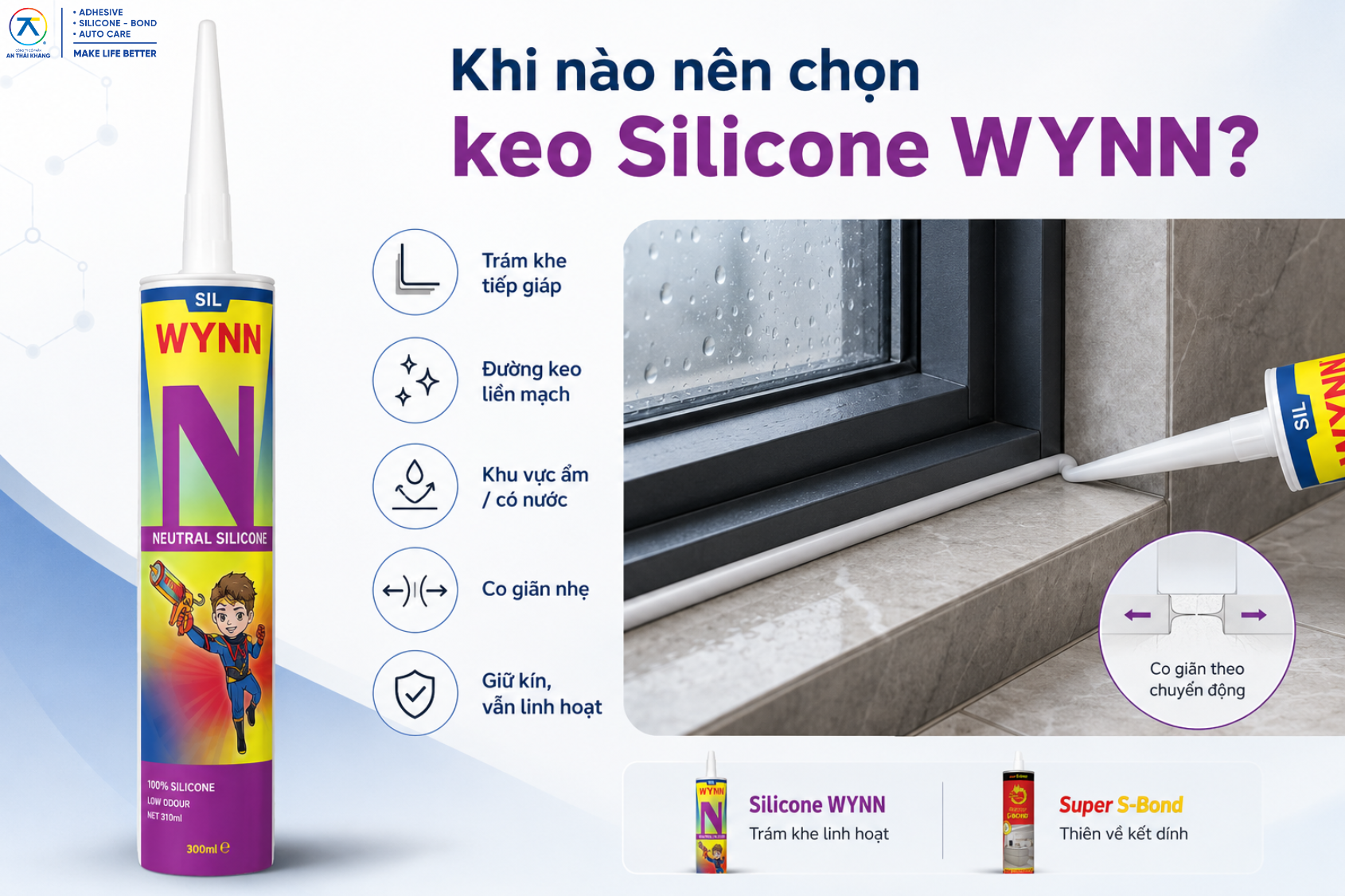
Silicone sealant is particularly suitable for areas where a gap between surfaces is the main issue that needs to be addressed.
Even a small joint can affect the quality of the finished surface. In areas exposed to water or moisture, an untreated gap may also provide a path for water to pass through.
WYNN N Neutral Silicone Sealant helps create a continuous seal in these areas while maintaining suitable flexibility after curing.
3.1. When a Continuous Seal Is Required
A good seal should run continuously along the joint.
Silicone is suitable for filling the gap between two surfaces, helping create a neater finish and reducing open spaces within the application area.
Suitable areas may include:
Gaps between surfaces.
Material joints.
Edges that require sealing.
Areas where water may pass through a joint.
Locations that require a continuous seal.
During application, the amount of sealant should be controlled according to the actual size of the gap. A narrow joint does not require an excessive amount of Silicone, while a wider joint should be treated appropriately so that the sealant adequately fills the required area.
3.2. When the Joint Is Subject to Slight Movement or Expansion
Some materials may undergo minor dimensional changes due to temperature, humidity, or conditions of use.
At these joints, the seal needs to accommodate movement rather than remain excessively rigid.
The flexibility and elasticity of Silicone make it more suitable for this type of application.
This is also one of the clearest differences between Silicone and Super S-Bond. Super S-Bond is primarily designed to create a bond, whereas Silicone is designed to keep a joint sealed while maintaining the flexibility required for minor movement.
For applications that require both sealing performance and flexibility, WYNN Silicone is a suitable option to consider.
4. Using the Right Product Helps Achieve a Better Finish
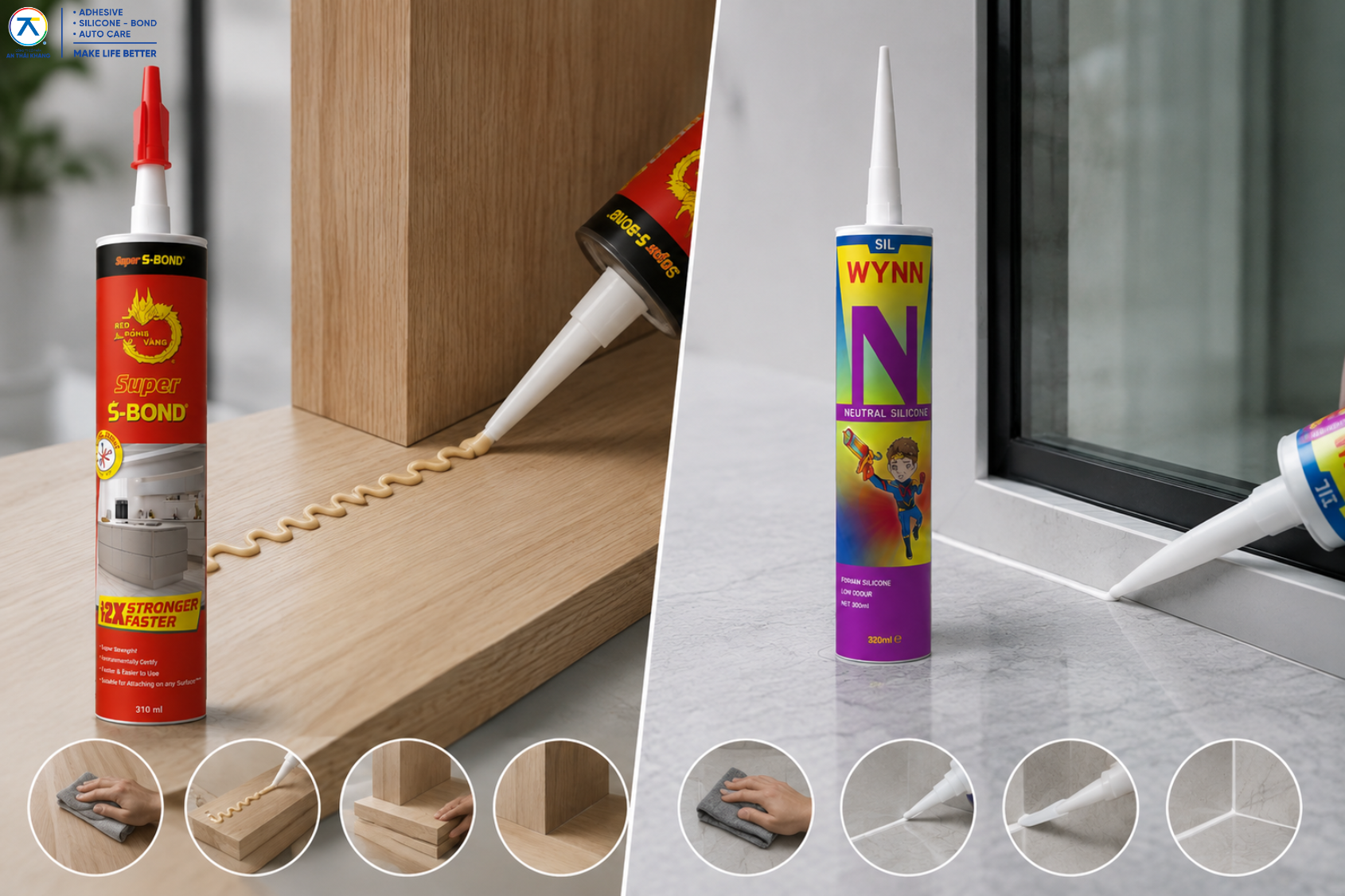
Choosing the correct product is only the first step. The final result also depends on surface preparation and proper application.
When using Super S-Bond, the two surfaces to be bonded and the contact area between them should be clearly identified. The surfaces should be cleaned so that the adhesive can make direct contact with the materials.
When using Silicone sealant, the width and length of the joint should be inspected before application. The sealant should be applied directly into the area that needs sealing while minimizing unnecessary spread onto surrounding surfaces.
Several points should be considered during application:
Clean the application area before using the product.
Clearly identify the area that needs to be bonded or sealed.
Avoid applying more adhesive or sealant than the actual area requires.
Maintain a continuous Silicone seal along the joint.
Finish and shape the applied material neatly before it begins to cure.
Avoid disturbing the newly applied area too soon.
Select the product according to the material and application environment.
For Silicone sealant in particular, continuity of the seal is especially important in areas where water ingress needs to be limited. A missing section or a point where the sealant does not make proper contact with the surface can affect the sealing performance of the entire joint.
By contrast, when using Super S-Bond, attention should be given to the contact area between the materials so that the adhesive can perform its intended bonding function.
The two products therefore require a different approach from the application stage itself.
5. Conclusion: Choose Silicone for Sealing and S-Bond for Bonding
WYNN N Neutral Silicone Sealant and Super S-Bond Structural Adhesive are both convenient for a variety of construction and finishing applications, but they are not designed for the same purpose.
Super S-Bond focuses on adhesion and is suitable for joining, fixing, and bonding materials in construction, interior finishing, or repair work.
WYNN Silicone Sealant is more suitable for areas that require gap sealing, joint treatment, a sealed finish, and continued flexibility during use.
Therefore, when choosing between two products with a relatively similar cartridge format, users should not base their decision simply on the fact that both can adhere to surfaces.
Instead, consider the actual application.
If two materials need to be bonded together, Super S-Bond is a suitable option to consider. If a joint needs to be sealed with a flexible finish, WYNN Silicone Sealant is better suited to that requirement.
Choosing the right product from the beginning allows the adhesive or sealant to perform its intended function, makes the application process more straightforward, and helps achieve a cleaner and more professional finished surface.
AN THAI KHANG JSC
- • Fanpage: An Thái Khang JSC
- • Hotline: 0764 644 245
- • Email: support@anthaikhang.com
- • Website: https://anthaikhang.com/