
Which Two-Component Adhesive Is Best for Home Repairs?
Which two-component adhesive is best for bonding metal, wood, ceramic, stone, glass, and hard plastic? Consider An Thái Khang’s S-EPOXY Epoxy Adhesive for strong bonding and good load resistance.
Many household items can crack, break, come loose at the joints, or develop gaps after a period of use. These may include metal handles, motorcycle parts, ceramic items, stone surfaces, glass frames, wooden objects, or certain hard plastic surfaces. In such cases, many people search for which two-component adhesive is best to make quick repairs while still ensuring a strong, durable, and long-lasting bond.
Unlike temporary adhesives, two-component adhesives are often chosen when users need a stronger, more load-resistant, and more stable bond after curing. However, to choose the right product, you should not rely only on the name or brand. What matters most is whether the adhesive is suitable for the material, the application environment, and the expected durability.
If you need a multi-purpose adhesive for household repairs, light mechanical work, or everyday item restoration, An Thái Khang’s S-EPOXY Epoxy Adhesive is a worthwhile option. This is a two-component adhesive made of epoxy resin and hardener, designed for strong bonding on various hard materials such as metal, wood, ceramic, stone, glass, and certain hard plastics.
1. When should you use a two-component adhesive?
Not every repair requires a two-component adhesive. For lightweight items that are not exposed to much force, regular adhesive may be sufficient. However, if the bonded area is frequently exposed to impact, vibration, pulling force, or requires long-term durability, a two-component adhesive is usually more suitable.
You should consider using a two-component adhesive when bonding loose metal parts, repairing items made of wood, ceramic, stone, glass, or hard plastic, filling small cracks, or restoring household items that are used regularly.
The key advantage of a two-component adhesive lies in its curing mechanism after the two components are mixed together. When mixed in the correct ratio and applied properly, the adhesive can create a stronger bond, reduce shrinkage, and provide better durability than many common fast-drying adhesives.
Therefore, when asking which two-component adhesive is best, the answer should not be based only on how quickly the product bonds. A good adhesive must match the specific repair need, the material, and the actual conditions of use.
2. What qualities should a good two-component adhesive have?
A good two-component adhesive should meet several important criteria, including strong adhesion, stable load resistance, low shrinkage, ease of application, and long-lasting durability after curing.
2.1 Strong adhesion on multiple surfaces
Adhesion strength is the most important factor when choosing an adhesive. For hard materials such as metal, stone, ceramic, glass, or hard plastic, the adhesive must create a stable bond between two surfaces to reduce the risk of peeling or separation after a period of use.
2.2 Good load resistance after curing
For mechanical parts, household items, or objects that are frequently held, pulled, pushed, or exposed to vibration, the bond must have a certain level of hardness and load resistance. If the adhesive only sticks to the surface but does not provide good strength, the repaired area can easily crack or separate during use.
2.3 Low shrinkage and easy application
Some adhesives may shrink, crack, or leave gaps after drying. This reduces the sealing ability and strength of the bond, especially when the adhesive is used to fill cracks. For this reason, users should prioritize adhesives that remain stable after curing.
In addition, the adhesive should also be easy to apply. For home repairs, the product should have a simple mixing process, a reasonable working time, and allow the bonded parts to be fixed easily after application.
3. Who is An Thái Khang’s S-EPOXY Epoxy Adhesive suitable for?
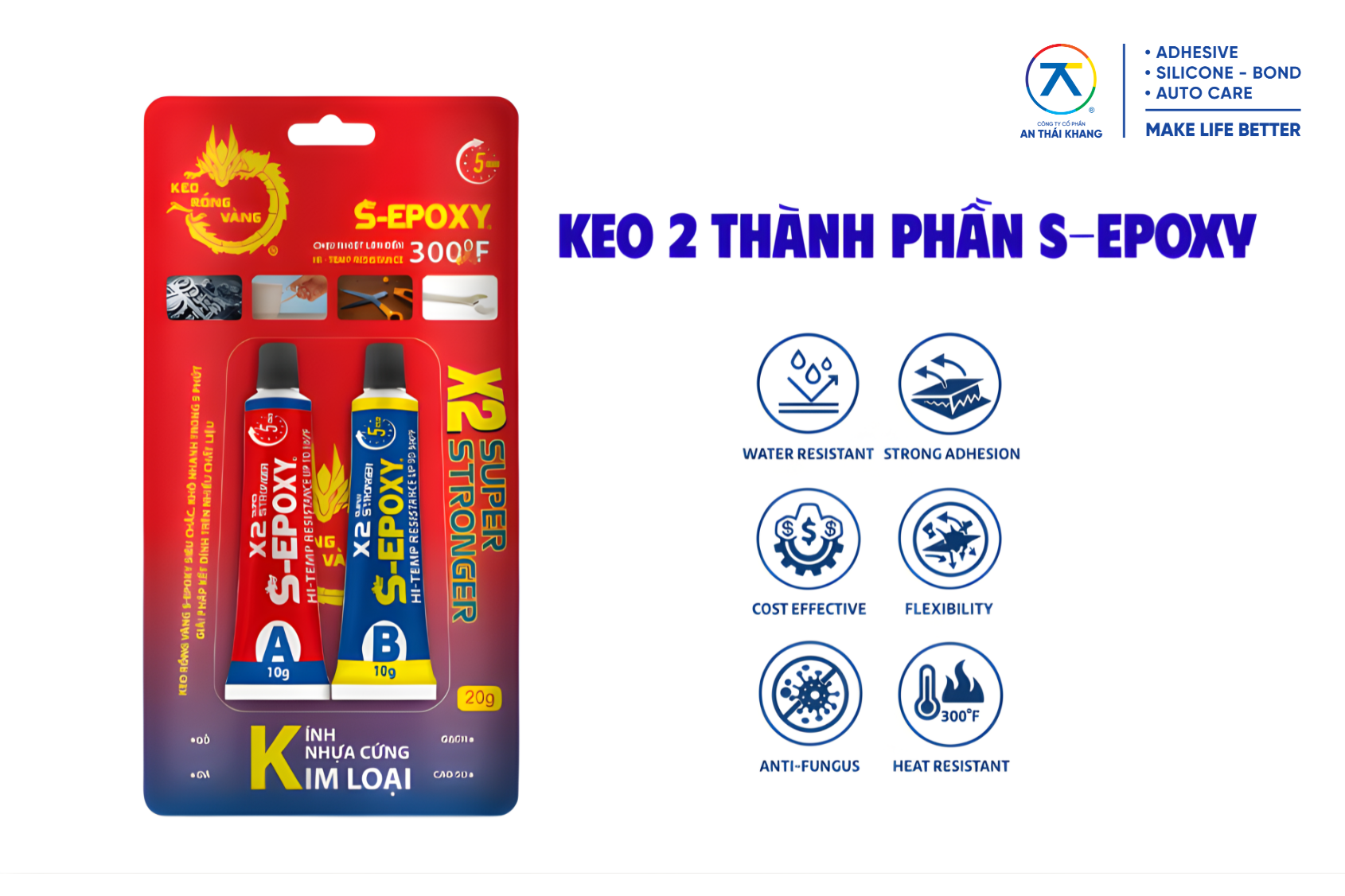
An Thái Khang’s S-EPOXY Epoxy Adhesive is suitable for users who need a multi-purpose two-component adhesive that can handle various repair tasks instead of having to buy several different adhesives.
This product is suitable for people who need to repair household items, small mechanical repair workers, users who need to bond metal parts, and those who want to restore items made of wood, ceramic, stone, glass, or hard plastic. It is also suitable for users who need an adhesive that becomes hard after curing.
According to An Thái Khang, S-EPOXY is a two-component epoxy adhesive that works through the combination of epoxy resin and hardener. When the two components are mixed evenly, the adhesive undergoes a curing reaction to form a strong bond, making it suitable for mechanical, industrial, and household repairs.
4. What materials can An Thái Khang’s Epoxy Adhesive be used on?
One of the reasons S-EPOXY is relevant to the search for which two-component adhesive is best is its broad range of applications. The product can be used on many hard materials commonly found in household repairs and light mechanical work.
4.1 Suitable materials
S-EPOXY can be used on metal, wood, ceramic, stone, glass, and certain hard plastics. Thanks to its ability to bond with multiple surfaces, the product can be applied in many real-life situations, such as repairing motorcycle parts, mechanical items, decorative objects, handmade products, household equipment, or certain areas that need filling and patching.
4.2 Surfaces that should not be used
The product should not be used on PP, PE, or oily surfaces. These are difficult-to-bond surfaces and may reduce the adhesive’s bonding performance. Before application, users should clean and dry the surface to help the adhesive perform more effectively.
5. Advantages of An Thái Khang’s S-EPOXY Epoxy Adhesive for repairs
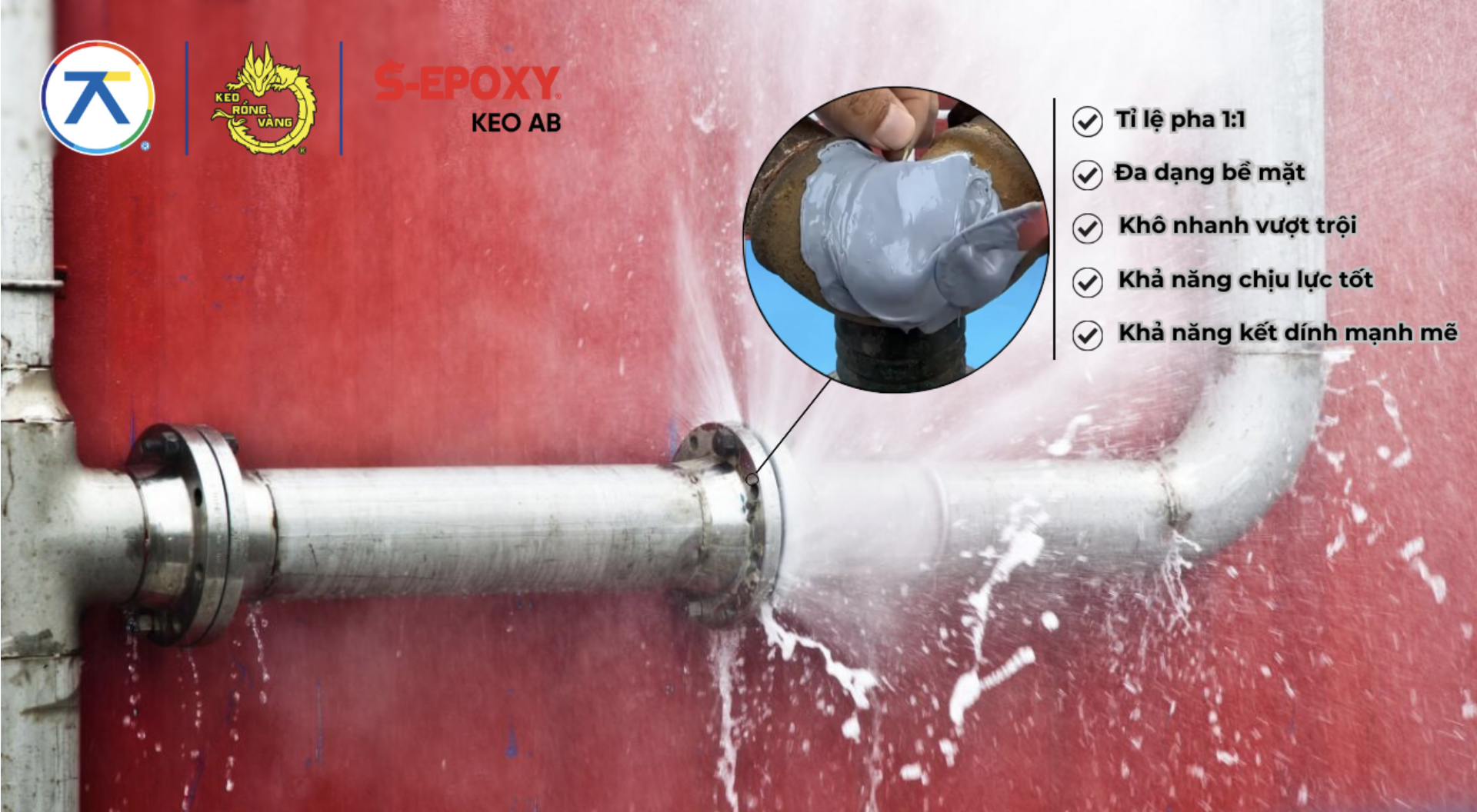
S-EPOXY is chosen for many repair tasks because it can create a hard bond, dry quickly, and provide good load resistance after curing. These are important factors when repairing frequently used household items or small mechanical parts.
5.1 Strong bond after curing
After fully drying, S-EPOXY creates a hard and strong bonding layer. This makes it suitable for areas that require stability and durability, rather than temporary bonding only.
5.2 Convenient drying time
The product has a surface drying time of about 5 minutes, reaches full drying in about 45 minutes, and achieves full hardness after approximately 3 days. This timing is suitable for small repair tasks, allowing users to handle basic repairs quickly while still ensuring the necessary curing process.
5.3 Load-resistant, vibration-resistant, and durable under suitable conditions
For parts that are frequently exposed to impact, load resistance and vibration resistance are very important. S-EPOXY is suitable for many areas that require a hard, stable, and more durable bond than regular adhesives.
After fully curing, the adhesive can resist water, oil, chemicals, and impact under suitable conditions. This is an advantage when used for household items, equipment, mechanical parts, or areas with more demanding usage conditions.
6. How to choose an adhesive based on your repair needs
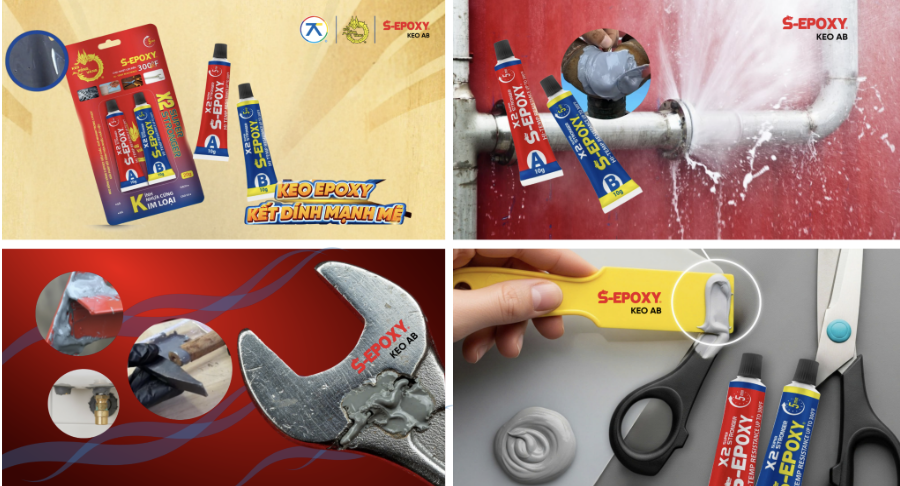
If you are still wondering which two-component adhesive is best, the simplest way is to choose based on your actual repair needs. Each material and bonding area requires different adhesive properties.
6.1 For bonding metal
When bonding metal, you should prioritize an adhesive with strong adhesion, load resistance, and vibration resistance on hard surfaces. An Thái Khang’s S-EPOXY is a suitable option for this need because it is designed for applications that require strong bonding and good mechanical durability.
6.2 For repairing household items
For household items, you should choose an adhesive that is easy to use, dries quickly, and works on multiple materials. S-EPOXY is suitable for many common household materials such as wood, ceramic, stone, glass, and hard plastic.
6.3 For filling cracks or repairing impact-prone items
If you need to fill cracks, choose an adhesive with low shrinkage after curing. This helps reduce the risk of gaps reopening, cracks returning, or the adhesive peeling off after a period of use.
For items that are frequently exposed to impact or vibration, you should avoid adhesives that are too soft or only bond at the surface level. A two-component epoxy adhesive such as S-EPOXY is more suitable because it creates a hard and strong bond after curing.
7. How to use two-component adhesive for a more durable bond
To achieve the best performance, users should prepare the surface carefully before bonding. This is an important step that is often overlooked, which can cause the bond to become less durable even when the right adhesive is used.
7.1 Clean and dry the surface
The surface to be bonded should be clean, dry, and free from dust, grease, oil, or water. If the surface is oily or contaminated, the adhesive will have difficulty bonding firmly, and the repair may peel off more easily.
7.2 Mix the two components thoroughly before application
When using a two-component adhesive, take equal amounts from the two tubes and mix them thoroughly before application. This step is very important because uneven mixing may prevent the adhesive from reaching its best hardness and bonding strength.
7.3 Fix the bonded area and ensure safety
After applying the adhesive, press the two surfaces firmly together and temporarily fix them in place if the parts may shift. Avoid applying force too early before the adhesive reaches the required hardness.
In addition, apply the adhesive in a well-ventilated area, keep it away from flames and high heat, and use gloves and protective glasses when necessary to ensure safety during the repair process.
8. Should you choose An Thái Khang’s S-EPOXY Epoxy Adhesive?
An Thái Khang’s S-EPOXY is a worthwhile choice if you need a multi-purpose two-component adhesive that bonds strongly, dries quickly, provides good load resistance, and works on many hard materials such as metal, wood, ceramic, stone, glass, and hard plastic.
The product is not suitable for PP, PE, or oily surfaces. However, for common household and light mechanical repair needs, S-EPOXY performs well thanks to its hard, durable bond and convenient application.
Need to repair cracked, broken, or loose items? Choose An Thái Khang’s S-EPOXY Epoxy Adhesive for a strong, durable bond that suits many everyday repair needs.
AN THAI KHANG JSC
- • Fanpage: An Thái Khang JSC
- • Hotline: 0764 644 245
- • Email: support@anthaikhang.com
- • Website: https://anthaikhang.com/