
What Is the Difference Among Shoe Glues?
Compare shoe lasting and heat-activated adhesives by use, color, and application. Explore An Thai Khang's S-Bond SB68, 3300S, SB55, SB60, 405S, and 505S.
1. What Roles Do Shoe Lasting Adhesives and Heat-Activated Adhesives Play in Footwear Manufacturing?
In footwear manufacturing, different material bonding stages have different requirements. Therefore, selecting the right adhesive depends not only on its bonding performance but also on the application area and bonding process.
Shoe lasting adhesives and heat-activated adhesives are both types of adhesives used in the footwear industry. However, they differ significantly in their applications, colors, and bonding activation methods.
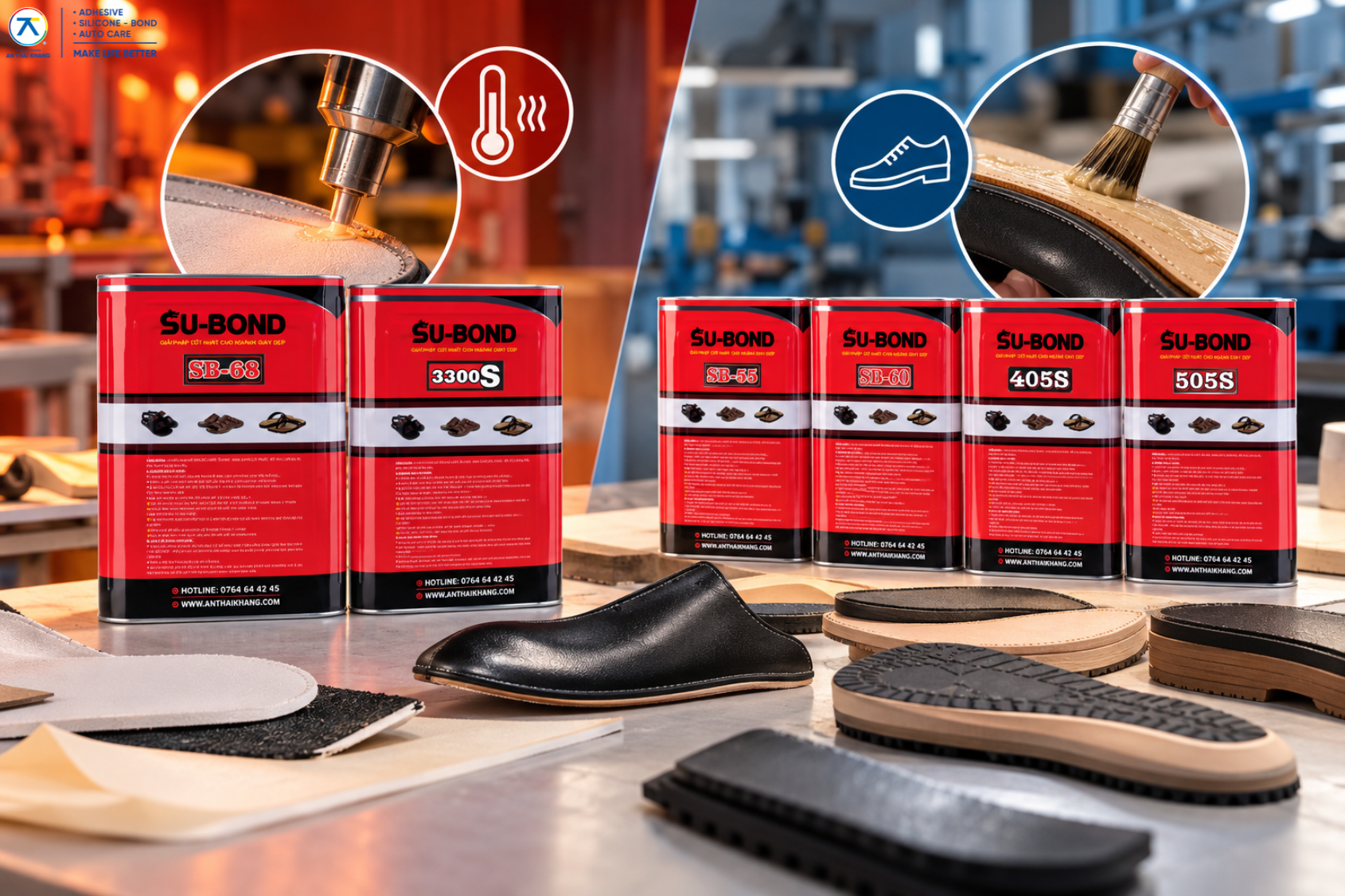
An Thai Khang currently offers several S-Bond adhesive products designed for these specific needs. Its heat-activated adhesive range includes S-Bond SB68 and S-Bond 3300S. Meanwhile, its shoe lasting adhesive range includes S-Bond SB55, S-Bond SB60, S-Bond 405S, and S-Bond 505S.
Understanding the characteristics of each adhesive category helps manufacturers select the most suitable product for each stage of footwear production.
2. Key Differences Between Shoe Lasting Adhesives and Heat-Activated Adhesives
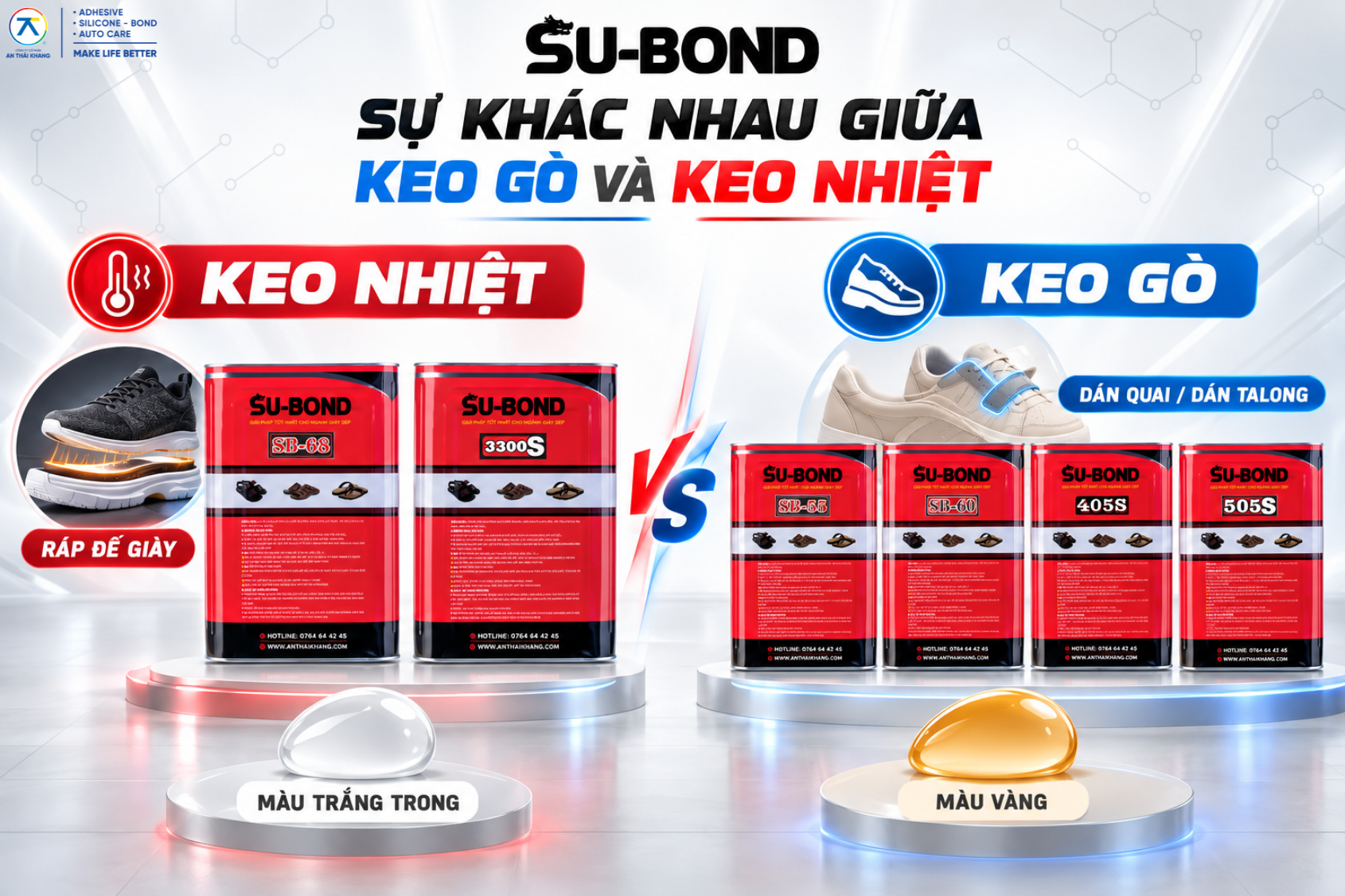
The most important differences between these two types of adhesives lie in their application areas and the methods used to create a bond after the adhesive surface has dried.
2.1. Differences in Applications
Heat-activated adhesives are primarily used in shoe sole assembly.
In this process, the adhesive helps bond material surfaces in the sole area after being applied and properly activated according to the required procedure. This area may involve various materials, including rubber and other suitable sole materials.
In contrast, shoe lasting adhesives are used to bond straps to shoe uppers or midsoles. They may also be used to attach surface layers, a process commonly referred to as talong bonding.
Although both adhesive types are used in footwear manufacturing, they serve different stages of the production process.
2.2. Differences in Color
Color is another distinguishing characteristic of these two adhesive categories.
Heat-activated adhesives have a translucent white appearance. This characteristic is suitable for sole assembly processes and applications where a lighter-colored adhesive layer is preferred.
Shoe lasting adhesives, on the other hand, are yellow. The shade may range from light to dark yellow depending on the specific product.
Distinguishing adhesives by color helps users identify the appropriate products during preparation and application, particularly in footwear manufacturing facilities that use multiple adhesive formulations for different production stages.
3. The Most Important Difference: Application Methods

In addition to their applications and colors, shoe lasting adhesives and heat-activated adhesives differ significantly in how their bonds are formed.
3.1. Shoe Lasting Adhesives Can Be Bonded After Surface Drying
With shoe lasting adhesives, once the adhesive has been applied to both surfaces and has reached the appropriate surface-dry condition, the two surfaces can be brought directly together to form a bond.
This means that an additional heat activation step is not required before joining the two surfaces.
Products in this category include S-Bond SB55, S-Bond SB60, S-Bond 405S, and S-Bond 505S.
Proper application still requires clean, well-prepared surfaces and an appropriate distribution of adhesive to ensure good contact between the two materials when they are joined.
3.2. Heat-Activated Adhesives Require Heating Before Bonding
Heat-activated adhesives follow a different application process.
Once the adhesive layer has reached the appropriate surface-dry condition, the two surfaces should not be joined immediately. Instead, an additional heating step is required. The adhesive-coated surfaces are heated to activate the adhesive before being brought together and pressed.
An Thai Khang offers two heat-activated adhesive products: S-Bond SB68 and S-Bond 3300S.
This distinction is particularly important when organizing footwear manufacturing processes. Applying the same bonding procedure used for shoe lasting adhesives to heat-activated adhesives, while skipping the heat activation step, would result in an application that does not follow the required bonding procedure.
4. Overview of An Thai Khang's S-Bond Adhesive Products
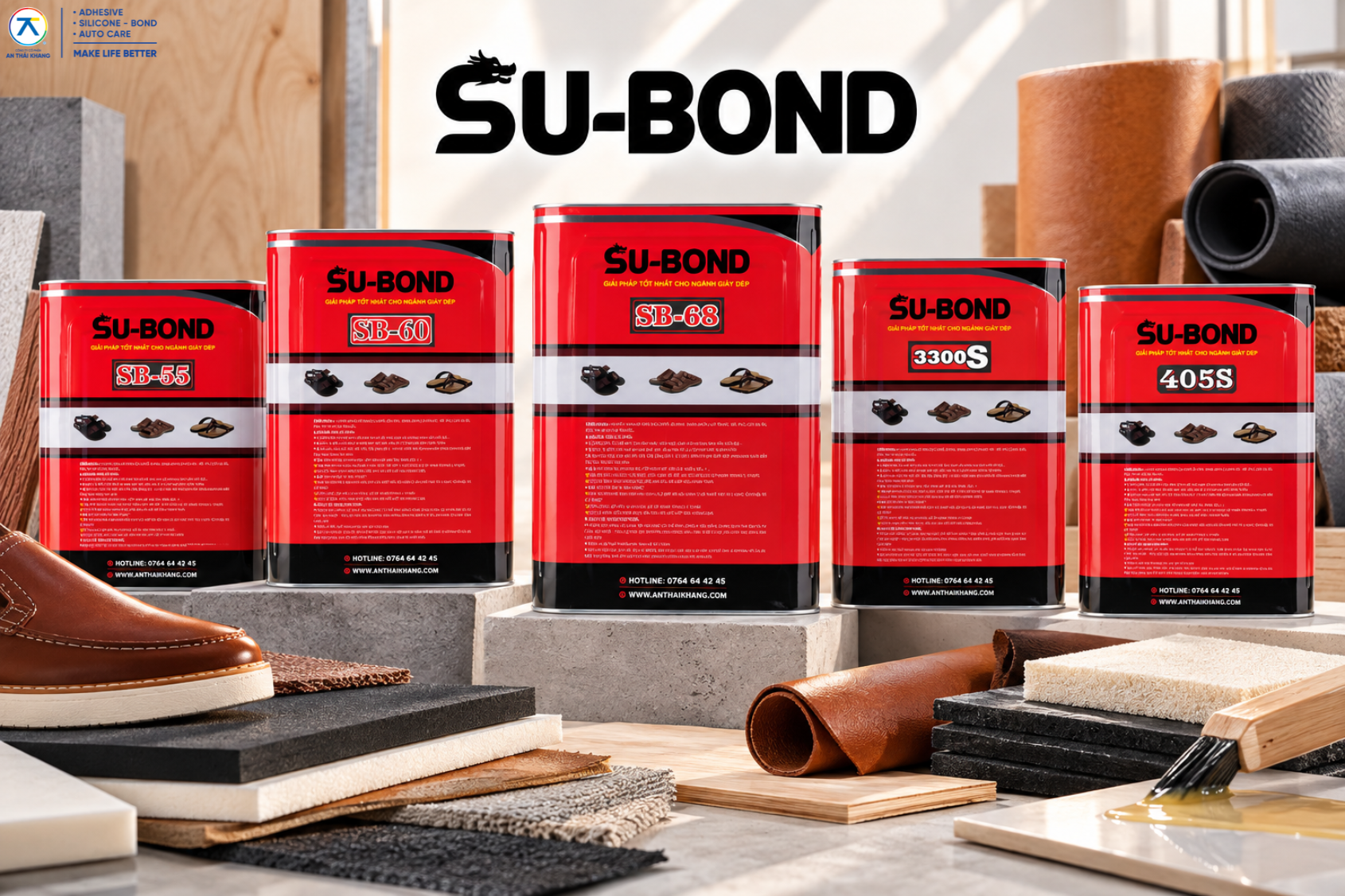
Within each adhesive category, An Thai Khang provides several product options to meet different manufacturing requirements.
4.1. Heat-Activated Adhesives: SB68 and 3300S
Within the heat-activated adhesive range, the products are positioned in ascending order, starting with S-Bond SB68, followed by S-Bond 3300S.
Both products are intended for shoe sole assembly and have a characteristic translucent white appearance. After the adhesive surface has dried, heat activation is required before joining the two surfaces.
Depending on the sole construction and the type of polymer materials used, manufacturers should select the adhesive formulation that best suits their actual production process.
4.2. Shoe Lasting Adhesives: SB55, SB60, 405S, and 505S
The shoe lasting adhesive range offers more options, arranged in ascending order as follows: S-Bond SB55, S-Bond SB60, S-Bond 405S, and S-Bond 505S.
These products have a yellow appearance, with lighter or darker shades depending on the specific formulation.
They are used in applications such as bonding straps to shoe uppers or midsoles and attaching surface layers. Once the adhesive has reached the appropriate surface-dry condition, the two surfaces can be joined directly without an additional heat activation step.
In a manufacturing environment, clearly assigning adhesives to specific production stages makes it easier for operators to control the bonding process and reduces the risk of confusing shoe lasting adhesives with heat-activated adhesives.
5. Conclusion
Shoe lasting adhesives and heat-activated adhesives are both used in footwear manufacturing, but they serve different purposes and production stages.
Heat-activated adhesives, including S-Bond SB68 and S-Bond 3300S, have a translucent white appearance and are primarily used in shoe sole assembly. They require heat activation after surface drying and before the two surfaces are joined.
In contrast, shoe lasting adhesives, including S-Bond SB55, S-Bond SB60, S-Bond 405S, and S-Bond 505S, are yellow and are used for bonding straps, shoe uppers, midsoles, and surface layers. Once the adhesive has reached the appropriate surface-dry condition, the two surfaces can be joined directly.
Understanding these differences in applications, colors, and bonding methods helps manufacturers select the right adhesive for each stage of shoemaking while minimizing confusion between the two product categories.
AN THAI KHANG JSC
- • Fanpage: An Thái Khang JSC
- • Hotline: 0764 644 245
- • Email: support@anthaikhang.com
- • Website: https://anthaikhang.com/