
Which Glue Is Suitable for Wooden Box Assembly?
Learn how to use S-BOND Premium Wood Glue when assembling decorative wooden boxes and handmade crafts, helping create strong, neat joints and achieve a clean, professional finish.
1. Using Wood Glue in Handmade Wooden Box Assembly
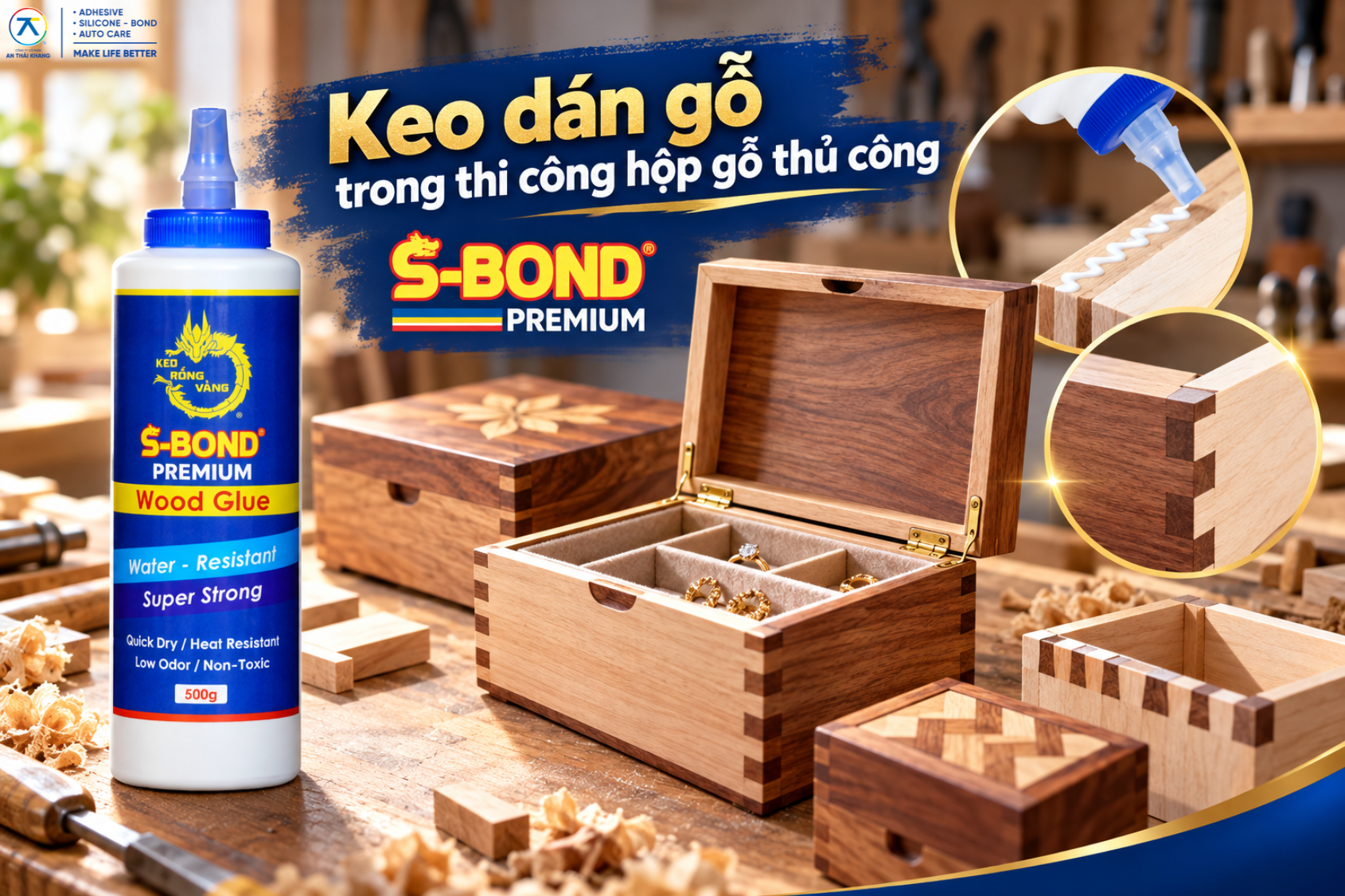
In woodworking, small products such as jewelry boxes, gift boxes, keepsake boxes, and decorative wooden boxes require a high level of precision in every joint. Even a small gap or an unstable connection can affect the shape and overall finish of the final product.
Therefore, wood glue plays an important role in joining box sides, bottom panels, internal dividers, and decorative components. Unlike larger wooden structures that may use screws or mechanical fasteners, handmade wooden boxes often prioritize clean, neat joints to maintain their aesthetic appeal.
S-BOND Premium Wood Glue is a suitable choice for bonding wooden components during the production and finishing of wooden boxes. When applied correctly, the adhesive remains within the joints, helping maintain a clean surface and minimizing visible fastening elements.
>>> See more: How to distinguish commom types of engineered wood
This is particularly important for handicrafts, where value comes not only from functionality but also from the careful finishing of every edge and corner joint.
2. Why Is Choosing the Right Wood Glue Important for Wooden Boxes?
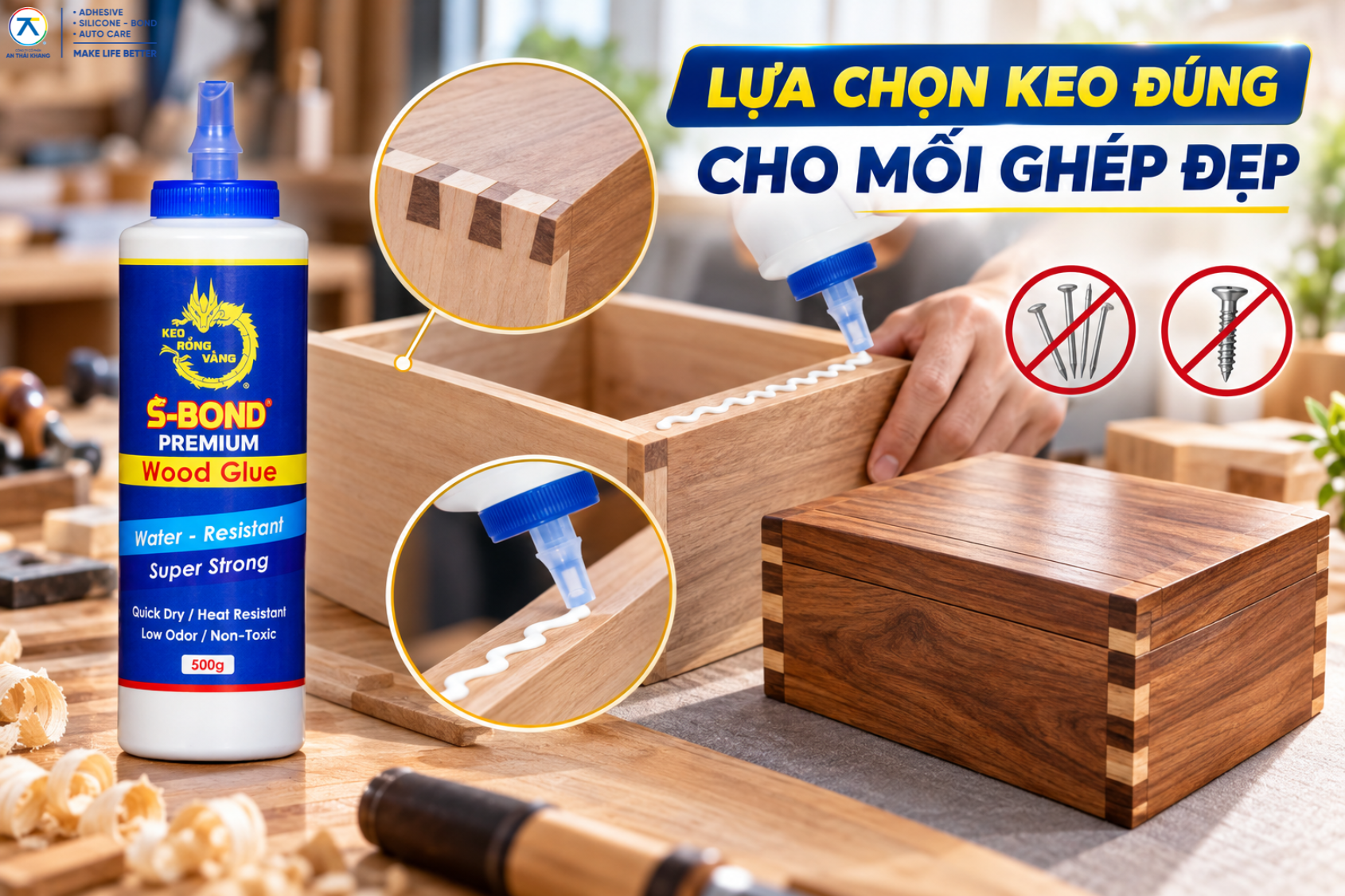
A wooden box may appear simple in construction, but it consists of numerous small joints. The sides must be square, the bottom panel must remain stable, and the corners must fit properly to prevent misalignment after assembly.
When creating wood joints, the adhesive must be distributed appropriately across the bonding surfaces. Applying too little glue may result in insufficient coverage, while excessive glue can squeeze out along the edges, increasing the time required for cleaning and finishing.
These requirements are particularly important for decorative storage boxes, gift boxes, and products with exposed wood grain. Clean, neat joints help create a more refined and professional appearance.
S-BOND Premium Wood Glue can be incorporated into the wooden box production process, from assembling the main structural components to attaching smaller elements such as wooden trim strips, internal dividers, and decorative wooden details.
Using suitable wood glue also helps craftspeople reduce their reliance on nails or screws in areas where maintaining the product's natural appearance is important.
3. Applications of S-BOND Premium Wood Glue in Wooden Box Components
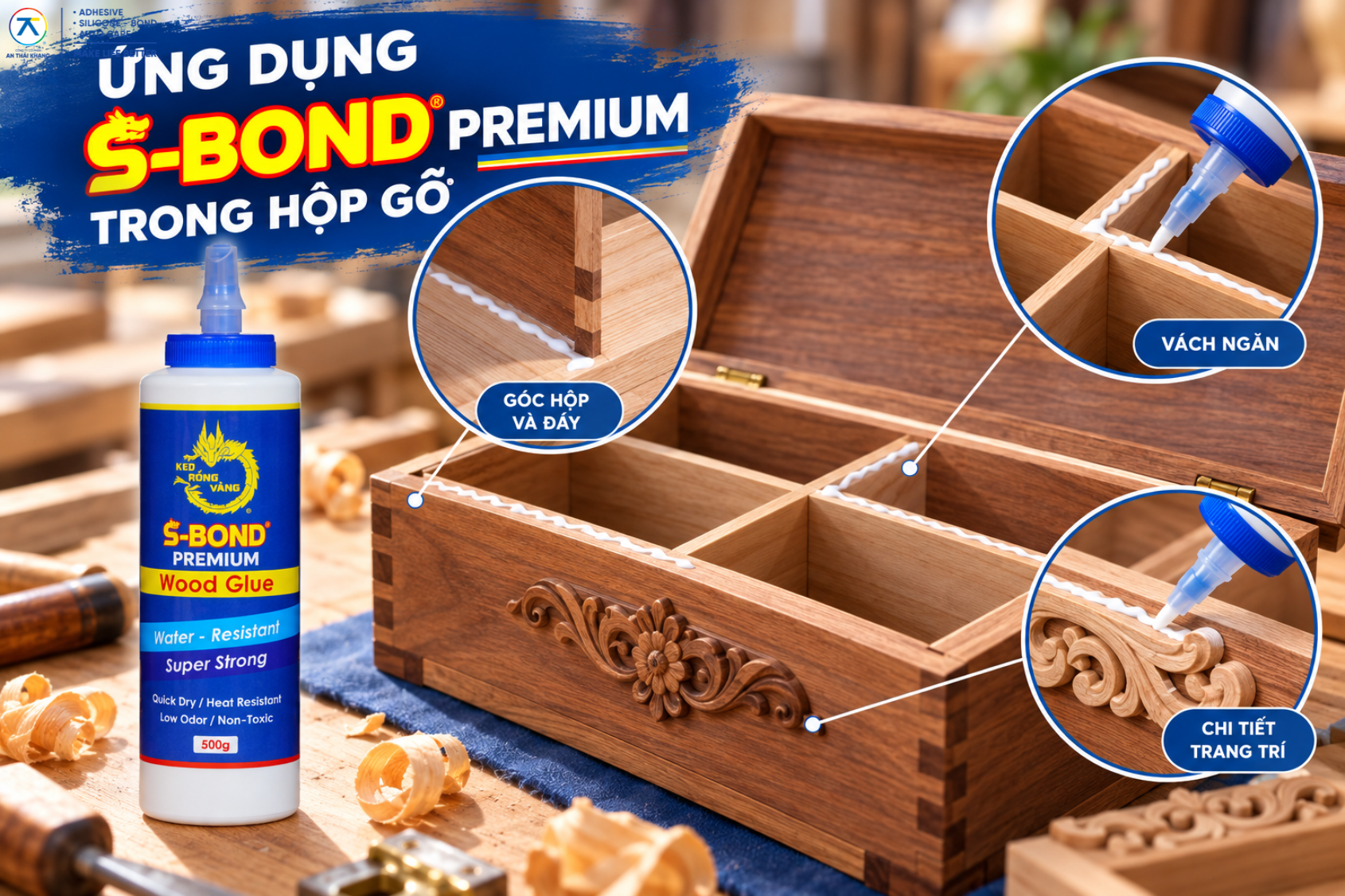
Handmade wooden boxes can be produced from natural wood or other wood-based materials suitable for the intended design. Some products also incorporate plywood to optimize their structure and shape.
S-BOND Premium Wood Glue can be used in various areas during box assembly. However, accurately identifying the surfaces that need to be bonded before application remains essential.
>>> See more: Wood adhesive for durable and attractive furniture
3.1. Joining Box Sides, Bottom Panels, and Corners
The four sides of a wooden box directly determine the shape of the finished product. The components must be aligned at the correct angles before clamping to minimize the risk of misalignment.
Glue should be applied evenly to the contact surfaces between the two components. After joining them, appropriate clamping pressure should be applied to keep the wooden pieces in their correct positions during bonding.
For the bottom panel, glue application should be carefully controlled to ensure sufficient contact between surfaces while preventing excess adhesive from spreading into the box interior. Although this may seem like a minor detail, it significantly affects the cleanliness and overall neatness of the finished product.
3.2. Attaching Internal Dividers and Decorative Components
Many jewelry boxes and handmade storage boxes feature internal dividers. These components are often relatively thin, making mechanical fasteners less suitable from an aesthetic perspective.
Wood glue allows these components to be joined without leaving visible screw heads or nails on the surface.
Similarly, wooden trim strips, decorative patterns, and other small details can be attached using adhesive when the design requires a seamless appearance.
This bonding method is particularly suitable for wooden boxes used as gifts, decorative items, or handmade products, where every joint contributes to the product's overall visual appeal.
4. How to Use Wood Glue for a Clean and Professional Wooden Box Finish
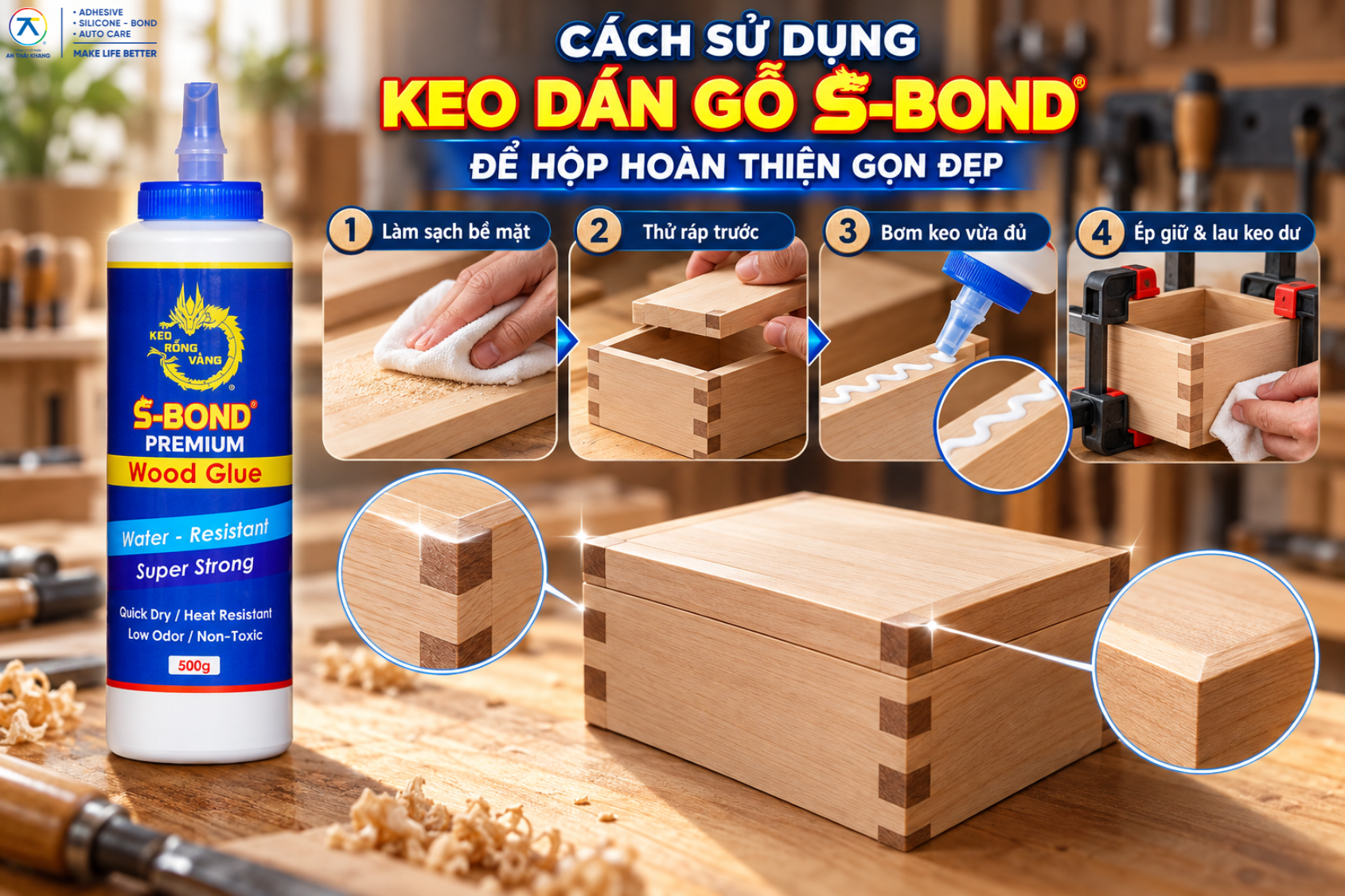
To achieve stable adhesive bonds, wooden surfaces must be carefully prepared before application. Removing dust, aligning edges, and ensuring proper contact between the two surfaces are important steps in woodworking, particularly for small products such as wooden boxes and handicrafts.
4.1. Preparing Surfaces Before Gluing
The two wooden surfaces should fit closely together before glue is applied. Sawdust, oil, and other contaminants should be removed from the joint areas to allow the adhesive to come into direct contact with the material.
If the edges are not square or there are significant gaps between components, these issues should be corrected beforehand rather than attempting to fill the entire gaps with glue.
For small wooden boxes, craftspeople should perform a dry fit before applying adhesive. This step helps verify dimensions, check the positions of the box sides, and ensure that each corner fits correctly, reducing the need for adjustments after the glue has been applied.
4.2. Controlling Glue Application and Clamping Pressure
Wood glue should be applied in an appropriate amount across the bonding surfaces. Excessive glue should not be used under the assumption that a greater quantity will automatically produce a stronger bond.
When two components are joined, they must be held in the correct positions with suitable clamping pressure. For wooden boxes, particular attention should be given to the four corners to ensure that the box maintains its intended shape throughout the bonding process.
Any excess glue appearing along the edges should be removed appropriately to prevent interference with subsequent steps such as sanding, surface finishing, or decoration.
Once the joints are stable, the squareness of the box, the edges of the bottom panel, and the internal dividers should be checked again before proceeding to the finishing stage.
For handmade products with high aesthetic requirements, precision in these small steps often makes a noticeable difference between a product that is simply assembled and one that is professionally finished.
5. Conclusion
Decorative wooden boxes, storage boxes, and handmade craft products all require joints that are both stable and visually neat. Therefore, selecting suitable wood glue is an important part of the production process.
S-BOND Premium Wood Glue gives craftspeople greater flexibility when joining box sides, bottom panels, internal dividers, and decorative components without relying entirely on mechanical fasteners that may remain visible on the surface.
However, achieving clean, well-finished joints still begins with accurately prepared wooden components, clean surfaces, appropriate glue application, and controlled clamping pressure during assembly.
When every joint is carefully completed, a wooden box not only fulfills its storage function but also becomes an aesthetically appealing product suitable for decoration, gift-giving, and various other craft applications.
AN THAI KHANG JSC
- • Fanpage: An Thái Khang JSC
- • Hotline: 0764 644 245
- • Email: support@anthaikhang.com
- • Website: https://anthaikhang.com/