
Rust on Metal: When Should You Use RV Lubricant Spray?
Rust can make bolts, hinges, and other metal components difficult to operate. Learn about the functions of RV Lubricant Spray, when to use it, and practical tips for proper metal maintenance.
Rust does not always appear as large patches across a metal surface. In many cases, the first signs may be nothing more than a brownish layer around a bolt head, a metal joint that starts to move more stiffly, or a component that becomes harder to remove after being left untouched for a long time.
What deserves attention is that rust can form directly in areas that affect how equipment operates, such as threaded gaps, contact points, rotating shafts, or joints between two metal surfaces.
When rust begins to interfere with normal use, maintenance is no longer simply about cleaning the surface. Users may also need to address the rust that is causing resistance while maintaining smooth movement in areas that are frequently exposed to friction.
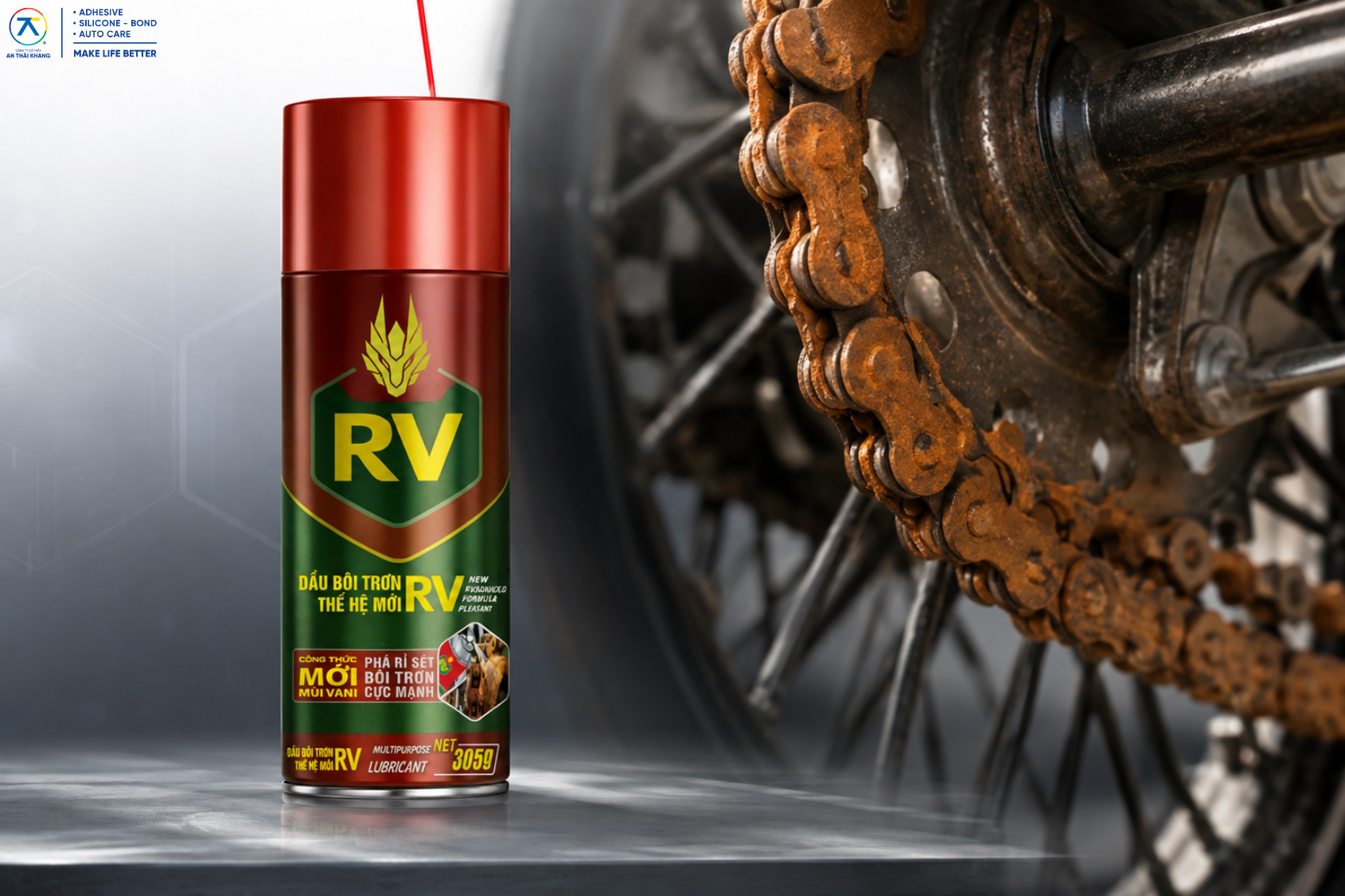
RV Lubricant Spray combines rust-loosening and lubricating functions in a convenient spray format. The product is suitable for a variety of metal maintenance tasks, especially when early signs of rust or reduced movement begin to appear.
1. When Does Rust Begin to Affect Metal Components?
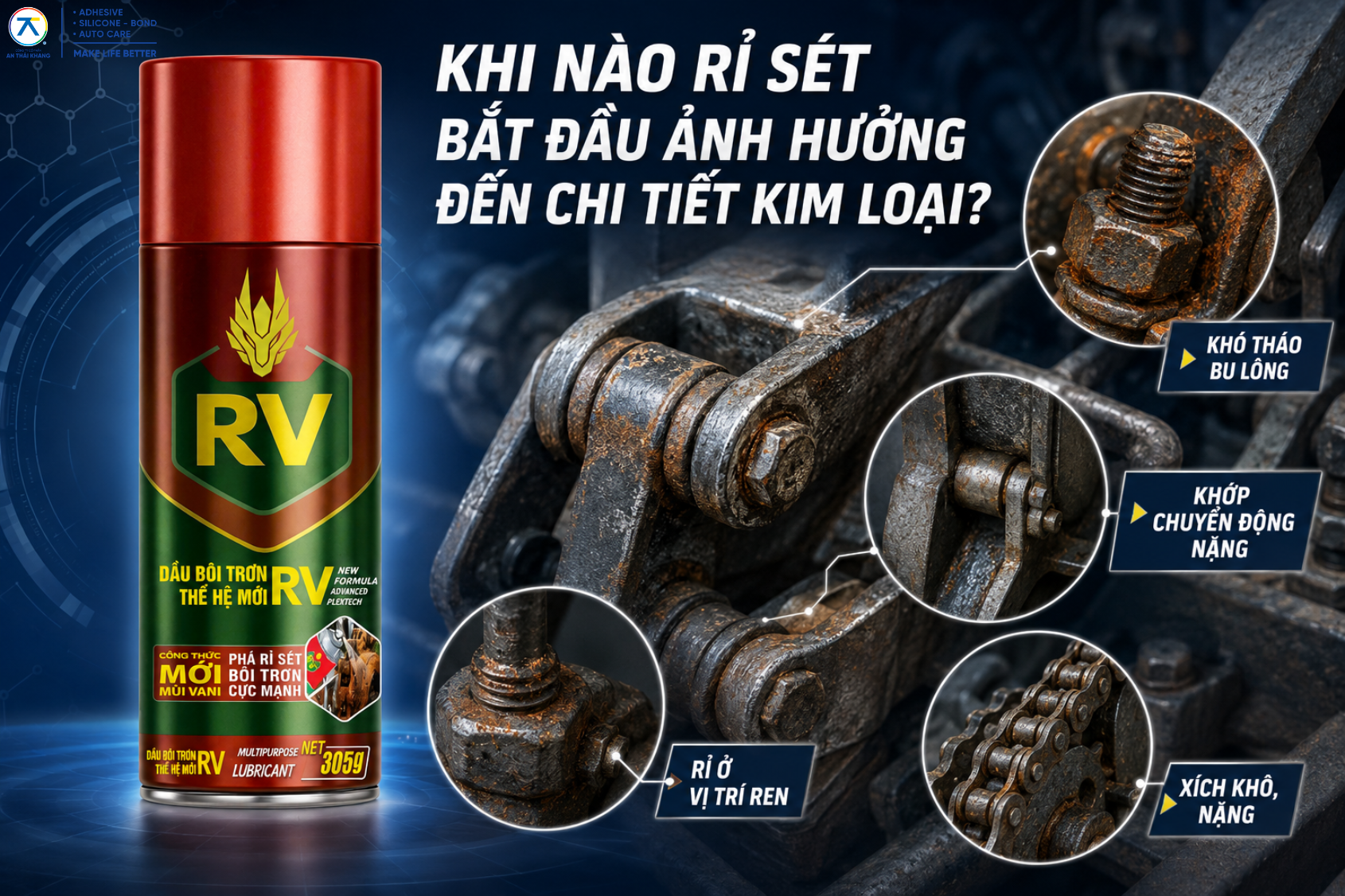
Not every type of rust affects metal components in the same way.
A small amount of surface rust on a flat metal surface may not immediately affect usability. However, when rust develops on threads, rotating shafts, or connection points, its impact on operation is often more noticeable.
Some common signs include:
Bolts or nuts becoming more difficult to remove.
Hinges moving stiffly or producing noise.
Metal joints no longer operating smoothly.
Chains or moving parts feeling dry and resistant.
Brown or reddish rust appearing on threaded areas.
Metal tools that have not been used for a long time beginning to oxidize.
When these signs appear, rust is no longer affecting only the appearance of the surface. It may begin to interfere directly with movement, operation, assembly, or disassembly.
1.1. Rust at Connection Points Can Make Disassembly More Difficult
Rust on a flat surface is usually easy to see and access. Rust located deep inside threads or between two components, however, can be much more difficult to detect.
This is why some bolts may still look relatively intact from the outside but feel extremely tight when you try to remove them.
At this stage, the most important area to focus on is the contact point between the components. A spray-format product offers an advantage because it can reach narrow gaps that may be difficult to access through direct application.
1.2. Rust Combined with Friction Can Make Moving Parts Stiffer
Hinges, joints, and chains experience friction during regular operation. When rust develops together with dirt and old lubricant residue, these parts may no longer move as smoothly as before.
In this situation, maintenance involves more than simply addressing the rust. Contact surfaces may also require lubrication to support smoother movement.
This is one of the situations where a product that combines rust-loosening and lubricating functions can be particularly useful.
2. How RV Lubricant Spray Supports Rust-Related Maintenance
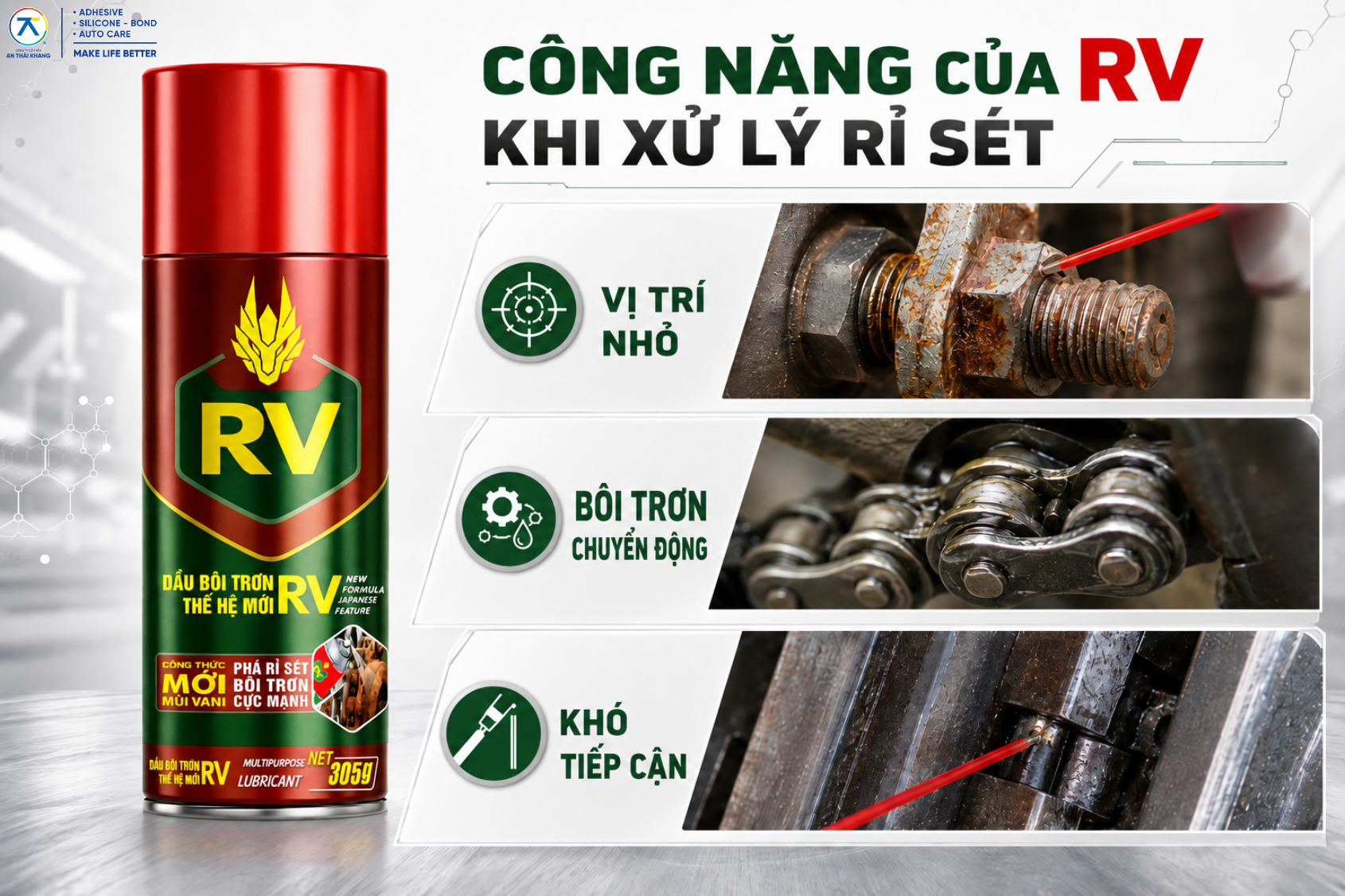
A rusted metal component may experience several problems at the same time, such as becoming difficult to remove, developing increased friction, or being located in an area that is difficult to access.
RV Lubricant Spray is suitable for several of these maintenance needs in one convenient product.
2.1. Helps Address Rust in Small Areas
Rust around bolts, nuts, and metal joints often develops at the contact point between two surfaces.
The spray format makes it easier to direct the product toward the area that needs attention, especially threaded gaps and small connection points.
Instead of coating the entire surface, users can focus directly on the area affected by rust or the point that is causing resistance. This targeted approach keeps the application cleaner while helping the lubricant reach the area where it is actually needed.
2.2. Helps Lubricate Moving Points
Even after a component begins moving again, friction between contact surfaces will continue during use.
Hinges, chains, and metal joints are common examples.
The lubricating function of RV Lubricant Spray makes it suitable for components that are affected by both rust and the need for ongoing movement.
As a result, the product can be used not only when addressing an isolated rusted area but also as part of routine metal component maintenance.
2.3. Convenient for Hard-to-Reach Areas
Many areas that require maintenance are small or located deep within a component.
These may include:
gaps between bolts and nuts;
hinge pins;
chain links;
metal pins;
joints and connections;
narrow gaps within mechanical assemblies.
The spray format makes it more convenient to apply the product to these areas compared with using a cloth or conventional manual lubrication tools.
3. When Should You Use RV Lubricant Spray?
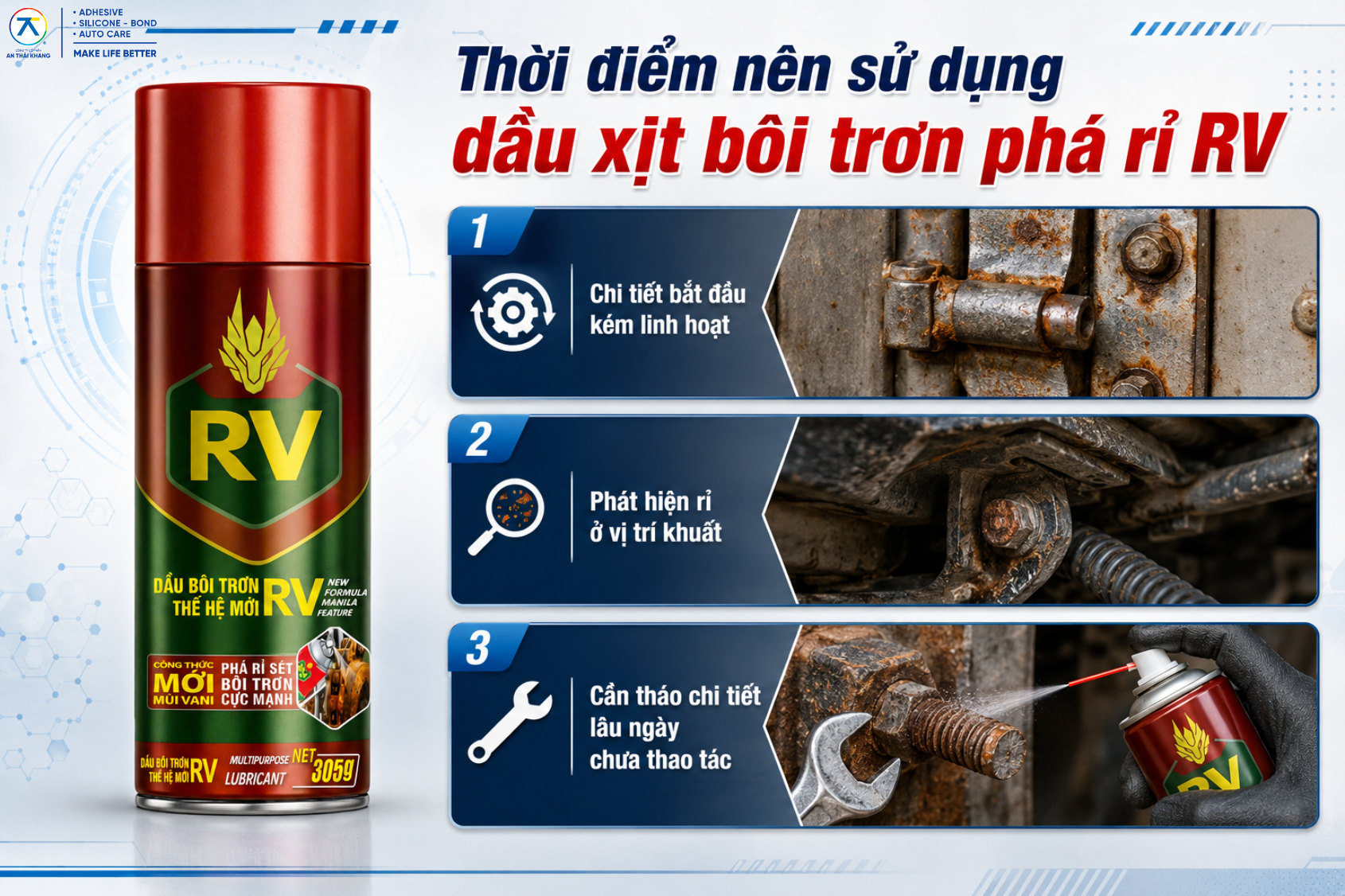
There is no need to wait until a component becomes completely stuck before carrying out maintenance.
Identifying early warning signs can make the process more proactive and easier to manage.
3.1. When a Component Still Works but Starts to Move Less Smoothly
This is one of the easiest stages at which to identify the need for maintenance.
A bolt may still be removable but require more force than before. A hinge may still open and close but begin to make noise. A metal joint may continue moving but no longer feel smooth or consistent.
These signs do not necessarily mean the component is damaged, but they do indicate that it may need inspection and maintenance.
Using RV Lubricant Spray at this stage can help address suitable rusted areas while providing additional lubrication where needed.
3.2. When Rust Appears in Areas That Are Rarely Inspected
Rust commonly develops in areas that retain moisture or receive less frequent cleaning.
The underside of equipment, fastening points, joints, and hidden areas are often overlooked.
If rust is discovered in these locations during routine inspection, RV Lubricant Spray can be used where appropriate to help address the affected area before corrosion interferes further with disassembly or operation.
3.3. When Removing a Component That Has Not Been Operated for a Long Time
Bolts and joints that have remained untouched for extended periods may develop rust around the threads.
If significant resistance is felt as soon as you attempt to loosen the component, avoid immediately applying excessive force.
Instead, inspect the connection area, perform basic cleaning if necessary, and apply RV Lubricant Spray to the area requiring treatment before continuing with the disassembly process.
4. Tips for Using RV Lubricant Spray More Effectively on Rusted Areas
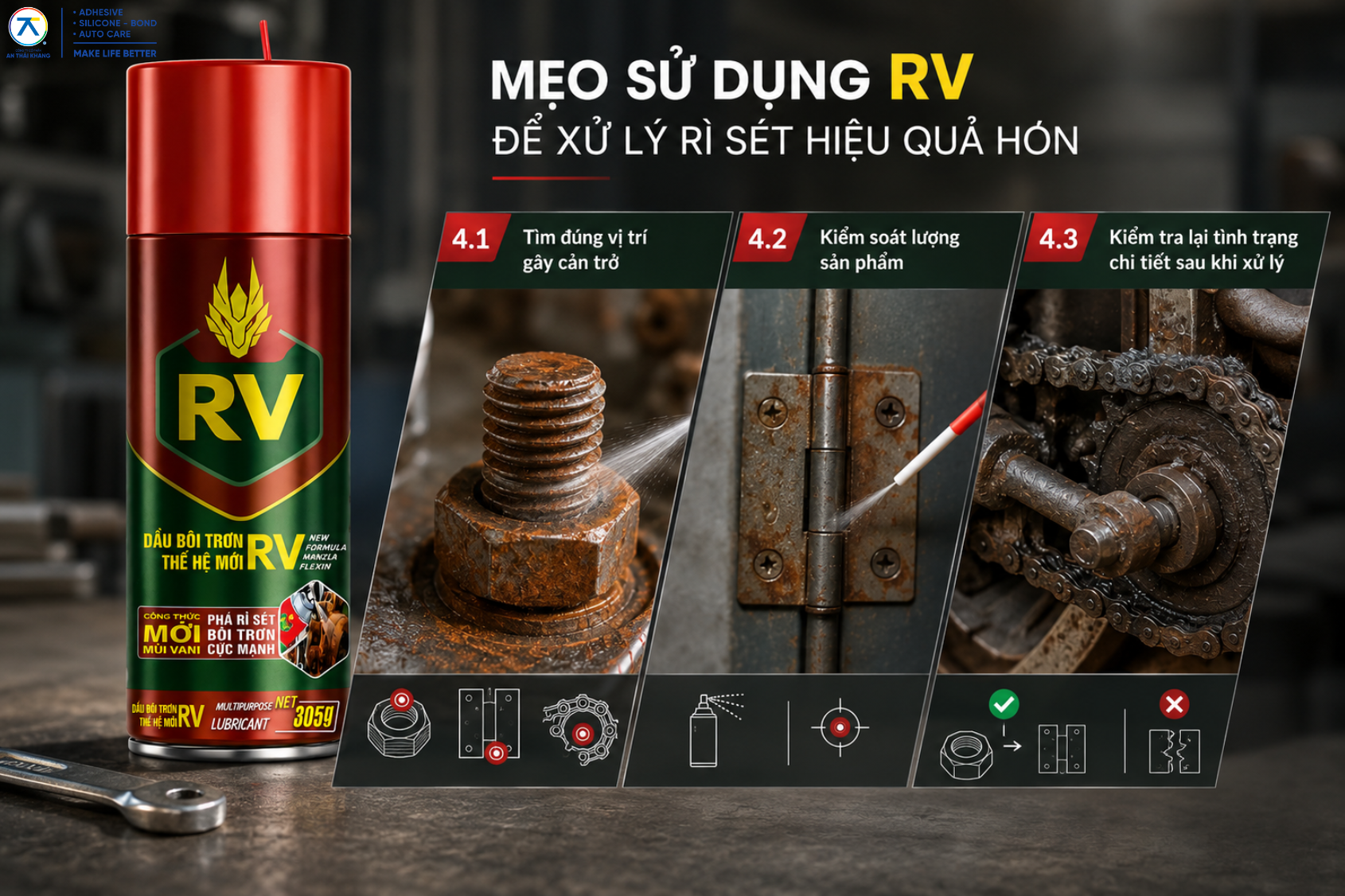
Using a lubricant spray does not have to be complicated. The most important point is to apply the product directly to the area that requires maintenance.
4.1. Identify the Exact Point Causing Resistance
Before applying the product, inspect where the rust is located and determine whether it is directly affecting movement or disassembly.
For bolts, focus on the threaded section and the contact area with the nut.
For hinges, concentrate on the hinge pin or pivot point.
For chains and moving joints, pay attention to the contact points between metal components.
Identifying the correct area helps prevent unnecessary spraying on unrelated surfaces.
4.2. Control the Amount of Product Used
There is no need to coat an entire component with a large amount of lubricant when only a small rusted area needs attention.
For narrow gaps, controlling the direction of the spray is more important than increasing the amount of product.
Using an appropriate amount also helps reduce excess residue and keeps the maintenance area cleaner.
4.3. Recheck the Component After Treatment
After applying the product and carrying out the appropriate maintenance steps, inspect the component again to assess its condition.
If the bolt can be removed with reasonable force or the hinge begins moving more smoothly, maintenance can continue according to the actual requirements.
If the component remains stuck or shows unusual signs, further inspection may be necessary.
Bending, misalignment, cracking, or severe corrosion are mechanical issues that cannot be resolved with lubricant spray alone.
5. Common Mistakes to Avoid When Using Rust-Loosening Lubricant Spray
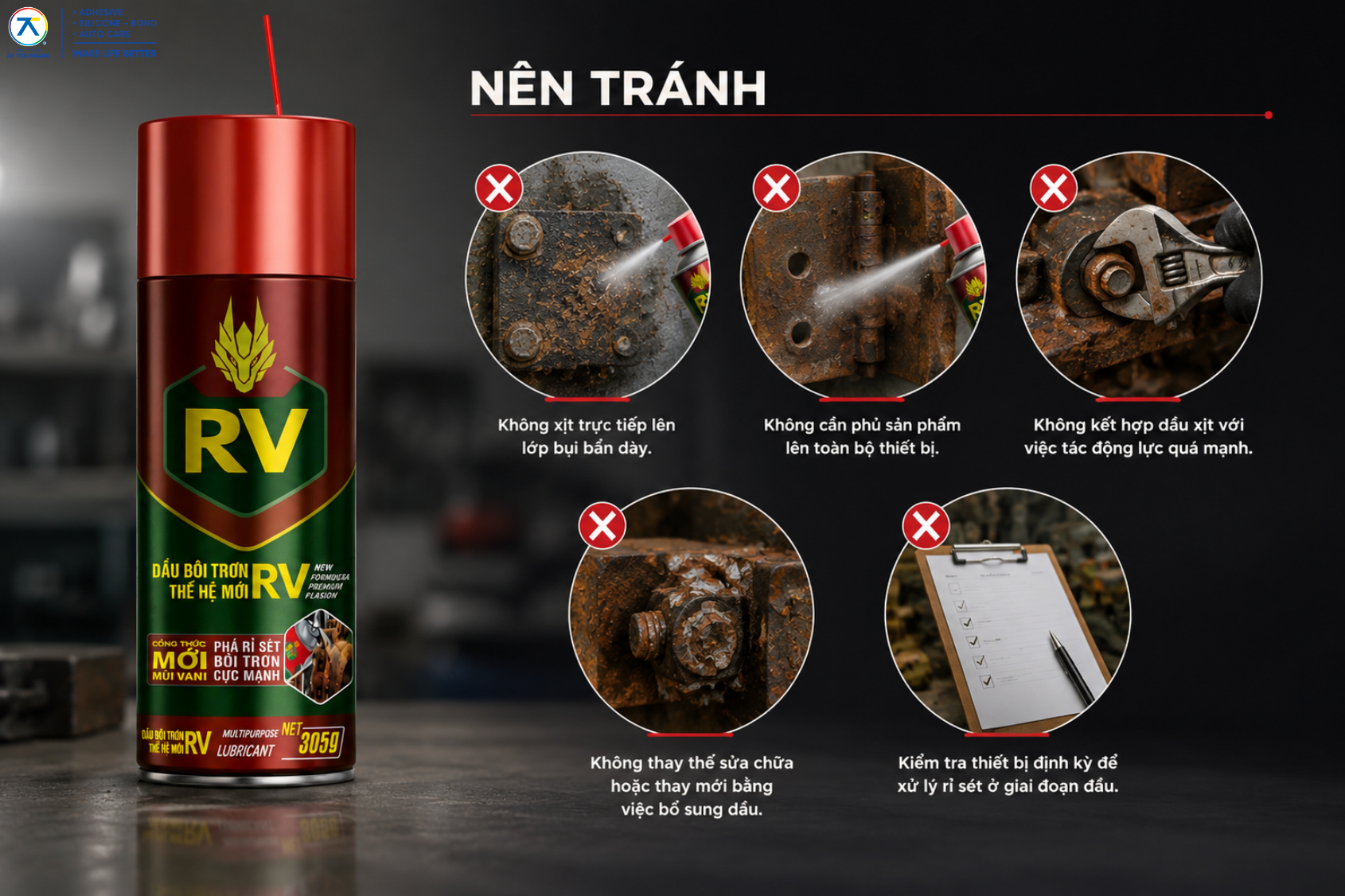
Using the right product with the wrong technique can still make maintenance less effective.
First, avoid spraying directly over a thick layer of dust or contamination when the surface can be cleaned beforehand.
There is also no need to coat the entire piece of equipment when rust is concentrated in only one small area.
When a component is stuck, avoid combining the spray with excessive force immediately after application.
If the component has already been identified as severely deformed or corroded, applying additional lubricant cannot replace proper repair or replacement.
A more practical habit is to inspect equipment regularly. Detecting rust at an early stage allows users to address it before it has a significant impact on operation.
6. Proactive Rust Maintenance Makes Metal Care More Convenient
Rust can develop in many different areas, but threaded connections, joints, hinges, and metal contact points usually require closer attention because they directly affect how a component operates.
RV Lubricant Spray provides a convenient combination of rust-loosening support and lubrication in a single product. Its spray format also makes it easier to reach small areas and narrow gaps.
RV Lubricant Spray can be considered when bolts start becoming difficult to remove, hinges become less flexible, metal joints require lubrication, or rust begins to appear around connection points.
Instead of waiting until a component becomes completely stuck or shows obvious signs of deterioration, incorporating the product into routine inspection and maintenance can help users take a more proactive approach to caring for metal equipment.
When using the product, focus on the exact problem area, apply an appropriate amount, and inspect the component again after treatment. This simple approach helps make better use of the functions of RV Lubricant Spray without making the maintenance process unnecessarily complicated.
AN THAI KHANG JSC
- • Fanpage: An Thái Khang JSC
- • Hotline: 0764 644 245
- • Email: support@anthaikhang.com
- • Website: https://anthaikhang.com/