
Wooden Pet Products and Applications of S-Bond Wood Glue
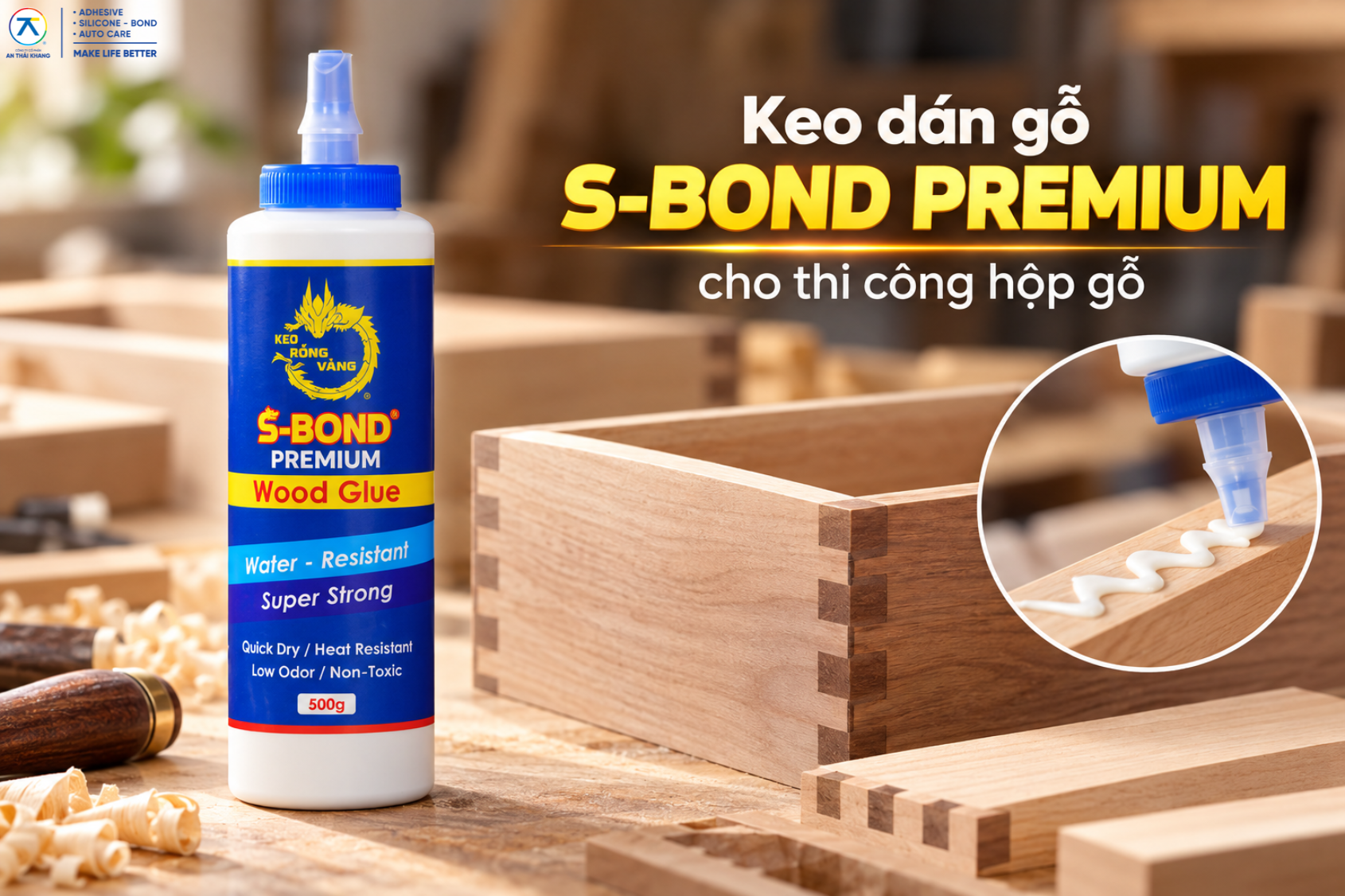
Wooden pet products are becoming increasingly diverse, from pet houses and climbing platforms to everyday accessories. S-BOND Premium Wood Glue helps bond wooden components during manufacturing and finishing.
1. Growing Emphasis on the Design of Wooden Pet Products
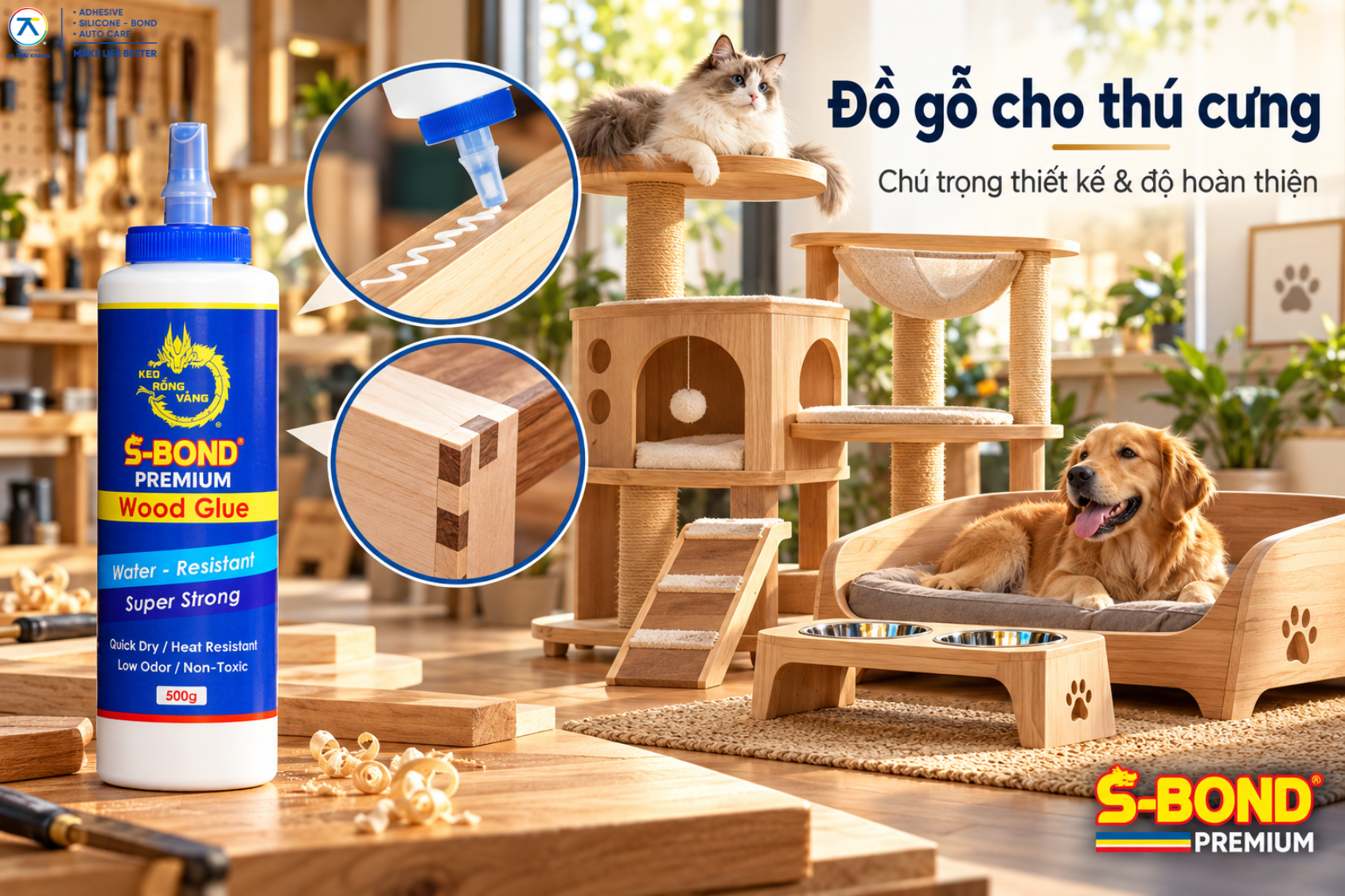
Pet products today are expected not only to meet practical needs but also to offer attractive designs that complement living spaces.
From pet houses and climbing platforms to beds and feeding stations, many products for cats and dogs are designed to resemble small pieces of household furniture.
For cats in particular, products such as cat trees, resting platforms, and multi-level climbing structures often use wood as their main structural material. For dogs, wood can be used in pet houses, mobility steps, raised beds, and feeding bowl stands.
These products also represent a suitable application for S-BOND Premium Wood Glue, which helps bond wooden components during the manufacturing and finishing of pet products.
2. Types of Wooden Pet Products Suitable for Manufacturing
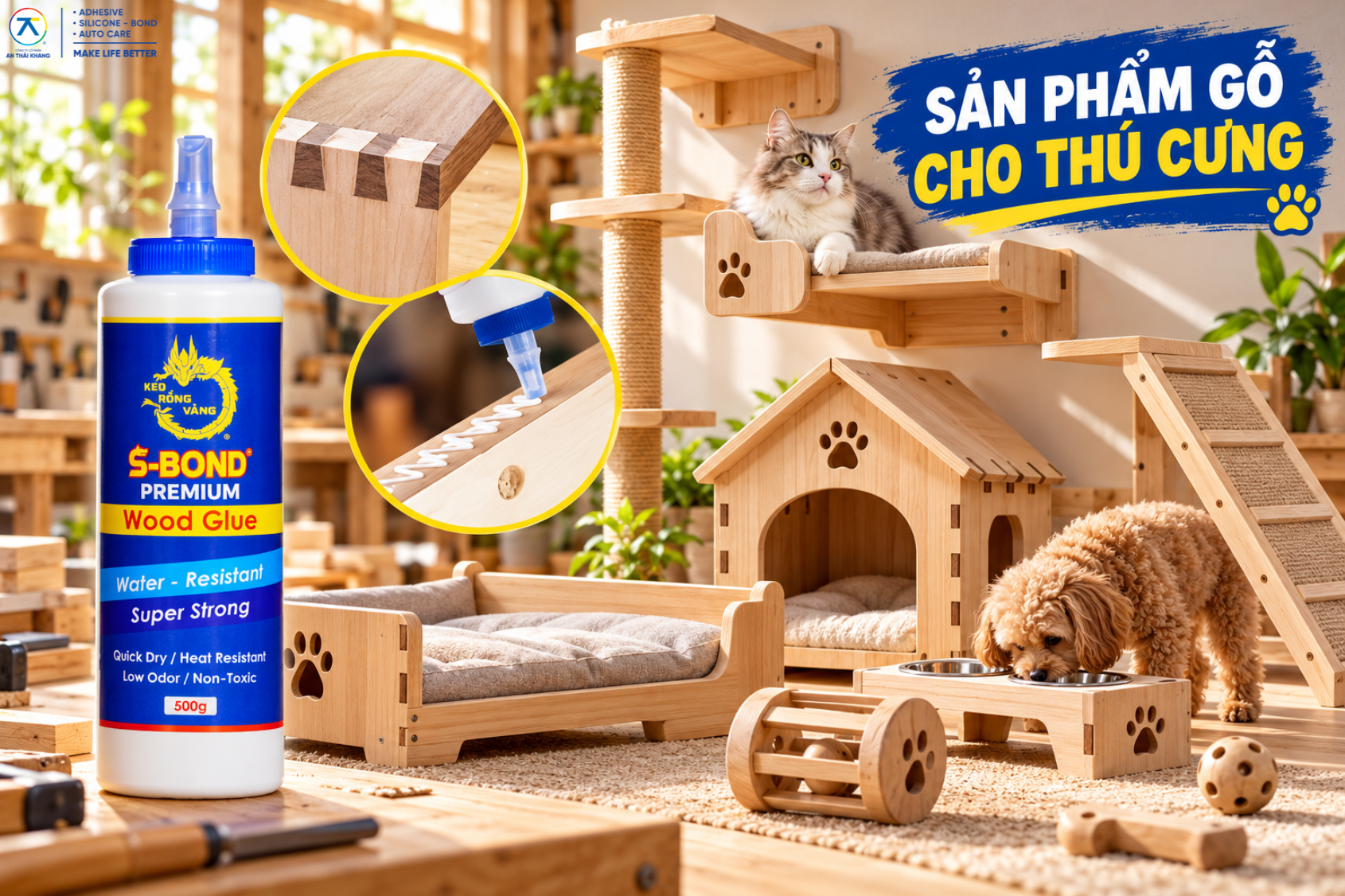
One advantage of wood is its versatility, allowing it to be shaped and adapted to various designs.
In woodworking, components can be cut to specific dimensions and then assembled into different products according to their intended uses.
Common wooden pet products include pet houses, beds, climbing platforms, resting shelves, mobility steps, feeding bowl stands, and certain types of interactive toys.
Some designs incorporate plywood or other suitable wood-based materials to create structures that are both sturdy and easy to finish.
What these products have in common is the presence of numerous small components that require precise assembly. Therefore, the quality of each joint has a noticeable impact on the alignment and aesthetic appearance of the finished product.
3. Applications of S-BOND Premium Wood Glue in Wooden Pet Product Manufacturing
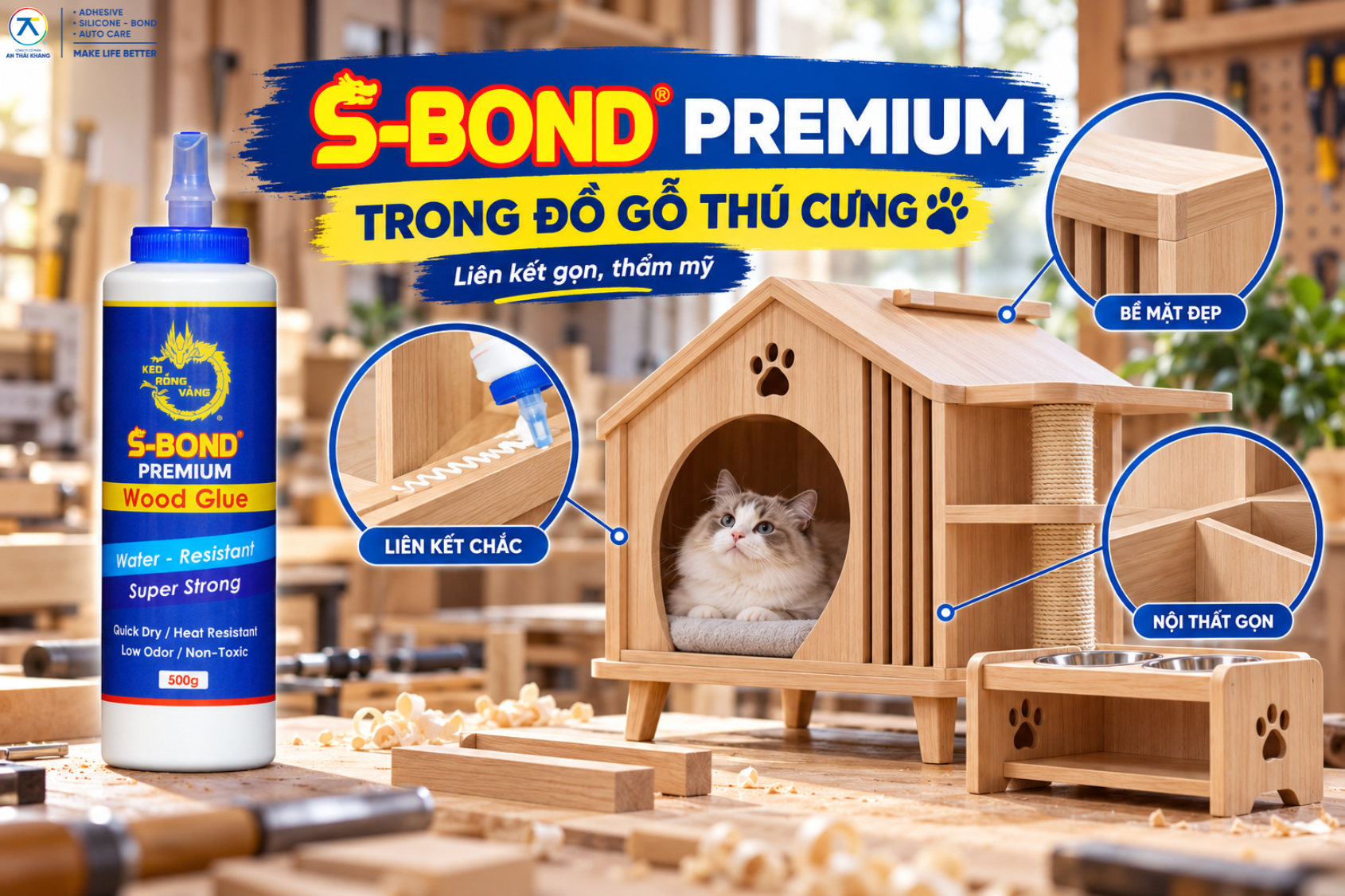
When manufacturing wooden pet products, glue is often used in areas where two wooden surfaces need to be joined without leaving too many visible nails or screws.
S-BOND Premium Wood Glue can be incorporated into various assembly stages, including joining side panels, bottom panels, partitions, trim strips, and certain decorative components.
When the adhesive remains within the joints, the exterior surfaces can maintain a cleaner and more seamless appearance. This is particularly suitable for pet products placed in living rooms, bedrooms, or other spaces where aesthetics are important.
However, for load-bearing components such as legs, support posts, or multi-level structures, manufacturers must still design appropriate wood joints and reinforcement methods.
4. Why Are Joints Important for Wooden Pet Products?
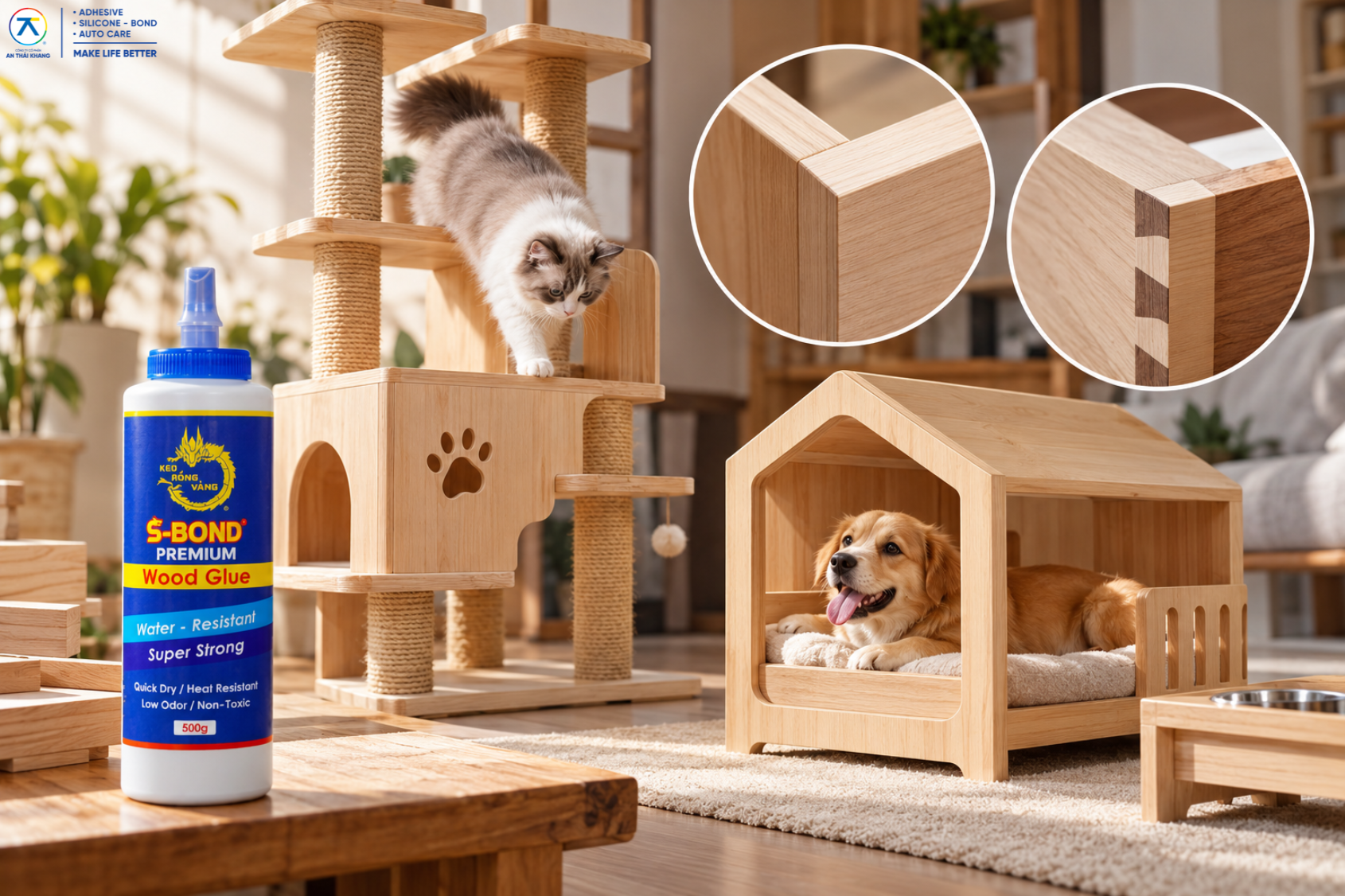
Products designed for cats and dogs are often subjected to continuous movement and physical impact during use.
Cats may climb, jump, or rest on different levels, while dogs may step onto platforms, use beds, or place pressure directly on the product's frame. Therefore, the components must be designed and assembled with sufficient stability from the beginning.
A product may have an attractive design, but misaligned joints, uneven edges, or displaced components can affect both its functionality and appearance.
These requirements become even more important for products designed to resemble pieces of furniture.
Neat joints make surface finishing easier, allowing for more convenient sanding, painting, and the application of decorative details.
This is also why manufacturers should pay close attention to every stage, from material cutting to dry fitting before applying adhesive.
5. How to Use S-BOND Premium Wood Glue in Wooden Pet Product Manufacturing
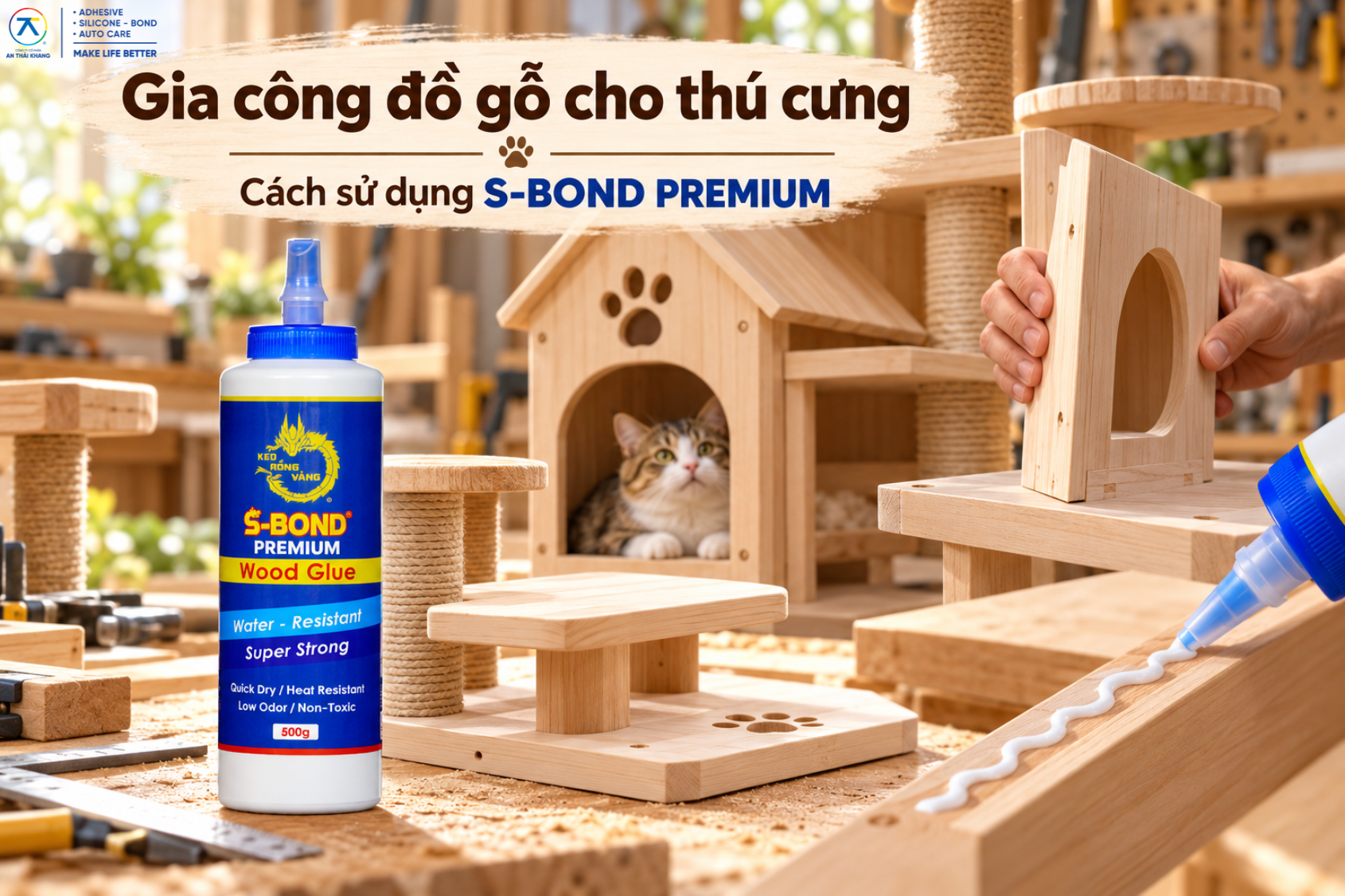
To achieve stable adhesive bonds, surfaces must be carefully prepared before application.
5.1. Inspecting and Dry Fitting Components Before Gluing
Components should be checked for accurate dimensions and dry-fitted before adhesive application.
The contact surfaces should be relatively flat, free from sawdust, and clear of contaminants that could interfere with bonding.
For products featuring multiple levels or numerous corners, such as cat houses, climbing platforms, or resting structures, dry fitting helps identify poorly fitting components before glue is applied.
This simple step helps minimize repeated adjustments during the finishing process.
5.2. Controlling Glue Application and Bonding Positions
S-BOND Premium Wood Glue should be distributed appropriately across the contact surfaces between wooden components.
Excessive amounts of glue should be avoided, as surplus adhesive may squeeze out along the edges, increasing cleaning requirements and affecting subsequent surface finishing.
After joining the components, they should be held in their correct positions to minimize misalignment.
For products with multiple corners, the overall shape and alignment should be checked again before proceeding to the next stage.
Small handicraft products often require a high level of precision in every detail. Therefore, carefully controlling the gluing process helps achieve a neater appearance after finishing.
6. Conclusion
Wooden pet products are becoming increasingly diverse in both design and functionality, ranging from pet houses and climbing platforms to beds, feeding bowl stands, and various accessories.
For these products, quality depends not only on their design but also on the precision of each component and joint.
S-BOND Premium Wood Glue can support the bonding of suitable wooden components, particularly in areas where a neat surface finish is required and visible mechanical fasteners should be minimized.
When materials are accurately cut to size, surfaces are carefully prepared, and adhesive is applied appropriately, wooden pet products are better positioned to achieve a high-quality finish in terms of both appearance and functionality.
AN THAI KHANG JSC
- • Fanpage: An Thái Khang JSC
- • Hotline: 0764 644 245
- • Email: support@anthaikhang.com
- • Website: https://anthaikhang.com/