
Polyurethane Sealant and Silicone Sealant: Comparison and How to Choose
Polyurethane sealant and silicone sealant are both used for bonding, joint sealing, waterproofing, and finishing work in construction. This detailed comparison of the two sealant types will help you choose the right one for each specific application.
Polyurethane Sealant and Silicone Sealant: Differences, Comparison, and How to Choose the Right One
In construction, home repair, door installation, joint sealing, waterproofing, and interior finishing, polyurethane sealant and silicone sealant are two widely used types of sealants. Both can be used for bonding, sealing, and filling gaps, but they should not be used interchangeably without proper consideration.
Polyurethane sealant, also known as PU sealant, is typically strong in gap filling, adhesion, sound insulation, thermal insulation, and technical applications. Meanwhile, silicone sealant stands out for its water resistance, flexibility, neat finish, and suitability for finishing work such as aluminum and glass systems, bathrooms, kitchens, and sinks.
Therefore, to choose the right product, users need to clearly understand which type of sealant is suitable for which surface, environment, and application purpose. The article below will help you distinguish between polyurethane sealant and silicone sealant, while also providing a clear comparison table to make selection easier.
1. What Is Polyurethane Sealant?
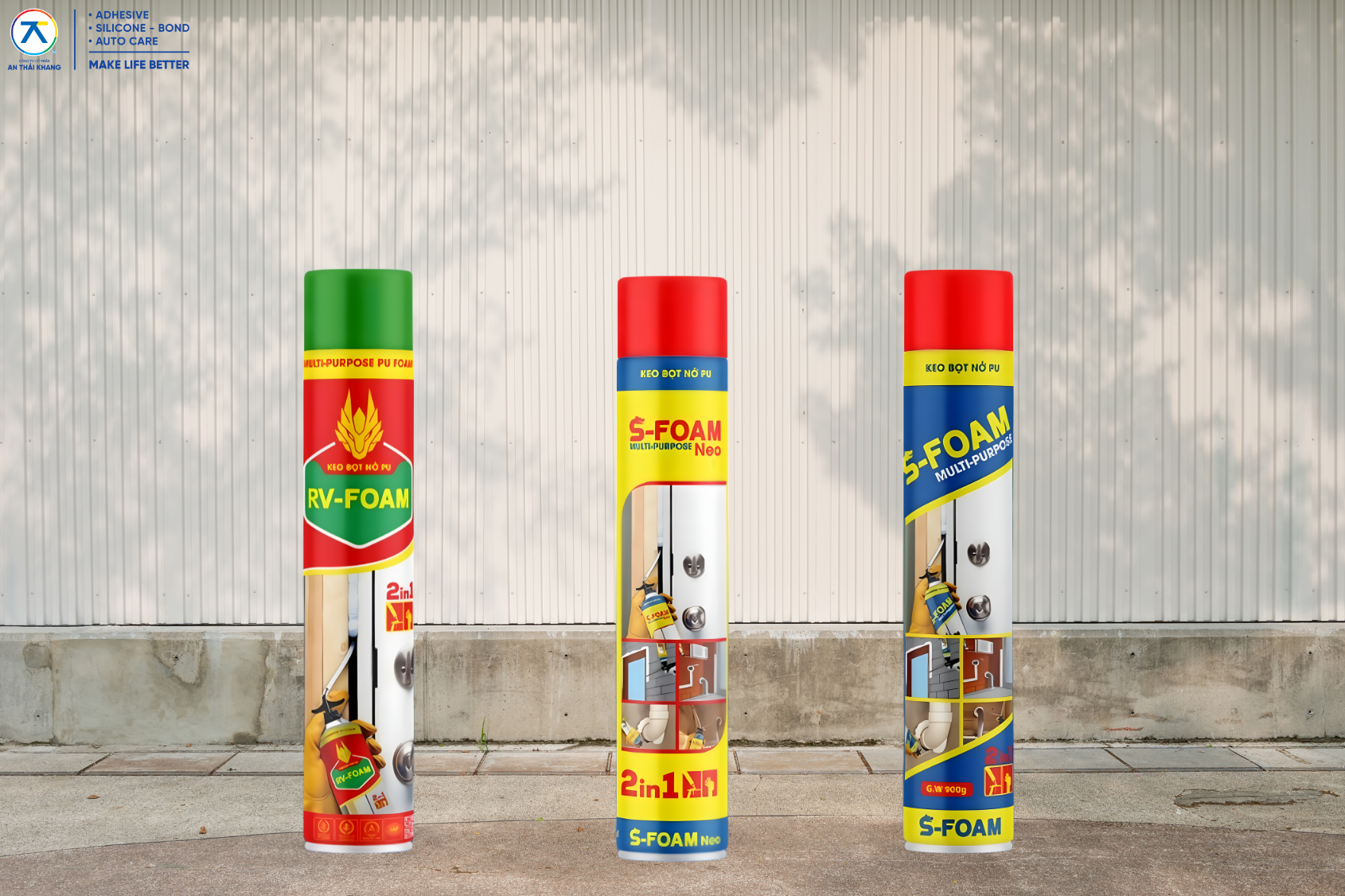
Polyurethane sealant is a PU-based sealant commonly used for bonding, sealing, filling gaps, fixing materials, or supporting sound and thermal insulation in construction. In the market, it is often referred to simply as PU sealant.
1.1 Characteristics of Polyurethane Sealant
Polyurethane sealant has good adhesion on many construction surfaces. With expanding PU foam sealants, once dispensed, the foam expands automatically to fill gaps, voids, or hollow spaces inside a structure.
This is a major difference compared with silicone sealant. Silicone sealant mainly creates a sealing bead on the surface, while expanding polyurethane foam can fill the internal volume of a gap.
1.2 Common Types of PU Sealant
At An Thai Khang, the PU sealant category includes products such as RV-FOAM Expanding Foam, S-FOAM 900g Expanding Foam, and S-FOAM NEO 750ml Expanding Foam. These products are all one-component polyurethane foam sealants used for filling gaps, sealing, sound insulation, thermal insulation, and supporting material fixation in construction.
PU Sealant Product | Key Characteristics | Suitable Applications |
|---|---|---|
RV-FOAM | One-component polyurethane foam, fast expansion, strong adhesion | Door gaps, wall gaps, pipe penetrations, cold rooms, machine rooms |
S-FOAM 900g | Multi-purpose PU foam, expands automatically when exposed to air | Construction works, interiors, windows, water pipes, wall partitions |
S-FOAM NEO 750ml | Fast-expanding PU foam, quick drying, good adhesion | Gaps, voids, vibration reduction, sound insulation, thermal insulation |
1.3 When Is Polyurethane Sealant Most Effective?
Polyurethane sealant is most suitable for areas with large gaps, deep joints, hollow spaces, or requirements for improved airtightness. Examples include gaps around door frames, joints between walls and roofs, openings around pipes, and areas requiring vibration resistance, sound insulation, or thermal insulation.
However, polyurethane sealant is not the optimal choice for small, exposed sealant lines that require high aesthetics. Those areas are usually better suited to silicone sealant.
2. What Is Silicone Sealant?
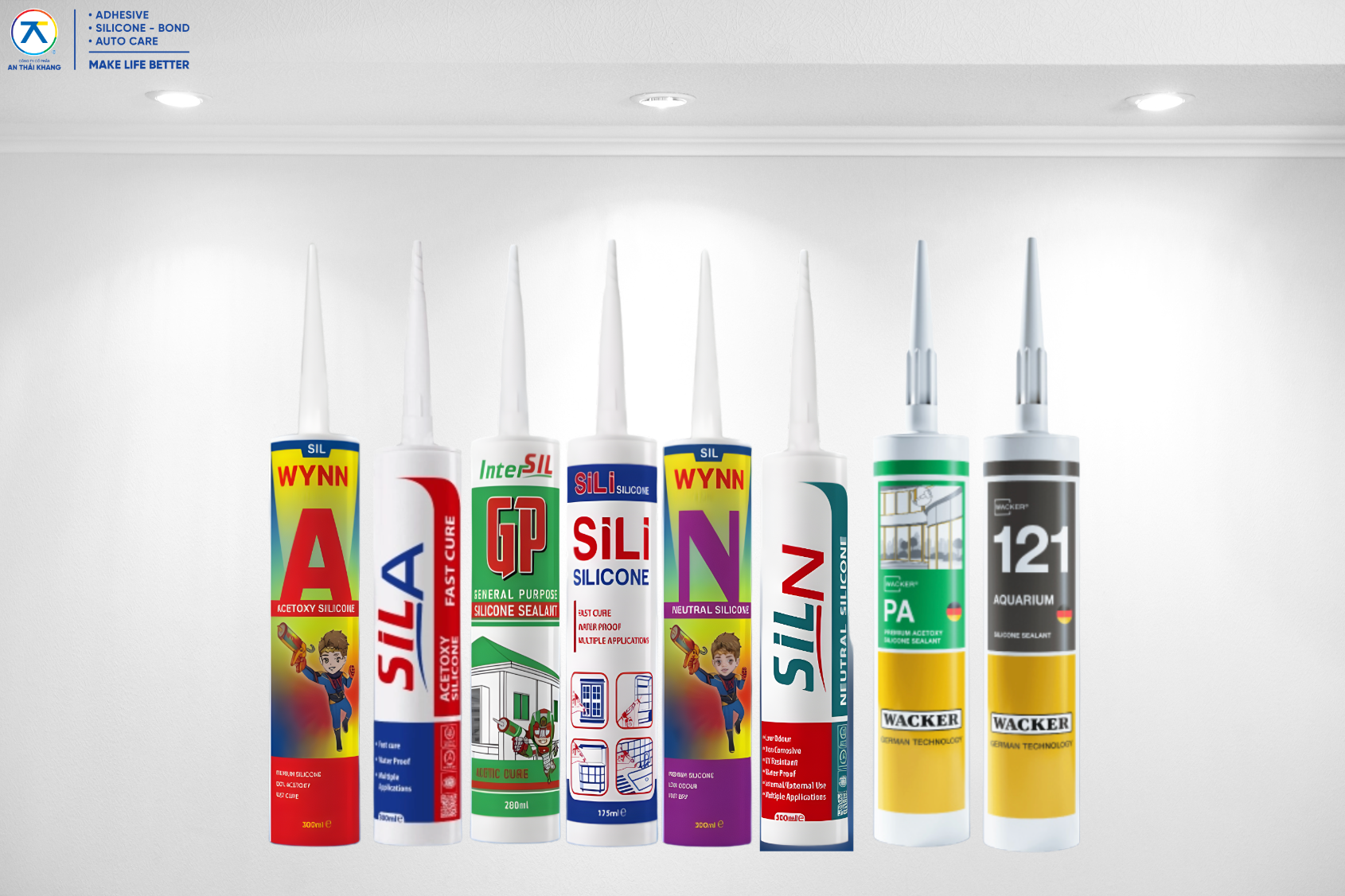
Silicone sealant is an elastic sealing material commonly used in applications that require water resistance, moisture resistance, and a clean finish. It is widely used in aluminum and glass installation, bathrooms, kitchens, washbasins, sinks, aquariums, and interior finishing areas.
2.1 Characteristics of Silicone Sealant
Silicone sealant usually comes in paste form and is applied with a caulking gun to create a sealant bead along joints. After curing, it forms an elastic layer that helps prevent water, dust, and moisture from entering.
Unlike expanding polyurethane foam, silicone sealant is not used to fill large hollow gaps. Its strengths are water resistance, good adhesion on finished surfaces, and the ability to create a neat, smooth, easy-to-finish sealant line.
2.2 Common Groups of Silicone Sealants
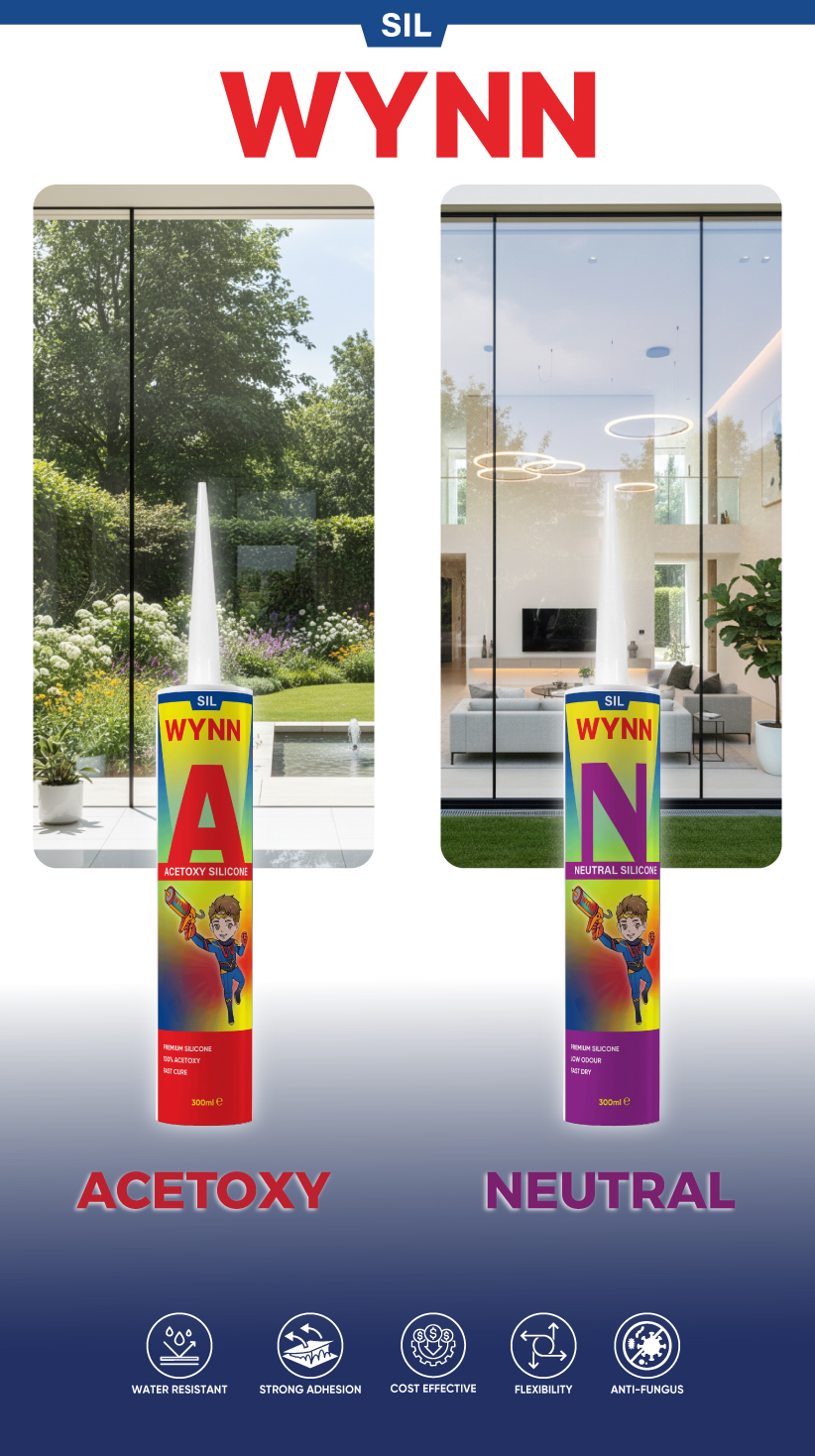
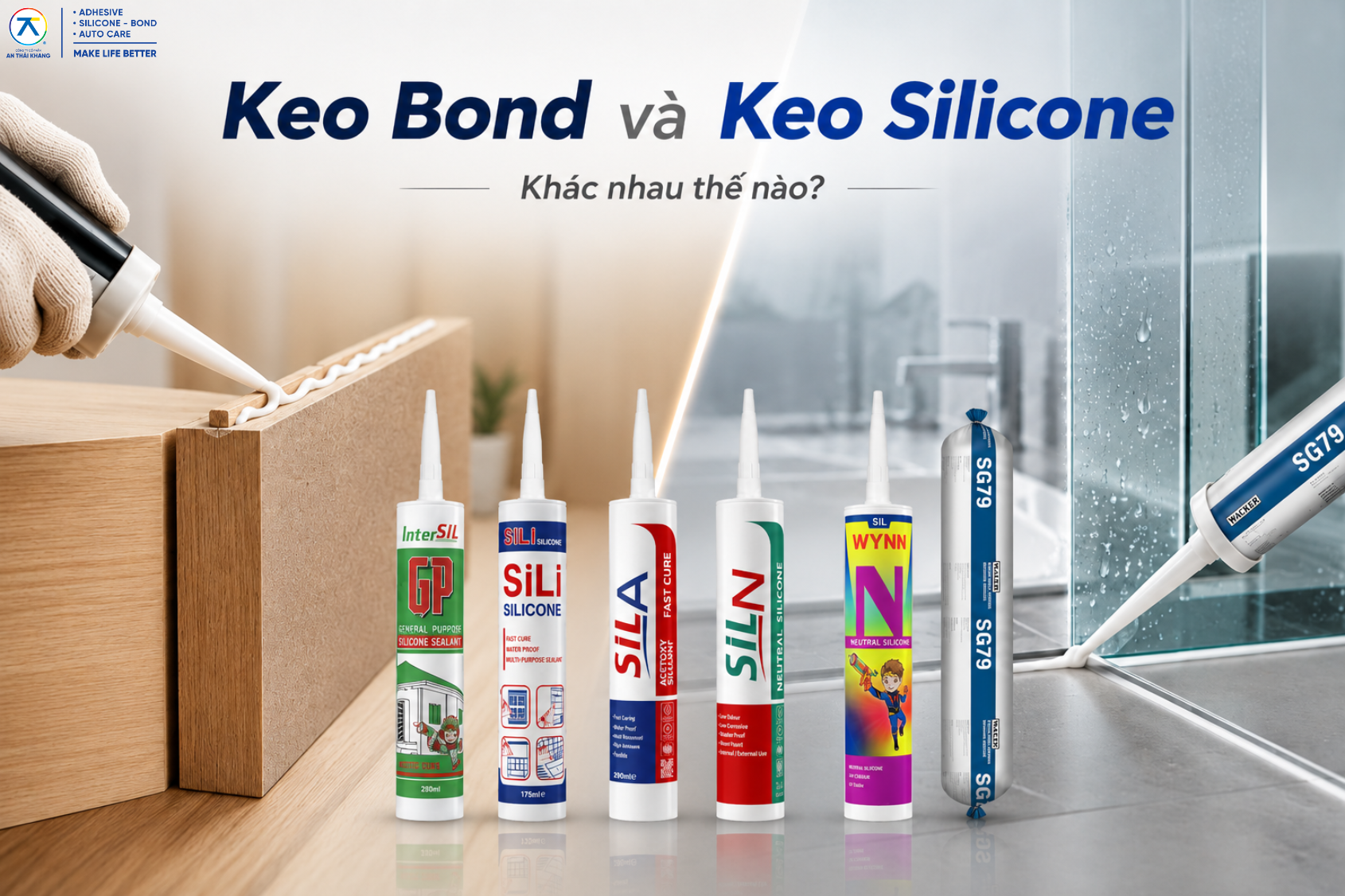
The silicone sealant category at An Thai Khang includes acid silicone sealants, neutral silicone sealants, and Wacker Silicone products. Some product lines in this category include Silicone GP, Silicone SILI, Silicone SIL A, Silicone WYNN A, Silicone SIL N, Silicone WYNN N, and Wacker Silicone products.
Silicone Sealant Group | General Characteristics | Suitable Applications |
|---|---|---|
Acid silicone | Fast curing, commonly performs well on glass | Glass, aquariums, glass cabinets, glass doors |
Neutral silicone | Less corrosive, suitable for a wider range of surfaces | Aluminum and glass systems, metal, curtain walls, outdoor applications |
Wacker Silicone | Silicone products from the Wacker brand | Applications requiring high quality and stable performance |
2.3 When Is Silicone Sealant More Suitable?
Silicone sealant is more suitable when you need to seal small joints, exposed sealant lines, or areas that are frequently exposed to water. Examples include washbasin edges, sinks, bathtubs, shower glass partitions, aluminum-glass joints, tile edges, and areas where a clean sealant line is required.
3. Comparison Table: Polyurethane Sealant vs. Silicone Sealant
To choose the right sealant more easily, the two types can be compared using the criteria below:
Criteria | Polyurethane Sealant / PU Sealant | Silicone Sealant |
|---|---|---|
Strengths | Gap filling, sound insulation, thermal insulation | Water resistance, aesthetics |
Suitable gap type | Large gaps, deep joints | Small gaps, surface joints |
Suitable surfaces | Walls, doors, roofs, water pipes | Glass, aluminum, tiles, washbasins |
Aesthetic level | Medium | High |
Best used when | Filling gaps and fixing materials are required | Water resistance and a neat sealant line are required |
From the table above, it is clear that polyurethane sealant is suitable for technical treatment, while silicone sealant is suitable for surface finishing and waterproofing. This is the most important point to consider when making a selection.
4. Detailed Comparison of Polyurethane Sealant and Silicone Sealant by Application Need
Each construction project has different requirements. Therefore, instead of asking which sealant is better, you should ask which sealant is more suitable for the specific application.
4.1 Gap-Filling Ability
If the gap is large, deep, or has an internal void, polyurethane sealant is the more suitable choice. In its expanding foam form, the sealant can expand to fill empty spaces, helping improve airtightness in the application area.
Silicone sealant should not be used for excessively large gaps. If used incorrectly, it may consume more material, be difficult to apply evenly, take longer to cure, and fail to provide the desired filling effect.
4.2 Water Resistance
For areas frequently exposed to water, such as bathrooms, kitchens, washbasins, sinks, and glass partitions, silicone sealant is usually more suitable. After curing, silicone sealant forms an elastic bead that seals small joints and helps prevent water from seeping through connections.
Polyurethane sealant can also support sealing, but it should not be used arbitrarily on submerged surfaces or in areas that require an exposed, attractive, easy-to-clean waterproof sealant line.
4.3 Aesthetics
If a clean, neat, smooth, and visible sealant line is required, silicone sealant should be prioritized. Silicone sealant is easy to tool and smooth, making it suitable for finishing areas such as glass, ceramic tiles, washbasins, sinks, and aluminum frames.
Expanding polyurethane foam is more functional in nature. After the foam expands and cures, excess material must be cut away to finish the surface. Therefore, PU foam is not suitable for thin, exposed sealant lines that require high aesthetic quality.
4.4 Sound and Thermal Insulation
In this criterion, polyurethane sealant has a clearer advantage, especially expanding PU foam. Thanks to its ability to fill voids, PU sealant can help reduce noise, vibration, and heat loss in areas such as door gaps, cold rooms, machine rooms, and recording rooms.
Silicone sealant can help seal small joints, but it is not a specialized material for filling voids or creating a sound-insulating or thermal-insulating layer.
5. When Should Polyurethane Sealant Be Used?
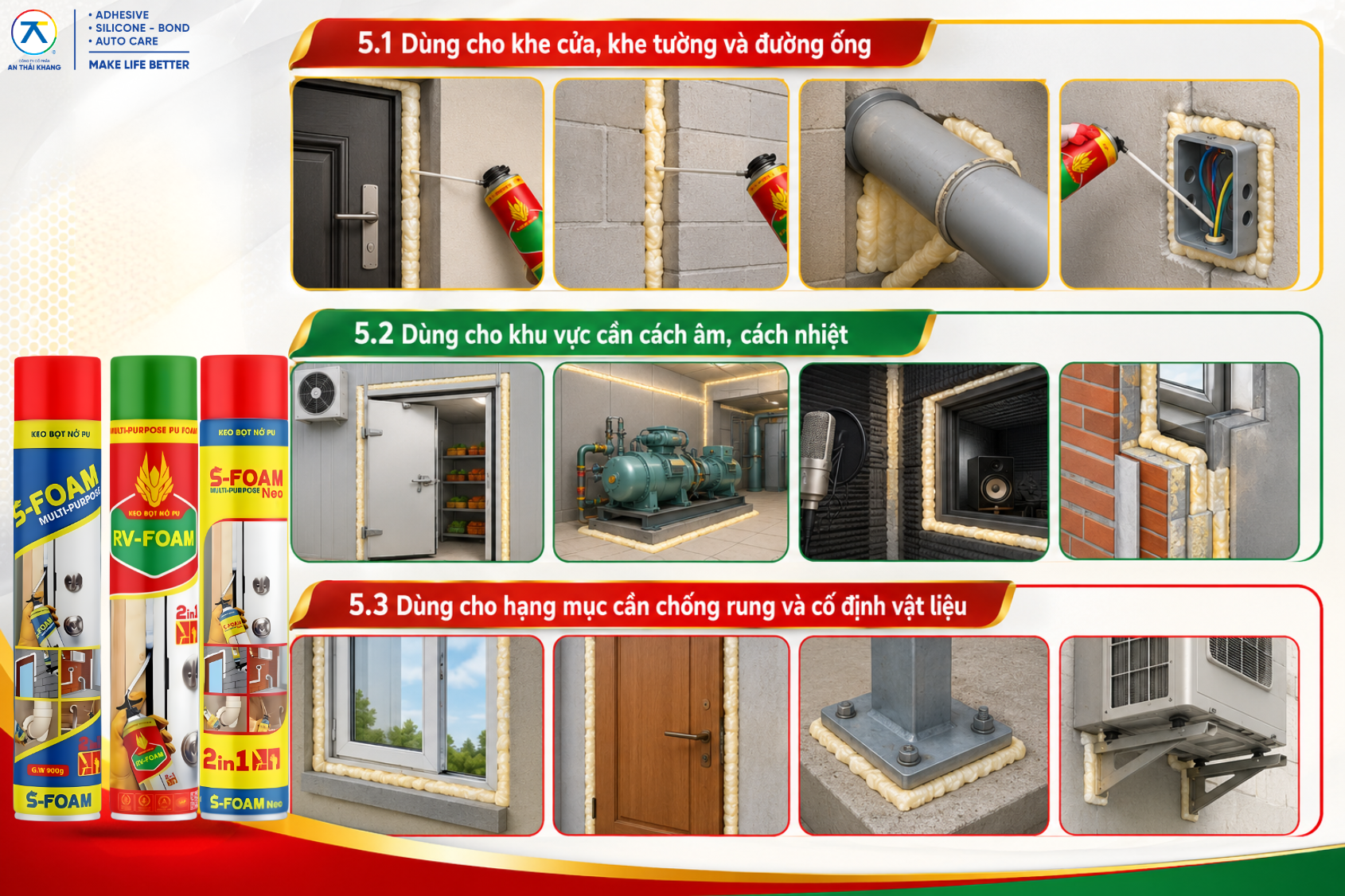
Polyurethane sealant should not be used everywhere simply because it has good adhesion and gap-filling ability. This type of sealant should be used properly in technical applications, large gaps, or areas that need improved airtightness.
5.1 For Door Gaps, Wall Gaps, and Pipe Penetrations
Polyurethane sealant is suitable for treating gaps around door frames, wall joints, joints between roofs and walls, empty spaces around pipes, or openings around electrical outlets. These areas often contain internal voids and require a material with strong filling ability.
5.2 For Areas Requiring Sound and Thermal Insulation
For cold rooms, machine rooms, recording rooms, or areas that need to reduce noise and heat loss, expanding polyurethane foam is a worthwhile option. This type of sealant helps fill gaps, increase airtightness, and support the reduction of sound and heat transmission.
5.3 For Applications Requiring Vibration Reduction and Material Fixing
In window installation, door installation, or certain construction details, polyurethane sealant can help reduce vibration and support material fixation. However, it must be applied in the correct amount. Do not overfill the gap, as the foam will continue to expand after spraying.
6. When Should Silicone Sealant Be Used?
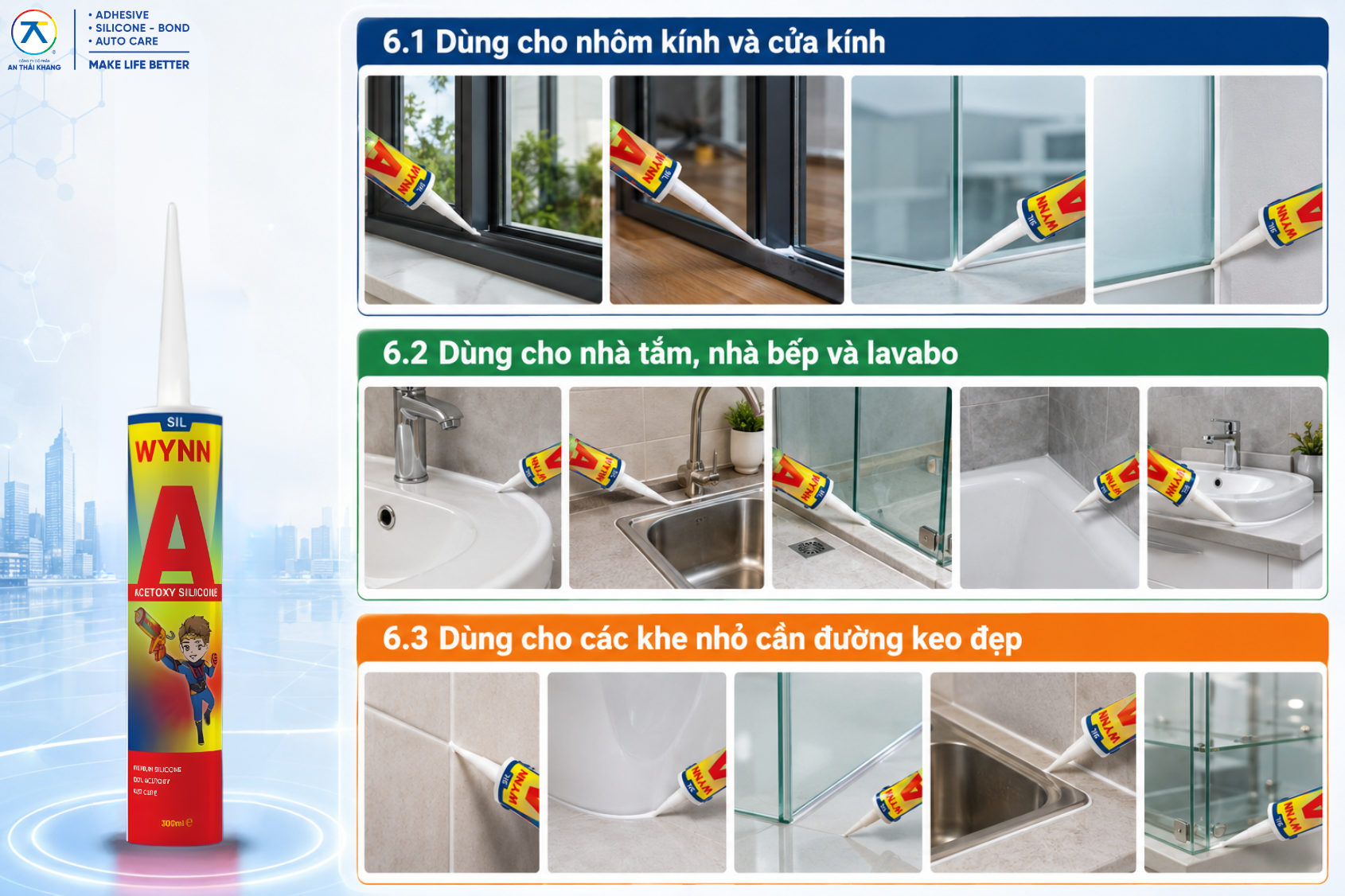
Silicone sealant should be prioritized in finishing applications where water resistance, elasticity, and surface aesthetics are required.
6.1 For Aluminum and Glass Systems and Glass Doors
In aluminum and glass installation, silicone sealant is used to seal joints between glass and aluminum frames, between glass panels, or between glass and walls. For metal surfaces, powder-coated aluminum, or curtain walls, neutral silicone sealant should be prioritized to reduce the risk of corrosion.
6.2 For Bathrooms, Kitchens, and Washbasins
Bathrooms, kitchens, washbasins, sinks, and bathtubs are areas that frequently require water resistance. Silicone sealant is suitable because it can create an elastic sealant bead, adhere closely to material edges, and be easier to clean after finishing.
6.3 For Small Joints That Require a Clean Finish
For small joints in ceramic tiles, porcelain, glass, sinks, glass partitions, or glass cabinets, silicone sealant provides better aesthetic results. These are areas where expanding PU foam should not be used, because expanding foam is difficult to form into a thin and neat sealant line.
7. How to Choose the Right PU Sealant and Silicone Sealant for Each Situation
To choose correctly, you should consider three factors: gap size, usage environment, and aesthetic requirements.
7.1 Choose Based on Gap Size
If the gap is large, deep, or contains a void, polyurethane sealant should be selected. This type of sealant has better expansion and filling ability, especially for areas around door frames, walls, roofs, pipes, and cold rooms.
If the gap is small, located at a surface joint, or requires a thin sealant line, silicone sealant should be selected. It is more suitable for aluminum and glass systems, washbasins, sinks, bathrooms, and kitchens.
7.2 Choose Based on the Usage Environment
For environments requiring sound insulation, thermal insulation, or vibration resistance, polyurethane sealant is more suitable. For environments that are frequently wet, require water resistance, and need to be easy to clean, silicone sealant is the more reasonable choice.
8. Conclusion
Polyurethane sealant and silicone sealant are both important materials in construction, but each has a different role. Polyurethane sealant is suitable for large gaps, hollow joints, areas requiring filling, sound insulation, thermal insulation, or vibration resistance. Meanwhile, silicone sealant is more suitable for small joints, waterproofing areas, aluminum and glass systems, bathrooms, kitchens, and locations requiring a clean sealant line.
The selection principle is clear: choose polyurethane sealant when you need gap filling and technical treatment; choose silicone sealant when you need water resistance and aesthetic finishing. Choosing the right sealant from the beginning will help the project become more durable, more airtight, and less likely to require repairs later.
AN THAI KHANG JSC
- • Fanpage: An Thái Khang JSC
- • Hotline: 0764 644 245
- • Email: support@anthaikhang.com
- • Website: https://anthaikhang.com/