
MIRA Spray Paint
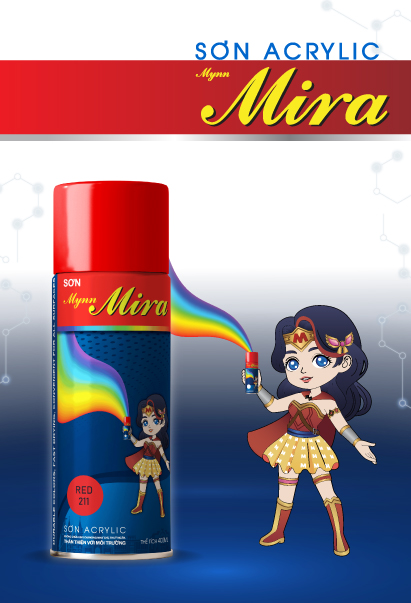
MIRA Spray Paint 400ml features an acrylic polymer formula with fast drying and good adhesion to galvanized steel, wood and other compatible surfaces.
Product features
Features
Single-component, solvent-based spray paint that cures by oxidation, made with high-quality acrylic polymer resin, free of lead and mercury
Applications
For decorative and protective coating on metal, wood, plastic, and various surfaces.
Color
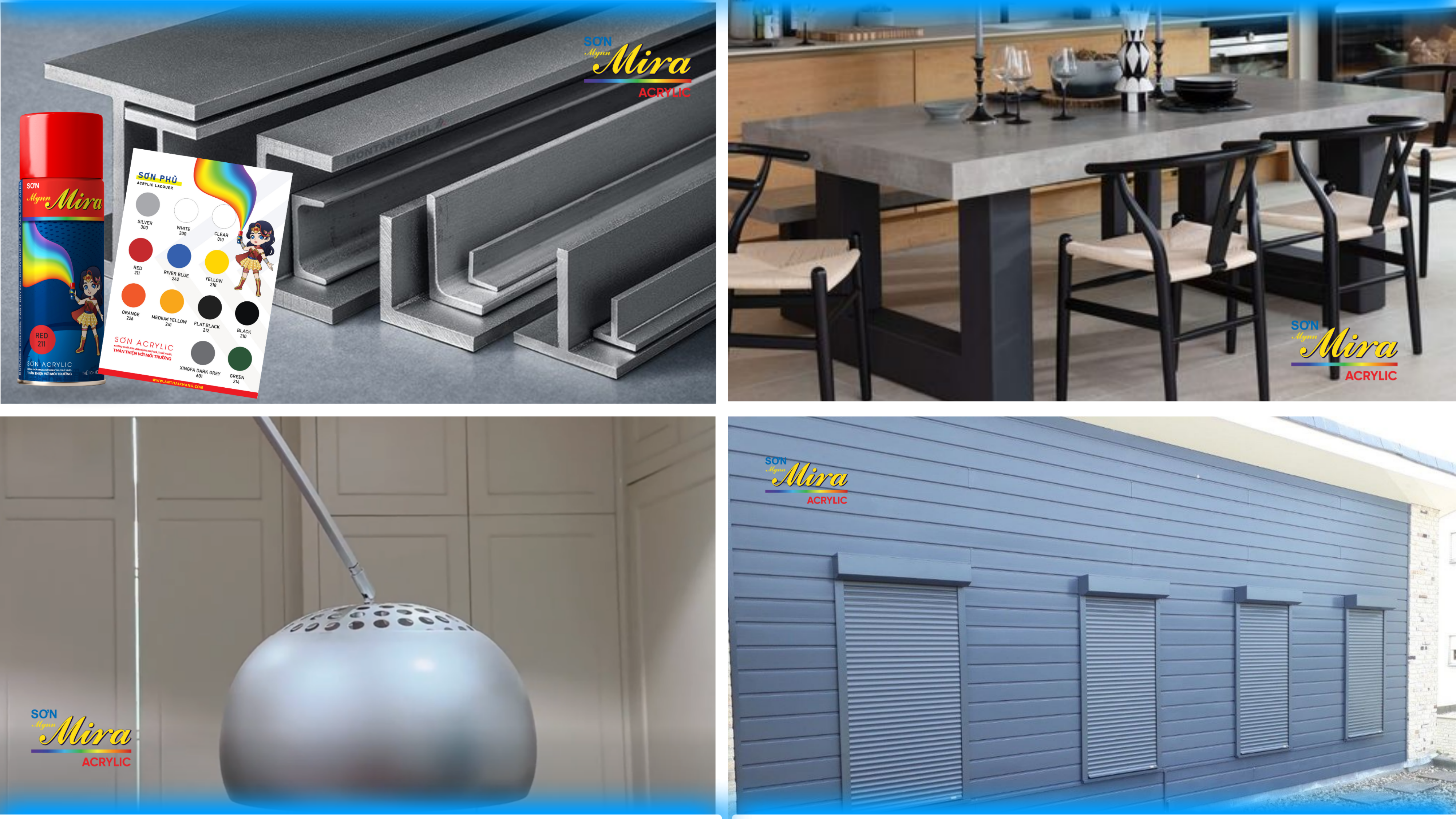
Available in the following MIRA spray paint color palette.
Packaging
400 ml
Safety note
Do not apply in humid conditions; keep away from heat and open flames.
MIRA Spray Paint is a one-component (1K), solvent-based aerosol paint formulated with acrylic polymer resin and designed to dry through oxidation. It provides good adhesion to various substrates, particularly galvanized steel, forming a hard, smooth, uniformly colored coating with fast-drying properties.
Chemical Base: Acrylic polymer resin, one-component (1K) solvent-based coating system, with an oxidation drying mechanism.
Compatible Substrates: Iron, steel, galvanized steel, wood, plastic, concrete, composites, ceramics, and other suitable materials subject to compatibility testing.
1. Key Features of MIRA Spray Paint
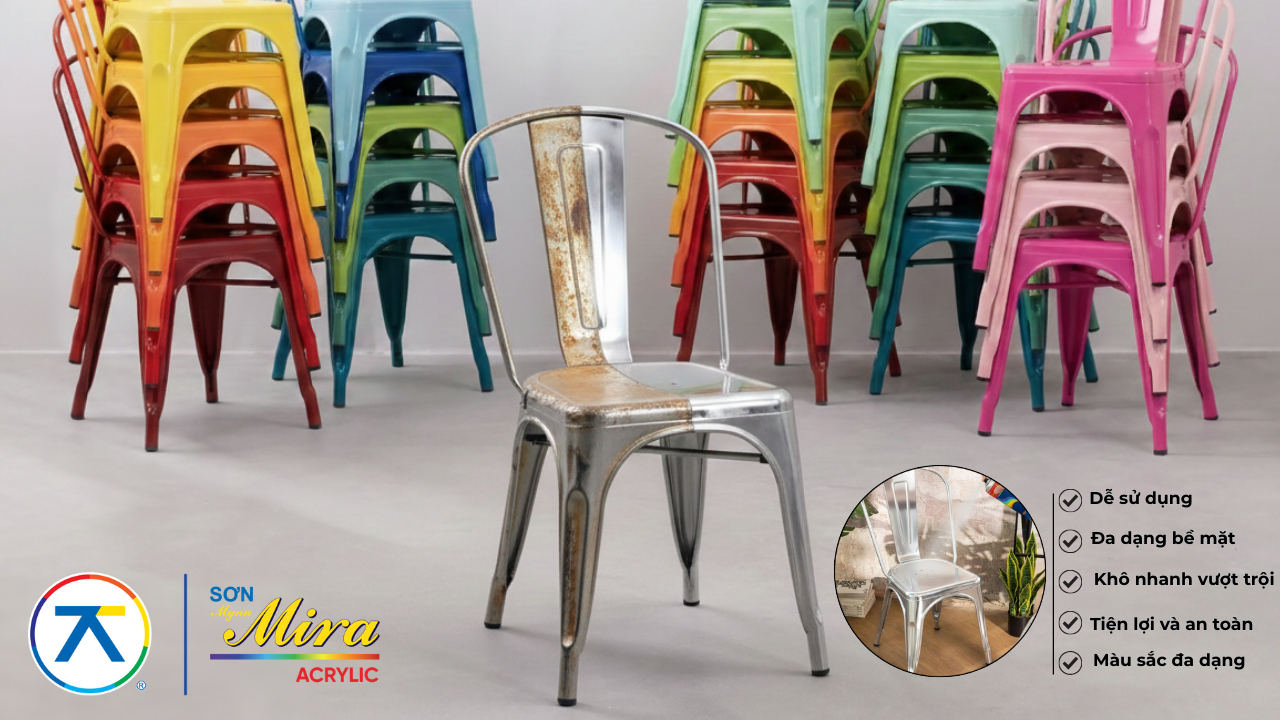
MIRA Spray Paint is suitable for coating, repairing, touch-up painting, and decorative applications on various surfaces. Its main features include:
Good Adhesion: Adheres to various substrates, particularly galvanized steel, when the surface has been properly prepared.
Hard Paint Film: Achieves a pencil hardness rating of ≥HB according to the TDS, providing suitable coating hardness for recommended applications.
Fast Drying: At a surface temperature of 30°C, the coating becomes surface dry within approximately 5–7 minutes under specified test conditions.
High Gloss and Coverage: Produces a uniform, smooth coating with good color retention. Glossy or matte finishes are available depending on the color code.
Easy Application: The aerosol format is convenient for surface repairs, touch-up painting, and decorative work.
Direct Application: Can be applied without a primer on compatible surfaces that have been properly prepared.
Lead- and Mercury-Free: According to the information published in the product's Technical Data Sheet.
2. Packaging and Color Options of MIRA Spray Paint
MIRA Spray Paint is available in 400ml aerosol cans, packed 12 cans per carton. The product offers various color options with glossy or matte finishes according to the manufacturer's published color chart.
Specifications | Details |
Product Name | MIRA Spray Paint |
Product Type | One-component solvent-based spray paint |
Volume | 400ml/can |
Packaging | 12 cans/carton |
Colors | According to the product color chart |
Surface Finish | Glossy or matte, depending on the color code |
Note: Color codes should be checked against the official color chart before product selection. Actual color appearance may vary depending on lighting conditions, substrate characteristics, and application methods.
3. Technical Specifications of MIRA Spray Paint
3.1. Basic Technical Specifications
Technical Properties | Values |
Product Type | One-component (1K) solvent-based paint |
Main Resin Component | Acrylic Polymer |
Drying Mechanism | Oxidation drying |
Paint Film Appearance | Uniform color and smooth finish |
Gloss Level | Glossy/matte, according to the color chart |
Dry Film Thickness (DFT) | 25–35 µm |
Wet Film Thickness (WFT) | 70–90 µm |
Theoretical Coverage | 2–3 m² per 400ml can |
Basic technical properties are measured at 25°C and 60% relative humidity (RH), according to the product's TDS. Theoretical coverage may vary depending on substrate characteristics, coating thickness, and paint loss during spraying.
3.2. Drying Time of MIRA Spray Paint at Different Surface Temperatures
Drying Stage | 10°C | 20°C | 30°C | 40°C |
Surface Dry | 15–20 minutes | 10–15 minutes | 5–7 minutes | 2–5 minutes |
Fully Dry | After 120 minutes | 90–120 minutes | 60–90 minutes | 60 minutes |
Hard Dry | After 24 hours | 16–24 hours | 16 hours | 12–16 hours |
Drying times are determined at a dry film thickness of approximately 30 µm and an ambient relative humidity of 60–70%.
Note: Surface drying does not mean the coating has reached its final hardness. Users should consider actual application conditions and the condition of the coating before putting painted items into service.
4. Applications of MIRA Spray Paint
MIRA Spray Paint is used for coating, refinishing, touch-up painting, and decorative applications on various materials in household and construction projects.
4.1. Coating Iron, Steel, and Galvanized Steel
The product is suitable for iron, steel, and galvanized steel items such as doors, gates, metal furniture, and railings.
For galvanized steel, dirt and zinc salts must be removed, and the surface should be properly roughened before painting. Appropriate surface preparation helps achieve adequate coating adhesion.
4.2. Touch-Up Painting for Machinery, Equipment, and Metal Components
MIRA Spray Paint is used for touch-up painting on machinery, equipment, welded joints, and metal connections.
The product supports surface finishing and protection of areas requiring repair within its recommended applications.
For components requiring specialized corrosion protection or operating in harsh environments, the suitability of the coating system should be evaluated before use.
4.3. Decorative Painting on Wood, Plastic, and Household Items
MIRA Spray Paint can be applied to certain compatible wood, plastic, and composite surfaces, as well as decorative household items.
The TDS also lists applications on materials such as fabric, leather, nylon, and paper.
For plastics and other solvent-sensitive materials, conduct a small-area test before full application to evaluate compatibility and potential effects on the surface.
4.4. Coating Concrete, Ceramics, and Decorative Objects
The product can be used on plant pots, flower planters, concrete posts, relief sculptures, decorative moldings, and certain ceramic objects.
Before painting, clean the surface, remove dust and contaminants, and ensure the substrate is dry.
For highly absorbent surfaces or materials with existing protective coatings, adhesion testing is recommended before full application.
4.5. Maintenance Painting for Construction and Infrastructure Components
According to the TDS, MIRA Spray Paint may also be used on signposts, railings, and road safety barriers.
For projects with specific durability, corrosion resistance, or maintenance requirements, operating conditions should be evaluated and an appropriate coating system selected.
5. How to Apply MIRA Spray Paint in 5 Steps
To achieve a uniform finish and suitable coating adhesion, follow the surface preparation requirements, application conditions, and spraying techniques specified in the TDS.
Step 1: Prepare and Treat the Surface
Before painting, the surface must be clean, dry, and free from dust, grease, and other contaminants.
Aluminum, Iron, Carbon Steel, and Stainless Steel: Clean and roughen the surface manually or mechanically using sandpaper or abrasive cloth.
Steel and Galvanized Steel Sheets: Remove dirt, zinc salts, and other contaminants before cleaning and roughening the surface.
Previously Painted Surfaces: Remove damaged paint using suitable methods such as sandblasting, high-pressure water cleaning, or sanding. Where further surface treatment is required, an intermediate coating may be applied, allowed to dry, and sanded before the final spray application, following the TDS instructions.
Step 2: Check Application Conditions
According to the TDS, the recommended application conditions are:
Ambient Temperature: 5–35°C.
Relative Humidity: 30–70%.
Application Environment: Dry weather conditions or a suitably ventilated indoor area.
Do not apply the paint when the surface is damp or has standing water.
Step 3: Shake the Aerosol Can Thoroughly
Shake the MIRA Spray Paint can thoroughly for approximately 2–3 minutes before use.
The movement of the mixing ball should be noticeable inside the can to ensure the paint is properly mixed.
When the remaining paint volume decreases and spray pressure weakens, shake the can again for approximately 1–2 minutes before continuing application.
Step 4: Spray the Paint onto the Surface
Remove the cap and direct the spray nozzle toward the surface to be coated.
Maintain a spraying distance of approximately 20–30 cm.
Apply two crosswise passes in a crisscross pattern, following the TDS instructions.
Move the spray can at a speed of approximately 30–60 cm/second.
Control the amount of paint applied to achieve a uniform coating. Avoid excessive paint buildup in one area.
The recommended dry film thickness according to the TDS is 25–35 µm.
Step 5: Allow the Coating to Dry and Inspect the Finish
After application, place the painted item in a dry, well-ventilated area and protect it from dust for approximately 12–16 hours before use, as recommended in the TDS.
Actual hard-drying time depends on surface temperature, humidity, and coating thickness.
Inspect the coating condition before further assembly or use.
6. Common Application Issues and Troubleshooting
6.1. Poor Paint Adhesion
Check whether the surface contains dust, grease, moisture, or peeling old paint.
For galvanized steel, remove zinc salts and properly roughen the surface before spraying.
6.2. Uneven Coating or Paint Runs
Check the spraying distance, hand movement speed, and amount of paint applied.
According to the TDS, maintain a spraying distance of 20–30 cm and a movement speed of 30–60 cm/second.
Avoid applying excessive paint to the same area.
6.3. Weak or Uneven Spray Output
Check whether the aerosol can has been shaken thoroughly before use.
When the remaining paint volume decreases and spray pressure weakens, the TDS recommends shaking the can again for approximately 1–2 minutes before continuing application.
6.4. Extended Drying Time
Check the surface temperature, ambient humidity, and coating thickness.
According to the TDS, at a surface temperature of 20°C, the coating becomes surface dry within approximately 10–15 minutes. Actual drying time may vary when temperature and application conditions differ.
6.5. Incompatibility with the Substrate
Check the substrate type and existing surface coating before application.
For certain plastics, composite materials, or solvent-sensitive surfaces, perform a small-area test to evaluate compatibility.
The troubleshooting information above provides general technical guidance based on the product's characteristics and application instructions. It does not represent separate defect-testing results published in the TDS.
7. Shelf Life, Storage, and Safety Precautions
7.1. Shelf Life
According to the TDS, MIRA Spray Paint has a shelf life of 36 months from the manufacturing date.
7.2. Storage Instructions
To maintain product quality during storage:
Replace the cap after use.
Store in a cool, dry place.
Keep away from direct sunlight, heat, and ignition sources.
Protect the product from water and conditions that may affect the packaging.
Avoid strong impacts during storage and transportation.
Follow the applicable storage and transportation instructions for aerosol products.
7.3. Safety Precautions
MIRA Spray Paint is a solvent-based aerosol product and presents a flammability hazard. The following precautions should be observed:
Apply in a well-ventilated area with appropriate measures to control solvent vapors and paint mist.
Do not spray near heat sources, sparks, or open flames.
Wear suitable protective gloves, safety goggles, and respiratory protection as specified in the SDS/MSDS.
Avoid inhaling paint vapors and minimize direct contact with skin and eyes.
Do not puncture, burn, or directly heat the aerosol can, even when empty.
Keep out of reach of children.
Collect and dispose of paint waste according to applicable safety and environmental regulations.
7.4. Application Limitations
Although MIRA Spray Paint can be applied to various materials, compatibility should be evaluated before use in the following situations:
Plastic materials or solvent-sensitive surfaces.
Surfaces that have not been properly cleaned or contain grease or excessive moisture.
Equipment operating frequently at high temperatures.
Projects requiring specific corrosion resistance or weathering performance standards.
Items with special safety requirements or surfaces that come into direct contact with food.
The TDS does not provide specific test results for these conditions. Product suitability should not be assumed without appropriate verification.
8. Frequently Asked Questions About MIRA Spray Paint
8.1. Can MIRA Spray Paint Be Applied to Galvanized Steel?
Yes. According to the TDS, MIRA Spray Paint provides good adhesion to galvanized steel.
Before application, remove dirt and zinc salts, and properly roughen the surface to improve coating adhesion.
8.2. How Long Does MIRA Spray Paint Take to Dry?
At a surface temperature of 30°C, MIRA Spray Paint becomes surface dry within approximately 5–7 minutes, fully dry in 60–90 minutes, and hard dry after approximately 16 hours under the specified TDS test conditions.
Actual drying time may vary depending on temperature, humidity, and coating thickness.
8.3. How Much Area Can One 400ml Can of MIRA Spray Paint Cover?
According to the TDS, the theoretical coverage of MIRA Spray Paint is approximately 2–3 m² per 400ml can.
Actual coverage depends on substrate characteristics, coating thickness, and paint loss during spraying.
8.4. Does MIRA Spray Paint Require a Primer?
According to the TDS, MIRA Spray Paint can be applied directly to compatible surfaces without a primer when the substrate has been properly prepared.
For specialized materials or applications with specific coating requirements, compatibility should be verified before use.
8.5. Can MIRA Spray Paint Be Used on Wood and Plastic?
MIRA Spray Paint can be applied to wood and certain compatible plastic surfaces.
However, as the product is solvent-based, a small-area test is recommended before full application to evaluate adhesion and potential effects on the substrate.
Consultation & Support
- • Contact An Thai Khang now for consultation & quotation.
- • We are always ready to support and respond quickly to ensure your confidence in purchasing.