
S-EPOXY Two-Component Adhesive
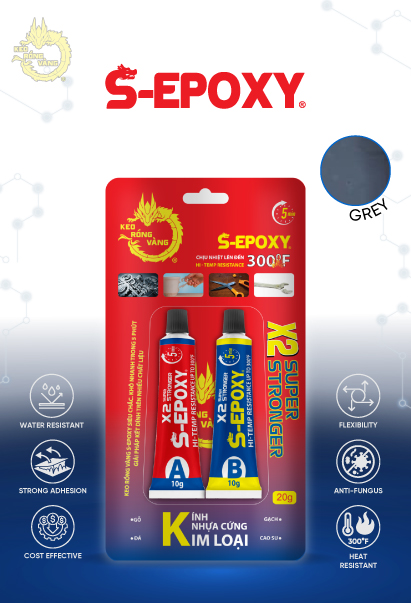
S–Epoxy Adhesive is a two-component metal adhesive designed for superior bonding strength and high mechanical durability.
Product features
Features
Premium two component epoxy adhesive for strong, heat and impact resistant bonds.
Applications
Bonds and repairs a wide range of materials including metal, ceramic, stone, wood, glass, cement, rubber, and hard plastics.
Packaging
2 tubes (Part A + Part B) / 20g or 56g per pack
Note safety
Not suitable for PP or PE materials. Avoid application on wet surfaces or near high heat sources.
S-Epoxy is a two-component epoxy resin adhesive (Parts A and B) designed for bonding and repairing metal components and various other materials. According to the Technical Data Sheet (TDS), the adhesive becomes surface dry in 5 minutes, fully dry in 45 minutes, and reaches a completely hardened state after 3 days.
Chemical Base: Two-component epoxy resin system consisting of Parts A and B, which must be mixed before application.
Compatible Substrates: Metal, wood, ceramics, stone, glass, cement, rubber, and other suitable materials, subject to compatibility testing.
Quality Information: Surface drying time of 5 minutes, complete drying time of 45 minutes, and full hardening after 3 days, according to the TDS. The provided document does not specify numerical values for tensile strength, shear strength, or temperature resistance.
1. Key Features of S-Epoxy Adhesive
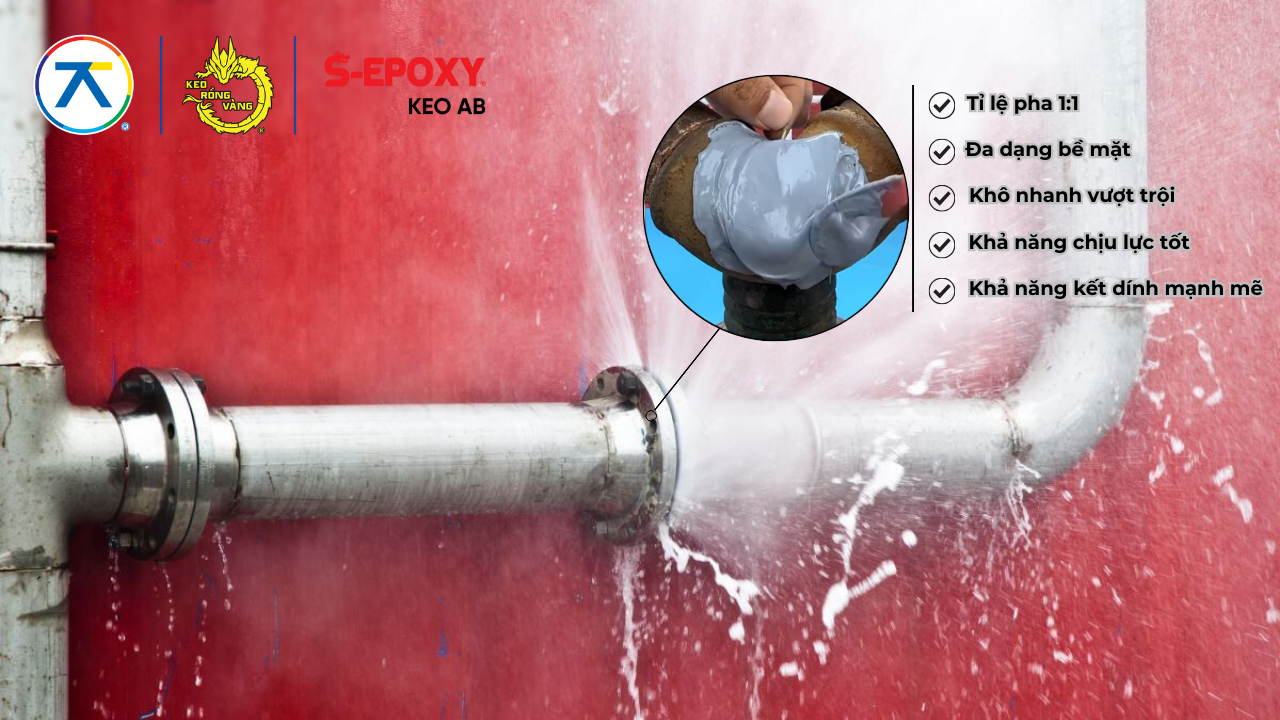
S-Epoxy is designed for bonding, repairing, and restoring components made from various materials. Its main features include:
Strong Adhesion: The two-component epoxy resin system forms bonds on compatible materials, including metal, ceramics, stone, and wood.
Fast Surface Drying: The adhesive becomes surface dry in approximately 5 minutes, making it convenient for small repair applications.
Hardening Performance: The adhesive reaches the fully dry stage after approximately 45 minutes and becomes completely hardened after 3 days, according to the TDS.
Versatile Applications: Suitable for repairing mechanical components, household items, decorative objects, and compatible equipment parts.
Heat Resistance: The TDS describes the product as having high heat resistance but does not specify a maximum operating temperature.
Easy Application: Parts A and B are supplied in separate tubes, allowing users to dispense equal amounts, mix thoroughly, and apply the adhesive manually.
2. Packaging Options of S-Epoxy Adhesive
S-Epoxy is available in two packaging sizes: 20g and 56g. Each blister pack contains one tube of Part A and one tube of Part B, which must be mixed before use.
Packaging Size | Contents | Packing | Shelf Life |
S-Epoxy 20g | 2 tubes (Parts A and B)/blister pack | 12 blister packs/box | 2 years |
S-Epoxy 56g | 2 tubes (Parts A and B)/blister pack | 12 blister packs/box | 5 years |
The 20g package is suitable for bonding and repair tasks requiring smaller amounts of adhesive. The 56g package may be selected for applications requiring a larger quantity.
Note: Shelf life differs between the two packaging sizes. Users should check the manufacturing date, expiration date, and packaging condition before application.
3. Technical Specifications of S-Epoxy Adhesive
The following specifications are based on the S-Epoxy Technical Data Sheet issued by An Thai Khang Joint Stock Company, revised on April 4, 2025.
3.1. Basic Technical Specifications
Technical Properties | Values |
Product Name | S-Epoxy Adhesive |
Product Type | Two-component adhesive |
Base Material | Epoxy resin |
Mixing Ratio | 1:1 (equal amounts of Parts A and B) |
Surface Drying Time | 5 minutes |
Complete Drying Time | 45 minutes |
Full Hardening Time | 3 days |
Packaging Sizes | 20g/blister pack and 56g/blister pack |
Shelf Life – 20g | 2 years |
Shelf Life – 56g | 5 years |
The specifications are based on the S-Epoxy TDS. The document does not specify the temperature and humidity conditions used to determine drying times. Actual results may vary depending on the substrate, amount of adhesive, and application conditions.
3.2. Understanding the Drying and Hardening Stages of S-Epoxy
Drying Stage | Time | Description |
Surface Dry | 5 minutes | The adhesive surface begins to set and becomes less tacky, while the inside remains soft. |
Fully Dry | 45 minutes | The adhesive has dried and the bond begins to stabilize, but it has not reached maximum hardness. |
Fully Hardened | 3 days | The adhesive reaches a fully hardened state, providing a more stable bond for intended use. |
Note: Becoming surface dry after 5 minutes does not mean the bond has reached its final strength. Avoid applying excessive force until the adhesive has reached an appropriate curing stage for the intended application.
4. Applications of S-Epoxy Adhesive
S-Epoxy is used for bonding and repairing various materials. Surface conditions, load requirements, and operating environments should be evaluated before selecting the product.
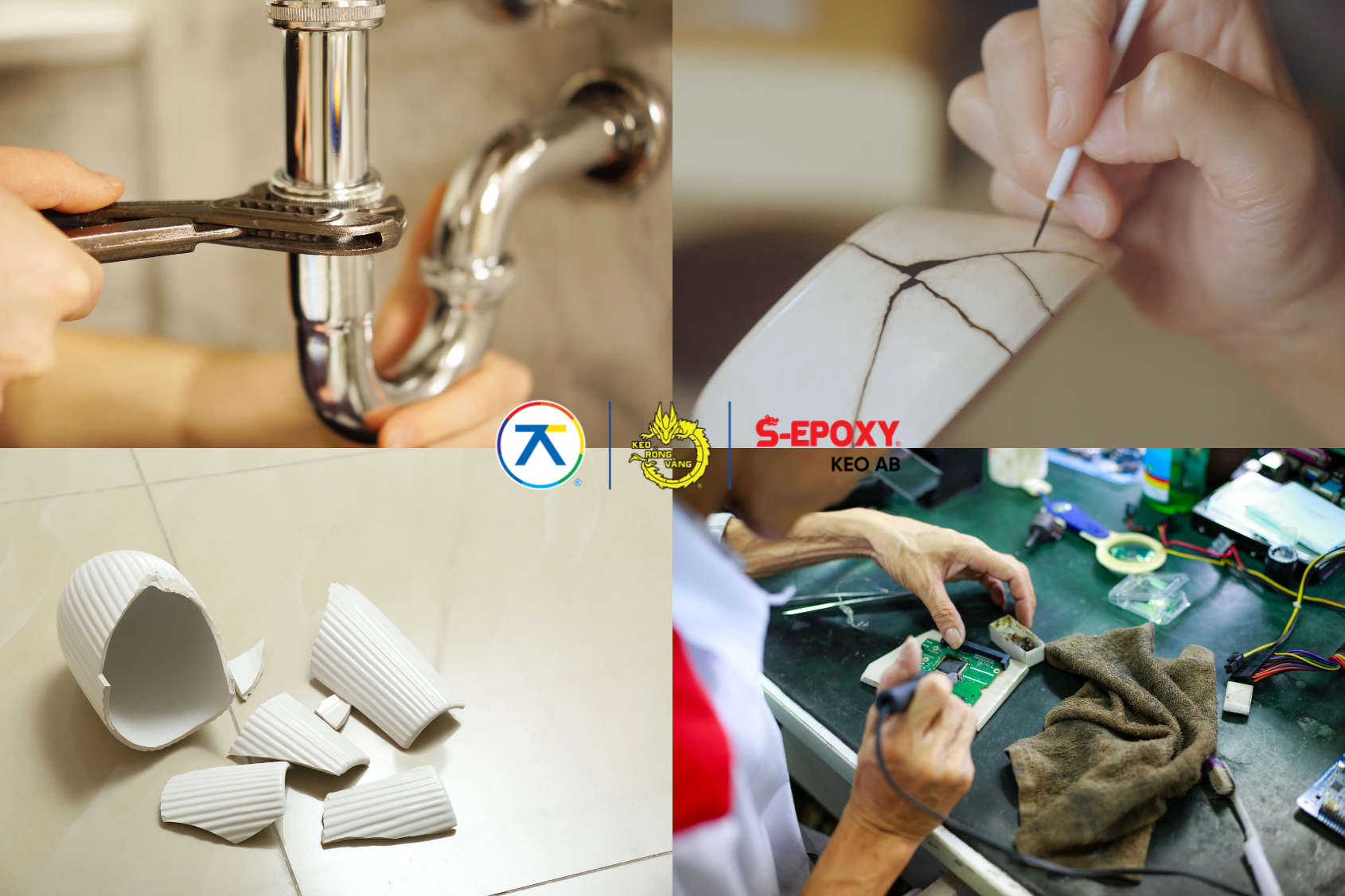
4.1. Bonding and Repairing Metal Components
S-Epoxy can be used to bond metal components in automobiles, motorcycles, machinery, and mechanical tools within suitable application conditions.
The product is appropriate for repairing and joining components that do not require certified structural bonding performance.
Before application, remove grease, dust, and other contaminants that may interfere with adhesion.
For components exposed to heavy loads, strong vibrations, or safety-critical operating conditions, technical suitability must be verified before use.
4.2. Repairing Wood, Ceramic, Stone, and Glass Objects
S-Epoxy can be used to bond components made from wood, ceramics, stone, and glass.
Typical applications include repairing household items, decorative objects, and components with suitable bonding surfaces.
Before mixing the adhesive, ensure that the surfaces are clean, dry, and compatible.
For coated surfaces or materials with sensitive finishes, conduct a small-area test to evaluate potential effects on appearance.
4.3. Repairing Cracks in Pipes and Tanks
The TDS lists S-Epoxy for applications involving cracks in water pipes, tanks, and fluid transfer lines.
However, the document does not provide numerical pressure resistance, long-term waterproofing performance, or specific chemical compatibility data.
Therefore, S-Epoxy should not be treated as a certified repair solution for gas pipelines, pressurized piping systems, or hazardous chemical containment systems without appropriate technical assessment and verification.
4.4. Bonding Machinery Parts, Tools, and Electronic Components
S-Epoxy is listed in the TDS for bonding components used in machinery, tools, electronic devices, and sports equipment.
For electronic components, electrical insulation requirements, heat resistance, and material compatibility must be evaluated before application.
The current TDS does not provide numerical values for electrical insulation resistance or thermal conductivity.
Do not use the adhesive to replace mechanical fasteners or safety-critical components without proper verification.
4.5. Repairing Decorative and Handicraft Items
S-Epoxy can be used for bonding and repairing decorative objects, handicrafts, and household items.
For components with complex shapes, align the bonding surfaces before mixing the adhesive to minimize positioning errors during assembly.
5. How to Use S-Epoxy Adhesive in 5 Steps
To achieve suitable bonding performance, prepare clean surfaces, dispense equal amounts of the two components, and mix thoroughly before application.
Step 1: Prepare the Bonding Surfaces
Clean both surfaces to remove dust, grease, and other contaminants.
Ensure the substrates are dry before applying the adhesive.
For surfaces with old paint, peeling coatings, or uncertain material compatibility, appropriate surface treatment and compatibility testing should be carried out before bonding.
Step 2: Dispense Equal Amounts of Parts A and B
Dispense equal amounts of adhesive from Tubes A and B onto a clean mixing surface.
Prepare only the quantity required for the bonding area to minimize excess adhesive during application.
Step 3: Mix the Two Components Thoroughly
Mix Parts A and B thoroughly until a uniform mixture is obtained.
According to the TDS, the mixed adhesive should be used within approximately 1–2 minutes.
Prepare all components and tools in advance to allow prompt application after mixing.
Do not change the mixing ratio without instructions from the technical department.
Step 4: Apply the Adhesive and Join the Surfaces
Spread the mixed adhesive evenly over the bonding area.
Position the two surfaces correctly and press them together using appropriate pressure.
Keep the components stable as the adhesive begins to cure.
Avoid movement or excessive force that could affect joint alignment.
Step 5: Allow the Adhesive to Cure and Inspect the Bond
According to the TDS, S-Epoxy has the following drying and hardening times:
Surface Dry: Approximately 5 minutes.
Fully Dry: Approximately 45 minutes.
Fully Hardened: After 3 days.
Keep the bonded components in suitable conditions during curing. Inspect the bond before putting the item into service.
For load-bearing components, actual bond strength should be evaluated rather than relying solely on surface drying time.
6. Common Application Issues and Troubleshooting
6.1. Uneven Adhesive Curing
Check the amounts of adhesive dispensed from Tubes A and B and whether the two components have been mixed thoroughly.
According to the TDS, equal amounts of Parts A and B should be used and mixed thoroughly before application.
An uneven mixture may interfere with the curing process.
6.2. Poor Bonding Strength
Check whether the surfaces contain grease, dust, moisture, or unstable coatings.
S-Epoxy should be applied to clean, dry surfaces.
The TDS specifically states that the product does not bond to polypropylene (PP) or polyethylene (PE).
6.3. The Adhesive Thickens Before Application Is Completed
Check the time elapsed since Parts A and B were mixed.
Because S-Epoxy has a fast curing process, components should be aligned and the required adhesive quantity prepared before mixing.
Do not continue using a mixture that has visibly changed in consistency if it can no longer be applied properly.
6.4. The Bond Has Not Reached the Expected Hardness
Check the actual curing time.
According to the TDS, S-Epoxy becomes fully dry after approximately 45 minutes but requires 3 days to reach a completely hardened state.
For components that must withstand mechanical loads, avoid premature use until the joint's suitability has been confirmed.
6.5. Poor Adhesion to Plastic Materials
Identify the specific type of plastic being bonded.
According to the TDS, S-Epoxy is not suitable for PP and PE plastics.
For other plastic materials, compatibility testing is recommended before application.
The troubleshooting information above provides general technical guidance based on the product's characteristics, application instructions, and stated limitations. It does not represent separate defect-testing results published in the TDS.
7. Shelf Life, and Safety
7.1. Shelf Life
The shelf life of S-Epoxy depends on the packaging size:
S-Epoxy 20g/blister pack: 2 years.
S-Epoxy 56g/blister pack: 5 years.
Check the manufacturing date and expiration date printed on the packaging before use.
7.2. Storage Instructions
To maintain adhesive quality during storage:
Store the product in a cool, dry place.
Keep away from direct sunlight.
Close the caps of both tubes tightly after use.
Prevent Parts A and B from coming into contact with or contaminating each other during storage.
Keep away from heat and ignition sources.
7.3. Safety Precautions
Read the application instructions carefully before use.
Work in a well-ventilated area.
Keep away from heat and ignition sources.
Wear suitable protective gloves and safety goggles as specified in the SDS/MSDS.
Avoid direct contact with skin and eyes.
In case of eye contact, rinse carefully with clean water and seek medical attention.
Keep out of reach of children.
Collect and dispose of excess adhesive and used packaging according to applicable health, safety, and environmental regulations.
7.4. Application Limitations
According to the TDS, S-Epoxy does not bond to polypropylene (PP) or polyethylene (PE) plastics.
Additional technical evaluation is required before using the product in applications involving:
Joints exposed to heavy loads or high pressure.
Gas pipelines, fuel lines, or pressurized systems.
Surfaces exposed to continuous water immersion or chemical contact.
Components operating continuously at high temperatures.
Applications requiring certified structural bonding or operational safety performance.
The TDS does not provide specific performance limits for these conditions. Product suitability should not be assumed without appropriate verification.
8. Frequently Asked Questions About S-Epoxy Adhesive
8.1. How Long Does S-Epoxy Take to Dry Completely?
According to the TDS, S-Epoxy becomes surface dry after 5 minutes, fully dry after 45 minutes, and completely hardened after 3 days.
Complete drying and full hardening are different stages. For load-bearing applications, allow the adhesive to reach an appropriate curing stage before use.
8.2. Can S-Epoxy Be Used to Bond Metal?
Yes. S-Epoxy is a two-component epoxy resin adhesive designed for bonding metal components used in automobiles, machinery, and mechanical equipment.
Before application, the bonding surfaces must be clean and dry. Actual load requirements should also be evaluated.
8.3. Can S-Epoxy Bond PP and PE Plastics?
No. According to the TDS, S-Epoxy does not adhere to polypropylene (PP) or polyethylene (PE).
For other plastic materials, compatibility testing is recommended before use.
8.4. What Is the Mixing Ratio of S-Epoxy Parts A and B?
According to the TDS, equal amounts of Parts A and B should be dispensed and mixed thoroughly on a clean surface before application.
The mixing ratio should not be adjusted without technical guidance, as this may affect the curing process.
8.5. What Packaging Sizes Are Available for S-Epoxy?
According to the TDS, S-Epoxy is available in two packaging sizes: 20g and 56g per blister pack.
Each blister pack contains two tubes, Parts A and B, with 12 blister packs per box.
The shelf life is 2 years for the 20g version and 5 years for the 56g version.
Consultation & Support
- • Contact An Thai Khang now for consultation & quotation.
- • We are always ready to support and respond quickly to ensure your confidence in purchasing.