
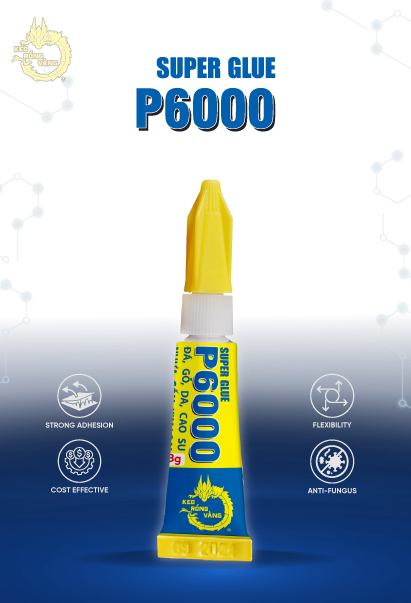
P-6000 Super Glue 3g
P-6000 Super Glue 3g offers fast curing and strong adhesion for rubber, plastic, metal, MDF and plywood. Explore its technical specifications and application guide.
Product features
Features
One-component instant adhesive that cures quickly with moisture in the air, requiring no heat or catalysts.
Applications
Bonds a variety of materials including metal, rubber, plastic, glass, MDF, wood, and composites.
Color
Transparent
Packaging
3g/ tube
Safety note
Not suitable for oily, wet, or submerged surfaces, and not for direct contact with food.
P-6000 Super Glue is a one-component, solvent-free instant adhesive that cures through exposure to atmospheric moisture. Its low-viscosity formula allows rapid bonding of various materials, including rubber, plastic, and metal. The product is particularly suitable for small components requiring precise assembly and fast curing.
Chemical Base: One-component instant adhesive that cures through moisture-initiated polymerization.
Compatible Substrates: Rubber, plastic, glass, metal, MDF, plywood, and other materials subject to compatibility testing.
1. Key Features of P-6000 Super Glue
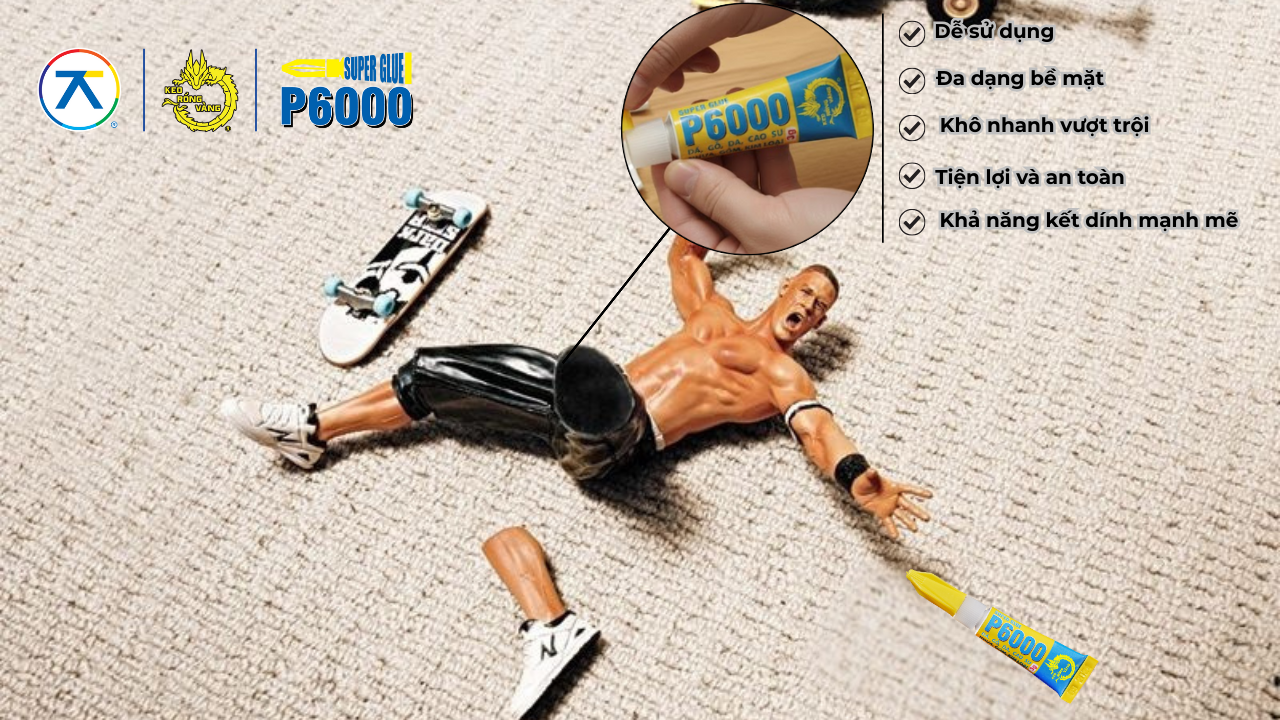
P-6000 Super Glue is designed for assembling, repairing, and bonding small components. According to the Technical Data Sheet (TDS), the product offers the following features:
Fast Curing: The adhesive can cure within seconds, depending on the substrate. According to the TDS, the curing time is 3 seconds on nitrile rubber and 22 seconds on MDF.
Low Viscosity: With a viscosity of 51 mPa·s, the adhesive spreads easily across contact surfaces and is suitable for joints with narrow gaps.
Gap-Filling Capability: The product can fill gaps of up to 0.1 mm, as specified in the TDS.
Adhesion to Various Materials: Suitable for bonding rubber, metal, plastic, and other manufacturer-recommended substrates.
Solvent-Free Formula: The product is identified as solvent-free in the TDS. It cures through moisture exposure without requiring additional heat, catalysts, or specialized pressing equipment.
Easy Application: Apply a small amount of adhesive to one surface, join the components, and hold them together as instructed.
2. Packaging and Color of P-6000 Super Glue
P-6000 Super Glue is packaged in 3g plastic tubes, making it suitable for bonding and repairing small components.
Specifications | Details |
Product Name | P-6000 Super Glue |
Product Type | One-component instant adhesive |
Net Weight | 3g/tube |
Packaging | 12 tubes/blister pack |
Color | Clear |
Appearance | Homogeneous liquid |
Note: The packaging specifications above are based on the P-6000 Technical Data Sheet.
3. Technical Specifications of P-6000 Super Glue
3.1. Basic Technical Specifications
Technical Properties | Values |
Product Type | One-component instant adhesive |
Appearance | Homogeneous liquid |
Color | Clear |
Specific Gravity | 1.00 g/cm³ |
Shear Strength After 24 Hours on Carbon Steel | 11.8 MPa |
Gap-Filling Capability | Up to 0.1 mm |
Application Temperature | +5°C to +45°C |
Shelf Life | 12 months in unopened packaging |
The technical properties were determined at a temperature of 23 ± 2°C and a relative humidity (RH) of 50 ± 5%, according to the product's TDS.
3.2. Curing Time on Different Substrates
The curing time of P-6000 Super Glue varies depending on the substrate and application conditions.
Test Substrate | Curing Time |
PVC | 7 seconds |
Nitrile Rubber | 3 seconds |
MDF | 22 seconds |
Plywood | 11 seconds |
Curing times were measured at 23 ± 2°C and 50 ± 5% relative humidity. These values represent test results for specific substrates and do not guarantee the same curing time or final bond strength for every application.
4. Applications of P-6000 Super Glue
P-6000 Super Glue is suitable for applications requiring fast bonding, minimal adhesive consumption, and precise assembly of components with closely fitting contact surfaces.
4.1. Bonding Rubber, Plastic, and Metal
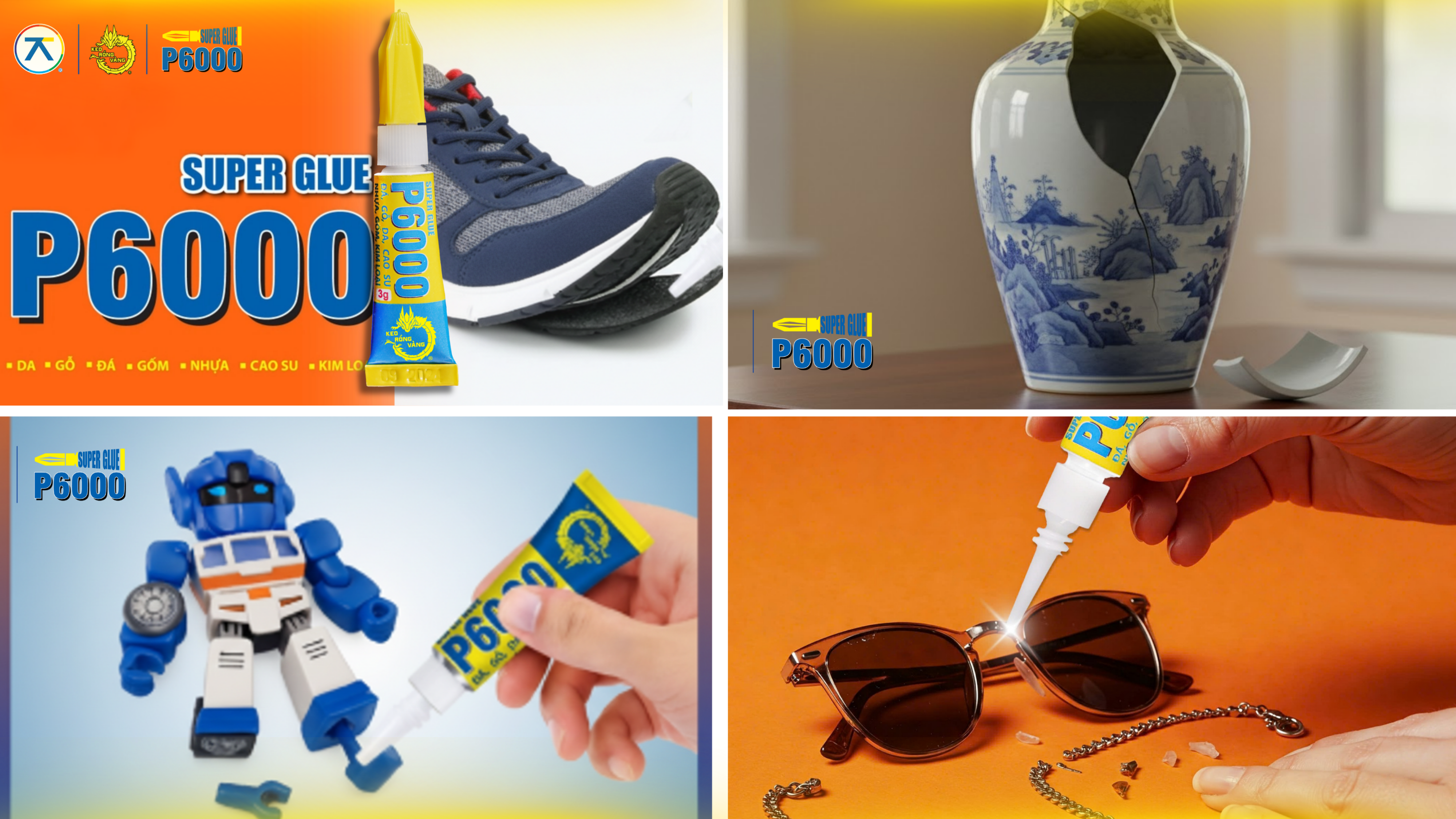
P-6000 Super Glue can be used to bond rubber, plastic, and metal components in assembly and repair applications.
According to the TDS, the product is suitable for small joints with gaps of up to 0.1 mm. For plastics with difficult-to-bond surfaces, compatibility testing on actual material samples is recommended before application.
4.2. Jewelry Making and Repair
P-6000 Super Glue is recommended for bonding gemstones and certain types of stones in jewelry making and repair applications.
As gemstones vary in size and surface characteristics, compatibility with the stone, surface coatings, and aesthetic requirements should be evaluated before use.
4.3. Gift Manufacturing and Display Products
The product is used in the production of acrylic gift items, point-of-purchase (POP) display materials, and tabletop display products.
Its low viscosity and fast-curing characteristics make it suitable for assembling small components that have been properly positioned before bonding.
4.4. Repairing Household Appliances and Equipment
P-6000 Super Glue can be used to repair certain small components of household appliances, such as grinders, irons, and other suitable items.
Do not use the adhesive on components with surface temperatures exceeding 50°C, load-bearing parts, or safety-critical components unless its technical suitability has been verified.
4.5. Bonding MDF, Plywood, and Small Furniture Components
According to the TDS test results, P-6000 Super Glue has a curing time of 22 seconds on MDF and 11 seconds on plywood.
The adhesive may be considered for small joints involving these materials. For oil-treated wood, coated surfaces, or joints with larger gaps, compatibility testing should be conducted before application.
5. How to Use P-6000 Super Glue in 5 Steps
P-6000 Super Glue cures rapidly when exposed to moisture. Therefore, components should be prepared and properly aligned before applying the adhesive to minimize positioning errors during assembly.
Step 1: Prepare the Surfaces
Ensure that both bonding surfaces are clean, dry, and free from grease, dust, or old adhesive residues.
Closely fitting surfaces are recommended for effective bonding. For materials with uncertain compatibility, conduct a small-scale test before full application.
Step 2: Check Application Conditions
According to the TDS, the recommended application temperature ranges from +5°C to +45°C.
Do not apply the adhesive to wet surfaces or materials that release oils, contain plasticizers, or have other components that may affect bonding performance.
Step 3: Apply the Adhesive to One Surface
Apply the adhesive to only one of the two surfaces to be bonded.
According to the TDS, the recommended application amount is approximately one drop per square inch of bonding area.
Adjust the adhesive quantity according to the joint size. Avoid excessive application, which may cause adhesive to overflow onto surrounding areas.
Step 4: Assemble and Hold the Components
Position the two surfaces correctly and join them immediately after applying the adhesive.
Hold the components firmly together with appropriate pressure for approximately 15 seconds or until the joint is fixed in place.
Actual curing time may vary depending on the material. A 15-second holding time should not be interpreted as the time required to achieve final bond strength in every application.
Step 5: Inspect the Bond and Remove Excess Adhesive
After assembly, inspect the alignment and condition of the bonded joint.
The TDS recommends using acetone to remove excess adhesive. However, acetone may affect certain plastics, coatings, and decorative materials. Conduct a compatibility test before use.
Avoid applying excessive force to the bonded joint until the adhesive has reached an appropriate curing stage and sufficient bond strength.
6. Common Application Issues and Troubleshooting
6.1. Poor Adhesion to the Surface
Check whether the bonding surfaces contain grease, dust, old adhesive residues, or surface treatment chemicals.
Materials containing plasticizers, oils, or solvents may reduce bonding performance. Testing on actual material samples is recommended before application.
6.2. Slower Curing Than Expected
Check the temperature, humidity, and substrate type.
According to the TDS, the curing time is 3 seconds on nitrile rubber and 22 seconds on MDF. Therefore, the same curing time should not be assumed for all materials.
6.3. Excess Adhesive Overflowing from the Joint
Check the amount of adhesive applied and the contact area.
The TDS recommends approximately one drop per square inch of bonding surface. When bonding small components, control the adhesive quantity to prevent overflow and maintain a clean appearance.
6.4. Unstable Bonds Under Water or Heat Exposure
Check the actual operating conditions of the bonded components.
P-6000 Super Glue is not recommended for continuously submerged surfaces or surfaces with temperatures exceeding 50°C. If the joint will be exposed to these conditions, a more suitable adhesive should be selected.
The troubleshooting information above provides general technical guidance based on the product's characteristics and application limitations. It does not represent separate defect-testing results published in the TDS.
7. Shelf Life, Storage, and Safety Precautions
7.1. Shelf Life
According to the TDS, P-6000 Super Glue has a shelf life of 12 months from the manufacturing date when stored in unopened packaging.
7.2. Storage Instructions
To maintain product quality during storage:
Store in a cool, dry, and well-ventilated area.
Storage Temperature: 5–27°C.
Relative Humidity: 30–70%.
For optimal storage, maintain temperature and humidity near the lower limits of the recommended ranges.
Close the tube cap tightly after use.
Store opened or previously used products separately from new, unopened products to minimize the risk of contamination.
Avoid direct sunlight and heat sources.
7.3. Safety Precautions
Although P-6000 Super Glue is identified as solvent-free in the TDS, appropriate safety precautions are still required during handling and application.
Work in a well-ventilated area and read the application instructions carefully before use.
Wear suitable protective gloves and safety goggles or a face shield.
Avoid direct contact with skin, eyes, and clothing.
In case of eye contact, rinse carefully with clean water and seek immediate medical assistance.
If adhesive contaminates clothing, remove the affected clothing in accordance with the product's safety instructions.
Do not smoke or work near open flames or heat sources during application.
Do not dispose of adhesive directly into the environment.
Keep out of reach of children and refer to the Safety Data Sheet (SDS/MSDS) for detailed safety information.
7.4. Application Limitations
According to the TDS, P-6000 Super Glue is not recommended for the following conditions:
Surfaces with temperatures exceeding +50°C or application environments below +5°C.
Materials that release oils or contain plasticizers, solvents, or other substances that may interfere with adhesion.
Oil-treated wood, certain oil-based fillers, or materials that have not fully cured or vulcanized.
Surfaces that come into direct contact with food.
Structural glazing and joints requiring structural load-bearing performance.
Surfaces exposed to continuous water immersion or prolonged moisture.
Actual operating conditions should be evaluated, and material compatibility tests should be conducted before using the adhesive in applications that have not been verified.
8. Frequently Asked Questions About P-6000 Super Glue
8.1. How Long Does P-6000 Super Glue Take to Cure?
According to the TDS, P-6000 Super Glue has a curing time of 3 seconds on nitrile rubber, 7 seconds on PVC, 11 seconds on plywood, and 22 seconds on MDF.
These results were measured at 23±2°C and 50±5% relative humidity. Actual curing time may vary depending on the substrate and application conditions.
8.2. Can P-6000 Super Glue Bond Plastic and Metal?
Yes. According to the TDS, P-6000 Super Glue is suitable for bonding various materials, including plastic, rubber, and metal.
However, bonding performance depends on the specific material and surface characteristics. For difficult-to-bond plastics or materials with unknown compositions, compatibility testing is recommended before use.
8.3. Does P-6000 Super Glue Require Heat to Cure?
No. According to the TDS, P-6000 Super Glue is a one-component adhesive that cures upon exposure to atmospheric moisture without requiring additional heat or catalysts.
8.4. What Is the Maximum Gap-Filling Capability of P-6000 Super Glue?
According to the TDS, P-6000 Super Glue can fill gaps of up to 0.1 mm.
The product is best suited for small joints with closely fitting contact surfaces that have been properly cleaned before bonding.
8.5. Can P-6000 Super Glue Be Used on Continuously Submerged Surfaces?
Not recommended. The TDS specifically states that the product is unsuitable for surfaces exposed to continuous water immersion.
For joints that frequently come into contact with water or operate in persistently damp environments, a more appropriate adhesive should be selected based on the intended application conditions.
Consultation & Support
- • Contact An Thai Khang now for consultation & quotation.
- • We are always ready to support and respond quickly to ensure your confidence in purchasing.